CIHS – Centre for Integrated and Holistic Studies

Date/Time:

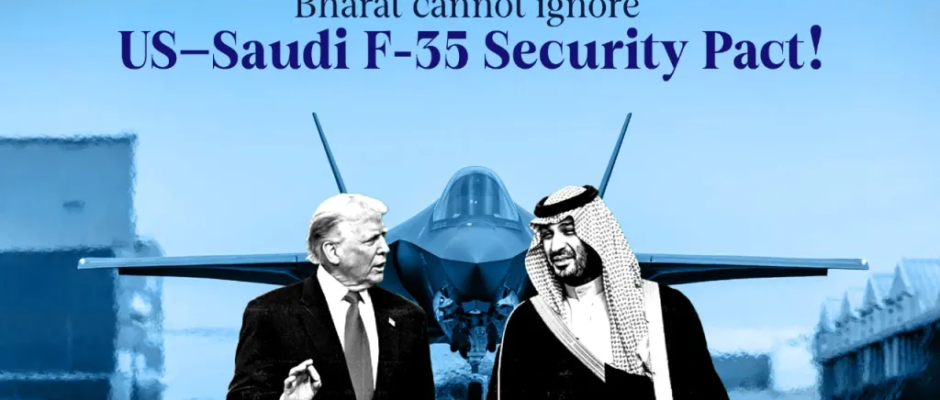
Bharat Cannot Ignore US–Saudi F-35 Security Pact!

Leveraging New Delhi – Riyadh linkages, keeping a hawk’s eye on F-35s integration into Saudi command structures will limit Pakistan’s advantage.N. C. Bipindra Saudi Crown Prince Mohammed bin Salman’s visit to Washington DC recently led to one of the most significant defence announcements in recent years. In a move long considered unlikely, United States has agreed to sell the Kingdom its most advanced fighter aircraft, F-35 Lightning II as part of a sweeping new security pact that the White House has described as a “major defence sale package.” This agreement, years in the making, marks a turning point not only in US–Saudi relations but broader strategic environment in West Asia. For United States, the pact is an attempt to re-anchor Saudi Arabia firmly within Western security architecture at a time when shifting allegiances is the norm, growing Chinese influence and an emboldened Iran. For Riyadh, access to F-35 is a long-sought strategic prize, symbolising military modernisation, regional deterrence and closer military interoperability with Washington DC. From Indian perspective, the announcement has raised a deeper question: given Saudi Arabia’s historically close security ties with Pakistan does the sale pose a hidden risk? To understand the implications, it’s essential first to break down what the pact represents. The F-35 is not merely another fighter jet; it is a networked warfare ecosystem. It fuses intelligence, surveillance, reconnaissance and combat capabilities into a single stealth platform unlike anything currently operating in West Asia. For decades, US refused to supply it to any Arab nation to maintain Israel’s qualitative military edge. Washington DC’s readiness to support Riyadh’s acquisition marks a fundamental recalibration of regional power dynamics. There are several reasons behind this shift. United States is seeking to regroup and consolidate its alliances in a region where Iranian influence continues to grow, Russia and China are expanding their diplomatic, economic and technological footprints. Riyadh, under Mohammed bin Salman’s Vision 2030 ambition, is accelerating modernisation of its military, a process that requires sophisticated platforms like the F-35 to replace ageing legacy systems. Although the US–Saudi deal is not formally tied to progress on a Saudi–Israel normalisation track, the agreement undeniably fits into Washington DC’s long-term strategic desire to stabilise West Asia through deeper defence linkages. Yet the debate in India largely hinges on how this deal intersects with Saudi Arabia’s longstanding relationship with Pakistan and recently concluded security cover provided to Islamabad through a separate larger pact. For decades, Pakistan has served as critical military partner for the Kingdom. Pakistani troops have been stationed in Saudi Arabia for training and internal defence duties. Pakistani military professionals have played influential roles in shaping parts of Royal Saudi Land Forces and Saudi–Pakistani security partnership has often overlapped with Riyadh’s financial assistance to Islamabad during economic crises. In Western strategic circles, speculation has long existed that Saudi funding played an indirect role in Pakistan’s nuclear programme. While such assertions remain unproven, they reflect the depth of a relationship shaped by geopolitical, ideological and economic interdependence. This history understandably raises concerns in New Delhi. The question is not whether Pakistan could ever receive F-35 aircraft which seems to be impossible, given its deepening military alignment with China and Washington DC’s absolute unwillingness to risk fifth-generation technology falling into Beijing’s hands. Instead, more realistic concern is whether Pakistan might gain indirect benefits from Saudi Arabia operating such cutting-edge systems. On technology front, the risk of direct leakage is extremely low. The F-35 programme is protected by some of the world’s most stringent encryption, monitoring and access-control protocols. Export versions supplied even to close US allies are deliberately configured with restricted capabilities and the aircraft’s software ecosystem is tightly controlled through remote management systems. No country — not even Israel, UK or Japan — has access to full suite of F-35 source code. The US is unlikely to relax these controls for any West Asian state. Still, Pakistan could indirectly benefit in limited ways. Its officers involved in training exchanges or deployments in Saudi Arabia might gain exposure to modern combat concepts, stealth-related tactical planning or NATO-style mission systems integration. Such exposure does not translate into sensitive technical knowledge, but it could incrementally enhance Islamabad’s understanding of cutting-edge airpower operations. Saudi Arabia’s integration of F-35s into its broader air-defence network could also offer Pakistan a window, however limited, into Western sensor fusion and early warning paradigms. These are marginal tactical advantages, not transformative ones, but they do warrant close Indian observation. Yet the landscape today is markedly different from the era in which Pakistan was Riyadh’s default security partner. Over the past decade, India’s relationship with Saudi Arabia has undergone an unprecedented transformation. The Kingdom now sees New Delhi as a major economic partner, a reliable energy market, rising defence manufacturer and an increasingly influential political actor across Indo-Pacific and West Asia. High-level political engagement between the two nations has intensified, bilateral counterterrorism cooperation is stronger than ever and Saudi investment in India including through the Public Investment Fund, has grown significantly. This shift has not gone unnoticed in Islamabad. While Pakistan once relied on automatic Saudi support, it now faces a more transactional, interest-driven Saudi foreign policy. As Riyadh deepens ties with stronger economies and emerging powers, Pakistan’s leverage has diminished. This means that while Pakistan will remain a partner for Saudi Arabia, it no longer holds the privileged position it once enjoyed. For India, the new US–Saudi pact therefore presents a complex but not necessarily adverse scenario. The deal is a reminder that West Asia’s strategic landscape is rapidly evolving with major powers and regional players recalibrating their roles. India should approach these changes with cautious realism rather than anxiety. The F-35 sale does not pose a direct threat to India’s security, nor does it empower Pakistan in any significant military sense. What it does signal is the need for New Delhi to continue strengthening its presence and partnerships in West Asia. India now has the opportunity to deepen defence cooperation with Saudi Arabia, expand joint training programmes and position its

Read More
Beyond “Iron Brothers” - The Cracks in the China-Pakistan Defence Partnership

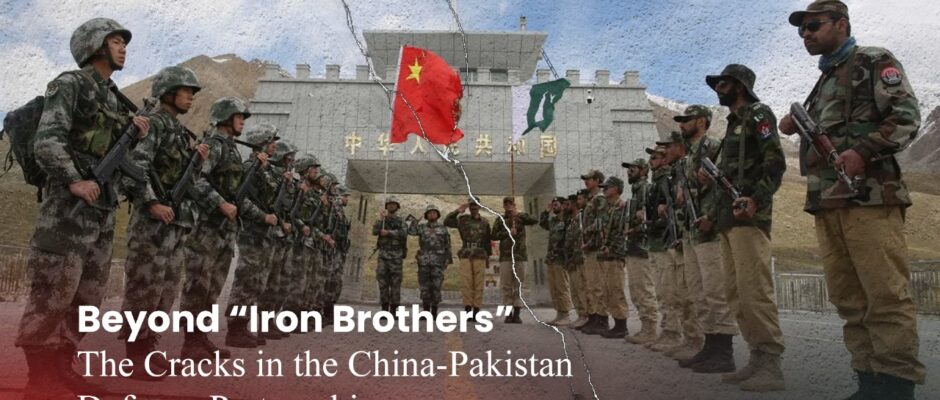
Beyond “Iron Brothers”: The Cracks in the China-Pakistan Defence Partnership

N. C. Bipindra Pakistan’s engagement with both Washington and Beijing raises concerns about its relationship with China. Despite claims of trust and shared interests, Pakistan’s foreign policy history reveals a consistent pattern of duplicity. This poses risks for China, affecting its security and technological dominance. Let us analyse Pakistan’s dual alignments, urging caution from Beijing regarding military technology transfers to Islamabad. Pakistan’s foreign policy traits, transactionalism, opportunism, and dependence on external allies, suggest a potential shift in technology flow from the U.S. to China in a new geopolitical landscape. Historical Patterns of Technology Transfers Pakistan has long capitalised on its geostrategic location to obtain military and economic concessions from major powers. During the Cold War, it accommodated CIA operations against the Soviets in Afghanistan and received sophisticated U.S. armaments; however, not all of it remained in Pakistani possession. Two instances are particularly noteworthy. In the 1990s, U.S. intelligence asserted that Pakistan transferred American-supplied Stinger missiles to China, a claim that Islamabad refuted. After the 2011 Abbottabad raid, The New York Times disclosed that Chinese engineers were permitted to examine the remnants of a downed U.S. stealth-modified Black Hawk helicopter. Although definitive evidence was lacking, U.S. officials referenced intercepted communications to substantiate the allegation. These occurrences, notwithstanding Pakistani refutations, solidified perceptions of duplicity. For Beijing, the implication is unequivocal: if Pakistan was unable to protect U.S. technologies, it cannot be entirely relied upon to safeguard Chinese ones. Pakistan’s Contemporary Balancing Act Today, Pakistan faces a transformed strategic environment. Following Operation Bunyaan-un-Marsoos and subsequent outreach efforts, Islamabad has sought to re-engage Washington, particularly to secure tariff concessions and financial relief amid severe economic strain. Simultaneously, it remains dependent on Beijing for military hardware, ranging from advanced weapons and sensors to drones. The private lunch hosted for Asim Munir at the White House on June 18, 2025, is not merely a ceremonial bonhomie. It is a fact that such courtesies are rarely extended without an eye on strategic dividends. It appears that, in an era where China has surged ahead of the U.S. in technologies like AI, 5G, and advanced manufacturing, Washington views Pakistan not merely as an old battlefield ally but as a potential conduit for intelligence, leverage, and Chinese tech transfer. Perhaps, for Washington, cultivating ties with Pakistan’s generals is about far more than courtesy. It offers a discreet channel for access, legitimacy, and potentially even Chinese technology. However, this balancing act carries profound risks for China. Sensitive Chinese systems, long assumed to be secure within the framework of an “all-weather” partnership, may become vulnerable to American scrutiny as Pakistan attempts to cultivate favor in Washington. What was once an unshakable partnership is beginning to look increasingly fragile, as Pakistan’s loyalties are often dictated not by long-term commitments but by immediate strategic and financial incentives. As former CIA officer Bruce Riedel has long observed, “Pakistani generals can be bought any time,” a reminder of how transactional and compromised the country’s military elite remain. Compounding this vulnerability is the conduct of Pakistan’s civil–military elite. Many former army chiefs, including Pervez Musharraf, Ashfaq Parvez Kayani, and Qamar Javed Bajwa, have relocated abroad or maintained significant overseas assets after retirement. Such behavior underscores an entrenched pattern of ethical and moral corruption: leaders prioritise personal enrichment and external safe havens over national development, leaving the public to suffer under chronic instability and economic decline. Case of the J-35 Stealth Fighter Pakistan’s reported withdrawal from a planned deal for 40 J-35 stealth fighters highlights these dynamics. Once poised to be the jet’s first foreign buyer, Islamabad later dismissed the reports, despite earlier claims of pilot training in China. Battlefield lessons from Operation Sindoor — where Chinese systems underperformed against India’s BrahMos and S-400 — fueled doubts about the untested J-35. Economic pressures, including IMF austerity and a stretched defence budget, further undermined the $5 billion deal. For Beijing, Pakistan’s reversal exposed the fragility of trust: a flagship transfer was abandoned in favor of renewed U.S. outreach, underscoring China’s vulnerability to Islamabad’s hedging. Hypersonic Missiles: China Draws a Line Another case highlighting Beijing’s caution is its reported rejection of Pakistan’s request for hypersonic missiles and related technology. Media reports suggest China refused both sales and tech transfers, fearing Islamabad’s growing outreach to the U.S. could expose sensitive systems. Unlike fighter jets or conventional missiles, hypersonic platforms like the DF-17 are central to China’s strategic deterrence and lack downgraded export versions, reflecting their sensitivity and immaturity. The denial underscores a key reality: even in an “all-weather” partnership, Beijing does not fully trust Pakistan with its most advanced technologies. Strategic Implications for China The implications of this dynamic for China are far-reaching. First, Pakistan represents both an asset and a liability for Beijing. It provides strategic depth in South Asia, a reliable arms market, and political support in international forums. Yet these benefits come at the cost of significant vulnerability: advanced Chinese systems risk exposure through Pakistani networks, intentionally or inadvertently, to Western intelligence. Second, the problem is structural rather than episodic. Pakistan’s foreign policy has long been characterised by transactionalism, with loyalty subordinated to immediate material gains. As Islamabad draws closer to Washington, Beijing must anticipate that Pakistan’s defence partnership could once again become a conduit for technological leakage, this time at China’s expense. Third, the nature of emerging technologies magnifies the risk. Whereas conventional hardware could be downgraded for export, dual-use and software-driven systems cannot be so easily restricted. For Beijing, the possibility of losing control over AI, cyber, or hypersonic technologies through Pakistan would represent a strategic disaster, undermining years of investment and eroding its position vis-à-vis the United States. In this sense, Pakistan’s growing closeness with Washington is about far more than counterterrorism cooperation or financial bailouts. It is “more than what meets the eye”: for the West, Pakistan provides a potential backdoor to scrutinize and even reverse-engineer Chinese technologies in domains like AI, quantum, and stealth areas where Beijing has made significant advances over the United States. Washington now views Beijing not merely as a rising

Read More
Is Islamic Alliance in offing, With Ambiguities

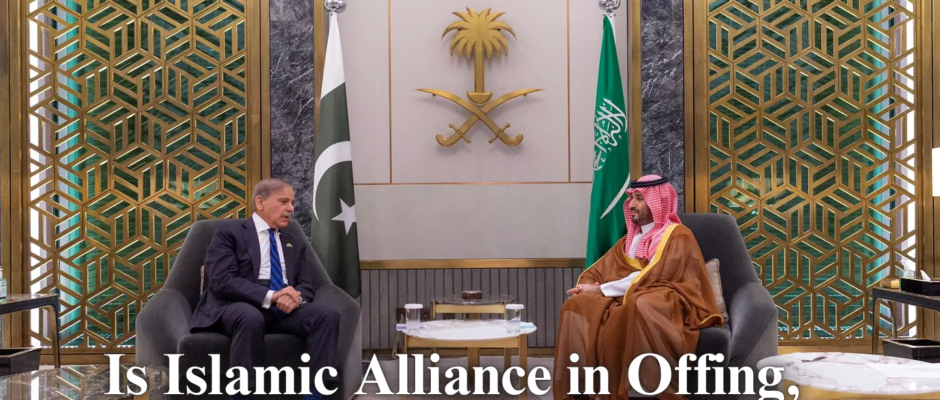
Is Islamic Alliance in Offing, With Ambiguities 

Only a true test, a moment of crisis, will reveal whether this new alliance is as ironclad as advertised, or more of a strategic signal than a binding shield. Rahul Pawa When Saudi Arabia and Pakistan signed a sweeping mutual defense agreement in Riyadh this month, it marked a strategic pivot. The agreement, termed a “Strategic Mutual Defence” agreement declares that an attack on one is an attack on both, echoing NATO’s famous Article 5 commitment. It’s an unprecedented pledge between the guardian of Islam’s holiest sites and the only Muslim nation armed with nuclear weapons. Yet behind the celebratory rhetoric, the agreement’s true scope and weight remain uncertain. A NATO-Style on paper, the agreement’s collective defense vow is explicit: “any aggression against either country shall be considered an aggression against both” Pakistan’s government said. In practice, much is left vague. Notably, the agreement is silent on whether Pakistan’s nuclear arsenal, the Islamic world’s only nukes is now at Saudi Arabia’s disposal. Pressed about a potential Pakistani “nuclear umbrella” for Riyadh, a senior Saudi official would only say the agreement “encompasses all military means”. This careful ambiguity hints at a broad commitment while stopping short of any explicit nuclear guarantee. Another grey area is the agreement’s status. Riyadh and Islamabad pointedly call it an “agreement” and not a treaty. By definition, though, any written inter-state accord intended to bind is a treaty under international law, regardless of its label. The absence of a published text and the flexible wording suggest the parties prefer some wiggle room. Saudi Arabia has pursued grand defense coalitions before like a 2015 pan-Islamic military alliance against terrorism that proved “more symbolic than operational”. This time, the language of collective defense is tied to plans for concrete cooperation (joint exercises, intelligence-sharing, arms training). Whether it matures into a robust alliance or remains largely aspirational will only be clear with time. The agreement’s timing is telling. It came days after a surprise Israeli airstrike in Doha, Qatar that killed Hamas figures and stunned the Gulf States. Qatar hosts a major US airbase, yet Washington did not prevent the strike, a jolt to regional confidence in American protection. Saudi Arabia, already uneasy about U.S. reliability, seized the moment to bolster its own security. Officially, Riyadh says the deal “institutionalises” long-standing cooperation rather than targeting any specific incident. Still, it unmistakably signals that the kingdom can seek safeguards beyond the U.S. umbrella. The agreement even revived talk of an “Islamic NATO.” Saudi Arabia binding itself to Pakistan, Islam’s spiritual heart partnering with its only nuclear-armed state is a powerful image. Observers speculate that other Muslim countries might one day align under a similar framework. Yet longstanding sectarian and political rifts (Sunni vs Shia, Arab vs non-Arab) have doomed past unity efforts. For now, the Riyadh-Islamabad agreement is as much a message to big powers as a foundation for any broader alliance. Perhaps the toughest diplomatic test for Riyadh is managing the agreement’s fallout in New Delhi. India has spent years cultivating Saudi Arabia as a partner, a top source of oil, investment and Islamic-world backing on contentious issues. A formal Saudi-Pakistani security link is exactly what India hoped to avoid. New Delhi “would not welcome an explicit security tether between its principal energy supplier and its strategic rival,” one analysis noted. In effect, the agreement edges Saudi Arabia closer to Pakistan, risking awkward strain in Saudi-India ties. Indian government reacted in measured tones, acknowledging the agreement  and saying it would “study the implications” for her security. The real worry in New Delhi is not that Saudi forces would fight on Pakistan’s side which remains far-fetched but that Pakistan will feel politically bolstered by Riyadh’s backing. Pakistani hardliners may adopt a tougher posture in future confrontations, believing a wealthy Arab power has their back. There’s also concern that Saudi aid or arms could flow to Pakistan over time, indirectly strengthening India’s longtime foe. Aware of these optics, Saudi officials have been quick to reassure India. One senior official stressed that Saudi’s relationship with India “is more robust than it has ever been” and vowed to keep deepening it. Riyadh clearly wants to show it can defend its interests with Pakistan without abandoning its friendship with India. Even so, the balancing act is delicate. New Delhi will likely respond by tightening its own strategic bonds, for instance, with Israel, a close defense partner – and by quietly urging Riyadh to stay neutral in South Asian issues. Much progress in India-Saudi relations has come in recent years, and both sides have incentives to prevent this new alignment from derailing that momentum. As the dust settles, the Saudi–Pakistan agreement stands as a bold statement, but one not yet tested by crisis. Its ripple effects are already evident. Israel, which had been inching toward a historic normalisation with Riyadh, now sees that prospect put on hold Washington, too, must grapple with a Gulf ally hedging its bets on security. Ultimately, the agreement’s significance will hinge on how seriously Riyadh and Islamabad implement it. Regular joint drills coordinated planning or clear mutual defense protocols could turn the promise into genuine deterrence. Absent that, skeptics may view it as more posturing than substance. History offers caution: Pakistan’s past defense agreement s (such as Cold War alliances with the U.S.) often fell short when real wars loomed, and Gulf unity schemes have tended to fragment under pressure. For now, Saudi Arabia has made a dramatic bid to diversify its security options, a gamble on Pakistan’s reliability and on charting a more independent course without alienating old partners. If the gamble succeeds, it could redraw the strategic map of the Middle East and South Asia. If it falters, it will remind everyone that even grand agreements can carry unspoken caveats. Only a true test, a moment of crisis will reveal whether this new alliance is as ironclad as advertised, or more of a strategic signal than a binding shield. (Rahul Pawa is director, research at New Delhi

Read More
Lions, Shadows & Silk Roads

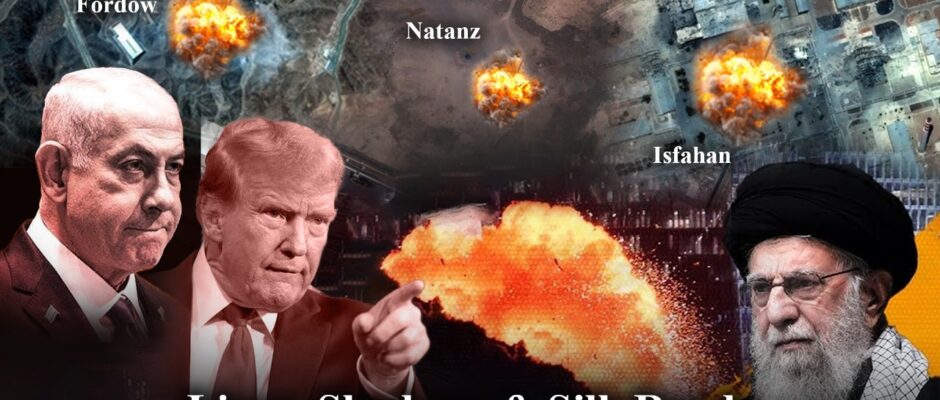
Lions, Shadows & Silk Roads

Israel-Iran clash reshaped West Asia’s strategic chessboard with US getting in. India will have to display maturity, dexterity, openness and exercise its strategic autonomy. N. C. Bipindra The Middle East was thrust into dramatic escalation of hostilities as Israel launched “Operation Rising Lion,” a comprehensive preemptive military campaign against Iranian targets, taking out military and nuclear facilities, on June 13, 2025. The operation, which included airstrikes, cyber-attacks and targeted assassinations was Israel’s most extensive cross-border military endeavour in recent years. In response, Iran activated proxy militias, launched missile attacks via Islamic Revolutionary Guard Corps (IRGC) and escalated its hybrid warfare tactics across the region. After calling for asking Iran to surrender, US President Donald Trump approved American air strikes completely obliterating three key Iranian nuclear facilities at Natanz, Fordow and Isfahan, yet noting “now is the time for peace.” This confrontation has far-reaching implications for regional stability, global oil markets, US foreign policy and emerging trade corridors like India-Middle East-Europe Economic Corridor (IMEC) and India-Isreal-UAE-USA (I2U2) group. For India, which has been investing heavily in regional diplomacy and infrastructure partnerships such as IMEC and I2U2, the conflict raises urgent questions about risk, resilience and realignment in its West Asia strategy. Operation Rising Lion, Israel’s Gambit Israel’s Operation Rising Lion was triggered by a surge in Iranian backed attacks on Israeli diplomatic and economic interests in northern Iraq, Syria and transfer of precision-guided missiles to Hezbollah in Lebanon apart from repeated calls for use of nukes to annihilate Israelis. The operation marked a shift in Israel’s longstanding “campaign between the wars” doctrine into an open and assertive military campaign targeting Iranian infrastructure, weapons convoys and senior commanders in multiple theatres. Key components of the operation included coordinated airstrikes on IRGC installations, targeted killing of senior operatives, military leadership and taking out nuclear facilities. The operation included cyber strikes and group covert attacks that disrupted Iranian air defence networks, missile stations and fuel supply chains. Anticipating a counterstrike from Iran, Israel deployed its new laser-based missile defence system which had been tested successfully against Iranian cruise missile barrages. Most of the Iranian attacks were intercepted though some have penetrated the air defence system to hit Israeli cities and towns including a hospital complex. Israel declared the operation a strategic necessity to “decapitate Iran’s regional encirclement architecture” and pre-empt future multi-front attacks including the nukes. While tactically effective, it has risked triggering a full-scale war with Iran and its axis of resistance apart from getting US and Russia-China involved in the war. Iran’s Proxy Retaliation, Strategic Posturing Iran’s counter-response blended military retaliation, strategic ambiguity, and proxy warfare. Apart from direct state-to-state confrontation with Israel — still a risky escalation — Iran relied heavily on asymmetric tactics. Iran fired hundreds of drones and rockets into Israel, overwhelming Iron Dome systems despite Israeli air superiority. The Houthis, an Iranian proxy in Yemen, have dubbed the US strikes on Iran as a “declaration of war” and have fired several missiles at Israel. Iran’s missile strike on Israel marked the first direct hit from Iranian territory since the April 2024 skirmish, indicating a new threshold of confrontation. Though Iran is trying to avoid full-scale war, its response is carefully calibrated to bleed Israel politically and militarily, while also testing the resolve of US deterrence commitments in the region. US Strategic Overstretch? The US was quickly pulled into the maelstrom, just over a week into the launch of military hostilities. Though Trump only issued warnings for a week, providing intelligence support to Israel and deploying at least two aircraft carriers to the region, his administration seems to have decided that enough is enough. Washington now faces accusations of strategic inconsistency. While it pushed for de-escalation publicly, on the parallel it supported Israeli operational aims covertly. This dualism will further strain US ties with Gulf States like Oman and Kuwait who fear further regional de-stabilisation. Furthermore, as tensions peaked, Trump administration’s G7 engagement was interrupted, which complicates America’s long-term global balancing act. Disruptions, Opportunity for India India has deep economic, energy and strategic stakes in West Asia. Operation Rising Lion and its aftermath present both direct threats and unexpected opportunities for New Delhi. IMEC Corridor in Jeopardy: The IMEC, announced at the 2023 G20 Summit, depends on regional stability across UAE, Saudi Arabia, Israel, and Jordan. The Israel-Iran conflict has disrupted port operations in Haifa and Eilat, key to IMEC’s Mediterranean leg. It has jeopardised land connectivity across Jordan due to increased Israeli military mobilisation. The insurance premiums on Red Sea maritime routes are expected to spike by about 35 per cent hurting Indian exporters. While not dead, IMEC’s viability is now under serious question until a ceasefire or détente is re-established. I2U2 Faces Diplomatic Strain: The I2U2 grouping aimed at high-tech cooperation, food security and infrastructure investment now faces political turbulence. UAE, a key I2U2 pillar, is deeply wary of regional conflict spilling over and has called for restraint putting it at odds with Israel’s aggressive posture. India is caught between maintaining its longstanding ties with Israel and its desire to deepen linkages with Iran, UAE and the Arab world, especially after recent Chabahar Port developments. India’s diplomatic tightrope is getting narrower. Energy Security and Diaspora Risks: Iran’s retaliation threatens commercial shipping in the Strait of Hormuz if India is seen backing Israel. While largely rhetorical, these threats would increase Brent crude prices beyond current rates, putting India’s inflation control at risk. There is heightened concern on nine million-strong Indian diaspora in the Gulf, as militias near Kuwait and Bahrain showed signs of mobilisation. India has had to yet again evacuate her citizens from Iran, Israel and the spill over of the conflict to other States in the region would compound the evacuation tasks on hand. Strategic Recommendations for India In navigating the evolving West Asian crisis, India must pursue a multi-vector strategy. It must reinvigorate strategic neutrality. India must avoid taking sides publicly while conducting quiet shuttle diplomacy between Israel, Iran and Gulf countries. A role in

Read More
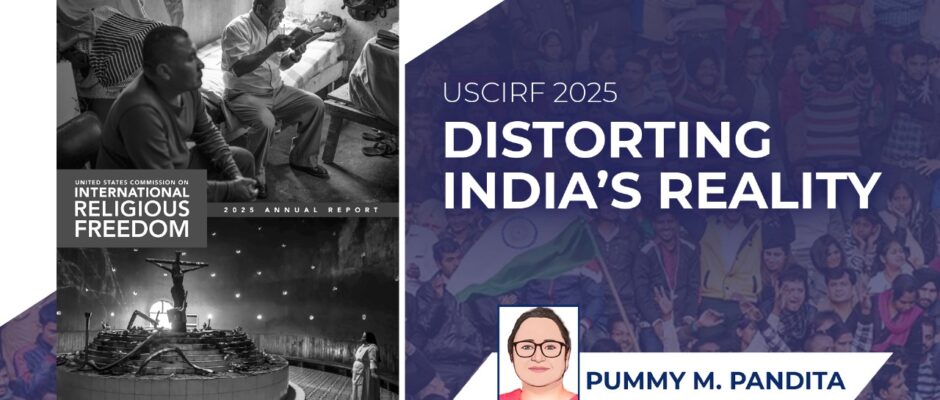
USCIRF 2025 - Distorting India’s Reality

USCIRF 2025: Distorting India’s Reality

The USCIRF time and again spins a one-sided tale cherry-picking facts, sidelining India’s constitutional pluralism, and pushing a loaded narrative that fits their playbook more than ground realities. Pummy M. Pandita The U.S. Commission on International Religious Freedom’s (USCIRF) 2025 India report has once again revealed the commission’s fundamentally flawed methodology, dependence on biased data sources & selection, lack of transparency in evaluating religious freedom, and a one-sided narrative that misrepresents India’s thriving democracy and plural society. By selectively choosing incidents, depending on questionable sources, and willfully avoiding India’s constitutional framework, USCIRF has created a report that is neither objective nor credible. In selectively pointing out incidents in a vacuum and ignoring the broader framework of India’s constitutional protections for all religions, USCIRF goes against its own credibility. Not only does this report misrepresent the situation on the ground, but it also unfairly defames a nation that enshrines the rights of all its citizens. USCIRF has repeatedly refused to provide its sources of data in a manner that meets rigorous journalistic or academic transparency standards. Much of the incidents quoted in the report rely on politically driven NGOs,  lobby groups, and reports from organisations that have a recorded history of ideological bias against India. Reports tend to be based on media reports instead of official government statistics, police records, or independent judicial evaluations. This selective information distorts the actual picture of religious freedom in India. Most of these sources have already been identified as previously misreporting or manipulating facts to fit a specific agenda. The lack of primary research, government interaction, or varied local opinions in the report questions its credibility. India is targeted for scrutiny, yet the USCIRF overlooks or disparages such incidents or worse in other democracies, showing a distinct double standard. The report ignores the emergence of religious extremism among some minority communities, such as instances where religious radicalization put national security at risk or affected communal harmony. It disregards the constitutional protection afforded to minorities in countries like India’s strong judicial protections, affirmative action measures, and full participation of minorities in public life. USCIRF selectively reports on local incidents without context, repeatedly leaving out legal proceedings, counter-reports, and government action taken to respond to grievances. USCIRF consistently misinterprets India’s legal structure, labeling good governance actions like anti-conversion laws and policies regarding citizenship as discriminatory, although they are founded on constitutional provisions. The report also underplays violent extremism, secessionist forces, and foreign interference in Indian internal affairs, selectively labeling state reactions as “persecution” without drawing attention to threats to national security. USCIRF’s record of going after India has followed a general geopolitics design wherein reports have been used to lever diplomatic engagements. The USCIRF has specifically targeted the Citizenship (Amendment) Act 2019 (“2019 CAA”) passed by the Indian Parliament in 2019 and its continued criticism since then reveals an inaccurate understanding of the genesis of the law and the disrespect towards sovereign Indian democratic institutions. CAA is designed to offer refuge to persecuted religious minorities—Hindus, Sikhs, Buddhists, Jains, Parsis, and Christians—from neighboring Islamic states like Pakistan, Afghanistan, and Bangladesh. These minorities have long faced systemic oppression in their home countries. CAA does not affect Indian Muslims, who are in no way disadvantaged by the law. Yet USCIRF frames it as a discriminatory tool, conveniently ignoring that it aims to address religious persecution in neighboring Islamic nations. For good order sake, United States too has a similar Citizenship Act in the form of the Lautenberg Amendment, led by US Senator Frank Lautenberg in 1989-90, which facilitates citizenship to recognized persecuted religious minorities in the former Soviet Union. Iran was added subsequently through the Specter Amendment, that provided refugee status and ultimately citizenship to a group of minorities from three nations.  Why is USCIRF silent on that and not condemned this act also? The commission has also been accused of disproportionately targeting on some nations and ignoring serious religious freedom abuses in many other nations, which puts its motives and geopolitical agendas in question. Its inability to speak out against growing cases of persecution of Hindus, Sikhs, Buddhists, and other minority groups in the neighboring countries where blasphemy laws and institutional discrimination are prevalent. This inconsistency erodes the credibility of the USCIRF and raises questions about whether its reports are motivated by facts or political goals. Suggesting India as a Country of Particular Concern (CPC) is not only factually wrong but also smells of a conscious effort to mislead about India’s religious scenario. India is still one of the most religiously plural and diverse countries, where individuals from all religions are involved in government, business, and public life. However, USCIRF’s failure to recognize this diversity and continued legal protections for religious communities reveals its biased agenda. The report also criticises India’s anti-conversion laws, which are in place to prevent coerced religious conversions, often under the guise of marriage or social coercion. These laws, intended to protect vulnerable individuals from exploitation, have become a focal point of controversy. USCIRF dismisses this as Hindu nationalist propaganda, sidestepping the genuine concerns that prompted these laws. By recommending punitive measures like sanctions and diplomatic pressure against India, USCIRF has gone beyond its mandate and attempts to intrude into the sovereign decisions of a democratic country. These suggestions are not only counterproductive but also demonstrate a basic misunderstanding of India’s democracy and devotion to pluralism. USCIRF Report 2025 is an extremely defective, ideologically charged document that fails objective scrutiny. Its selective ire, methodological shortcomings, and transparency deficiencies make it unsuitable for serious policy discussion. It is an instrument of geopolitical politics, not an objective evaluation of religious freedom. India’s commitment to religious freedom is classified in its Constitution and defended by its democratic institutions. It is essential that any honest evaluation of India is provided based on verifiable data, integrated analysis, and a recognition of India’s pluralistic fabric USCIRF 2025: Distorting India’s Realitysomething the USCIRF report utterly fails to accomplish. USCIRF’s biased reports are not an isolated phenomenon. They fit into a larger pattern

Read More
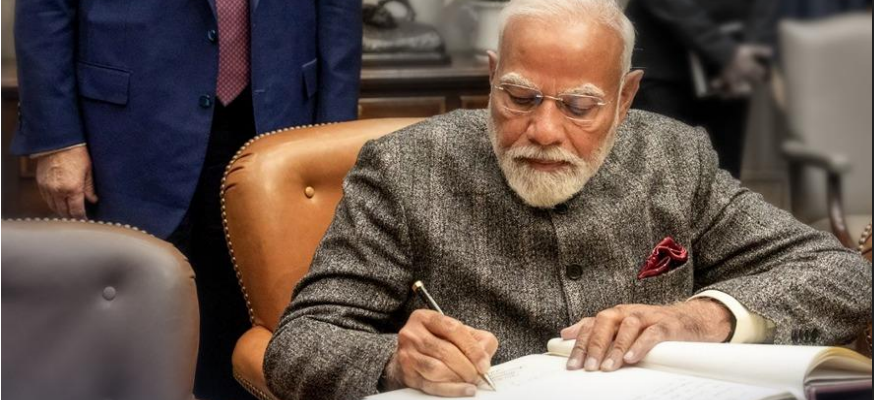
Prime Minister Narendra Modi’s USA Visit

Prime Minister Narendra Modi’s USA Visit

Prime Minister Narendra Modi’s visit to the United States in February 2025 represents a significant milestone in the evolution of the India-U.S. relationship. This visit was not only a display of high-level diplomacy but also a demonstration of both nations’ commitment to addressing contemporary challenges while harnessing emerging opportunities in multiple domains. With a focus on strategic defense, innovative technologies, economic reforms, and multilateral cooperation, the visit set the stage for a renewed and expansive partnership between the two democracies. This report outlines the key engagements, strategic dialogues, and transformative initiatives that were announced during the visit. It aims to provide a comprehensive overview of the discussions and agreements reached, highlighting the broad range of issues that are set to shape the future of bilateral relations.

Read More
PM Modi and Trump Forge a New Dawn in U.S.-India Relations

PM Modi and Trump Forge a New Dawn in U.S.-India Relations

Prime Minister Modi’s visit to the United States not only deepened the strategic alliance between the two nations but also set in motion a cascade of initiatives that promise to reshape the geopolitical landscape for decades to come. Rahul Pawa In a dazzling display of strategic vision and personal rapport, Prime Minister Narendra Modi’s recent visit to the United States in February 2025 has set the stage for an era of renewed cooperation and transformative partnerships between two of the world’s most influential democracies. Against the backdrop of an increasingly complex global landscape, the visit showcased a masterclass in diplomacy, marked by high-level meetings, landmark agreements, and an inspiring confluence of ideas that spanned defence, trade, technology, energy, and cultural exchange. At the heart of this historic journey was the much-anticipated meeting between Prime Minister Modi and President Donald J. Trump in Washington, D.C. In an atmosphere that was as congenial as it was consequential, the two leaders not only reaffirmed the bedrock of the India-U.S. Comprehensive Global Strategic Partnership but also demonstrated a genuine personal rapport that resonated far beyond policy papers and strategic memos. Their conversation, punctuated by mutual admiration and forward-looking optimism, culminated in the launch of the ambitious U.S.-India COMPACT for the 21st Century—a transformative roadmap designed to deliver tangible results across defence, commerce, and technology within the year. In an era defined by intricate challenges—from rebalancing global tariffs and tackling illegal immigration to addressing the ramifications of the Russia-Ukraine issue—Modi’s discussions with President Trump were both candid and constructive. The leaders deliberated on the urgent need to streamline tariff structures to foster a more equitable trading relationship. They also exchanged views on sensitive judicial issues, such as the extradition of Tahawwur Rana, recognising that robust legal cooperation is pivotal in the fight against terrorism. This frank dialogue underscored their shared commitment to maintaining a rules-based international order, a cornerstone for global stability. A standout moment during the visit was Prime Minister Modi’s engaging discussion with Elon Musk, who, in his dual role as the head of the U.S. Department of Government Efficiency (DOGE) and CEO of Tesla, symbolised the seamless fusion of public policy and private innovation. In an exchange that was as energetic as it was visionary, Modi and Musk explored the boundless possibilities of emerging technologies—from space exploration and artificial intelligence to sustainable development. Musk’s presence, accentuated by the warmth of his family’s company, added a distinctly personal dimension to the dialogue, reinforcing the belief that when innovation is nurtured, boundaries dissolve and progress becomes inevitable. The visit was also a testament to the two nations unyielding commitment to security. In his meeting with U.S. National Security Advisor Michael Waltz, Prime Minister Modi delved into discussions centred on strategic technologies and defence industrial cooperation. The dialogue, which included pivotal discussions on civil nuclear energy and the deployment of small modular reactors, laid the groundwork for an enduring partnership aimed at fortifying both nations’ security frameworks. Equally significant was the meeting with U.S. Director of National Intelligence Tulsi Gabbard, where the emphasis was placed on bolstering intelligence sharing, particularly in the realms of counterterrorism and cybersecurity. These high-level engagements highlighted a shared understanding: that in today’s volatile global environment, the integration of traditional and technological security measures is indispensable. One of the most consequential outcomes of the visit was the announcement of a new ten-year major defence partnership framework. This comprehensive agreement is poised to not only enhance the interoperability of the two nations’ armed forces through expanded defence sales and co-production initiatives but also to foster the development of cutting-edge autonomous systems via the newly established Autonomous Systems Industry Alliance (ASIA). Such initiatives are testament to the strategic foresight of both nations, ensuring they remain at the vanguard of modern warfare and intelligence-sharing capabilities. In parallel, enhanced military collaboration was underscored by plans for expanded joint exercises such as the “Tiger Triumph” tri-service exercise. This commitment to operational readiness and mutual trust stands as a bulwark against both conventional and unconventional threats, ensuring that the armed forces of India and the United States are ever-prepared to respond to emerging global challenges. On the economic front, the visit heralded a bold new chapter with the introduction of “Mission 500”—an ambitious initiative aiming to double bilateral trade to $500 billion by 2030. This visionary target is complemented by ongoing negotiations for a comprehensive multi-sector Bilateral Trade Agreement, expected to streamline trade practices and dismantle barriers to market access. Modi’s discussions emphasised the importance of greenfield investments and regulatory reforms designed to create an enabling environment for business expansion, ensuring that the economic benefits of the strengthened partnership are widely shared. Energy security, a linchpin of national stability, featured prominently in the agenda. The U.S.-India Energy Security Partnership was designed to guarantee reliable, sustainable, and affordable energy supplies through joint initiatives in oil, gas, and liquefied natural gas (LNG). Complementing this was the reaffirmation of the U.S.-India 123 Civil Nuclear Agreement, aimed at advancing civil nuclear cooperation through the development of U.S.-designed reactors in India. Special emphasis was placed on the development of small modular reactors—an innovation set to revolutionise energy generation by being both cost-effective and environmentally sustainable. Perhaps one of the most forward-looking initiatives announced was the U.S.-India TRUST (Transforming the Relationship Utilizing Strategic Technology) initiative. This comprehensive programme is poised to catalyse innovation by fostering collaboration among governments, academia, and the private sector in fields as diverse as artificial intelligence, semiconductors, and quantum computing. In tandem, the INDUS Innovation Bridge aims to bolster industry–academic partnerships and create secure, trusted supply chains for vital technological components, thereby enhancing both nations’ self-reliance and resilience in an increasingly interconnected global economy. The discussion also extended to strategic mineral recovery and civil space cooperation. Recognising the critical role of raw materials in technological advancement, efforts to accelerate the recovery of essential minerals like lithium and cobalt were highlighted. Joint space projects, including a NASA-ISRO collaboration, are poised to propel both nations into a leadership role in

Read More
USAID in India - A Subversive Influence

USAID in India: A Subversive Influence

The United States Agency for International Development (USAID) was established in 1961 during the Cold War, ostensibly to provide humanitarian aid and foster economic development. However, over the decades, it has evolved into a tool of American geopolitical manoeuvring, often acting against the very interests of the nations it claims to help. While USAID publicly promotes democracy, economic growth, and stability, its interventions have repeatedly served as instruments of subversion, funding extremist organizations, undermining local governance structures, and advancing ideologically driven agendas that disrupt sovereign nations. While USAID has worked extensively with national governments to implement development programs, it has often bypassed official state mechanisms, choosing instead to fund non-governmental organizations (NGOs) that operate with limited oversight. This approach has created parallel administrative structures, leading to dependency and weakened governance in several countries. Governments in Asia, Africa, and Latin America have repeatedly raised concerns over USAID’s influence, with some nations outright expelling the agency due to allegations of political interference and covert destabilization efforts.

Read More
Go Big, Go Bold!

Go Big, Go Bold!

Transactional Trump, EU policy recast, realignment of global forces with China & Russia moving closer may cast a long shadow on Modi government’s eleventh year budget. K.A.Badarinath Post-elections in United States, Donald J Trump assuming charge as American President coupled with realignment of forces globally will weigh-in on Finance Minister Nirmala Sitharaman as she readies to present her eighth federal budget in a row this Saturday. Nirmala Sitharaman may have to take on board Trump’s constant haggling that Bharat was a high tariff destination for American goods. More importantly, clubbing Brazil and Bharat with China for imposing high tariffs as a way to balance trade may be on top of the mind. A deficit of $ 32 billion that US have with India in bilateral trade of US $ 118 billion during 2024 is the big trigger for ‘transactional’ Trump who is expected to push hard for ‘rebalancing’ transactions. In fact, this is the biggest factor for Trump to threaten across the board tariff of over 2.5 per cent on all Indian goods, services and push for sale of defence equipment. A possible way out may be found when Prime Minister Narendra Modi meets Trump during his France visit next month. This apart, what finance minister Sitharaman would consider is Commerce Ministry analysis on all economic issues that Trump talked about at his inauguration as President on January 20 and virtual address at Davos World Economic Forum the day after. In fact, this will easily go into Finance Minister Sitharaman’s tabulations on oil prices, US $ and Indian rupee pricing apart from her fiscal deficit projections that are expected to be in line with her announcement in the last budget a couple of months back. In line with ‘Make America Great Again’ campaign of Donald Trump, European Union pushing for ‘Make Europe Great Again’ line may have its bearing on developing large economies like Bharat, Brazil, South Africa etc. The 27-nation block and Trump may have taken a leaf out of Prime Minister Modi’s “India First” or “Bharat First” campaign that led to mobilization of Hindutva or Bharatiya forces at political level as well as socio-economic front. Though European Commission President Ursula Vonder Leyen holds that Europe is already great, she commissioned a report on union’s competitiveness from Mario Draghi to provide a firm roadmap to sustain healthy growth rates over next 25 years. This reassessment will definitely have its impact on exporters from Asia like India that’s just becoming a player to reckon with both in investments and trade. Serious conversations within European Union end to her dominance in automobiles, emergence of China as a big player in automobiles as well as artificial intelligence, non-availability or limited access to cost-effective oil from Russia will have to be factored by Nirmala Sitharaman as she goes about fine-tuning Bharat’s roadmap to 2047. Union budget is definitely a big occasion to look back, assess and work on futuristic economic policy framework in the wake of global realignment of force, China and Russia moving closer, big debate on capitalism versus communism, conservatives to liberals, Left of centre to far right politics within and outside the country. Narendra Modi government as one can recollect have smartly deployed every penny to win hearts of 1.4 billion people in last eleven years. Even without majority seats in Lok Sabha on its own during last June elections, Modi and his economic policy making team led by Nirmala Sitharaman has not diminished or deviated one wee bit. This eleventh-year budget of BJP-led NDA will be no different. Fiscal consolidation, prudence in spending, continuation of its well laid out taxation policy and spreading the wings to cover more and more vulnerable sections in the ambit of famed Bharat ‘growth story’ will clearly be visible in vision and action. Expanding scope of highly successful Production Linked Incentives (PLI) scheme hitherto introduced in 2020 would not only expand industrial base, create new jobs opportunities but also offer an excellent platform for foreign investors. Till date about Rs. 1.32 lakh crores foreign investment (US$ 16 billion) have been realized thereby leading to a massive jump in manufacturing output at Rs. 10.90 lakh crore (US$ 130 billion). Over 850,000 jobs have been created due to this industrial expansion under the scheme alone. ‘Make in India’ and ‘Make for the World’ is a great policy liner that has stood test of times for Modi government. Matrix for the scheme where foreign and domestic investors plough-in has to be expanded across sectors especially defence and security to exploit the potential for investments, technology and jobs creation. Finance Minister Nirmala Sitharaman will have to announce Modi government’s policy framework to manage Artificial Intelligence (AI) like DeepSake, Qwen developed by China with its alignment to Chinese Communist Party (CCP). Already, there are enough indications that AI Compute Facility that secured 18,000 GPUs will drive the artificial intelligence initiative that’s ‘open sourced, application focused and flexible’. Data privacy and data localization policy may have to be dovetailed to ensure that our artificial intelligence initiative is in sync with the country’s diverse needs. Quick investments and development of ‘generative’ artificial intelligence networks may have to be prioritized by Modi government and the dedicated mission may have to develop a framework to deal with the issues. Nirmala Sitharaman may have to opt for policy reforms to push the pedal on governance that eases ‘way of living’ and enhances ‘living standards’ for people in rural and semi-urban areas. Bringing equivalent focus on middle and lower-middle class apart from most vulnerable sections into the ambit of budget and economic policy making will also be a saleable preposition for the finance minister. Given the kind of direct cash benefits announced in different states as part of competitive political slugfest may have to be addressed immediately to nourish a healthy work culture to enhance productivity in industry, agriculture, services and allied areas. From free power, heavily subsidised gas to cash offers, both opposition parties and ruling NDA partners have gone for the kill

Read More
Sovereignty, Democracy & Strategy for Global Stability

Strategy for Global Stability

Marco Rubio may emerge key keg in President Donald J Trump’s second innings with Asia on boil, China, Pakistan fueling instability. Rohan Giri “We are at an inflection point. Nations that value sovereignty, democracy and individual freedom must come together to preserve these ideals against rising authoritarian forces.” Marco Rubio, newly appointed US secretary of state said on ‘global authoritarianism and geopolitical shifting in 2024’. The message was loud and clear to everyone who knew Rubio’s approach. Although he did not take names, his comments were obviously directed at China and Pakistan, two prominent South Asian countries. There was a bigger story behind Rubio’s sensible foreign policy strategy, one that focused on strengthening ties with India. The vision Rubio aimed to advance appeared to be reflected in India’s strategic ambitions, rich cultural legacy and shared values as a growing nation. Rubio’s involvement in US-India relations began much before his ascent to become US Secretary of State. In his tenure as a senator, Rubio advocated US – India Defense Cooperation Act of 2024. This significant bill was more than just a diplomatic gesture; it sought to strengthen Bharat’s position as a key point in US Indo-Pacific policy. Among its significant provisions was an extraordinary clause mandating Department of Defense to prioritize transfer of advanced technologies to India, a clear sign of trust and collaboration. “India stands at the crossroads of global security,” Rubio pointed out at a Senate hearing. “It’s strategic location, vibrant democracy and shared interests with United States making it an indispensable ally in this era of uncertainty.” His buttressed his argument with facts rather than just political overstatement. India became world’s most populated country in 2023 surpassing China. With an average annual growth rate of eight per cent, its defense budget had been increasing rapidly and its naval expansion demonstrated its desire to establish control in Indian Ocean which Rubio identified as crucial for global trade and stability. Rubio’s concentration on Indo-Pacific was intrinsically linked to his strong stance against China. Rubio had been raising concerns long before it became common in Washington DC to speak out against Beijing. From speeches opposing China’s Belt and Road Initiative (BRI) to op-eds warning about dangers of economic dependency, his stance was consistent. “Nations embracing China’s loans do so at their peril,” he cautioned in 2019. By 2024, the predictions had come true, as countries such as Sri Lanka and Pakistan were neck deep in catastrophic debt owing to Chinese-funded projects. To Rubio, Quad—an alliance of United States, India, Japan and Australia—was critical to resisting China’s ambitions. He firmly supported the alliance’s naval drills and strategic consultations, seeing them as critical to countering Beijing’s growing aggressive behaviour in South China Sea. India’s geographic advantage and historic difficulties with China made it a key component of Rubio’s program. “A strong India is not just in America’s interest,” he asserted; “it’s in the interest of every nation that values a free and open Indo-Pacific.” However, Rubio’s concerns extended beyond China. Pakistan, with its complicated history of state-sponsored terrorism, was another target of his critique. Throughout his legislative career, he pushed for measures to hold Islamabad accountable for its actions. US – India Defense Cooperation Act even included a provision requiring State Department to produce detailed reports on Pakistan’s use of proxy groups against India. Rubio didn’t believe in just identifying terrorism—he demanded action. “American taxpayer’s dollars should never fund regimes that harbour terrorists,” he declared in a Senate speech, pointing to Pakistan government’s links to terrorist groups like Jaish-e-Mohammed and Lashkar-e-Taiba. However, US had close military relationship with Pakistan through aid agreements like SEATO (Southeast Asia Treaty Organization). Rubio’s strong standpoint resonated in New Delhi. Rubio’s push to make foreign aid contingent on verifiable counter-terrorism actions sent a clear message: the era of unhampered support for Islamabad was over. His foreign policy demonstrated a deeper cultural alignment even as it was directed by geopolitical concerns. Rubio condemned persecution of religious minorities around the world in a statement released in October 2023. He said that upholding rights of religious minorities is crucial to maintaining world peace and order in addition to being morally right. Hindu communities in Bharat and the United States, who had long pushed for world attention to persecution of Hindus in nations like Bangladesh and Pakistan resonate in these remarks. Congressman Raja Krishnamoorthi urged the Senate to address continuous violence against Hindus in Bangladesh during Rubio’s confirmation hearing as Secretary of State.  Rubio affirmed his commitment to defending religious freedom and framed it as a key component of American foreign policy. He underlined that defending rights of religious minorities is crucial to maintaining world peace and is essential to global stability. More than just opposing China or criticizing Pakistan, Rubio’s interactions with India were part of a larger vision for just and peaceful world order. In addition to being a strategic ally, he saw Bharat as a country whose core principles—pluralism, democracy, and resilience—were aligned to those of US. Vibrant industries including technology and pharmaceuticals drove the record $191 billion commerce between United States and India by 2024. Indian-American population which is currently hovers at over 4.5 million has made significant contributions to education, engineering and medicine. Rubio saw these numbers as concrete proof of close and long-lasting relations between the two countries and not just statistics. What sets Rubio apart is his ability to seamlessly blend pragmatic foreign policy with broader cultural and civilizational narratives? He avoids making loud proclamations about being “pro-India.” Instead, his actions—championing defense agreements, advocating for Hindu rights and emphasizing shared values—speak volumes. His approach is one of alignment rather than assertion, subtly integrating Bharat’s interests into broader framework of US geopolitics. For Asia Pacific, Rubio represents unique harmony between values and practicality. His initiatives not only address urgent problems like regional security and terrorism but open the door for future collaboration. His acknowledgment of India’s strategic and cultural significance is more than just a diplomatic ploy; it shows his sophisticated awareness of changing world.

Read More