Modi Magic for Middle Class Works Wonders
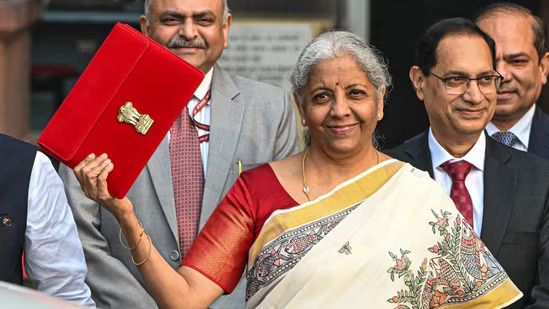
Consumption led growth, deregulation & reforms coupled with political and economic consolidation is what the budget attempts smartly! K.A.Badarinath Prime Minister Narendra Modi led government’s first full budget in its third term has deftly managed numbers, stuck to fiscal prudence & consolidation glide path, fiscal deficit reined in, borrowings manageable and put the economy on a consumption overdrive by providing huge tax relief of Rs 102660 crore. The vast middle class taxpayers who are also biggest consumers of goods and services will dance home with the goodies provided by finance minister Nirmala Sitharaman that presented her eighth consecutive budget for the Modi government on Saturday. Relief in personal income tax through rejig in both slabs and rates is the highest provided by any government in post-independence history of Bharat. And, there’s a big political message as well. Stick to the right of centre BJP-led National Democratic Alliance without drifting away. And, you will only be happy. This message is particularly important after Prime Minister Modi led alliance managed a wafer thin majority in Lok Sabha during last general elections. Also, Prime Minister Modi, BJP and NDA seem to be in no mood to let up the consolidation drive undertaken in assembly elections of Maharastra, Haryana and elsewhere post-Lok Sabha elections in June 2024. Also, in National Capital Region, Delhi’s assembly elections set for February 5, BJP has targeted the middle-class voters who are also taxpayers in a big way There may be naysayers that point fingers at huge tax exemptions and relief and Nirmala Sitharaman’s strategy to spend Rs 50.65 lakh crore to perk up growth in medium term beyond seven per cent in especially challenging conditions internationally. She has definitely not announced any ‘run away’ spending but put money where its seriously required to avoid the much feared ‘middle income trap’, keep the economy competitive, combative and at the same time expand smartly. Putting more than Rs 100,000 crore in hands of taxpayers, rewarding them handsomely for their contribution and thereby perk up consumption demand is to take economic growth way beyond 6.3 – 6.8 per cent projected in economic survey presented on Friday. Projected fiscal deficit at 4.4 per cent for 2025-26 over 4.8 per cent in current fiscal is achievable given buoyancy in tax receipts and reflects government’s steadfast commitment to consolidation, limit borrowings and shift big to infrastructure spending on capital account at Rs 15.48 lakh crore that translates to over 3.1 per cent of GDP. Borrowings would be limited at Rs 11,53,834 crore next fiscal to actual Rs 11,62,678 crore in the year ending March 31, 2025. Over next one year beginning April 1, 2025, the country’s gross domestic product in actual terms would expand to Rs 356,97,923 crore as against Rs 324,11,406 crore projected for 2024-25. Deregulation and fresh bout of reforms as an economic strategy – both policy side and taxation – recommended in Economic Survey have been accepted by Modi government. Taking stock of regulations and lifting controls has been corner stone of government’s liberalization programme when the economic liberalization was fine-tuned by Atal Bihari Vajpayee regime two decades back. Fresh overtures to reform, deregulate and thereby liberalize the economy is something Modi government would pursue to realize its full potential as it readies the journey to ‘developed nation’ status free from poverty by 2047. Focusing on agriculture, investments, micro, small & medium enterprises (MSMES) apart from exports as four growth engines is refreshing and a departure from traditional ways of looking at four economic pillars. At a time when assorted Left leaning farmers groups hit the ground seeking legal guarantee for minimum support prices (MSP) for their produce, Modi government has presented a different model to make farming a profitable enterprise, push up rural prosperity and take the famed Bharat growth story to hinterlands. Apart from sprucing up agricultural credit, mission for pulses, cotton, developing 100 agriculture-based districts, Makhana mission and initiative for vegetables and fruits is noteworthy. Focusing on Micro, small and medium enterprises as growth engine is something that will gel well with the BJP’s core constituency of small businesses. And, it makes eminent sense to take these over 4.5 crore small enterprises up the value chain and align them to export markets to deliver both goods and services. Fund of Funds for start-ups, prioritizing footwear, leather and toys, extending first time entrepreneurship to five lakh scheduled caste and tribes women and ‘make in India’ for the world schemes would expand the landscape of these enterprises that have become hallmark of Bharat’s industry in last ten-odd years. Announcement on national manufacturing mission for MSMEs is something that will lead to consolidation of these tiny enterprises but also provide framework for nurturing and embellishing their operations in long term. The two growth engines that are significant are investments and exports given global uncertainties especially in Europe, return of Donald Trump as American President, China and Russia getting closer on geo-political front. Setting up an omnibus export mission, bringing the MSMEs to put them on export mode and involving banks, financial institutions is a pragmatic way of tiding over the global uncertainties especially in wake of ‘Make America Great Again’ and ‘Make Europe Great Again campaigns. Setting up global capability centres in different states and bharat trade net for easing documentation related issues for exporters would only add to ease of exporting Bharat’s goods and services to global consumers. Government led investments in infrastructure, mobilizing global resources for large signature projects would trigger private and foreign funds commitment to both green field and expansion projects. One big opportunity for both private and foreign players would be 100 Gw nuclear power projects that would eventually replace the heavily polluting coal-fired power plants. Nuclear mission will provide an opportunity for foreign players apart from putting together a regulatory framework given that the sector is being opened up for first time. For the first time in last few years, Bharat has opened the insurance sector wider for foreign investments with 100 per cent