CIHS – Centre for Integrated and Holistic Studies

Date/Time:

Lions, Shadows & Silk Roads

Lions, Shadows & Silk Roads

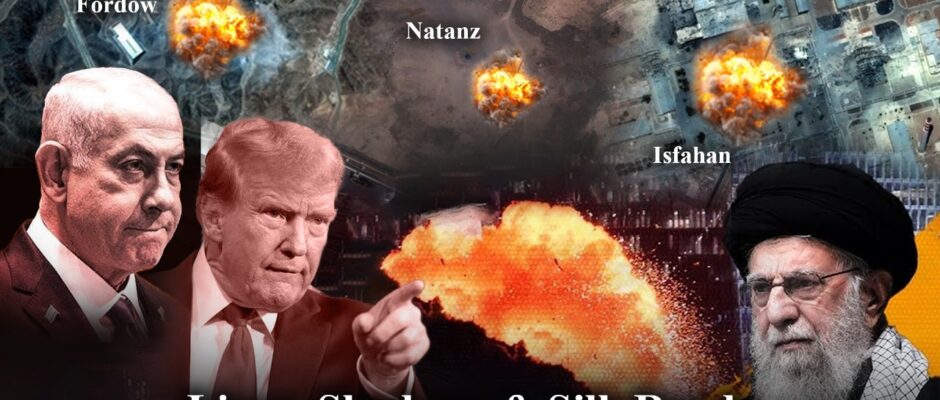
Israel-Iran clash reshaped West Asia’s strategic chessboard with US getting in. India will have to display maturity, dexterity, openness and exercise its strategic autonomy. N. C. Bipindra The Middle East was thrust into dramatic escalation of hostilities as Israel launched “Operation Rising Lion,” a comprehensive preemptive military campaign against Iranian targets, taking out military and nuclear facilities, on June 13, 2025. The operation, which included airstrikes, cyber-attacks and targeted assassinations was Israel’s most extensive cross-border military endeavour in recent years. In response, Iran activated proxy militias, launched missile attacks via Islamic Revolutionary Guard Corps (IRGC) and escalated its hybrid warfare tactics across the region. After calling for asking Iran to surrender, US President Donald Trump approved American air strikes completely obliterating three key Iranian nuclear facilities at Natanz, Fordow and Isfahan, yet noting “now is the time for peace.” This confrontation has far-reaching implications for regional stability, global oil markets, US foreign policy and emerging trade corridors like India-Middle East-Europe Economic Corridor (IMEC) and India-Isreal-UAE-USA (I2U2) group. For India, which has been investing heavily in regional diplomacy and infrastructure partnerships such as IMEC and I2U2, the conflict raises urgent questions about risk, resilience and realignment in its West Asia strategy. Operation Rising Lion, Israel’s Gambit Israel’s Operation Rising Lion was triggered by a surge in Iranian backed attacks on Israeli diplomatic and economic interests in northern Iraq, Syria and transfer of precision-guided missiles to Hezbollah in Lebanon apart from repeated calls for use of nukes to annihilate Israelis. The operation marked a shift in Israel’s longstanding “campaign between the wars” doctrine into an open and assertive military campaign targeting Iranian infrastructure, weapons convoys and senior commanders in multiple theatres. Key components of the operation included coordinated airstrikes on IRGC installations, targeted killing of senior operatives, military leadership and taking out nuclear facilities. The operation included cyber strikes and group covert attacks that disrupted Iranian air defence networks, missile stations and fuel supply chains. Anticipating a counterstrike from Iran, Israel deployed its new laser-based missile defence system which had been tested successfully against Iranian cruise missile barrages. Most of the Iranian attacks were intercepted though some have penetrated the air defence system to hit Israeli cities and towns including a hospital complex. Israel declared the operation a strategic necessity to “decapitate Iran’s regional encirclement architecture” and pre-empt future multi-front attacks including the nukes. While tactically effective, it has risked triggering a full-scale war with Iran and its axis of resistance apart from getting US and Russia-China involved in the war. Iran’s Proxy Retaliation, Strategic Posturing Iran’s counter-response blended military retaliation, strategic ambiguity, and proxy warfare. Apart from direct state-to-state confrontation with Israel — still a risky escalation — Iran relied heavily on asymmetric tactics. Iran fired hundreds of drones and rockets into Israel, overwhelming Iron Dome systems despite Israeli air superiority. The Houthis, an Iranian proxy in Yemen, have dubbed the US strikes on Iran as a “declaration of war” and have fired several missiles at Israel. Iran’s missile strike on Israel marked the first direct hit from Iranian territory since the April 2024 skirmish, indicating a new threshold of confrontation. Though Iran is trying to avoid full-scale war, its response is carefully calibrated to bleed Israel politically and militarily, while also testing the resolve of US deterrence commitments in the region. US Strategic Overstretch? The US was quickly pulled into the maelstrom, just over a week into the launch of military hostilities. Though Trump only issued warnings for a week, providing intelligence support to Israel and deploying at least two aircraft carriers to the region, his administration seems to have decided that enough is enough. Washington now faces accusations of strategic inconsistency. While it pushed for de-escalation publicly, on the parallel it supported Israeli operational aims covertly. This dualism will further strain US ties with Gulf States like Oman and Kuwait who fear further regional de-stabilisation. Furthermore, as tensions peaked, Trump administration’s G7 engagement was interrupted, which complicates America’s long-term global balancing act. Disruptions, Opportunity for India India has deep economic, energy and strategic stakes in West Asia. Operation Rising Lion and its aftermath present both direct threats and unexpected opportunities for New Delhi. IMEC Corridor in Jeopardy: The IMEC, announced at the 2023 G20 Summit, depends on regional stability across UAE, Saudi Arabia, Israel, and Jordan. The Israel-Iran conflict has disrupted port operations in Haifa and Eilat, key to IMEC’s Mediterranean leg. It has jeopardised land connectivity across Jordan due to increased Israeli military mobilisation. The insurance premiums on Red Sea maritime routes are expected to spike by about 35 per cent hurting Indian exporters. While not dead, IMEC’s viability is now under serious question until a ceasefire or détente is re-established. I2U2 Faces Diplomatic Strain: The I2U2 grouping aimed at high-tech cooperation, food security and infrastructure investment now faces political turbulence. UAE, a key I2U2 pillar, is deeply wary of regional conflict spilling over and has called for restraint putting it at odds with Israel’s aggressive posture. India is caught between maintaining its longstanding ties with Israel and its desire to deepen linkages with Iran, UAE and the Arab world, especially after recent Chabahar Port developments. India’s diplomatic tightrope is getting narrower. Energy Security and Diaspora Risks: Iran’s retaliation threatens commercial shipping in the Strait of Hormuz if India is seen backing Israel. While largely rhetorical, these threats would increase Brent crude prices beyond current rates, putting India’s inflation control at risk. There is heightened concern on nine million-strong Indian diaspora in the Gulf, as militias near Kuwait and Bahrain showed signs of mobilisation. India has had to yet again evacuate her citizens from Iran, Israel and the spill over of the conflict to other States in the region would compound the evacuation tasks on hand. Strategic Recommendations for India In navigating the evolving West Asian crisis, India must pursue a multi-vector strategy. It must reinvigorate strategic neutrality. India must avoid taking sides publicly while conducting quiet shuttle diplomacy between Israel, Iran and Gulf countries. A role in

Read More
Ukraine Takes Drone Wars to Next Level

Ukraine Takes Drone Wars to Next Level

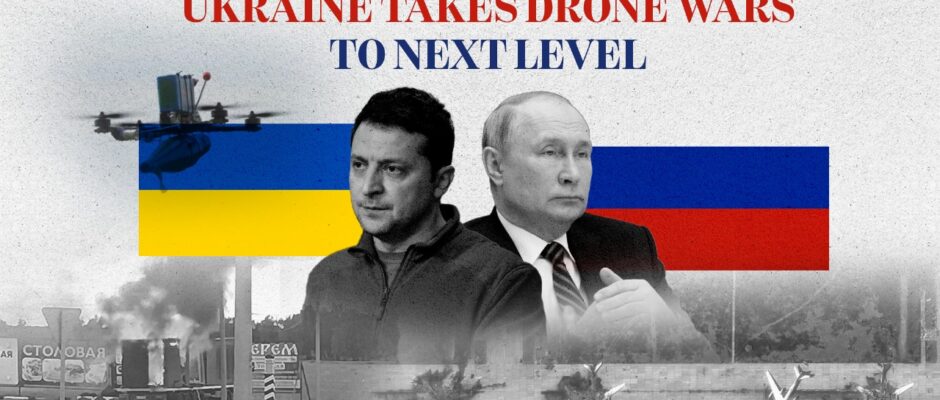
From Trojan Horse to pager bombs, Ukraine’s drones have rewritten war tactics while Russia puts up a red face. N. C. Bipindra Ukraine’s audacious drone attacks on airbases deep inside Russian territory are so brazen that such tactics have never been attempted before. The targeting of five Russian airbases — one of them over 4,500 km away from the Ukrainian border has reportedly destroyed over 40 military aircraft, including some long-distance bombers that were tormenting Ukrainians for nearly two years now. The use of cheap, off-the-shelf modified and armed drones is asymmetry in warfare taken to the next level. The drone strikes on June 1, 2025, are now being likened to Israeli Mossad pager bombs that took out a massive number of Hezbollah terror operatives inside Lebanon and the visit of unknown gunmen to wanted terrorists inside Pakistan in recent years. The drone attacks came after a long-drawn-out plan by Ukrainian military along with its intelligence units. The Ukrainians packed the armed drones onto cargo trucks and hid them with wooden planks under the truck roofs. Once the trucks reached too close to four airbases that were targeted —  Belaya in Siberia’s Irkutsk region, Olenya in Arctic Murmansk area, Ivanovo Severny near Ivanovo city, Dyagilevo in Ryazan and Ukrainka in Russia’s Far East the drones swarms were unleashed on Russian military aviation assets parked there. While the Belaya base in Irkutsk region was some 4,500 kilometers (2,800 miles) from Ukraine’s border with Russia, the Olenya base near Murmansk in the Arctic Circle was more than 2,000 kilometers (1,200 miles) from Ukraine’s border. The shortest distances covered by drone-carrying trucks were to Diaghilev airbase in Ryazan Oblast, some 520 kilometers (320 miles) from Ukraine and Ivanovo air base for Russian military transport aircraft was some 800 kilometers (500 miles) from the border. These visible distances notwithstanding, Ukraine’s daring drone attacks under Operation Spider Web targeted Ukrainka, the furthest airbase at over 8,000 km in Russia’s East, too far away from the war frontline. In Trojan-horse style attacks, Ukraine launched 117 drones concealed in container trucks, according to one Ukrainian account, striking with precision at airbases across Russia. Ukraine seems to have chosen this covert operation because the Western missiles supplied to it, such as the American ATACMS and European Storm Shadow, lacked the range to reach so deep inside Russia. Ukraine has been using drones against Russian targets, including Moscow, for last three years now. But majority of these drone attacks have been intercepted by Russians, essentially due to low speed of these unmanned aerial vehicles. Operation Spider Web’s audacity essentially played out due to Ukraine smuggling them into Russia and deploying them next to its target sites. Russia, obviously, was complacent with security of at least three of the five air bases, comfortable in the thought that it was too deep inside its territory for Ukrainians to even think of targeting them, a devastating mistake in defence preparedness, when military operations were prolonged beyond what was first envisaged when it began in February 2022. Moscow had presumed its airbases and military facilities deep inside its territory were safe, given their distance from Ukraine. Russia-Ukraine war, progressing for last three years now, has turned the warfare paradigm upside down. Till the Russia-Ukraine war began over Kyiv’s attempt to join the anti-Russia military bloc in the North Atlantic Treaty Organisation (NATO), military thought leadership was talking for nearly two decades about a short, swift and destructive warfare. Russia’s obvious military strength notwithstanding, its military operations did not result in quick surrender of a comparatively weaker Ukraine. The Russian neighbour a nation that was once part of the Soviet bloc held back the military onslaught for a while and by doing so, got the support of its friends in NATO. The US, Germany and other NATO nations sent billions of dollars’ worth arms and ammunition, battle tanks, air defence systems and fighter jets to Ukraine for its David vs Goliath moment. Satellite images, videos and photographs of the damage on these five airbases show Russia’s Tu-160, Tu-22 and Tu-95 nuke-carrying bombers key to their air power were hit badly with plumes of black smoke rising. Among destroyed air assets of Russia were Ilyushin Il-78 airborne refueling aircraft and advanced A-50 early warning and control aircraft a prized possession for airborne intelligence and radar warnings. Though Russia had tried to protect these assets with decoys, these measures failed miserably. Whether Western powers were involved in planning and execution of Operation Spider Web will be known later as more details of Ukraine’s attacks on Russia become public. But what could be worrying both Ukraine and NATO nations would be Russia’s response to Operation Spider Web. Ukraine and its friends in the West would be hoping that Ukraine’s drones circumventing Russian defenses and blowing up their military aviation assets would cause a major psychological blow to Russia’s air force. Truth be told, Operation Spider Web did lift Kyiv’s spirits and it is a dent to Moscow’s morale. But what they may have discounted is that Russia still holds air superiority overall against Ukraine and it may come back to deliver a crushing blow to Ukrainians at a place and time of its choosing, including an unequal nuclear response. If the nukes get involved in Russia’s war, then it could be game over for both Ukraine and NATO. The current Russia-Ukraine peace talks in Istanbul have already stalled, with Russian officials signaling no desire for compromise. The Ukrainian drone strike could mean the end of peace with Russia altogether. In response, Britain has announced a £350 million package to supply 100,000 drones to Ukraine by April 2026, reinforcing Kyiv’s growing drone warfare capabilities. In the second Armenia-Azerbaijan war for Nagorno-Karabakh region in 2020, Azerbaijani forces widespread use of drones was seen as crucial in determining the conflict’s outcome in their favour. Since then, drone warfare, particularly the asymmetric nature of advantage cheap, easily modifiable unmanned aerial systems bring to the table, has been a major focus

Read More

War on Inflation Must Continue

Second cut in duties on petrol & diesel, GST rates and further increase in interest rates may be some options to fight price rise K.A.Badarinath / New Delhi Spectre of high inflation and higher interest rates is back with a vengeance. Heady mix of the two make a lethal combination and turn out to be biggest sore points for a growth oriented finance minister like Nirmala Sitharaman. One is reminded of the high inflation and interest rates that singed the Indian economy during 2009 – 14 when the governance was under control of Harvard trained veterans like Dr Manmohan Singh as Prime Minister and Palaniappan Chidambaram as finance minister. India’s modern economic history bears testimony to their complete incompetence and failure thereby derailing the famed growth story that stood test of times till then. In 2009, G-20 Presidents and Prime Ministers had gathered in a summit mode at Pittsburgh in US to discuss the economic turmoil heaped on the world owing to collapse of American financial markets that has had contagion effect across geographies. The then US President Barrack Obama famously said that world leaders at the head table leaned heavily on wisdom of Dr Singh to steer the economy out of woods. Well, Dr Singh’s prescription may have had worked for others that went by the rule book. But, India’s economic turmoil thereafter was too huge owing to ‘inaction’ and ‘policy paralysis’ combined with rampant corruption that was hallmark of UPA government in its second tenure. Consumers paid through their nose. Investors lost big time. Real incomes of most people were lost. Pink slips were order of the day notwithstanding economic rescue packages announced by the inept UPA government with Pranab Mukherjee in finance ministry. Kitchen budgets had to be cut. Purchases had to be postponed by force. And, this phenomenon continued till 2014 when the Narendra Modi led juggernaut swept Lok Sabha polls and the first BJP-led majority government came to power post-independence. Today again, globally induced inflation has raised its ugly head again. Inflation in wholesale market has hit a record high of 15.08 per cent in April 2022. At retail level, the consumer price index is inching towards 8 per cent mark. Vegetables (23.24 per cent), Potatoes (19.84 per cent), wheat (10.7 per cent) have contributed big time to inflation last 13-months that has been in double digits. When the WPI passes through to consumers in next few months, the impact is bound to be devastating whether a policymaker concedes or not. Hardening of fuel and power inflation at 38.7 per cent in April 2022 would make things worse for consumers that have been worst hit hard due to two-years of Covid 19, Russia – Ukraine conflict and consequent spurt in commodity prices. Unlike the UPA of yesteryears or Joe Biden’s present democratic administration in US, Indian government headed by Prime Minister Narendra Modi has been proactive in limiting consumers and middle-class salaried peoples’ woes. Otherwise, tackling inflation would not have been prioritized over growth with sudden interest rate hike of 40 basis points and increase in cash reserve ratio, Standard Deposit Facility and Marginal Standing Facility. Another round of rate hikes has been anticipated by money policy experts when the multi-member policy committee of RBI meets next month. Another 50 basis points increase is what has been factored in by the markets. Pulling inflation below the acceptable six per cent at retail level is an imperative from which neither the RBI nor the Modi government can escape. Nirmala Sitharaman, on her part, began rolling out measures to counter surge in inflation beginning November 2021. Excise duty on diesel and petrol were slashed. This led to revenue losses of over Rs 49,500 crore. She was willing to absorb these revenue losses too. Food, fuel and fertilizer subsidies form a big chunk of Nirmala Sitharaman’s budget that projected a total spending of Rs 39.45 lakh crore (US $ 527 billion) during this fiscal. She will have to consider tinkering with subsidies to negate impact of high input costs for economy owing to elevated price levels internationally. While the cost push has had its run leading to high inflation globally, easing demand may bring in some respite for finance minister Sitharaman. But then, this war on inflation and prices has to continue in the Indian context like most other economies internationally. Finance Minister Sitharaman and RBI governor Shakti Kanta Das may have to reconcile at sacrificing more of projected 7.5 per cent growth this fiscal with spill over impact for 2023-24. While none should risk stagflation or recession, a fresh round of cut in taxes on petroleum products may have to be attempted to cool down inflationary pressures. Both states and centre may have to act in tandem on this front. Foregoing revenue may turn out to be a clincher for both central and state governments. Fortunately, buoyant money and equity markets, continued demand for goods and services has kept industrial manufacturers and service providers on toes to deliver. As the rate hikes seep in, slowing demand may make things trickier in few months from now. There’s very little elbowroom for the government to rejig the goods and services tax rates. In any case, slash in GST rates can be done only in consultation with state finance ministers that are already under tremendous pressure to meet ends. In this backdrop, government’s decision to continue with infrastructure thrust and spending of Rs 7.5 lakh crore this fiscal is refreshing. This only means that next round of interest rates hike may be front-loaded. Another possibility that government may have to consider is a flexibly designed economic rescue package that needs to be rolled out on mission mode. (Author is Director & Chief Executive of Centre for Integrated and Holistic Studies based in New Delhi.)

Read More

Russia-Ukraine Crisis: India’s Foreign Policy Implications

Rahul Pawa / New Delhi On February 23, 2022, Russian President Vladimir Putin announced a “special military operation” in Ukraine. Russia has long opposed Ukraine joining the European Union (EU) and North Atlantic Treaty Organization (NATO), the West’s defensive military alliance. He accused NATO of threatening Russia’s “historic future as a nation” and announced Russia’s military operation in Ukraine. “The purpose of this operation is to protect people who, for eight years now, have been facing humiliation and genocide perpetrated by the Kyiv regime,” Putin added. Subsequently, several media outlets reported explosions in numerous locations and large-scale Russian military operations throughout Ukraine. Ever since Ukraine’s pro-Russian president, Viktor Yanukovych, was overthrown in 2014 after months of protests against his government, Russian President Vladimir Putin has regularly flagged Ukraine of being taken over by extremists. Russia responded by seizing Crimea’s southern region and sparking a revolution in the east, backing hardliners against Ukrainian soldiers in a war that has claimed 14,000 lives. Regardless, the current issue has its roots in the disintegration of the Soviet Union. Ukraine, a former Soviet republic, had the world’s third-largest nuclear arsenal when the Soviet Union disintegrated in the early 1990s. The US and Russia collaborated with Ukraine to de-nuclearise the country. In a series of diplomatic deals, Kyiv returned hundreds of nuclear warheads to Russia for security assurances against a possible Russian assault. However, the assurances did not stand; below, we examine the 2022 Russia-Ukraine Crisis and discuss India’s foreign policy implications in that context. Download Explainer – Russia Ukraine Crisis (Author is the Director for Research at Centre for Integrated and Holistic Studies)

Read More

Human Cost Should Deter War!

India’s independent approach to Russian invasion on Ukraine balances its relations with NATO, European partners Amrit Pal Kaur / New Delhi Critics from either side of foreign policy matrix may have issues with India charting an independent and balanced course on Russia’s invasion of Ukraine as against NATO allies and European Union opposition to this intrusion. Pro-NATO and European think tanks have made out that India missed the bus in playing a decisive role in world affairs yet again by keeping off the conflict mostly unconcerned and untouched. Soviet era Russia’s backers have hailed India’s ‘sensible’ decision not to go whole hog with NATO alliance given her varied offensive and defensive interests. But then, Modi government hardly had many options in changing course of events leading to military aggression on Ukraine by Russia while both NATO and European Union went ahead with severely sanctioning Moscow. China that subtly supported Russian invasion chose to talk of winding down the violence though the two countries communist leadership has been led by oligarchs. Prime Minister Narendra Modi’s telephonic conversation with President Vladimir Putin is a milestone in long chain of events that led the present invasion. India’s appeals for peace and getting back to diplomatic dialogue on outstanding issues relating to Ukraine cannot be ignored by the world community. Russia’s ‘military operation’ in Ukraine has virtually sealed the possibility of rapprochement with Europe that continued to hang in balance during last 30 years.   India’s external affairs minister S. Jaishankar rightly mapped the genesis of Ukrainian issue that emanates from complexities of ‘Post Soviet Politics, expansion of NATO and relationship between Russia and Europe.’ In last three decades, Russia concluded numerous arms-reduction treaties with Western countries including 1997 Russia-NATO Act, Budapest Memorandum, Treaty on Conventional Armed Forces in Europe (1990), Intermediate Range Nuclear Forces Treaty (1987) and Open Skies Treaty that put an end to cold war in Europe and opened avenues for cooperation between Russia and Europe. Some genuinely believe that Russia did not reap benefit of the cooperation with Europe. Breaking point perhaps was granting NATO membership to Ukraine that brings Europe’s sphere of influence to Russia’s doorstep. President Putin’s statement that Russia wants demilitarization of Ukraine and it ‘does not intend to occupy’ the country implies that the conflict goes beyond their bilateral relations and points to involvement of greater Western powers. In this larger struggle for supremacy, one country which has been asked to pick sides is India. As an emerging market economy, credible and substantial international power, India has largely seen herself as a stabilizing factor that pushes seriously for peace and prosperity. Such is the case especially after India became an equivalent member of QUAD after shunning ‘hesitations of history’ that defined non-alignment. Indian position has come into greater focus due to its close relations with Russia, USA and European Union. Its membership and current chairmanship at UNSC has only accentuated India’s stake given that she been a longtime votary of independent foreign policy and pluri-lateral world order. Since India has had close civilizational links with both sides, it’s pragmatic and logical to abstain from voting on Ukraine issue at UNSC. India’s representative at UN Tirumurti spelt out India’s stand and asked countries to find peaceful, diplomatic solution through Minsk mechanism. It’s rather impractical to expect India to severe its relations with Russia that has been her single largest defense partner with 60 per cent share in defense inventory. On the other hand, India has also nursed progressive relations with US as well as Europe for over 20 years, since Vajpayee-Clinton era. India as a fast-developing country has its own pressing needs with over 1.4 billion to feed and enable spread of prosperity. Therefore, expectations on either side for India to align may not fit into the New Delhi’s scheme of things. Her compulsions to lift a vast majority out of poverty and put herself on growth mode are what drive India’s foreign policy. In fact, these very imperatives pushed India’s position striking a fine line between Russia and West at large. Instability on eastern flank of Europe brings home the acute need to develop in house inventory of defense mechanisms and systems without depending on imports. Self-reliance is the key to great power status. ‘Make in India’ initiative in the defense sector is a significant component of the policy choice made by the government. Russia’s invasion of Ukraine is bound to create ripple effects already being felt in India though New Delhi has stayed away from swinging either ways. Crude prices touching $ 105 per barrel in spot markets would translate to larger fuel import bill thereby upsetting budget numbers outlined by Finance Minister Nirmala Sitharaman. As Russia apart from OPEC has been large exporter of hydrocarbons in particular to Europe, the crisis will increase fuel prices and shortage in almost all of Europe. For instance, Finland imports most of its crude while Hungary gets 83 per cent, Austria – 62 per cent and Germany imports 46 per cent of its natural gas. Russia’s output had kept fuel prices competitive while curbing the Gulf dominance, its engagement otherwise will give space for the monopolies that’s bound to distort market prices, distribution as well as access. Precarious growth of world economy that’s bracing post-Covid will be badly hit. Most importantly, it will create crude induced inflationary pressures in countries like India where over 80 per cent fuel demand is met through imports. Recent World Bank report Global Economic Prospects argued that the world is walking towards global slowdown as the fiscal support in the wake of corona virus pandemic wanes, increase in debts and inequalities would kick in across the world. There is no denying that Europe and the world at large are treading choppy waters. Though the ongoing invasion may not go the cold war way, it will certainly wreak havoc on lives of innocent people caught in the crossfire. Human cost involved in the war should act as deterrence and the countries involved should

Read More