CIHS – Centre for Integrated and Holistic Studies

Date/Time:

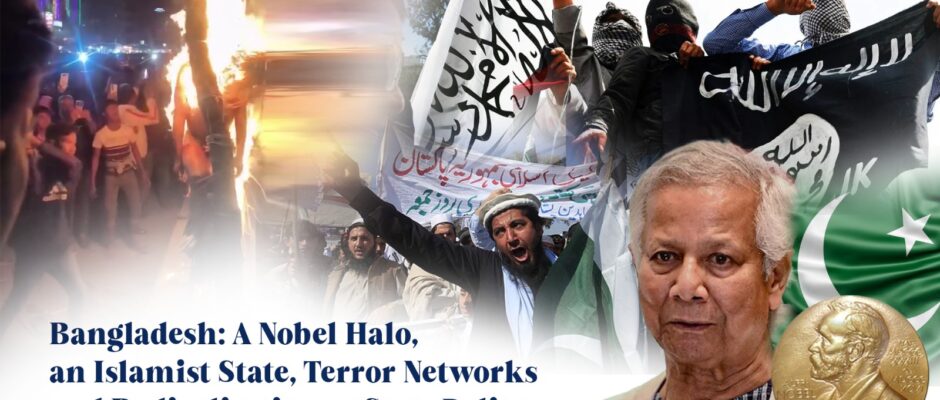
Bangladesh: A Nobel Halo, an Islamist State,Terror Networks and Radicalisation as State Policy

Rahul PAWA | @imrahulpawa (X) Global jihadists see an opening: a chance to reconnect their Pakistani networks with Bangladeshi extremists, reversing years of counterterrorism and counter-radicalisation gains. On a mid-December night in Bangladesh, 25-year-old Dipu Chandra Das, a Hindu garment factory worker was beaten by a frenzy of Islamists, hung from a tree, and set ablaze on a highway. His alleged “crime”? A rumor that he insulted Islam. Yet investigators have since confirmed there is zero evidence that Dipu ever blasphemed at all. Not one can point to a single derogatory remark he made; “no one saw or heard” anything offensive, a Rapid Action Battalion officer admitted. In other words, an innocent Hindu man was lynched and immolated over a lie. One would expect such a medieval atrocity, captured on video and circulated worldwide, to provoke an outpouring of shock from international human rights watchdogs. Imagine if the roles were reversed: a Muslim man lynched and burned by a mob in a Hindu-majority country. The global indignation would be instantaneous and deafening. But in Dipu’s case, the outrage has been oddly muted. Major human rights organizations and Western governments that normally champion minority rights barely mustered a whisper of protest. The deafening silence of these supposed watchdogs is as harrowing as the crime itself, and it exposes a disturbing double standard. Bangladesh’s own minority rights groups vehemently condemned the lynching, the Bangladesh Hindu-Buddhist-Christian Unity Council decried the “so-called blasphemy” killing as an assault on communal harmony. But where were the urgent press releases from Geneva, the high-profile tweets from Human Rights Watch, the emergency sessions at the UN? Their voices have been either absent or astonishingly subdued. Such restraint stands in stark contrast to their usual activism when religious persecution occurs elsewhere. The message implicit in this silence is chilling: that the lynching of a poor Hindu man in Bangladesh is somehow a lesser transgression on the global human rights ledger. The hypocrisy extends to Bangladesh’s interim rulers. The current government, led by Nobel Peace laureate Muhammad Yunus, swept to power in August 2024 after a Islamist-led “Monsoon Revolution” toppled Sheikh Hasina’s democratically elected administration. Internationally, Yunus is venerated for championing human rights and equality. Domestically, his regime’s actions tell a darker story. Chief Adviser Yunus was quick to issue a condemnation of Dipu’s lynching, vowing the perpetrators “will not be spared”. However, such words ring hollow against the regime’s track record: while it denounces one mob killing, it has concurrently overseen the release or escape of hundreds of criminals and Islamist extremists since taking power. At Hadi’s funeral, Yunus himself delivered a eulogy that should have set off international alarm bells. In front of tens of thousands, Yunus heaped praise on Hadi’s “mantra” and vowed to fulfill Hadi’s vision “generation after generation”. Let’s be clear: Hadi was explicitly known for his anti-India and anti-Hindu rhetoric and polarising, Islamist-tinged politics. By publicly sanctifying Hadi’s ideals, Yunus sent a dangerous signal that anti-India and anti-Hindu dictate is now quasi-official ideology in Dhaka. Unsurprisingly, the fallout was swift. Days after Hadi’s death, Bangladesh erupted in fury, not just against alleged conspirators in his killing, but against perceived Indian influence. Mobs attacked the Indian Assistant High Commission in Chittagong, and hundreds of protesters marched on the Indian High Commission in Dhaka, chanting anti-India slogans and even hurling stones at diplomatic compounds. Bangladesh’s police hinted (without evidence) that Hadi’s assassins might have fled to India – where ex-PM Hasina has taken refuge – a claim that only inflamed public paranoia. In the frenzy, fact and fiction mattered little: ‘anti-India and anti-Hindu agenda’ was the rallying cry. Caught in the crossfire were Bangladesh’s Hindu minorities, now doubly scapegoated as both “blasphemers” at home and perceived fifth-columnists for India. Attacks on Hindu homes, temples and community leaders have spiked over the past year and a half. Even before Dipu Das’s lynching, minority groups warned that the post-Hasina political climate had emboldened extremists to settle scores with Hindus, Buddhists and Christians. Tragically, those warnings proved prescient in Bhaluka, Mymensingh, when Dipu’s killers exploited a religious rumor to unleash lethal mob “justice.” Police and RAB have detained ten suspects, Mohammad Limon Sarkar, Mohammad Tarek Hossain, Mohammad Manik Mia, Ershad Ali, Nijum Uddin, Alomgir Hossain, Mohammad Miraj Hossain Akon, Mohammad Azmol Hasan Sagir, Mohammad Shahin Mia, and Mohammad Nazmul, aged 19 to 46. The interim regime’s, especially Mohammad Yunis’s own actions, from baiting an anti-Indian agitator to allowing Islamist hardliners back into public life, have fertilised the soil in which Islamist extremism and radicalisation grows. Perhaps most cynical of all has been the Bangladesh Foreign Ministry’s complicity and the atrocious attempt to downplay these horrors. When India officially protested the mob killing of a Hindu Bangladeshi (and even a small peoples demonstration in New Delhi decrying it), Dhaka’s response was dismissive. Foreign Affairs Adviser Mohammad Touhid Hossain bristled at the notion that Dipu Das’s lynching had anything to do with minority targeting. He then lectured that “such incidents occur across the region” and every country has a responsibility to address themas if mob lynching and immolation of religious minorities is just business as usual in South Asia, nothing special. This whataboutist shrug is nothing short of an attempt to normalise hate crimes. By equating a communal lynching with generic law-and-order problems everywhere, Bangladesh’s officials signal that the brutal murder of a Hindu for an unproven slur is not a national emergency but a routine matter that merits no extra soul-searching. This attitude is profoundly dangerous. Bangladesh was founded on principles of secularism and communal harmony in 1971, a legacy now under siege. To shrug off anti-Hindu violence as “common in the region” is to abandon the very idea of a pluralistic Bangladesh. It emboldens extremists and tells persecuted minorities that they are essentially on their own. Indeed, Islamist radicals have heard the message loud and clear. With the new regime’s indulgence, dormant terrorist networks are roaring back to life. Key jihadist leaders have re-entered the fray, for example,

Read More
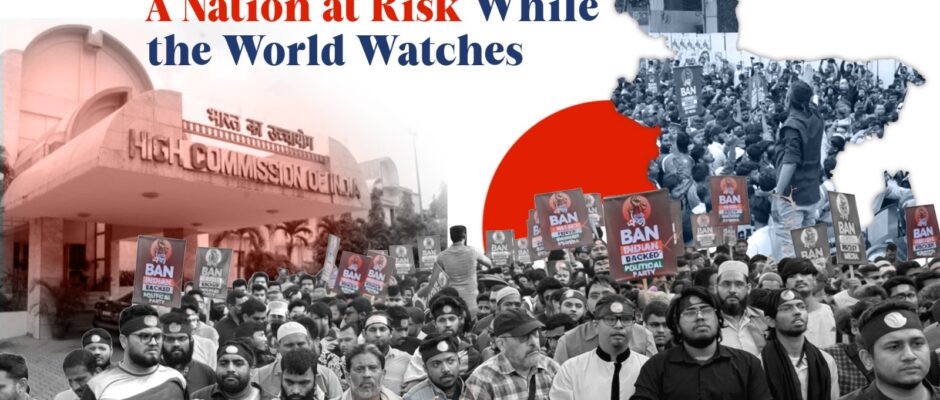
A Nation at Risk While the World Watches

A Nation at Risk While the World Watches

By R K Raina The events that unfolded in Dhaka this week should end any remaining illusion that Bangladesh’s current political drift is a contained or internal matter. On Wednesday afternoon, hundreds of protesters marched towards the Indian High Commission under the banner of July Oikya, raising anti-India slogans and issuing open threats against a diplomatic mission. Police restraint prevented immediate escalation, but the message was unmistakable: radical forces now feel emboldened enough to challenge diplomatic norms in broad daylight. The protest was not spontaneous. July Oikya, a front comprising several groups linked to the July mass uprising, had announced its “March to Indian High Commission” in advance. Its leaders warned that they would forcibly enter the High Commission if their demands were not met. These included the return of individuals convicted in the so-called July massacre case, including former Prime Minister Sheikh Hasina, and an end to what they described as “Indian conspiracies” against Bangladesh. Such rhetoric mirrors the familiar language of Islamist mobilisation across the region, where external enemies are invoked to justify internal radicalisation. What makes this incident especially alarming is not merely the hostility directed at India, but the broader political context in which it occurred. Several fundamentalist and extremist figures, previously detained on terrorism-related charges, have been released in recent months under the current interim administration. Many of these elements are now active on the streets, shaping protest narratives and openly threatening foreign missions. This is not accidental. It is the predictable outcome of legitimising radical actors under the pretext of political transition. Threatening a foreign high commission violates the most basic norms of the diplomatic community. When such acts are tolerated, or downplayed as expressions of popular anger, the consequences extend far beyond bilateral relations. They signal a breakdown of state authority and a willingness to allow extremist mobilisation to dictate political space. This moment must be understood within Bangladesh’s longer historical arc. The country was born in 1971 as a rejection of Pakistan’s ideological model. Bengali nationalism asserted that language, culture and democratic choice mattered more than religious uniformity imposed by the state. Sheikh Mujibur Rahman articulated this vision decades earlier, insisting that Bengal’s history and identity could not be erased. That vision guided Bangladesh through its most successful periods of economic growth and social stability. The forces now gaining ground stand in direct opposition to that legacy. Pakistan’s role in this trajectory is being conspicuously ignored. Since 1971, Islamabad has never reconciled itself to the idea of a secular, culturally confident Bangladesh. Its historical hostility to Bengali identity culminated in genocide, and its ideological influence has since flowed through organisations that opposed Bangladesh’s independence. Jamaat-e-Islami, banned for its collaboration with Pakistan during the liberation war and now politically rehabilitated, remains the clearest example. Its ideological alignment with Pakistan is neither incidental nor historical trivia; it is central to the current moment. Yet while these forces resurface, much of the  world has chosen silence. Worse, some have framed recent developments as a domestic political correction, urging restraint while avoiding any serious engagement with the ideological direction Bangladesh is being pushed towards. Treating the rise of radical street power, the intimidation of diplomatic missions and the release of extremist figures as internal matters is not neutrality. It is abdication. This selective blindness sets a dangerous precedent. Terrorism, it appears, is being judged differently depending on the target and the geography. Threats against Indian diplomatic property are brushed aside, while the same actors would be condemned instantly if they appeared near other embassies. Such double standards undermine the very international norms. The regional consequences are serious. South Asia is already burdened by fragile borders, unresolved conflicts and ideological fault lines. Allowing Bangladesh to slide towards Pakistan-style politics, marked by street radicalism, ideological hostility and economic uncertainty, risks destabilising an entire neighbourhood. The early economic signals are already troubling. Political instability and radical mobilisation have begun to erode confidence in what was once one of Asia’s most promising growth stories. Equally at stake is Bangladesh’s cultural future. The sustained assault on symbols of the liberation movement, and the replacement of Bengali nationalism with political Islam represent an attempt to rewrite the country’s founding narrative. History shows that such projects do not end with symbolism. They reshape education, law and social norms, often irreversibly. World policymakers should be under no illusion. Pakistan itself is a case study in how tolerating or enabling radical forces for short-term stability leads to long-term dysfunction. Decades of engagement have failed to undo the damage caused by ideological capture of the state. To allow Bangladesh to move down the same path is not a policy error; it is a strategic failure. The warning signs today are far clearer. Threats to diplomatic missions, the release of extremists and the open mobilisation of radical fronts are not normal features of democratic transition. They are indicators of state erosion. If the world continues to look away, it will share responsibility for what follows. The erosion of peace in this region, the empowerment of extremist networks and the slow destruction of Bengali cultural identity will not remain confined within Bangladesh’s borders. Silence, in this case, is not caution. It is complicity. (Author is a former diplomat and policy commentator focused on South Asian geopolitics, Tibet and India’s neighbourhood. He contributes to leading think tanks and policy platforms on regional and civilisational issues.)

Read More

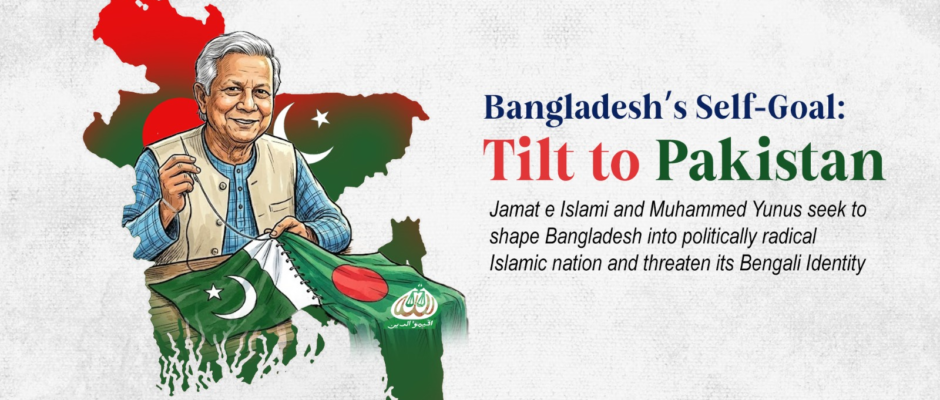
Bangladesh’s self-goal: tilt to Pakistan

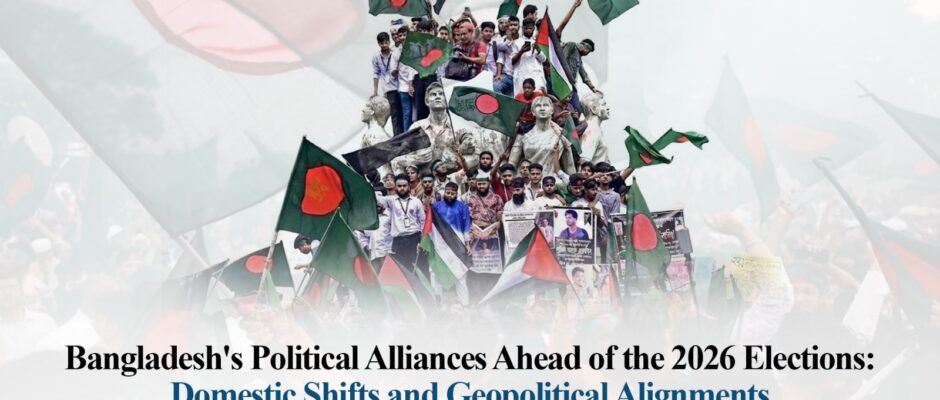
Jamat e Islami and Muhammed Yunus seek to shape Bangladesh into politically radical Islamic nation and threaten its Bengali Identity N. C. Bipindra During a 1955 debate in Pakistan’s Second Constituent Assembly on whether the eastern province should be called East Bengal or East Pakistan, Sheikh Mujibur Rahman said, “We have demanded so many times that you should use East Bengal instead of East Pakistan. The word Bengal has a history and a tradition of its own.” Today, Bangladeshis share Sheikh Mujibur Rehman’s sentiments: Bengali is their ethnicity and Bangladesh is their nation. In fact, Bangladesh’s formation in 1971 was built on Bengali nationalism spearheaded by Sheikh Mujibur Rehman, the Father of Bangladesh. In August 2024, during uprising that led to ouster of Prime Minister Sheikh Hasina, radical Islamic groups with an affinity to Pakistan were unleashed under the garb of student protests who attempted to vandalise the legacy of true hero of Bangla identity Sheikh Mujibur. The same Sheikh Mujiibur who was hailed as greatest Bengali of all time ahead of Rabindranath Tagore by BBC Bengali Language Service Survey, about whom Cuban leader Fidel Castro once said, “I have not seen the Himalayas. But I have seen Sheikh Mujib.” Pakistan has historically rejoiced vandalism of Bengali identity (in fact, any identity other than their own). Urdu-speaking Pakistanis, who hate local languages including Punjabi or Sindhi, have neither sympathy nor commonality with Bengali culture, language, or societal beliefs. Since partition in 1947, the policies and outlook of Pakistan have been indifferent, irrational and mired in hatred for Bengali identity of Bangladesh. The entire world took note of utter neglect and callous treatment meted out to East Pakistan (now Bangladesh) in aftermath of cyclone Bhola in 1970 by the Pakistani central government. To date, the aid that was promised by Pakistan to East Pakistan has not been transferred. Rather than offering a nursing hand, a year later, Pakistan launched terror on the streets of Bangladesh under Operation Searchlight. The horror of ‘Operation Searchlight’ undertaken by Pakistani military on March 25, 1971, to crush Bengali nationalist movement after Awami League won a majority in the general elections is still fresh and painful for the conscience of Bengali people. The stark and ignoble truth about Pakistan’s genocide in Bangladesh is that it was a conscious military policy steered at the government level to undermine Bengali society and in some cases attempt to change Bengali gene pool. For over 52 years, Pakistan has neither established nor attempted open, direct, people-to-people connections with those inside Bangladesh who support Bangla nationalism. Of the hundreds of cuts inflicted by Pakistan on Bangladesh, the most noticeable is an ongoing attempt at systemic erosion of Bangla identity and its replacement with the ideology of political Islam, which is the basis of governance in Pakistan. The underlying role of Jamat e Islami, a radical organisation which was banned in 2013 (and such other organisations), is hard to miss in the ouster of a democratically elected government in 2024. No wonder Jamat e Islami has found favour with Bangladesh’s current interim administration under Muhammed Yunus, who lifted the ban on the radical organisation. While other Islamist militant groups in Bangladesh do have connections with Pakistan, since 1971, Jamaat-e-Islami Bangladesh has been Pakistan’s true friend and partner. These radical Islamic groups have left no stone unturned to shred the fabric of Bangla identity and colour the whole of Bangladesh in politically radicalised Islam. Therefore, people of Bangladesh need to view Pakistan’s recent warming to Bangladesh through a historic and nationalistic lens. The recent developments coincide with an unusual wave of military and diplomatic engagement between Bangladesh and Pakistan, marked by the visit of Pakistan’s Navy Chief to Dhaka and the first docking of a Pakistani naval vessel at Chattogram port since 1971. Bangladesh, at this stage, must remember and side with friends who were steadfast with them through their biggest economic transformation and offered a helping hand in times of crisis. The more Bangladesh leans towards becoming Pakistan-like in text and tenor, its economy will further tank. Radicalism and a healthy economy simply cannot coexist. Over the past year alone, Bangladesh’s GDP growth has fallen from a flying 6.1% to crawling 3.76%. A year ago, Bangladesh’s growth was comparable to India’s and China’s and was considered one of the enterprising economies in Asia. Bangladesh must understand that Pakistan, which is mired with deep corruption, radicalism, a struggling economy, and is often part of the FATF ‘grey list’ and is home to most of the recognised terrorist organisations in the world, and works as a puppet state to China, cannot assist Bangladesh in any meaningful way. On the contrary, Bangladesh must seek a rational division of the pre-1971 assets of the state of Pakistan, and the aid that was promised in the aftermath of Cyclone Bhola. The evidence conclusively indicates that the recent shift in Bangladesh–Pakistan relations would further push political instability in Bangladesh, foster political Islam, provoke conflicts along shared borders, and, most importantly, pose a threat to the Bangla identity, which is the basis of the foundation of Bangladesh. Additionally, fondness towards Pakistan would dent Bangladesh’s image at world forums. Friendship with a failing (failed) state like Pakistan cannot bring more than this. The world has faith in Bangladesh; that Bangladesh would learn its lessons from history, as exact events of 1971 may not repeat themselves, but they may rhyme. Georg Hegel, a German philosopher, once said, “What experience and history teach is that nations and governments have never learned anything from history or acted upon any lessons they might have drawn from it.” This now sounds true and apt for Bangladesh’s recent shift towards Pakistan. (Author is Chairman, Law and Society Alliance, a New Delhi-based think tank, and guest columnist with CIHS)

Read More

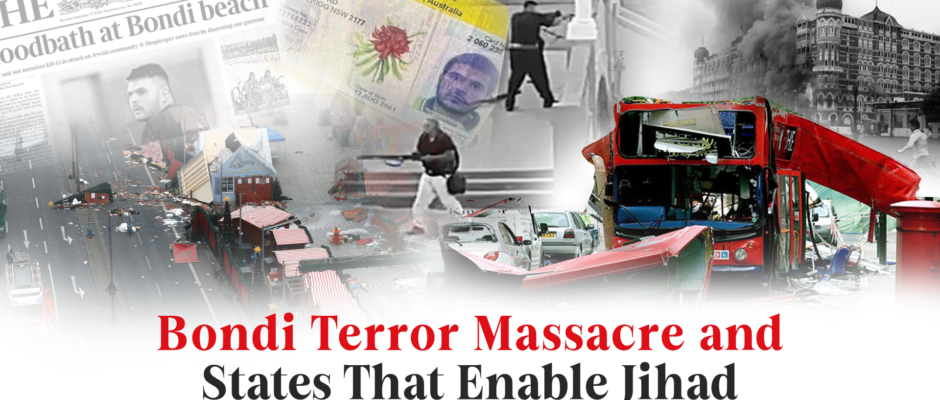
Bondi Terror Massacre and States That Enable Jihad

Sydney’s Bondi Beach terror attack comes amid a disturbing surge of antisemitic violence and Islamist radicalism across the West Rahul PAWA | @imrahulpawa Sydney’s Bondi Beach was the scene of a chilling mass shooting during a public Hanukkah celebration. Witnesses say two masked gunmen opened fire on dozens of peaceful Jewish worshippers lighting the first candle of Chanukah on the beach. Authorities now report at least 15 people killed (including a 10-year-old girl) and dozens wounded. Prime Minister Anthony Albanese condemned it and has advocated for tougher gun laws. UK Chief Rabbi noting the attackers deliberately targeted Jews merely for gathering “visibly and peacefully as Jews”. It is Australia’s deadliest terrorist assault in years, and it once again shows how safe spaces for Jewish life are being converted into active crime scenes. Investigators say the terrorists were a father-and-son team of Islamist extremists. Both were armed with long-barrelled rifles and dressed in black tactical gear. Police identified them as 50-year-old Sajid Akram and his 24-year-old son Naveed Akram, Pakistani-origin nationals. Sajid was shot dead by officers at the scene, and Naveed remains in custody in critical condition. Officials found two ISIS flags in their getaway vehicle and believe both men had pledged allegiance to the Islamic State. Remarkably, Australian intelligence had even interviewed Naveed six years ago about ties to a local IS cell. The father legally owned multiple firearms and reportedly stockpiled explosive materials, indicating this was a premeditated terror operation. Clearly, this was not a random rampage by troubled loners but a coordinated attack by Islamist jihadists emboldened by extremist networks. This massacre comes amid a disturbing surge of antisemitic violence and Islamist radicalism across the West. In the United States last year, FBI crime statistics show Jews, just 2% of Americans were the target in 69% of all religion-based hate crimes along with Hindus, crimes against whom have doubled in recent years. This unprecedented spike of 1,938 incidents of anti-Jewish hate became particularly evident on US campuses during protests following Israel’s military response to the October 7 Hamas attack. Jewish communities report unprecedented fear and harassment. Europe has seen similar trends, a recent EU survey found 80% of Jews across member states feel antisemitism has grown in recent years and many now conceal their identity in public. Analysts warn this trend is aided by on-line radicalisation and echo chambers: there are “no lone wolves”, only networks of extremists linking movements from North America to Europe. Indeed, authorities have foiled multiple Islamist-inspired plots just this year, from individual attackers to organized cells and intelligence agencies caution that democratic societies remain prime targets. To counter these threats, public venues have adopted stringent new security. Across Germany and other countries, Christmas markets (symbolic of Western holiday culture) now open behind concrete barriers, metal detectors and armed guards. For example, Berlin’s famed Gendarmenmarkt Christmas village has raised concrete barricades and expanded CCTV and police patrols. Security budgets are soaring, in fact, German city authorities report a 44% increase in spending on public-event security over the past three years. These measures recall last winter’s deadly car-ramming in Magdeburg killing six and injuring hundreds. This year’s images of heavily-armed officers at a Munich market highlight how normal life is now treated as a potential target. Even routine outings are screened: just weeks ago police arrested five suspected Islamist extremists plotting a vehicle-ramming at a Bavarian market. New bans on large knives in crowds, random security checks and surging police presence at synagogues and malls have become the norm. Paris, once synonymous with joie de vivre (cheerful enjoyment of life), has officially cancelled its New Year’s Eve midnight concert, citing concerns over “unpredictable crowd movements”, in a break with a tradition that has run for more than six decades. The attack has also deepened global tensions over Islamist terrorism, especially in South Asia. Indian Prime Minister Narendra Modi was swift to condemn the Bondi massacre on “first day of the Jewish festival of Hanukkah” and offered India’s “deepest condolences and full support” to Australia. His post declared that “India stands in solidarity” with the victims and reiterated that India has “zero tolerance towards terrorism”. Those words resonated most in India, a country long been a victim of Islamist radicalisation and terrorism practiced by Pakistan against it as a part of its state policy. Earlier this year, India had itself been struck by terror on April 22, when Pakistani backed terrorists massacred 24 Hindu tourists in Indian Union territory of Jammu and Kashmir. New Delhi immediately tracked Pakistan Army-backed jihadists for the Pahalgam terror attack and retaliated with force launching “Operation Sindoor.” During the initial three-day period of operation, India obliterated nine globally acknowledged terrorist camps and infrastructure inside Pakistan and Pakistan Occupied Jammu and Kashmir hitting training and indoctrination sites of Lashkar-e-Taiba and Jaish-e-Mohammed (globally proscribed Pakistan-based terror groups) to “dismantle” infrastructure for further attacks. Later the country foiled an extraordinary scale Bio-terror plot and accidental blast in Delhi following the country’s crackdown on terrorism. From Sydney’s Bondi Beach Hanukkah massacre to Britain’s 7/7 bombings and the 2006 transatlantic “liquid bomb” plot, to the Denmark recce by David Headley and to India’s own horrors in Mumbai in 2008, Pahalgam in 2025 and Delhi 2025 counter-terror case files keep converging on the same connective tissue of facilitation, training and operational enabling that investigators have repeatedly traced to Pakistan based and Pakistani Army backed jihadist networks, even when the attackers themselves hold Western passports, much as the 9/11 Commission identified Khalid Sheikh Mohammed as the principal architect of 9/11 and he was later captured in Pakistan. The Bondi Beach shooting tragically reaffirmed this harsh reality. In today’s world, no place is immune from Islamist violence, not sunny Sydney, not a festive holiday market in Europe and not the high Himalayas in India. Defending free societies therefore requires more than platitudes. It demands relentless pressure on the entire pipeline of radicalisation, from online indoctrination to real world facilitation, financing, travel and logistics. That pipeline is rarely

Read More

Analysis: From Siege to Staccato Strikes: 26/11 Mumbai Attack to 10/11 Red Fort Blast

From foreign-directed, 26/11-style mega-operations to low-signature, micro-cell, digitally inspired strikes like 10/11 and the foiled ricin plot, India’s terror landscape has changed. Through community monitoring, hardened cities, quick forensics and sharper intelligence India has reduced incidences significantly. In order to combat terror ecosystems at their root, world must now embrace India’s zero-tolerance policy and modernise international counter-terrorism frameworks.

Read More

India Stopped an ISIS-K Bio-Terror Plot the World Needs to Talk About

An ISIS-K bio-terror attack that could have killed over a hundred thousand people was just stopped in India. Why isn’t the world talking about it? Rahul PAWA In a world saturated with headlines of conflict and calamity, an extraordinary victory against terrorism has gone almost unnoticed beyond specialist circles. Indian authorities quietly dismantled a bio-terror plot so chilling in ambition that its success would have rewritten the story of global security. Just days ago, India’s Gujarat Anti-Terrorism Squad (ATS) dismantled an Islamic State Khorasan Province (ISIS-K) cell, the South Asian affiliate of the Islamic State preparing to unleash a mass biological terrorist attack. At its core lay ricin, a toxin so lethally efficient, one of the deadliest known toxins, derived from something as ordinary as the castor bean. It was a scheme as simple as it was monstrous, poisoning the essentials of life itself, and it was stopped just in time. Its story came to light with an arrest that barely drew notice. Acting on specific intelligence, Gujarat ATS arrested Dr Ahmed Mohiyuddin Saiyed, a China-educated MBBS graduate, in Ahmedabad for his links to ISIS-K. Investigators say he had been extracting ricin from castor oil, four litres of which were recovered from his possession and had already procured laboratory equipment and begun initial chemical processing when officers arrested him.  According to police sources, his plan was as insidious as it was horrific: to poison public drinking water supplies and even food (prasad) at Hindu temples, thereby silently killing masses of civilians. Officials estimate the plotters intended to kill “scores of people” and were aiming for catastrophic casualties. In worst-case scenarios, analysts have speculated that hundreds of thousands of lives might have been at risk, had a major water reservoir or a large temple gathering been successfully poisoned. The ambitious reach of this foiled plot underlines why it deserves far more international attention. This was not a lone wolf or a fringe fanatic acting in isolation; it appears to have been coordinated by ISIS-K, working through educated operatives. Dr. Saiyed’s handler, Abu Khadija, was an Afghanistan-based terrorist associated with ISIS-Khorasan, and he potentially arranged arms deliveries for the cell via drones crossing the Pakistan border. Saiyed did not act alone. Two other accomplices, 20-year-old Azad Suleman Sheikh and 23-year-old Mohammad Suhail from Uttar Pradesh, India’s northern state were arrested alongside him. These men had spent the last year conducting reconnaissance on potential targets across India, scoping out crowded public places where a poison attack could yield maximum chaos. Among the locations they surveilled were Asia’s largest wholesale produce market in Delhi (Azadpur Mandi), a bustling fruit market in Ahmedabad, and even the headquarters of RSS, a prominent social organisation in Lucknow. The chosen targets, places of food, water, community life, speak volumes about the terrorist’s cruel intent to strike at the very heart of ordinary society. By targeting temple prasad (food offered to Hindu devotees) and municipal water, they aimed to turn sustenance into a weapon. The depravity is chilling. Ricin itself is a nightmare agent. Tasteless and deadly, it is classified as a Category B bioterrorism agent under the Chemical Weapons Convention. A dose of a few milligrams can kill an adult if delivered effectively, and there is no antidote. Notably, ricin is not a typical weapon in the terrorist arsenal. it has surfaced mostly in fringe plots and isolated incidents (such as poisoned letters addressed to U.S. Presidents Barack Obama and Donald Trump in past years), but never before at this scale. The rarity of ricin attacks is partly why this plot is so alarming: intelligence agencies warn that ISIS and its affiliates have been actively discussing bio-terror tactics in encrypted chats, marking a strategic shift towards unconventional methods. In other words, the very fact that jihadist groups are exploring bioweapons is a worrisome evolution of terror. Unlike bombs or guns, a biological or chemical attack can sow panic far beyond the immediate victims. It contaminates the basic trust we place in our communal resources. As one counter-terror official noted, poisoning a city’s water or food supply would not only kill people but “wreak havoc in the minds of the people”, inflicting psychological trauma on society at large. Had the ricin plot succeeded, it could have easily been one of the deadliest terror attacks in modern history, a silent mass murder stretching over days or weeks as poisoning victims fell ill, and an entire populace plunged into fear. Thankfully, that nightmare never came to pass. Indian security forces acted on a tip and caught the plotters red-handed, seizing their cache of castor oil, weapons (including imported semi-automatic pistols), and digital evidence of their plans. The swift operation, coordinated by Gujarat ATS with central intelligence support, likely saved countless lives. It was, in effect, a major victory in the global fight against terrorism. Yet outside of India, this triumph registered barely a blip. Global media outlets that routinely headline terror incidents offered only cursory reports, if any, on India’s ricin plot bust. Why? One reason may be that success stories simply garner less attention, when disaster is prevented, there are no dramatic visuals of carnage to propel 24/7 news coverage. A bomb that didn’t go off is often a footnote, while a bomb that explodes is breaking news. This asymmetry in coverage creates a perverse situation where we pay more heed to terrorist violence than to vigilance that averts violence. There is also an uncomfortable truth about geographic bias. Had a quarter-million people in a Western city been in danger from a foiled bio-attack, one suspects it would dominate international headlines and talk shows. But when such a plot is foiled in India, it struggles to capture the world’s imagination. This is despite the fact that ISIS’s operations in South Asia are very much a global concern, the ISIS-K module behind the ricin plot has ties spanning Afghanistan and Pakistan, and reflects the same menace that threatens cities from London to New York. Indeed, an Indian investigation report recently

Read More

Enforced Disappearances, Human Rights and BLA’s Independence Call

By N. C. Bipindra Balochistan has yet again entered a dangerous phase of political and humanitarian uncertainty. Recent declaration by the Balochistan Liberation Army (BLA) to form an independent army and seek international recognition as a sovereign nation has brought decades-long freedom struggle against Pakistan’s reported occupation into sharp focus. While BLA’s statement marks a new and more assertive phase in the struggle to take governance into their own hands, it also threatens to worsen an already grim human rights landscape. For years, enforced disappearances, extrajudicial killings, and suppression of dissent have scarred the province. Now, with renewed calls for being recognized as a separate nation, Balochistan risks sliding deeper into vortex of violence and repression that shows little sign of abating. Pakistan’s army and security establishment has come down heavily on Baloch people seeking their basic rights to live peacefully and honourably. Islamabad’s new found friend in US President Donald Trump may be oblivious to this grim situation and only interested in excavating the high value rare earth metals and specialized molecules with high precision application across industries in America. A Province in Perpetual Conflict Balochistan, rich in natural resources but poor in development and representation has long been a theatre of conflict between Pakistani state and various Baloch nationalist groups. The grievances are old and deep, rooted in reported political marginalization, economic exploitation and cultural erasure. BLA’s recent announcement seeking international recognition and establishment of diplomatic missions represents a bold political escalation. It reframes the struggle from one of autonomy within Pakistan to outright independence. Predictably, such a declaration is being treated in Islamabad not as political dissent but as a direct challenge to national sovereignty, setting the stage for intensified military operations. Beneath the political grandstanding lies a darker humanitarian crisis that predates this declaration: persistent phenomenon of unexplained disappearances and human rights abuses that have come to define life in Balochistan. Missing People of Balochistan For families in Balochistan, the phrase “missing persons” has become an everyday horror. Thousands of Baloch men — students, teachers, activists, and ordinary civilians — have disappeared over the years, allegedly picked up by security forces or intelligence agencies. Many are never seen again; others turn up dead, often bearing signs of torture. According to the Human Rights Council of Balochistan (HRCB), 123 enforced disappearances and 26 killings were recorded in just August 2025. Earlier in March that year, the group documented 151 disappearances and 80 killings. Such numbers are staggering for a single province, and they are likely underestimates, given the difficulty of reporting in militarised areas. The Pakistan Commission of Inquiry on Enforced Disappearances (COIED) has received over 10,000 cases nationwide, with a disproportionate number from Balochistan. Yet, rights groups say that official mechanisms lack independence and transparency. Investigations rarely lead to prosecutions, and security agencies operate with near-total impunity. The HRCB and other local NGOs have documented a recurring pattern: night-time raids, arrests without warrants, and bodies discovered days or weeks later in desolate areas. Families often face intimidation when they speak out or join protests demanding the return of their loved ones. Many have spent years camped outside press clubs or government offices, holding faded photographs and placards that ask a simple question: “Where is my son?” Fear and Silence: A Society Under Siege The psychological toll on the province is immense. Entire communities live under a shadow of fear. In cities like Turbat, Kech, Awaran, and Gwadar, once bustling trade hubs, silence has replaced debate. Even student activism is seen as a potential act of rebellion. Students have been frequent victims of disappearances, especially those affiliated with Baloch student organisations. Human rights defender Dr. Mahrang Baloch, who spearheaded a peaceful movement for missing persons, was herself detained in 2024, a move widely condemned internationally as an attempt to crush dissent. Journalists, too, face censorship and threats. Many have been warned against reporting on disappearances or military operations. The result is a near-total blackout on independent information from much of Balochistan, leaving only official narratives and sporadic social media updates from activists who risk their lives to post them. Extrajudicial Killings and the “Kill-and-Dump” Policy One of the most disturbing aspects of the crisis is what local activists describe as the “kill-and-dump” policy. Individuals who disappear are later found dead, their bodies dumped on roadsides or in remote deserts. These victims are often presented by authorities as “terrorists” killed in encounters, but human rights groups say many of these encounters are staged. The state’s security establishment insists its operations target armed insurgents, not civilians. Yet the blurred line between militant and civilian in such operations has made accountability nearly impossible. In some cases, the victims had no political affiliation at all. Families are left with bodies to bury and no answers about why their loved ones were taken or killed. Legal and Institutional Failures Pakistan is a signatory to major international human rights treaties, including the International Covenant on Civil and Political Rights (ICCPR) and the UN Convention Against Enforced Disappearances. Yet, in practice, these obligations remain largely unfulfilled. The COIED, established to investigate missing persons cases, has been criticised as toothless. It lacks the authority to compel powerful agencies like the Inter-Services Intelligence (ISI) or the Frontier Corps (FC) to produce detainees or disclose information. Its reports are rarely made public, and few cases have led to convictions. In the absence of credible accountability, enforced disappearances have become normalised as a tool of control. Human rights lawyers describe it as a deliberate policy, a way to silence opposition without legal consequence. BLA’s Declaration and Its Fallout The BLA’s move to declare a separate “army” and seek global recognition adds a dangerous new layer to this human rights tragedy. The Pakistani state, already hypersensitive to any challenge in Balochistan, is likely to respond with harsher counter-insurgency measures, which could lead to more disappearances, arrests, and extrajudicial killings under the banner of fighting terrorism. Civilians will, as always, bear the brunt. In areas where the BLA has

Read More
Beyond “Iron Brothers” - The Cracks in the China-Pakistan Defence Partnership

Beyond “Iron Brothers”: The Cracks in the China-Pakistan Defence Partnership

N. C. Bipindra Pakistan’s engagement with both Washington and Beijing raises concerns about its relationship with China. Despite claims of trust and shared interests, Pakistan’s foreign policy history reveals a consistent pattern of duplicity. This poses risks for China, affecting its security and technological dominance. Let us analyse Pakistan’s dual alignments, urging caution from Beijing regarding military technology transfers to Islamabad. Pakistan’s foreign policy traits, transactionalism, opportunism, and dependence on external allies, suggest a potential shift in technology flow from the U.S. to China in a new geopolitical landscape. Historical Patterns of Technology Transfers Pakistan has long capitalised on its geostrategic location to obtain military and economic concessions from major powers. During the Cold War, it accommodated CIA operations against the Soviets in Afghanistan and received sophisticated U.S. armaments; however, not all of it remained in Pakistani possession. Two instances are particularly noteworthy. In the 1990s, U.S. intelligence asserted that Pakistan transferred American-supplied Stinger missiles to China, a claim that Islamabad refuted. After the 2011 Abbottabad raid, The New York Times disclosed that Chinese engineers were permitted to examine the remnants of a downed U.S. stealth-modified Black Hawk helicopter. Although definitive evidence was lacking, U.S. officials referenced intercepted communications to substantiate the allegation. These occurrences, notwithstanding Pakistani refutations, solidified perceptions of duplicity. For Beijing, the implication is unequivocal: if Pakistan was unable to protect U.S. technologies, it cannot be entirely relied upon to safeguard Chinese ones. Pakistan’s Contemporary Balancing Act Today, Pakistan faces a transformed strategic environment. Following Operation Bunyaan-un-Marsoos and subsequent outreach efforts, Islamabad has sought to re-engage Washington, particularly to secure tariff concessions and financial relief amid severe economic strain. Simultaneously, it remains dependent on Beijing for military hardware, ranging from advanced weapons and sensors to drones. The private lunch hosted for Asim Munir at the White House on June 18, 2025, is not merely a ceremonial bonhomie. It is a fact that such courtesies are rarely extended without an eye on strategic dividends. It appears that, in an era where China has surged ahead of the U.S. in technologies like AI, 5G, and advanced manufacturing, Washington views Pakistan not merely as an old battlefield ally but as a potential conduit for intelligence, leverage, and Chinese tech transfer. Perhaps, for Washington, cultivating ties with Pakistan’s generals is about far more than courtesy. It offers a discreet channel for access, legitimacy, and potentially even Chinese technology. However, this balancing act carries profound risks for China. Sensitive Chinese systems, long assumed to be secure within the framework of an “all-weather” partnership, may become vulnerable to American scrutiny as Pakistan attempts to cultivate favor in Washington. What was once an unshakable partnership is beginning to look increasingly fragile, as Pakistan’s loyalties are often dictated not by long-term commitments but by immediate strategic and financial incentives. As former CIA officer Bruce Riedel has long observed, “Pakistani generals can be bought any time,” a reminder of how transactional and compromised the country’s military elite remain. Compounding this vulnerability is the conduct of Pakistan’s civil–military elite. Many former army chiefs, including Pervez Musharraf, Ashfaq Parvez Kayani, and Qamar Javed Bajwa, have relocated abroad or maintained significant overseas assets after retirement. Such behavior underscores an entrenched pattern of ethical and moral corruption: leaders prioritise personal enrichment and external safe havens over national development, leaving the public to suffer under chronic instability and economic decline. Case of the J-35 Stealth Fighter Pakistan’s reported withdrawal from a planned deal for 40 J-35 stealth fighters highlights these dynamics. Once poised to be the jet’s first foreign buyer, Islamabad later dismissed the reports, despite earlier claims of pilot training in China. Battlefield lessons from Operation Sindoor — where Chinese systems underperformed against India’s BrahMos and S-400 — fueled doubts about the untested J-35. Economic pressures, including IMF austerity and a stretched defence budget, further undermined the $5 billion deal. For Beijing, Pakistan’s reversal exposed the fragility of trust: a flagship transfer was abandoned in favor of renewed U.S. outreach, underscoring China’s vulnerability to Islamabad’s hedging. Hypersonic Missiles: China Draws a Line Another case highlighting Beijing’s caution is its reported rejection of Pakistan’s request for hypersonic missiles and related technology. Media reports suggest China refused both sales and tech transfers, fearing Islamabad’s growing outreach to the U.S. could expose sensitive systems. Unlike fighter jets or conventional missiles, hypersonic platforms like the DF-17 are central to China’s strategic deterrence and lack downgraded export versions, reflecting their sensitivity and immaturity. The denial underscores a key reality: even in an “all-weather” partnership, Beijing does not fully trust Pakistan with its most advanced technologies. Strategic Implications for China The implications of this dynamic for China are far-reaching. First, Pakistan represents both an asset and a liability for Beijing. It provides strategic depth in South Asia, a reliable arms market, and political support in international forums. Yet these benefits come at the cost of significant vulnerability: advanced Chinese systems risk exposure through Pakistani networks, intentionally or inadvertently, to Western intelligence. Second, the problem is structural rather than episodic. Pakistan’s foreign policy has long been characterised by transactionalism, with loyalty subordinated to immediate material gains. As Islamabad draws closer to Washington, Beijing must anticipate that Pakistan’s defence partnership could once again become a conduit for technological leakage, this time at China’s expense. Third, the nature of emerging technologies magnifies the risk. Whereas conventional hardware could be downgraded for export, dual-use and software-driven systems cannot be so easily restricted. For Beijing, the possibility of losing control over AI, cyber, or hypersonic technologies through Pakistan would represent a strategic disaster, undermining years of investment and eroding its position vis-à-vis the United States. In this sense, Pakistan’s growing closeness with Washington is about far more than counterterrorism cooperation or financial bailouts. It is “more than what meets the eye”: for the West, Pakistan provides a potential backdoor to scrutinize and even reverse-engineer Chinese technologies in domains like AI, quantum, and stealth areas where Beijing has made significant advances over the United States. Washington now views Beijing not merely as a rising

Read More