CIHS – Centre for Integrated and Holistic Studies

Date/Time:

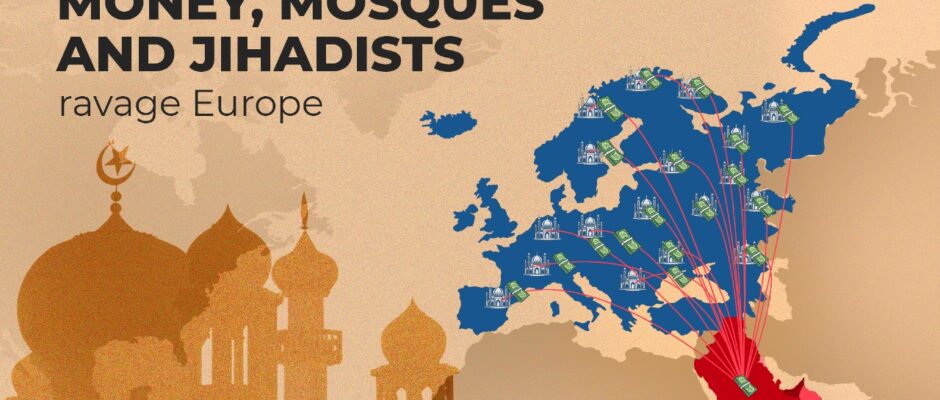
Money, Mosques and Jihadists ravage Europe

Money, Mosques and Jihadists ravage Europe

Unregulated foreign funding to religious extremist organizations has led to spread of Jihadists that altered demography, threaten democracy, social fabric. Rohan Giri First, it was United States and United Kingdom that reported increasing presence of Islamist networks, their infiltration into public institutions and society. Now, it’s the turn of Europe to confront a comparable proliferation of jihadist ecosystem that has led to demographic transformation, threat to democracy and socio-economic fabric in the region, Substantive support from Gulf monarchies, Turkey and Iran apart from others has enabled spread of jihadist networks through religious centres, cropping up of ideological organizations and expansion of their financial networks that bolstered subversive narratives. Although religious pluralism is easily recognized as a fundamental right, unregulated influence of foreign entities has generated significant concerns regarding integration, social cohesion and security. Saudi Arabia has reportedly been an important financial catalyst for the difficulties confronting Europe. During 2010 – 20, Riyadh disbursed more than $1.3 billion to Islamist groups in Europe via Muslim World League and International Islamic Relief Organisation. These funds have facilitated setting up Wahhabi-affiliated religious infrastructure, exemplified by Grand Mosque of Brussels. The mosque, seized by Belgian authorities in 2018 had historically served as a hub for ideological influence. In France, Germany and UK, institutions funded by Saudi Arabia have influenced religious discourse, frequently deterring assimilation into local cultures. Qatar has taken an alternative approach, leveraging considerable financial resources to endorse organizations that align with its geopolitical ambitions. During 2014 – 21, more than $ 650 million was allocated to European mosques, NGOs and Islamist networks through Qatar Charity and Qatar Foundation. A 2019 report explained how Qatari financing supported Muslim Brotherhood’s operations in Europe with monetary transfers channeled through intricate networks. Institutions including East London Mosque, Finsbury Park Mosque and Cordoba Foundation have received Qatari support, promoting narratives that highlight social segregation. In France, localities such as Trappes have seen rise of insular enclaves, partially influenced by Qatari-funded efforts that promote parallel social and economic frameworks. Turkey wields its influence via direct governmental intervention. Directorate of Religious Affairs, known as Diyanet supervises over 900 mosques in Germany controlling religious discourse and appointing imams who disseminate Ankara’s political and religious ideologies. German intelligence agencies have voiced apprehension regarding Turkey’s increasing influence especially since President Erdogan has urged Turkish populations in Europe to oppose integration. The Turkish-supported Milli Görüş movement, operating throughout Western Europe, promotes an Islamist socio-political paradigm that contests European secular principles. The 2016 Berlin Christmas Market incident underscored the threat of radicalisation within networks shaped by foreign-controlled religious entities. Iran uses a more nuanced, yet consequential, strategy. Tehran has expanded its influence in Shia communities in the UK, Sweden, and Germany through AhlulBayt World Assembly and Al-Mustafa International University. Financial networks associated with Hezbollah that frequently masquerade as charitable organizations have enabled both ideological proliferation and remittance of funds to Middle East. British intelligence agencies have recognized Hezbollah’s financial operations as a security threat; yet these activities continue to operate under legal safeguards intended for religious entities. In addition to conventional religious financing, financial instruments like Islamic banking and microfinance have been critical in supporting these networks. Islamic Relief Worldwide, active throughout Europe, has acquired a million dollars in donations from the Gulf in the past ten years. Despite framing these donations as humanitarian assistance, a significant portion of the funding serves to bolster ideological influence and establish economic dependency. Qatar Charity’s microfinance projects in France and Belgium have cultivated insular economic systems, wherein enterprises adhering to particular ideological stances prosper, while broader integration into the European market is impeded. Involvement of mosque networks in funding extremist groups has garnered heightened attention. Europol and intelligence services have disclosed instances in which foreign-funded mosques in France, Belgium, and Germany have served as channels for terrorist financing. A 2023 Europol report indicated that a minimum of 20 European mosques received funding and were subsequently associated with radical organisations in Middle East. In 2017, German police closed the Berlin Fussilet Mosque upon uncovering its connections to perpetrator of Berlin Christmas Market incident. France has implemented the same actions, shuttered 89 mosques during 2020 – 23, accommodating extremist factions and facilitating financial transactions for jihadist organizations. Security ramifications of these advances are significant. Extremist networks, developed and shaped by foreign financing, were linked to 2015 Charlie Hebdo attack, 2017 Manchester Arena bombing and 2020 Vienna terrorist attack. Certain European governments have implemented resolute measures. In 2021, Austria, led by Chancellor Sebastian Kurz, initiated closure of mosques directly associated with funding from Turkey and Gulf nations. France’s anti-separatism law, implemented the same year, established rigorous transparency mandates for foreign-funded religious organizations with an objective of diminishing external ideological influence. These efforts notwithstanding, Europe’s comprehensive response remains fragmented. Germany persists in permitting Turkish-controlled religious institutions to function with minimal supervision. UK has not yet implemented effective measures against Qatari-supported organisations, despite evidence linking them to terrorist ideologies. Despite being comprehensive, European Union’s counter-terrorism measures have encountered difficulties in combating ideological infiltration within communities. Resultant demographic changes and the impact on democracy are seriously being debated in Europe. Muslim population in Europe, currently estimated at 44 million, is anticipated to increase to 76 million by 2050. Migration and demographic changes are the elements of societal wellbeing; nonetheless, the inability to facilitate integration and mitigate foreign ideological influence threatens to exacerbate societal divisions. Reports of concurrent legal systems, voluntary segregation, and growing establishment of localised religious administration in regions of France, Belgium, Sweden and Germany signify an issue that transcends security and social stability. Europe may have to embrace a proactive strategy moving forward. Enhanced transparency in foreign fund raising is crucial along with stringent implementation of regulations aimed at preventing external influence from compromising national unity. De-radicalization initiatives must be enhanced by prioritizing community-driven efforts that promote common values instead of exacerbating differences. Safeguarding of Europe’s democratic, secular and inclusive identity will hinge on policymakers’ readiness to address these problems with a measured yet resolute approach. If ignored, the impact
Read More
USAID Shady Agenda Exposed

USAID Shady Agenda Exposed

Foreign influence peddling is not new to India. From colonial trade networks to modern soft power strategies, external forces have long sought to shape the nation’s socio-political landscape. In the present era, dominance is not limited to dominance through military strength but exercised via economic dependencies, cultural narratives and policy interventions to try and subjugate communities to slavery of ultra-modern variety. In Indian context, foreign influence is often orchestrated through a meticulously structured network of private corporations, non-governmental organizations (NGOs), think tanks and academic institutions with funding streams strategically directed to shape public discourse and policy formulation. And, in most cases, it’s an operation of the deep state. At the heart of this intricate web, the common patron is United States Agency for International Development (USAID).

Read More

Foreign Funding Has No Place in Democratic Self-Governance!

Vinod Kumar Shukla In Abraham Lincoln’s words democracy is a government of the people, by the people and for the people which supposedly means free from any influence to protect the rights of citizens of democratic self-governance. But foreign intervention has become a big challenge for democratic countries around the world and the US is also not free from it. To facilitate all this, US federal law prohibits foreign citizens and governments from spending in any election in the US. But certain foreign players cocked a snook at law in 2016 and 2020 by spending huge money to influence US elections exposing vulnerabilities of campaign finance laws. Such elements are still at work in the 2024 elections. With the digital world being a reality, laws governing campaign finance systems failed to catch up. Inaction by Federal Election Commission (FEC) and inadequate Electoral Transparency Laws allow foreign players to influence US elections. Around $1 billion “dark money,” has been spent over the past one decade. National Counterintelligence And Security Center tells that foreign interference fall into five categories: Cyber operations targeting election infrastructure; Cyber operations targeting political parties, campaigns, and public officials; Covert influence operations to assist or harm political organizations, campaigns, or public officials; Covert influence operations to influence public opinion and sow division; and Covert efforts to influence policymakers and the public. Narrative of political image; internet communities created for specific electoral goals and extensive use of humour and satire to influence electorates were at play in the campaigns in the US. The US State Department recently alleged Russia for covertly spending over $300 million since 2014 to influence elections in more than two dozen countries which is just the tip of the iceberg. US Secretary of State Antony Blinken during his three-day visit to China in April 2024 said that there is evidence of Chinese attempts to “influence and arguably interfere” upcoming US elections, despite Chinese President Xi Jinping’s commitment not to do so. A Microsoft research report published in April 2024 suggests that Russian online campaigns to influence November 2024 US elections geared up over the past 45 days, but the pace is slower than the past elections. Russia-linked accounts are allegedly disseminating divisive content. The observation of Microsoft is that activities of Russia are not as intense as in previous elections but it may increase in the days to come. Online disinformation campaigns are unleashed with posts starting with a whistleblower or citizen journalist posting content on a video channel or social media. That content is mostly taken up by websites like DC Weekly, Miami Chronicle and The Intel Drop. However, the Kremlin has denied any such meddling in November 2024 elections and also in 2016 and 2020 elections. China too has been interfering in the democratic process of countries across the world for a long time which has now become a foreign policy trouble for the US administration especially for those managing the poll process. Both Joe Biden and Donald Trump are of the view that China has the intent and capabilities to challenge the US-led world order. But the Biden administration has outlined several reasons to remain engaged with China. This might make sense to US companies working in China and to political realists who don’t see much wrong in working out a way to coexist with another great power. But 81 per cent Republicans, 59 per cent Independents and 56 per cent Democrats see China as a threat giving Republicans a political stick to beat Biden with for going soft on China. As it gives green signal to foreign interests to spend money on elections despite the fact that there is a ban on foreign spending in Federal, State, and local elections. The FEC interprets the ban applicable on contesting elections and letting foreign players pour millions in elections. For the US, dealing with foreign interference in elections has been critical since Russia allegedly worked to influence the outcome of the 2016 presidential election. Investigations reveal that Russia targeted Black Americans on social media to disincentivize them from voting in the 2016 election — the tactics were aimed at magnifying race-based societal divisions. Since then, the US adopted a whole-of-government approach against election cyberthreats and foreign interference ensuring that all government agencies work in tandem to track and counter cyberthreats on election-related manipulations to protect voters’ objectivity and election infrastructure. China has been meddling elections in every corner of the globe and the US being the most apparent target for its geopolitical interests. In February 2024, the Office of the Director of National Intelligence stated: “Beijing is expanding its global covert influence posture to better support the CCP’s goals. The PRC aims to sow doubts about US leadership, undermine democracy, and extend Beijing’s influence.” The US media extensively reported that covert Chinese accounts were masquerading online as American supporters of former President Donald Trump, promoting conspiracy theories, stoking domestic divisions and attacking President Biden ahead of the November election. This ‘spamouflage’ prompted Meta to take down thousands of fake Facebook accounts operating in China. But Chinese interference in elections is a significant policy change. In 2021, the US intelligence departments concluded that China would not interfere in US elections. The Chinese decision was attributed to the fact that costs of being caught meddling harms the country of potential benefits as Russia’s efforts to interfere in the 2016 election significantly damaged Moscow’s position and relationship with the US. Still the US authorities were not off guard and were looking at every aspect of foreign intervention knowing well that if there is any gap in the US laws and they remained unaddressed, foreign players can and will exploit them. Plugging loopholes that permit foreign spending and making the source of campaign funds transparent can prevent foreign players influencing the US elections. A strong policy to prevent foreign interference in elections must include updating treatment of digital campaign advertisements and requiring disclosure of the true source of campaign funds. But also spending in elections by

Read More
Illicit Foreign Funding and Radical Islamist Agenda in UK Elections

Illicit Foreign Funding and Radical Islamist Agenda in UK Elections

Rohan Giri Prior to the UK general elections, a media investigation revealed that five of the six major British political parties had taken illicit foreign funds. To minimise excessive foreign influence, British legislation compels parties to refund unlawful donations within 30 days and disclose any failures to the Electoral Commission. Only people on the electoral roll can make donations, with a minimum limit of £500. However, the Bureau of Investigative Journalism discovered that the Conservative Party, Reform UK, Liberal Democrats, Green Party, and Scottish National Party failed to prevent or identify these donations, which were made through an assortment of modest payments totalling more than £500 from a foreign source. As per the report, only the Labour Party successfully blocked such unlawful donations. Election law expert Gavin Millar criticised the self-policing method as ineffective and illogical because it relies on beneficiaries to enforce the law. Concerns had grown in the run-up to the 2024 UK general election about foreign players funding political non-governmental organizations (NGOs). Despite precise laws deliberate to prevent excessive foreign influence, some NGOs with significant influence in UK politics have evidently received large amounts of funding from international sources. These contributions, which are frequently routed through intricate channels to avoid detection, undermine the integrity of the democratic process and threaten to influence election results in favour of foreign interests. The current legal system, which relies mainly on self-policing, is deeply inadequate, allowing foreign funders to have hidden power over British politics. Several controversial groups in the British community receive funding from ambiguous sources, which they utilize to spread their propaganda and operations throughout the country. One prominent example is Muslim Council of Britain (MCB), an umbrella group that represents over 500 interconnected mosques and Muslim organizations. MCB has a notorious history of sponsoring and supporting extremist actions, prompting consecutive British administrations to adopt a “non-engagement” stance with the organization since 2009. Notably, the MCB backed a declaration in Istanbul calling for jihad in reaction to Israel’s activities in Gaza and backing Hamas attacks on foreign forces, possibly involving British troops. Another outfit of concern is Hizb ut-Tahrir, which is secretively operational in the UK despite being banned in many countries due to its disruptive ideology and links to terrorist acts. Hizb ut-Tahrir has been accused of radicalising young Muslims and pushing for the formation of a global caliphate through non-democratic means. Its financing roots are opaque, leading to suspicions of foreign financial aid intended to destabilise communities. Islamic Relief Worldwide, headquartered in the United Kingdom, has been accused of supporting terrorist entities, especially Hamas. However, the organization denies the accusations. Israel and the United Arab Emirates, have blacklisted for the concerns about the misuse of charitable donations to help terrorists. Furthermore, CAGE, a UK-based advocacy group, has made headlines for its provocative viewpoints and possible ties to terrorists. The entity openly advocated for the prominent figures such as Dr Aafia Siddiqui who is serving an 86-year jail term for the attempted murder of an FBI agent in disputed circumstances. She is an al-Qaeda sympathiser. Also, they advocated for Anwar al-Awlaki, an American-born cleric of Yemeni descent, who was a key figure in al-Qaeda in the Arabian Peninsula (AQAP). While CAGE professes to advocate for human rights, its support of high-profile terrorists and receipt of foreign financing have sparked investigation and criticism from a number of sources, including the British government. The Islamic community in the United Kingdom has considerable influence on the political mandate because of its large population and active involvement in societal and political concerns. British Muslims contribute to the electorate’s diversity of approaches, influencing policy discussions over immigration, foreign policy, and community welfare. The community’s participation in voting and political discourse ensures that the problems and demands of a sizeable portion of the people are addressed. This impact, however, can be destroyed by organizations and people that mislead or manipulate the community to advance their own objectives. Extremist organizations in the UK have not only attacked non-Islamic communities, as evidenced by the attacks on Hindus in Leicester, but are also actively influencing political circumstances ahead of the general elections. These organizations mobilise Muslim voters and lobby for certain political positions, such as supporting Palestinians and calling for a cease-fire in the Israel-Hamas conflict. According to studies, these organizations use societal tensions and global conflicts to acquire influence, which frequently results in heightened division and violence. The ubiquitous influence of these extremist groups emphasises the critical need for tougher measures to resist their activities and preserve the democratic process from being hijacked by radical ideology. In 2017, the Henry Jackson Society emphasised the importance of foreign money in spreading Islamist extremism in Britain. They noted that money, mostly from government-linked foundations in the Gulf and Iran, has supported the spread of extremist notions, particularly Saudi Arabia’s multimillion-dollar initiatives since the 1960s to promote Wahhabism. In the United Kingdom, the funds have taken the form of endowments for mosques and Islamic educational institutions that have hosted extremist preachers and distributed radical material. British Muslim religious leaders who have received training in Saudi Arabia, as well as the use of Saudi textbooks in Islamic schools in the United Kingdom, contribute to this effect. Many of Britain’s most infamous Islamist hate preachers are tied to foreign financing, which has contributed to the radicalisation of many who have joined jihadist groups in Iraq and Syria. Foreign funds pose a serious threat to the UK’s democratic values, as proven by recent exposes of illegal donations to major political parties and the influence of extremist organizations. Despite rules aimed at preventing undue foreign influence, the inability of a structured legal framework to ban illegal donations highlights the shortcomings of the current self-policing system. Furthermore, foreign funding by political NGOs and extremist groups undermines the legitimacy of the democratic process. These organizations use societal tensions and global crises to advance their objectives by propagating extreme beliefs and disrupting communities. (Author is a doctoral fellow at Amity University in Gwalior, content manager

Read More