CIHS – Centre for Integrated and Holistic Studies

Date/Time:

US Elections: Will Donald Trump deliver for Bharat?

US Elections: Will Donald Trump deliver for Bharat?

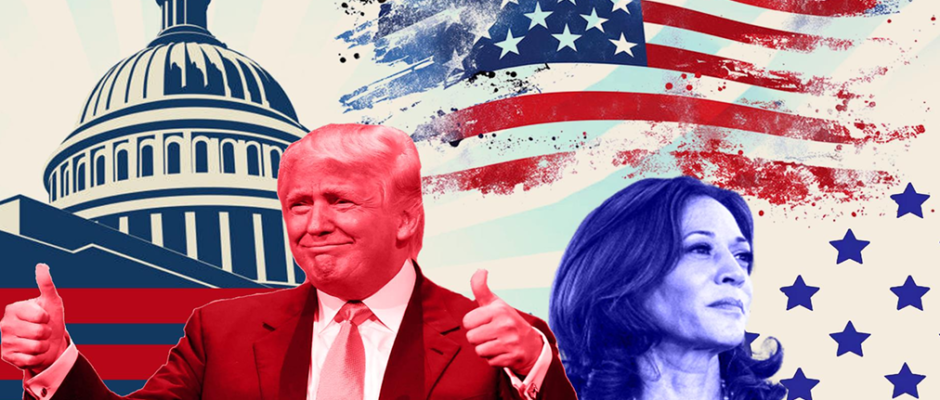
The 2024 US presidential election holds critical implications for global politics and economies with countries like India closely watching the outcome. This analysis compares key policy positions of Donald Trump and Kamala Harris highlighting how each candidate’s potential leadership could shape Indian economy and bilateral relations. To understand dynamics at play, it’s worth revisiting narrow 2000 election between Al Gore and George W. Bush where each candidate gained and lost modest leads throughout the race, ultimately ending in deadlock. The 2024 election is distinctly different with results reflecting a decisive shift in favour of Republicans in an increasingly polarized political landscape. Donald Trump and Republicans that emerged victorious face the daunting task of governing an increasingly divided nation. Polls indicated a tight race, yet beneath these numbers were profound shifts in American politics, some of which spotlighted key issues in Harris’s record and underscored difficulties she would have faced if she had won the White House.

Read More
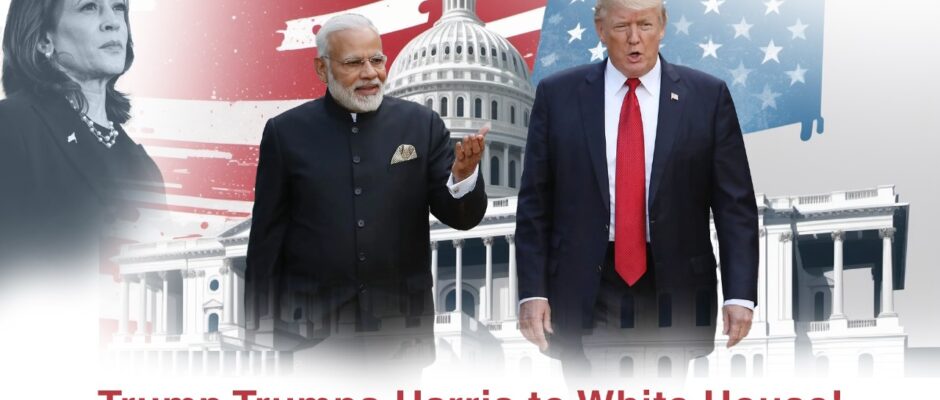
Trump Trumps Harris to White House!

Trump Trumps Harris to White House!

Choices made at this critical juncture will undoubtedly shape future of US and Bharat, global order. World watches with keen interest as these two powerful democracies cruise ahead. Rahul Pawa In a stunning political slugfest marked by fervent debates and impassioned rallies, Donald Trump emerged victorious in United States presidential election reclaiming White House. Even as Trump romped home, widespread anticipation and speculation about implications for both United States and its global relationships continued far and wide.  As dust settles from a heated, nerve wracking electoral battle, the narrative of Trump’s second term begins to take shape, weaving a complex web of promises and projections that could redefine America’s role on the world stage, particularly regarding its strategic partnership with India. With a renewed mandate, Trump steps back into office bringing with him a resolute commitment to an “America First” agenda that’s loosely designed on lines of ‘India First’ policy framework of Indian government under Prime Minister Narendra Modi. This mantra resonates deeply with Trump’s supporters who yearn for robust American presence in global affairs. His approach to foreign policy is characterized by determination to strengthen ties with India, a country he recognizes as essential to US strategic interests in an increasingly multiplex geopolitical landscape. By sidestepping criticisms of India’s internal matters—particularly concerning Jammu and Kashmir—Trump positions himself as a steadfast ally, respecting India’s sovereignty while forging a deeper partnership. One of the hallmarks of Trump’s presidency is his focus on national security and his victory sets the stage for robust collaboration with India on counter-terrorism. Trump has long championed the importance of addressing security threats emanating from Pakistan, a stance that aligns closely with India’s own challenges. His administration’s commitment to enhancing intelligence-sharing and joint operations signifies serious approach to addressing terrorism. This proactive alignment may fortify both the nation’s defences providing a united front against shared adversaries. As the world grapples with complexities of security threats, this partnership could emerge as a crucial alliance in maintaining stability in the region. Trade relations are another area poised for significant enhancement under Trump’s leadership. His pro-business policies aim to dismantle trade barriers and promote investment, creating a favourable environment for economic cooperation. American businesses are eager to tap into India’s burgeoning market, which promises growth opportunities across various sectors, from technology to agriculture. Trump’s focus on reducing regulatory hurdles could lead to a surge in bilateral trade, fostering economic integration that benefits both countries. This approach stands in contrast to Kamala Harris’s proposed policies, which might have introduced stricter regulations and compliance standards that could complicate trade dynamics. Culturally, Trump’s presidency is likely to strengthen the ties between United States and India. His vocal advocacy for religious freedoms resonates within the context of India’s pluralistic and inclusive society. By condemning religious persecution and supporting rights of Hindus globally, Trump aligns himself with India’s efforts to promote global inclusivity. This commitment could foster goodwill between the two nations, enhancing their cultural exchange and mutual understanding. In contrast, Harris’s approach, while supportive of human rights, may not have addressed the specific challenges faced by different communities in India, particularly Hindus, potentially limiting the depth of the relationship. Geopolitical relations become increasingly competitive especially with Chinese Communist Party’s rising influence in the Indo-Pacific region. Trump administration emphasizes the need for a strong military presence to counterbalance this threat. His advocacy for the Quad alliance—comprising United States, India, Japan, and Australia—demonstrates a commitment to collective security and stability. This alliance represents a strategic partnership that is likely to enhance India’s standing in the region while ensuring that the US remains a significant player in the Indo-Pacific. In contrast, Harris’s diplomatic approach may have leaned towards multilateral engagement focusing on dialogue without same level of assertiveness that many view as necessary in countering regional threats. As Trump navigates complexities of his second term, implications for US -India relations become will become increasingly clearer. His administration’s focus on economic cooperation, security collaboration, and cultural understanding are expected to build a framework for partnership poised to thrive in the coming years. The world watches closely, recognising that the choices made during this administration will resonate far beyond the borders of both nations. In this new chapter, Trump’s victory signifies more than just a personal triumph; it represents a decisive shift toward a more assertive foreign policy, one that embraces partnerships grounded in shared interests and mutual respect. The journey ahead is illuminated by the shared aspirations of two democracies ready to engage with the complexities of a changing world. Looking ahead, the potential for transformative collaboration between United States and India is immense. As both nations navigate the challenges of the 21st century, they stand at the forefront of a new era of global engagement. The combination of Trump’s commitment to economic revitalization and national security, along with India’s ambitions on global stage, creates an opportunity for powerful partnership that can address the pressing issues of our time. As the Trump administration sets its agenda, it is clear that India will play a central role in U.S. foreign policy. The historical ties between the two nations, steeped in shared democratic values and mutual respect, provide a strong foundation for a future characterised by collaboration. The potential for joint initiatives in emerging technology, defense, and climate change is vast, and as both countries seek to assert their influence on the global stage, the U.S.-India partnership will be a critical component of that strategy. Furthermore, Trump’s approach to governance may resonate well with India’s leadership style, fostering a sense of camaraderie that extends beyond mere political manoeuvring. As both leaders navigate the complexities of domestic and international challenges, their ability to forge a strong working relationship could yield significant benefits for their respective countries and the broader global community. As Donald Trump embarks on second term, the implications for US -India relations are profound. The potential for a transformative partnership, built on shared interests and mutual respect is within reach. With a focus on economic growth, national security

Read More

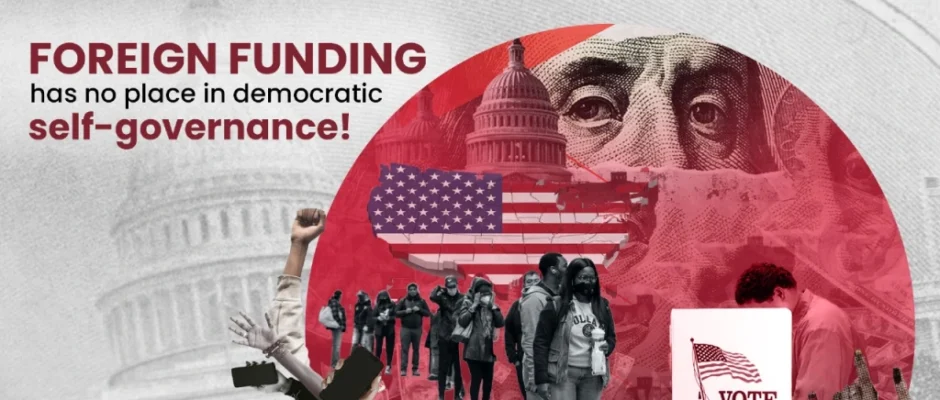
Foreign Funding Has No Place in Democratic Self-Governance!

Vinod Kumar Shukla In Abraham Lincoln’s words democracy is a government of the people, by the people and for the people which supposedly means free from any influence to protect the rights of citizens of democratic self-governance. But foreign intervention has become a big challenge for democratic countries around the world and the US is also not free from it. To facilitate all this, US federal law prohibits foreign citizens and governments from spending in any election in the US. But certain foreign players cocked a snook at law in 2016 and 2020 by spending huge money to influence US elections exposing vulnerabilities of campaign finance laws. Such elements are still at work in the 2024 elections. With the digital world being a reality, laws governing campaign finance systems failed to catch up. Inaction by Federal Election Commission (FEC) and inadequate Electoral Transparency Laws allow foreign players to influence US elections. Around $1 billion “dark money,” has been spent over the past one decade. National Counterintelligence And Security Center tells that foreign interference fall into five categories: Cyber operations targeting election infrastructure; Cyber operations targeting political parties, campaigns, and public officials; Covert influence operations to assist or harm political organizations, campaigns, or public officials; Covert influence operations to influence public opinion and sow division; and Covert efforts to influence policymakers and the public. Narrative of political image; internet communities created for specific electoral goals and extensive use of humour and satire to influence electorates were at play in the campaigns in the US. The US State Department recently alleged Russia for covertly spending over $300 million since 2014 to influence elections in more than two dozen countries which is just the tip of the iceberg. US Secretary of State Antony Blinken during his three-day visit to China in April 2024 said that there is evidence of Chinese attempts to “influence and arguably interfere” upcoming US elections, despite Chinese President Xi Jinping’s commitment not to do so. A Microsoft research report published in April 2024 suggests that Russian online campaigns to influence November 2024 US elections geared up over the past 45 days, but the pace is slower than the past elections. Russia-linked accounts are allegedly disseminating divisive content. The observation of Microsoft is that activities of Russia are not as intense as in previous elections but it may increase in the days to come. Online disinformation campaigns are unleashed with posts starting with a whistleblower or citizen journalist posting content on a video channel or social media. That content is mostly taken up by websites like DC Weekly, Miami Chronicle and The Intel Drop. However, the Kremlin has denied any such meddling in November 2024 elections and also in 2016 and 2020 elections. China too has been interfering in the democratic process of countries across the world for a long time which has now become a foreign policy trouble for the US administration especially for those managing the poll process. Both Joe Biden and Donald Trump are of the view that China has the intent and capabilities to challenge the US-led world order. But the Biden administration has outlined several reasons to remain engaged with China. This might make sense to US companies working in China and to political realists who don’t see much wrong in working out a way to coexist with another great power. But 81 per cent Republicans, 59 per cent Independents and 56 per cent Democrats see China as a threat giving Republicans a political stick to beat Biden with for going soft on China. As it gives green signal to foreign interests to spend money on elections despite the fact that there is a ban on foreign spending in Federal, State, and local elections. The FEC interprets the ban applicable on contesting elections and letting foreign players pour millions in elections. For the US, dealing with foreign interference in elections has been critical since Russia allegedly worked to influence the outcome of the 2016 presidential election. Investigations reveal that Russia targeted Black Americans on social media to disincentivize them from voting in the 2016 election — the tactics were aimed at magnifying race-based societal divisions. Since then, the US adopted a whole-of-government approach against election cyberthreats and foreign interference ensuring that all government agencies work in tandem to track and counter cyberthreats on election-related manipulations to protect voters’ objectivity and election infrastructure. China has been meddling elections in every corner of the globe and the US being the most apparent target for its geopolitical interests. In February 2024, the Office of the Director of National Intelligence stated: “Beijing is expanding its global covert influence posture to better support the CCP’s goals. The PRC aims to sow doubts about US leadership, undermine democracy, and extend Beijing’s influence.” The US media extensively reported that covert Chinese accounts were masquerading online as American supporters of former President Donald Trump, promoting conspiracy theories, stoking domestic divisions and attacking President Biden ahead of the November election. This ‘spamouflage’ prompted Meta to take down thousands of fake Facebook accounts operating in China. But Chinese interference in elections is a significant policy change. In 2021, the US intelligence departments concluded that China would not interfere in US elections. The Chinese decision was attributed to the fact that costs of being caught meddling harms the country of potential benefits as Russia’s efforts to interfere in the 2016 election significantly damaged Moscow’s position and relationship with the US. Still the US authorities were not off guard and were looking at every aspect of foreign intervention knowing well that if there is any gap in the US laws and they remained unaddressed, foreign players can and will exploit them. Plugging loopholes that permit foreign spending and making the source of campaign funds transparent can prevent foreign players influencing the US elections. A strong policy to prevent foreign interference in elections must include updating treatment of digital campaign advertisements and requiring disclosure of the true source of campaign funds. But also spending in elections by

Read More
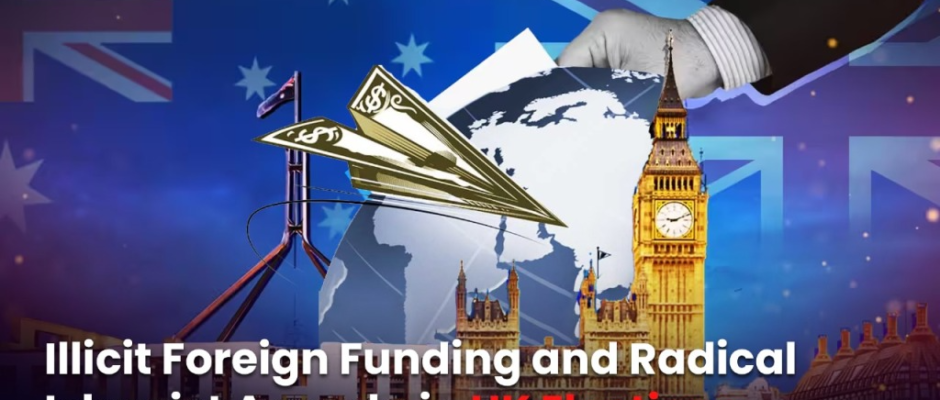
Illicit Foreign Funding and Radical Islamist Agenda in UK Elections

Illicit Foreign Funding and Radical Islamist Agenda in UK Elections

Rohan Giri Prior to the UK general elections, a media investigation revealed that five of the six major British political parties had taken illicit foreign funds. To minimise excessive foreign influence, British legislation compels parties to refund unlawful donations within 30 days and disclose any failures to the Electoral Commission. Only people on the electoral roll can make donations, with a minimum limit of £500. However, the Bureau of Investigative Journalism discovered that the Conservative Party, Reform UK, Liberal Democrats, Green Party, and Scottish National Party failed to prevent or identify these donations, which were made through an assortment of modest payments totalling more than £500 from a foreign source. As per the report, only the Labour Party successfully blocked such unlawful donations. Election law expert Gavin Millar criticised the self-policing method as ineffective and illogical because it relies on beneficiaries to enforce the law. Concerns had grown in the run-up to the 2024 UK general election about foreign players funding political non-governmental organizations (NGOs). Despite precise laws deliberate to prevent excessive foreign influence, some NGOs with significant influence in UK politics have evidently received large amounts of funding from international sources. These contributions, which are frequently routed through intricate channels to avoid detection, undermine the integrity of the democratic process and threaten to influence election results in favour of foreign interests. The current legal system, which relies mainly on self-policing, is deeply inadequate, allowing foreign funders to have hidden power over British politics. Several controversial groups in the British community receive funding from ambiguous sources, which they utilize to spread their propaganda and operations throughout the country. One prominent example is Muslim Council of Britain (MCB), an umbrella group that represents over 500 interconnected mosques and Muslim organizations. MCB has a notorious history of sponsoring and supporting extremist actions, prompting consecutive British administrations to adopt a “non-engagement” stance with the organization since 2009. Notably, the MCB backed a declaration in Istanbul calling for jihad in reaction to Israel’s activities in Gaza and backing Hamas attacks on foreign forces, possibly involving British troops. Another outfit of concern is Hizb ut-Tahrir, which is secretively operational in the UK despite being banned in many countries due to its disruptive ideology and links to terrorist acts. Hizb ut-Tahrir has been accused of radicalising young Muslims and pushing for the formation of a global caliphate through non-democratic means. Its financing roots are opaque, leading to suspicions of foreign financial aid intended to destabilise communities. Islamic Relief Worldwide, headquartered in the United Kingdom, has been accused of supporting terrorist entities, especially Hamas. However, the organization denies the accusations. Israel and the United Arab Emirates, have blacklisted for the concerns about the misuse of charitable donations to help terrorists. Furthermore, CAGE, a UK-based advocacy group, has made headlines for its provocative viewpoints and possible ties to terrorists. The entity openly advocated for the prominent figures such as Dr Aafia Siddiqui who is serving an 86-year jail term for the attempted murder of an FBI agent in disputed circumstances. She is an al-Qaeda sympathiser. Also, they advocated for Anwar al-Awlaki, an American-born cleric of Yemeni descent, who was a key figure in al-Qaeda in the Arabian Peninsula (AQAP). While CAGE professes to advocate for human rights, its support of high-profile terrorists and receipt of foreign financing have sparked investigation and criticism from a number of sources, including the British government. The Islamic community in the United Kingdom has considerable influence on the political mandate because of its large population and active involvement in societal and political concerns. British Muslims contribute to the electorate’s diversity of approaches, influencing policy discussions over immigration, foreign policy, and community welfare. The community’s participation in voting and political discourse ensures that the problems and demands of a sizeable portion of the people are addressed. This impact, however, can be destroyed by organizations and people that mislead or manipulate the community to advance their own objectives. Extremist organizations in the UK have not only attacked non-Islamic communities, as evidenced by the attacks on Hindus in Leicester, but are also actively influencing political circumstances ahead of the general elections. These organizations mobilise Muslim voters and lobby for certain political positions, such as supporting Palestinians and calling for a cease-fire in the Israel-Hamas conflict. According to studies, these organizations use societal tensions and global conflicts to acquire influence, which frequently results in heightened division and violence. The ubiquitous influence of these extremist groups emphasises the critical need for tougher measures to resist their activities and preserve the democratic process from being hijacked by radical ideology. In 2017, the Henry Jackson Society emphasised the importance of foreign money in spreading Islamist extremism in Britain. They noted that money, mostly from government-linked foundations in the Gulf and Iran, has supported the spread of extremist notions, particularly Saudi Arabia’s multimillion-dollar initiatives since the 1960s to promote Wahhabism. In the United Kingdom, the funds have taken the form of endowments for mosques and Islamic educational institutions that have hosted extremist preachers and distributed radical material. British Muslim religious leaders who have received training in Saudi Arabia, as well as the use of Saudi textbooks in Islamic schools in the United Kingdom, contribute to this effect. Many of Britain’s most infamous Islamist hate preachers are tied to foreign financing, which has contributed to the radicalisation of many who have joined jihadist groups in Iraq and Syria. Foreign funds pose a serious threat to the UK’s democratic values, as proven by recent exposes of illegal donations to major political parties and the influence of extremist organizations. Despite rules aimed at preventing undue foreign influence, the inability of a structured legal framework to ban illegal donations highlights the shortcomings of the current self-policing system. Furthermore, foreign funding by political NGOs and extremist groups undermines the legitimacy of the democratic process. These organizations use societal tensions and global crises to advance their objectives by propagating extreme beliefs and disrupting communities. (Author is a doctoral fellow at Amity University in Gwalior, content manager

Read More

Propagating ‘Truth’ That Never Existed!

Both, US and China used devious means to force a tilt, influence outcomes of recently concluded Lok Sabha elections in Bharat Vinod Kumar Shukla Cognitive warfare is the new tool deployed by a few global powers to ensure their continued dominance on others throwing ethics and internationally accepted practices to wind. These powers have attempted suppression of fair practices in election of a government especially in countries where there is a vibrant democracy. Among others, India too faced challenges where democratic process was allegedly tried to be influenced by creating false narratives with help of Artificial Intelligence (AI) and Social Media influencers. Most of these falsehoods were not only funded by foreign countries but ideas too were generated on foreign soil. Investigations revealed that STOIC, an Israeli company attempted to interfere in Lok Sabha elections by peddling anti-BJP agenda dubbed as ‘Zero Zeno.’ Efforts were made to manipulate public opinion even in Canada, US, Israel, and Ghana. With help of AI, web articles and social media, comments and content were generated and pushed across Instagram, Facebook, and X focusing on criticizing the BJP and praising the Congress. AI was used to create fictional characters and fake social media accounts with specific variables like age, gender and location. Bogus accounts were created to engage people with such posts that gave the impression of genuine audience interaction. China too was actively involved in this disinformation campaign and escalated its campaign for changing the government in India after People’s Liberation Army was humiliated both in Doklam and Galwan Valley. Artificial intelligence was craftily used to construct propaganda content, images and videos targeting parties and politicians opposed to Chinese hegemonic design. Microsoft had cautioned that China was poised to use generative AI to sway elections all across scheduled for this year. Chinese interference is deeply rooted in its expansive ‘influence operations’ (IO) targeting leaders of other countries with its disinformation campaign to undermine leaders by portraying them as weak and vulnerable. Spamouflage Dragon or Dragon Bridge or Storm 1376, a key Chinese disinformation propagator network has been functioning since 2017-18 on social media. Its activities came to notice when around 9,000 Facebook and Instagram accounts linked to this network were shut down by Meta in August 2023. In November 2023, approximately 4,800 fake Chinese social media accounts impersonating Americans were shut down for disseminating narratives designed to polarise public opinion through biased political content ahead of US elections. The same was done in Australia and the Philippines during 2022 elections. Beyond social media, Chinese IO strategies include both overt and covert tactics involving cultivation of assets like local and independent media, influential personalities, political parties, business figures and NGOs. Preference for particular candidates was subtly communicated not through direct diplomatic utterances but via Chinese state-affiliated media and United Front Work Department (UFWD) which is dedicated to exerting overseas influence. On the parallel, investigation on Chinese funding of NewsClick in Bharat is underway and the matter being heard in the court. Chinese objective of meddling in elections is to ensure that elected candidates or parties should adopt a pro-China stance. These disinformation campaigns aim to sway election outcomes by undermining voters’ confidence in candidates not favoured by China. Recent escalation in Chinese disinformation involves leveraging generative AI technology to prepare propaganda images and videos. These AI-generated materials target parties and politicians critical to China. Initially this technology was used during presidential elections of Taiwan to undermine Taiwan’s democratic framework, promoting a pro-unification narrative, and weakening Taiwan’s ties with the US. In fact, Chinese disinformation campaigns on the national security of various countries have prompted many to ban popular Chinese social media platform TikTok. But, reports indicate that China continues to meddle in foreign elections to emerge as a global power. Besides China and Israel, millions of dollars were spent to impact elections in India. Western interference from European Union and US too were in the game. Media outlets with tacit, explicit funding and a few funded by organizations with background in peddling agenda based narratives through stories on ‘random WhatsApp groups’ by creating heroes out of Pak-sponsored stooges. Recent elections in India witnessed the most intrusive foreign reporting with overwhelming negative and brazen reports about ruling dispensation. All this was done to have a Parliament with leaders who can help impose political agenda of countries which are instrumental in spreading these canards. The objective is to secure a favourable outcome aligning with its strategic interests. Western media was found indulging in mud-slinging to sully the image of select leaders and their party in a sinister attempt to impact voter’s minds. Dangerous narratives were peddled by a so-called Indologist Christophe Jaffrelot as the ‘caste census’ narrative allegedly came from France. Jaffrelot extensively writes on India. The French media had shown special interest in these elections with extensive reporting by Le Monde, Le Soir, France 24, La Croix (International), Le Temps, Reporterre, and Radio France Internationale (RFI) to shape up a particular narrative to impact Indian elections with Jaffrelot as an expert on almost everything in India. With the help of Trivedi Centre for Political Data (TCPD) at Ashoka University, Jaffrelot and his disciple Gilles Verniers aggressively peddled a narrative that ‘lower castes’ had lesser representation in politics, quoting profile of MPs in 2014 Lok Sabha. However, the expert duo immediately changed their stand when the 2019 Lok Sabha had a higher representation from lower castes. In fact, never before was he referred by so many outlets in such a short time. He wrote a paper on ‘need of caste census’, in September 2021. US and China attempted to play dirty in just concluded elections with startling discourse being Caste Census which certainly was not organic. Jaffrelot had allegedly received massive funding from the US-based ‘philanthropic’ organization Henry Luce Foundation (HLF) around the same time. HLF was founded by Henry Luce, the founder of TIME magazine. Lesser known fact about Luce is his alleged deep-state connections. He was born to Presbyterian Christian Missionaries and supported by

Read More

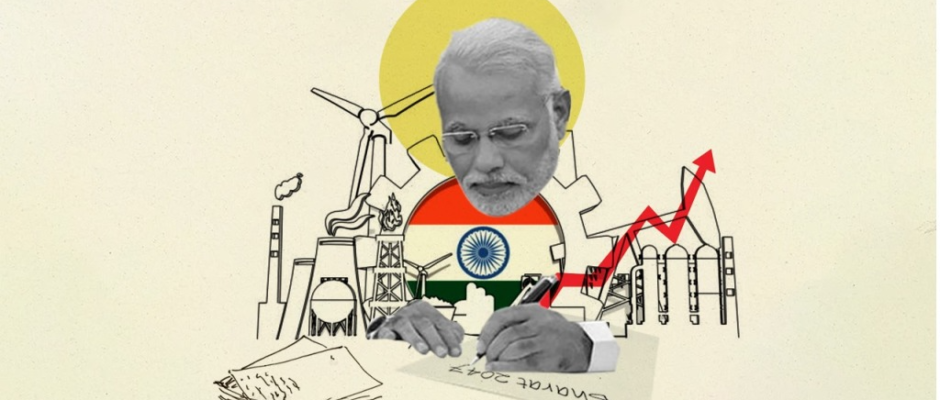
Reforms Should Go Beyond Economy, Touch Every Facet of Life

Let’s leverage strengths for global good, meet aspirations of Bharat’s citizens as we progress to become a developed country by 2047 Narendra Modi The biggest festival of democracy, the 2024 Lok Sabha Elections, is concluding today in our nation, the Mother of Democracy. After a three-day spiritual journey in Kanniyakumari, I have just boarded the plane for Delhi. Through the day, Kashi and numerous other seats have been in the midst of voting. My mind is filled with so many experiences and emotions… I feel a boundless flow of energy within myself. The 2024 Lok Sabha elections are the first in the Amrit Kaal. I began my campaign a few months ago from Meerut, the land of the First War of Independence of 1857. Since then, I have traversed ac-ross the length and breadth of our great nation. The final rally of these elections took me to Hoshiarpur in Punjab, the land of the great Gurus and a land associated with Sant Ravidas Ji. After that, I came to Kanniyakumari, at the feet of Maa Bharti. It is natural that the fervour of the elections was echoing in my heart and mind. The multitude of faces seen in rallies and road shows came in front of my eyes. The blessings from our Nari Shakti… the trust, the affection, all of this was a very humbling experience. My eyes were getting moist… I entered into a ‘sadhana’ (meditative state). And then, the heated political debates, the attacks and counter-attacks, the voices and words of accusations which are so characteristic of an election… they all vanished into a void. A sense of detachment came to grow within me… my mind became completely detached from the external world. Meditation becomes challenging amidst such huge responsibilities, but the land of Kanniya Kumari and the inspiration of Swami Vivekananda made it effortless. As a candidate myself, I left my campaign in the hands of my beloved people of Kashi and came here. I am also grateful to God for instilling in me these values from birth, which I have cherished and tried to live up to. I was also thinking about what Swami Vivekananda must have experienced during his meditation at this very place in Kanniyakumari! A part of my meditation was spent in a similar stream of thoughts. Amidst this detachment, amidst the peace and silence, my mind was constantly thinking about the bright future of Bharat, the goals of Bharat. The rising sun at Kanniyakumari gave new heights to my thoughts, the vastness of the ocean expanded my ideas, and the expanse of the horizon continuously made me realise the unity, the Oneness, embedded in the depths of the universe. It seemed as if the observations and experiences undertaken in the lap of the Himalayas decades ago were being revived. Kanniyakumari has always been very close to my heart. The Vivekananda Rock Memorial in Kanniyakumari was built under the leadership of Shri Eknath Ranade ji. I had the opportunity to travel extensively with Eknath ji. During the construction of this memorial, I had the opportunity to spend some time in Kanniyakumari as well. From Kashmir to Kanniyakumari… this is a common identity that is deeply ingrained in the heart of every citizen of the country. This is the ‘Shakti Peeth’ (seat of Shakti) where Maa Shakti incarnated as Kanya Kumari. At this southern tip, Maa Shakti performed penance and waited for Bhagwan Shiva, who was residing in the Himalayas at the northernmost parts of Bharat. Kanniyakumari is the land of confluences. The sacred rivers of our country flow into different seas, and here, those very seas converge. And here, we witness another great confluence – the ideological confluence of Bharat! Here, we find the Vivekananda Rock Memorial, a grand statue of Saint Thiruvalluvar, Gandhi Mandapam, and Kamarajar Mani Mandapam. These streams of thought from these stalwarts converge here to form a confluence of national thought. This gives rise to great inspirations for nation-building. This land of Kanniyakumari gives an indelible message of unity, especially to any person who doubts Bharat’s nationhood and the sense of unity. The grand statue of Saint Thiruvalluvar in Kanniyakumari seems to be looking at the expanse of Maa Bharti from the sea. His work Thirukkural is one of the crown jewels of the beautiful Tamil language. It covers every aspect of life, inspiring us to give our best for ourselves and for the nation. It was my great fortune to pay my respects to such a great figure. Swami Vivekananda once said, “Every nation has a message to deliver, a mission to fulfil, a destiny to reach.” For thousands of years, Bharat has been moving forward with this sense of meaningful purpose. Bharat has been a cradle of ideas for thousands of years. We have never considered what we have acquired as our personal wealth or measured it purely by economic or material parameters. Therefore, ‘Idam-na-mama’ (this is not mine) has become an inherent and natural part of the character of Bharat. Bharat’s welfare benefits our planet’s journey to progress as well. Take the freedom movement as an example. Bharat gained independence on Aug 15, 1947. At that time, many countries around the world were under colonial rule. Bharat’s independence journey inspired and empowered many of those countries to achieve their own freedom. That same spirit was seen decades later when the world came face to face with the once in a century Covid-19 pandemic. When concerns were raised about the poor and developing countries, Bharat’s successful efforts provided courage and assistance to many nations. Today, Bharat’s governance model has become an example for many countries around the world. Empowering 25 crore people to rise above poverty in just 10 years is unprecedented. Innovative practices such as Pro-People Good Governance, aspirational districts, and aspirational blocks are being discussed globally today. Our efforts, from empowering the poor to last-mile delivery, have inspired the world by prioritising individuals standing at the last rung of society. Bharat’s Digital India campaign is now an example for the entire

Read More

Brief: Foreign Media, Political Players in Bharat’s Elections

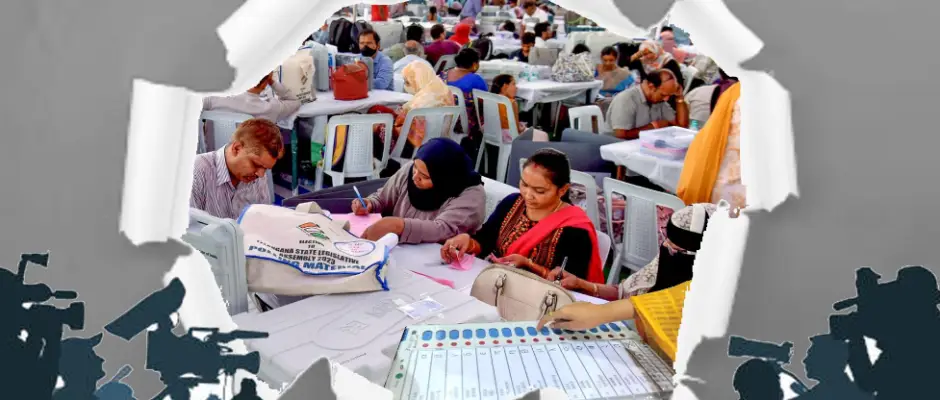
Bharat, a country with 1.4 billion population and over 968.8 million registered voters, is in the midst of largest democratic exercise of franchise in seven phases over two months ending on June 4. In the midst of election fury, Indian Prime Minister Narendra Modi visited Bellari, the mining town in the country’s southern state of Karnataka a few days back. Prime Modi made a significant statement relating to foreign propaganda in the elections to Bharat’s Parliament with upper and lower houses. A few were surprised when Modi said, “when the country is progressing rapidly, some countries and some institutions do not like it. There are many people who do not want a strong Bharat. They want the country and its government to be weak so that they can easily make profits. Since 2014, a campaign for cleanliness has been going on in the country’s power corridors. Bharat will progress as a developed nation.” Progressing to become a developed nation is logical extension of high growth trajectory in which Bharat is currently cruising. But, what stands out is Indian Prime Minister’s assertion about the country’s foes that may like to disrupt this organic progression by influencing the electoral process. In a nuanced speech, Prime Minister Modi talked about foreign powers’ false propaganda, interference and attempts at intervention in Bharat’s elections to see a weak and pliable government at helm in New Delhi. (Author Rohan Giri is a journalism graduate from Indian Institute of Mass Communication (IIMC) New Delhi, and a Content Manager at CIHS.)

Read More

West’s Supremacist, Colonial Mindset Gets Exposed

Bharat does not require dictates in democratic principles from US, Germany or other European powers. West’s misguided, outdated and conceited assumptions must be abandoned outright. Rahul Pawa April and May 2024 will be etched as ‘decisive months’ in Bharat’s modern history as the country prepares for yet another dance of democracy, a five-yearly feature. It also unfolds the grand electoral exercise when an estimated 970 million voters would exercise their franchise to elect a new government. Bharat’s citizens spanning geographic landscape from the mighty Himalayas in the north to vast Indian Ocean in the south and from Thar Desert in the west to the Mishmi Hills in the east would queue up to vote and elect the new government for next five years. As per Election Commission of India, the electorate this year includes 20 million young first-time voters and 14.1 million newly registered female voters amongst 1.4 billion population, indicating a significant uptick in youth and female participation in Bharat’s democratic process. Hosting the world’s most expansive, inclusive and resilient proven democratic exercise may not have been fully appreciated by Western powers. And, Bharat finds itself as the target of unsolicited interventions by her Western counterparts like United States Commission on International Religious Freedom (USCIRF), German Foreign Office, US State Department and United Nations (UN). These actions portray an arrogant presumption, a misplaced sense of superiority and a lingering colonial mindset that presupposes Western democratic models as the pinnacle of governance, undermining the sovereignty and integrity of Bharat’s electoral, legislative and constitutional workings.   West have had often cited Athens as cradle of democracy, a system born from the union of the Greek terms ‘demos’ (people) and ‘kratos’ (power). This narrative positions Athenian model established under Cleisthenes in the fifth century BCE as the archetype of people-powered governance. Yet, this Eurocentric perspective overlooks profound democratic ethos embedded within the ancient civilization of Bharat, predating Greek democracy by centuries. Bharat’s engagement with democratic principles is not a borrowed concept but a homegrown tradition that finds its roots in the Rig Veda, estimated to be composed around 1500 BCE. This ancient text reveals a society where governance was not the dominion of a singular ruler but a collaborative effort involving the collective wisdom of the Sabha (assembly) and Samiti (council), indicative of an evolved and sophisticated understanding of democratic governance far before emergence of Greek Athenian model. Vedic texts including both the Rig and Atharva vedas, detail existence of assemblies where decisions were deliberated in the presence of kings, ministers and scholars. Such gatherings were characterized by inclusive discussions and integration of diverse viewpoints embodying the essence of democratic dialogue. Approval of these assemblies led to electing or identifying a leader or ‘rajan’ unlike in the west. The very concept of a leader or ‘Rajan’ was neither divine, absolute nor hereditary. Systemic checks and balances resonate with current democratic ideals.  The invocation of ‘Samjnana’ in the Rig Veda symbolizing collective consciousness furthers intrinsic democratic spirit of ancient Bharat. This term, representing unity of thought and purpose among the people, was foundational to Vedic concept of governance where decisions were made through consensus reflecting a commitment to communal harmony and mutual respect. Moreover, historical records of Mahabharata and governance models described in Kautilya’s Arthashastra reveal a continuum of democratic practices through various epochs including republican systems of Licchavi and Vaishali where leaders were elected rather than born into power. Such examples affirmed that principles of democracy—participation, deliberation and representation—are not new to Bharat but are woven into the fabric of its society. Considering this wealth of historical evidence, the notion that Bharat requires dictates in democratic principles from a Western standpoint is not only misguided but perpetuates an outdated and conceited assumption that ought to be abandoned without delay.  Bharat’s democratic and judicial frameworks are subjected to proliferated patterns of interference from international organizations necessitating a detailed examination of the motives and potential impacts of such foreign meddling. United States Commission on International Religious Freedom (USCIRF) established by Christian missionary groups concerned with the alleged persecution of Christian missionaries worldwide has positioned itself as a self-appointed global arbiter of religious freedom. Over years, it has regularly vocalized, often misleadingly, about Bharat’s society and governance. Since 2013-14, USCIRF’s stance towards Bharat has been significantly influenced by its interactions with Indian American Muslim Council (IAMC), an organization linked to the Islamic Circle of North America (ICNA), an offshoot of Jamaat-e-Islami (Pakistan), particularly regarding Citizenship Amendment Act. This relationship, uncovered by independent research from an Open Source Intelligence (OSINT) firm indicates a strategic campaign to influence US policy and public opinion against Bharat highlighting a complex network of influences that questions USCIRF and other such US based entities and their impartiality in evaluations concerning Bharat. Recent machinations to portray Bharat in a negative context magnify apprehensions regarding international discourse surrounding Bharat’s internal matters. Germany’s criticism of lawful arrest of Indian politician Arvind Kejriwal and remarks by UN Secretary-General Antonio Guterres questioning integrity of its electoral process not only encroach upon the principles of sovereign equality and non-interference but also reveal a pattern of biased and agenda-driven scrutiny. Strikingly, Germany’s observations, juxtaposed against its role in hosting Nuremberg trials which aspired to set global legal precedents and ensure legal accountability at the highest levels of governance particularly stand out. United Nations bound by its charter to respect the sovereignty of its member states, seems increasingly influenced by growing financial contributions of Communist Party of China (CPC) indicating a shift in the dynamics of international power play. These developments do not merely affect the mechanisms of global governance but hint at complex strategic maneuvers, acknowledging resurgent Bharat as a principal contender in this global maze. Bharat advances towards electing her representatives to 18th Lok Sabha which is essentially a celebration of democracy that is unparalleled in scale and tradition, Unwarranted overreach by West into Bharat’s sovereign affairs and internal matters casts a long shadow over their intent and interest. This external curiosity cloaked in the guise of

Read More