CIHS – Centre for Integrated and Holistic Studies

Date/Time:

Chinese Pangs Continue to Stifle Buddhists

US, India should devise a plan to stop President Xi from hijacking selection of next Dalai Lama and preserve Tibetan culture & resources Brahma Chellaney As Dalai Lama, spiritual leader visits US, to receive medical treatment for his knees, concerns over who will succeed him have become acute. While Tibetans around the world pray that 88-year-old Tenzin Gyatso, 14th Dalai Lama still has plenty of life ahead of him, China is eagerly awaiting his demise so that it can install a puppet successor. Tibetans regard Dalai Lama as living incarnation of Buddha with a total of 13 reincarnations since 1391. When one Dalai Lama dies, the search for next one begins, with a council of senior disciples taking responsibility for identifying the figure based on signs and visions. But in recent years, Chinese government has insisted that only it has the right to identify next Dalai Lama. This would not be first time China selected a leader of Tibetan Buddhism. In 1995, it anointed its own Panchen Lama, whose spiritual authority is second only to that of Dalai Lama, after abducting actual Panchen Lama — six-year-old boy who had already been confirmed by Dalai Lama. Almost three decades later, real Panchen Lama is among the world’s longest-serving political prisoners. China also appointed Karmapa, Tibetan Buddhism’s third most important spiritual leader and head of the Karma Kagyu sect. But in 1999, its appointee Ogyen Trinley Dorje fled to India. The ease with which 14-year-old Karmapa escaped China raised suspicions among Indians about his loyalties. After imposing travel restrictions on him, India decided in 2018 to no longer recognize China-anointed Karmapa as legitimate head of his sect. Now, he and his rival Karmapa Trinley Thaye Dorje have issued a joint statement pledging to cooperatively resolve leadership split in Karma Kagyu sect. But, Dalai Lama is China’s white whale. The incumbent — who was identified as Dalai Lama in 1937, at age two  — has been a thorn in the side of Chinese Communist Party (CCP) since Beijing’s 1951 annexation of Tibet. With his relentless espousal of nonviolence, Dalai Lama who won Nobel Peace Prize in 1989 embodies Tibetan resistance to Chinese occupation. (Had Tibet remained self-governing like Taiwan, it would be the world’s tenth-largest country by area.) In his past incarnations, Dalai Lama was not only Tibet’s spiritual leader, but also its political leader, making him a kind of cross between a pope and a president. But the Dalai Lama ceded his political role in 2011 to a Tibetan government-in-exile which is democratically elected every five years by Tibetan refugees living in India and elsewhere. Dalai Lama has declared that he might choose not to be reborn — a decision that would undermine legitimacy of any Chinese-anointed successor. He knows that for China, a Dalai Lama devoted to CCP is much more useful than no Dalai Lama at all. He knows that while he has retained his mental acuity, his body is weakening. In 2016, he underwent radiation therapy for prostate cancer. He says he was “completely cured,” but continues to struggle with his knees. Given his advanced age, more health problems are to be expected. Dalai Lama’s frailty is one reason why his travel schedule has slowed considerably. But it is not the only one: Bowing to Chinese pressure, most countries — including European democracies and Asia’s Buddhist states (except Japan) — are unwilling to grant him entry. Fortunately, some countries have retained their backbones. US is hosting Dalai Lama for knee treatment and India has been his home for more than 65 years. India has officially designated Dalai Lama it’s “most esteemed and honoured guest,” while the Tibetan leader describes himself as a “son of India.” India is home to vast majority of Tibetan exiles and has played a central role in helping to preserve Tibetan culture including by supporting Tibetan-language schools. By contrast, China has been working actively to destroy Tibetan culture and identity, especially since Chinese leader Xi Jinping has been in charge. China’s appropriation of Tibetan natural resources has gone into overdrive with consequences that extend far beyond the Tibetan Plateau. Resource-rich Tibet is a source of fresh water for more than one-fifth of the world’s population and a global biodiversity hotspot. The plateau influences Asia’s weather and monsoonal patterns, as well as Northern Hemisphere’s “atmospheric general circulation” — the system of winds that helps transport warm air from the equator toward higher latitudes, creating different climate zones. US and India should work together to foil China’s plan to handpick next Dalai Lama. Already, America’s Tibetan Policy and Support Act which took effect in 2020, says that “the wishes of the 14th Dalai Lama, including any written instructions, should play a determinative role in the selection, education, and veneration of a future 15th Dalai Lama.” And it calls for sanctions on Chinese officials who interfere with Tibetan Buddhist succession practices. But more must be done. For starters, US President Joe Biden should take the opportunity presented by Dalai Lama’s knee treatment to fulfil a 2020 campaign promise to meet with the spiritual leader. More broadly, Washington should work together with India to devise a multilateral strategy to counter Xi’s plan to capture the more than 600-year-old institution of Dalai Lama. This must include efforts to persuade Dalai Lama to spell out, once and for all, rules that must be followed to identify his successor. (Author is professor emeritus of strategic studies at New Delhi-based Center for Policy Research; fellow at Robert Bosch Academy in Berlin. He is author of “Water, Peace, and War: Confronting the Global Water Crisis” (Rowman & Littlefield, 2013). © Project Syndicate, 2024. This write up was first published in Japan Times)

Read More

Games that China Plays

Psychological warfare, media propaganda, narratives coupled with operations beyond diplomatic relations is what China is known for. Is the world listening? Dr Amritpal Kaur Prima Facie, diplomacy is a well-rehearsed hard bargain negotiation among countries to achieve the best possible outcomes for a nation without resorting to crude force. What does not however meet the eye is that it is an incessant process to resolve outstanding issues lurking around the corners, brewing for years before the final settlement, if ever, is achieved. With core interests at the heart of diplomatic deliberations, the high stakes make this complicated dance on eggshells all more crucial. It is assumed that deliberations conducted by diplomats are a standard process with similar training in negotiation processes and the parlance used in discussions. In reality, diplomatic negotiation is a high-voltage tussle with deep and far-reaching consequences. Even more astounding is that it does not end on the negotiation table but runs like an undercurrent. In the era of Globalization or ‘Complex interdependence’ as much as the international community is reality of domestic national life, diplomacy and diplomatic signals become more significant for nations. If diplomatic engagement is mired in psychological games with the intention of one-upmanship, bilateral engagements become complex and if one of the parties is contemporary China, it raises its own share of issues. Conspicuous silence President Xi Jingping maintained when Prime Minister Modi assumed office for historic third consecutive term was marked by world leaders. This silence seems to have sent out an eloquent underlying message. Though Chinese Premier Li Qiang joined top world leaders in congratulating Prime Minister Modi ahead of swearing in on June 9, 2024, President Xi’s silence was ostensibly aimed at mounting psychological pressure on India. Post-second world war, China and its international relations give us glimpse into the country’s thinking on its relations with others including India. Beginning with Zhau Enlai, average Chinese have relentlessly pursued overt and covert ways to achieve its desired bilateral outcomes with an astonishing disregard for international treaties and modus operandi. Indo-Chinese agreement of 1993, intermittent border skirmishes and war (1962) since 1948 reiterates the point that it’s not over, until the last bell rang. Border dispute with India and People’s Liberation Army operations on Indo-Chinese border comes at crucial junctures. Former National Security Advisor Shiv Shankar Menon recounted in his book Choices (2016) that in 2014 when the first Modi government took office and President Xi came to India, PLA engaged in border skirmishes with India. Similarly, during Prime Minister Modi’s visit to China, a similar tactic unfolded. Probable explanation to such acts, according to Menon is to create psychological pressure on the newly elected Indian prime Minister as to who is the sheriff in town. Richard Solomon, former diplomat in US and former Foreign Secretary of India Vijay Gokhale have written respectively about the Chinese style of diplomacy which is remarkably different from diplomacy of democratic countries. Chinese engage in psychological warfare even in diplomacy at various levels. From setting agenda to building narratives, Chinese are adept at controlling the whole process and go beyond closed doors of diplomatic negotiations. One pattern is to engage in crude coercion and use of force while the other is to leverage media to create narratives. Two examples can be cited here, one is that of 1950s when Pt. Jawaharlal Nehru was called the ‘Bourgeoise Imperialist’ by Chinese media. Earlier this month, the state-sponsored Chinese media and related ecosystem described Prime Minister Modi as ‘weakened’ leader. These reports also suggested possible use of counter measures by China if India maintains policy status quo. Why is it that Chinese takes recourse to multi-pronged games in strategic and diplomatic relations with other countries eventually leading to disturbing regional peace and tranquility? Nature of Chinese state perhaps necessitates such behaviour. To begin with, Henry Kissinger in On China argued that since antiquity China has believed in ‘Middle Kingdom’ phenomenon which places the Chinese state over rest of the world and only beneath the heaven. This perceived middle Kingdom phenomenon has percolated to Communist China as well and hence they believe that other countries can only be vassals to the dragon power. There have been suggestions to the effect that Chinese communist expansionists harbor the idea that bilateral relations cannot be between equal sovereigns. These relations should centre on ‘superior’ China and ‘inferior’ other nations. With regards to Bharat, Chinese terminology includes ‘legalized hegemony’ and perceives India as an inferior state given that it does not have a permanent seat in United Nations Security Council. Chinese may have effortlessly used this aspect to tip balance of power in their favour, as former NSA Shiv Shankar Menon calls it.  Former foreign secretary Gokhale argued that Chinese engage in such tactics to keep power equation in their favour. Communist Party of China is the state itself and officials are appointed by the Party and not the state. Hence, their allegiance is with the Party and not the state per se. Menon sums the Chinese position succinctly when he argues that China is a lonely state rising in a crowded neighbourhood with an acute need for regime survival and internal harmony. Hence, its no wonder that being adventurous in foreign relations was to offset domestic attention from key issues. Since China is viewed as a formidable power, there is critical need to find a mutually beneficial bilateral mechanism. But, there’s no letup in tricky Chinese games loaded with psychological operations that have implications for outstanding bilateral issues. China experts, time and again, underscore that if we had to deal with China, understanding its game is more important. Only then can we find favourable outcomes in diplomatic negotiations. Jiang Zemin was famous for saying in English that it takes two to tango and it is true in this case well. For bilateral relations to succeed, it takes two to clap and a possible egalitarian approach in Chinese diplomacy. (Author is Assistant Professor in Political Sciences, Dayal Singh College, Delhi University, New Delhi)

Read More

‘Neighbourhood First’ Policy and Its Innovative ‘SAGAR’

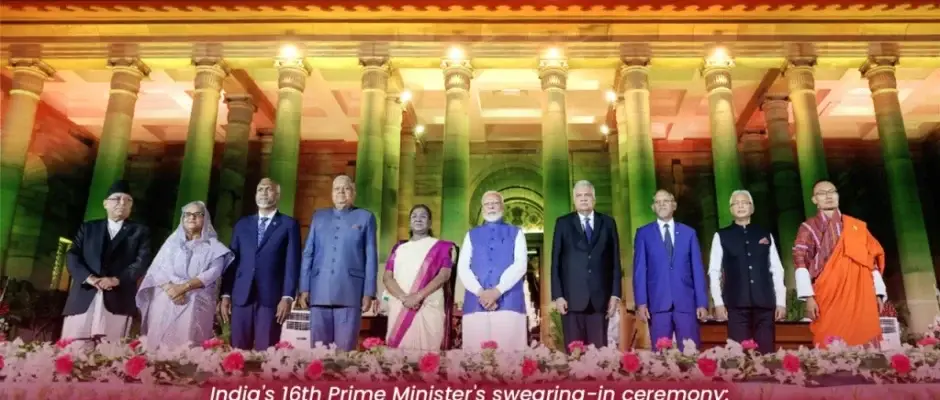
At the President house during swearing-in ceremony of India’s 16th Prime Minister, the country reaffirmed its unwavering commitment to its ‘Neighbourhood First’ policy and its innovative ‘SAGAR’ (Security and Growth for All in the Region) initiative. The invitation to neighbouring countries and those in the Indian Ocean Region (IOR), such as Sri Lanka, Bangladesh, Nepal, Bhutan, Maldives, Mauritius, and Seychelles, was extended amid the august assembly of dignitaries and demonstrated India’s unwavering commitment to developing strong ties with its maritime neighbours. Vision SAGAR started in 2015, to promote inclusion and adherence to international law while deepening economic and security cooperation, embodies India’s strategic vision for the IOR. Developing marine security capacities among neighbours is a key component of this goal, as it empowers them and ensures a cooperative approach to regional stability and prosperity. SAGAR is easily incorporated into the larger marine policy of India, working in concert with programs such as the Act East Policy, Project Mausam, and Project Sagarmala to advance the country’s approach towards regional providers of security. SAGAR highlights the significance of the Blue Economy and works to promote environmental stewardship and sustainable growth by utilizing the enormous potential of maritime resources. As India takes lead in IOR and is dedicated to creating an atmosphere of mutual respect, collaboration, and prosperity in order to fulfil the goals of all the nations in region. India aspires with SAGAR, the Indian Ocean would be a symbol of prosperity, peace, and advancement, demonstrating the strength of regional cooperation and strategic planning.

Read More

Propagating ‘Truth’ That Never Existed!

Both, US and China used devious means to force a tilt, influence outcomes of recently concluded Lok Sabha elections in Bharat Vinod Kumar Shukla Cognitive warfare is the new tool deployed by a few global powers to ensure their continued dominance on others throwing ethics and internationally accepted practices to wind. These powers have attempted suppression of fair practices in election of a government especially in countries where there is a vibrant democracy. Among others, India too faced challenges where democratic process was allegedly tried to be influenced by creating false narratives with help of Artificial Intelligence (AI) and Social Media influencers. Most of these falsehoods were not only funded by foreign countries but ideas too were generated on foreign soil. Investigations revealed that STOIC, an Israeli company attempted to interfere in Lok Sabha elections by peddling anti-BJP agenda dubbed as ‘Zero Zeno.’ Efforts were made to manipulate public opinion even in Canada, US, Israel, and Ghana. With help of AI, web articles and social media, comments and content were generated and pushed across Instagram, Facebook, and X focusing on criticizing the BJP and praising the Congress. AI was used to create fictional characters and fake social media accounts with specific variables like age, gender and location. Bogus accounts were created to engage people with such posts that gave the impression of genuine audience interaction. China too was actively involved in this disinformation campaign and escalated its campaign for changing the government in India after People’s Liberation Army was humiliated both in Doklam and Galwan Valley. Artificial intelligence was craftily used to construct propaganda content, images and videos targeting parties and politicians opposed to Chinese hegemonic design. Microsoft had cautioned that China was poised to use generative AI to sway elections all across scheduled for this year. Chinese interference is deeply rooted in its expansive ‘influence operations’ (IO) targeting leaders of other countries with its disinformation campaign to undermine leaders by portraying them as weak and vulnerable. Spamouflage Dragon or Dragon Bridge or Storm 1376, a key Chinese disinformation propagator network has been functioning since 2017-18 on social media. Its activities came to notice when around 9,000 Facebook and Instagram accounts linked to this network were shut down by Meta in August 2023. In November 2023, approximately 4,800 fake Chinese social media accounts impersonating Americans were shut down for disseminating narratives designed to polarise public opinion through biased political content ahead of US elections. The same was done in Australia and the Philippines during 2022 elections. Beyond social media, Chinese IO strategies include both overt and covert tactics involving cultivation of assets like local and independent media, influential personalities, political parties, business figures and NGOs. Preference for particular candidates was subtly communicated not through direct diplomatic utterances but via Chinese state-affiliated media and United Front Work Department (UFWD) which is dedicated to exerting overseas influence. On the parallel, investigation on Chinese funding of NewsClick in Bharat is underway and the matter being heard in the court. Chinese objective of meddling in elections is to ensure that elected candidates or parties should adopt a pro-China stance. These disinformation campaigns aim to sway election outcomes by undermining voters’ confidence in candidates not favoured by China. Recent escalation in Chinese disinformation involves leveraging generative AI technology to prepare propaganda images and videos. These AI-generated materials target parties and politicians critical to China. Initially this technology was used during presidential elections of Taiwan to undermine Taiwan’s democratic framework, promoting a pro-unification narrative, and weakening Taiwan’s ties with the US. In fact, Chinese disinformation campaigns on the national security of various countries have prompted many to ban popular Chinese social media platform TikTok. But, reports indicate that China continues to meddle in foreign elections to emerge as a global power. Besides China and Israel, millions of dollars were spent to impact elections in India. Western interference from European Union and US too were in the game. Media outlets with tacit, explicit funding and a few funded by organizations with background in peddling agenda based narratives through stories on ‘random WhatsApp groups’ by creating heroes out of Pak-sponsored stooges. Recent elections in India witnessed the most intrusive foreign reporting with overwhelming negative and brazen reports about ruling dispensation. All this was done to have a Parliament with leaders who can help impose political agenda of countries which are instrumental in spreading these canards. The objective is to secure a favourable outcome aligning with its strategic interests. Western media was found indulging in mud-slinging to sully the image of select leaders and their party in a sinister attempt to impact voter’s minds. Dangerous narratives were peddled by a so-called Indologist Christophe Jaffrelot as the ‘caste census’ narrative allegedly came from France. Jaffrelot extensively writes on India. The French media had shown special interest in these elections with extensive reporting by Le Monde, Le Soir, France 24, La Croix (International), Le Temps, Reporterre, and Radio France Internationale (RFI) to shape up a particular narrative to impact Indian elections with Jaffrelot as an expert on almost everything in India. With the help of Trivedi Centre for Political Data (TCPD) at Ashoka University, Jaffrelot and his disciple Gilles Verniers aggressively peddled a narrative that ‘lower castes’ had lesser representation in politics, quoting profile of MPs in 2014 Lok Sabha. However, the expert duo immediately changed their stand when the 2019 Lok Sabha had a higher representation from lower castes. In fact, never before was he referred by so many outlets in such a short time. He wrote a paper on ‘need of caste census’, in September 2021. US and China attempted to play dirty in just concluded elections with startling discourse being Caste Census which certainly was not organic. Jaffrelot had allegedly received massive funding from the US-based ‘philanthropic’ organization Henry Luce Foundation (HLF) around the same time. HLF was founded by Henry Luce, the founder of TIME magazine. Lesser known fact about Luce is his alleged deep-state connections. He was born to Presbyterian Christian Missionaries and supported by

Read More

When A Nation Crushed Its Own People…

A horrific incident in global history unfolded on June 4, 1989, when Deng Xiaoping, leader of Communist Party of China, declared martial law to trample upon students led protests in capital city, Beijing. The 27th and 38th divisions of People’s Liberation Army slaughtered hundreds of innocent citizens, student and youth, brutally carrying out diktats of Communist Oligarchs run party leadership. Rohan Giri June 3, 1989 was the day when Beijing engulfed with fear as Chinese dictatorship turned its weapons and tanks on its own people. Tiananmen Square Massacre is vivid reminder to which the Chinese regime led by Communist Party of China (CPC) went to reinforce its authority. This was more than just a crackdown; it was ruthless invasion of the Chinese people by their own leadership, sending shockwaves globally and haunting generations. The protest was outcome of rising socio-political inequality in China. Economic changes under Deng Xiaoping’s leadership lead to elevated corruption and socio-political inequality. On the other hand, reformist leader Hu Yaobang’s demise led to students’ rallies calling for political reform, government accountability and an end to corruption. As the protests spread, Chinese dictatorship declared martial law, fearing a loss of power and eventually chose to deploy soldiers of People’s Liberation Army to crush the peaceful protesters. The merciless crackdown killed hundreds of people and marked a dark episode in the Communist Party of China’s purported revolutionary efforts, symbolizing the extent to which CPC went to secure its rule and suppress dissent. The massacre had far-reaching consequences, emphasizing constant struggle for human rights and political liberty. How Brutality Began The protests that ended in the massacre began in April 1989, following death of Hu Yaobang, a former Communist Party leader who had been a symbol of reform. Students, intellectuals and labour activists gathered at Tiananmen Square (a city square in Beijing) to mourn Hu and request political and economic reforms including freedom and an end to corruption. Today also, CPC leadership under President Xi Jingping exhibits massive purge in political dissent and challenge to his leadership in the name of campaign against corruption. Same was the case then in1989 when the People’s Liberation Army tanks run over its own people seeking political and economic reforms. In 1989, when number of protestors increased, the authorities became more anxious. On May 20, martial law was imposed, and thousands of troops were sent out in Beijing. By end of May, the administration was set to crush demonstrators. On the evening of June 3, a directive was issued to eradicate demonstrators from the square using all violent and dictatorial means. The bloodshed that occurred was profound. People’s Liberation Army equipped with rifles, bayonets and tanks paraded into the city. The armed forces were instructed to shoot to kill and they did so extensively. The streets surrounding Tiananmen Square became slaughter houses when the army opened fire on defenseless civilians including women, children, and the elderly. Eyewitness stories depict scenes of chaos and slaughter, with victims scattered all over the streets and makeshift blockades flattened by tank treads. Victims’ Account One of the most distressing accounts is that of Wang Nan, 19-year-old student and aspiring journalist. Wang was among the first to be killed, shot in the head by PLA soldiers as he tried to photograph the events unfolding. His father, Wang Fandi, later detailed the suffering of detecting his son’s body amid many others in a hospital mortuary. Wang Nan’s execution represents silence of a generation’s voice and the shattering aspirations for an inclusive society. Another tragic account is of Liu Xiaobo, who was not killed in the massacre but became one of its recognizable victims. Liu, a literary critic and activist, was present at Tiananmen Square during the crackdown. On June 2, he began a four-man, three-day hunger strike. Later known as “Tiananmen Four Gentlemen Hunger Strike,” that gained students faith. Another three gentlemen with Liu were Hou Dejian (well-known songwriter and vocalist), Zhou Tou (Lecturer in sociology at Peking University), and Gao Xin (former editor of the Beijing Normal University Gazette). Liu was taken into custody at Qincheng Prison on June 5 for his involvement in students protest. The Chinese state-backed media published numerous reports calling him a “mad dog” and a “black hand” for allegedly inciting and manipulating student movement to topple the government and socialism. His writings were banned including his fourth book ‘Going Naked Toward God’. He survived and continued to struggle for human rights and democracy in China that led to several imprisonments. Liu received Nobel Peace Prize in 2010. Liu Xiaobo’s struggle and death in prison in 2017 validate the massacre’s lasting consequences for those who dared to speak out. Butchers of Beijing Tiananmen Square Massacre has had a lasting effect on generations. In light of the CPC’s rigorous control over information, younger generations in China may be oblivious to the massacre because the story is banned from textbooks, media and all other public contexts. Control of traditional forms of media such as newspapers, books, television, and radio has always been the norm for CCP from the Cultural Revolution (1966-1976) to Tiananmen massacre. Immediately after massacre of the students, it was renamed as ‘counter-revolutionary rebellion,’ gradually downgraded the massacre to an event and finally skirmish. However, individuals who learn about it, whether through family stories or international media, frequently experience a complicated range of emotions, including anger, despair and a sense of unfairness. Memory of the massacre has played an important part in formation of the post-1989 understanding between rulers and ruled in China. The legacy of Tiananmen Square Massacre highlights importance of historical reminiscence. Efforts to preserve remembrance of the massacre, such as annual vigils in Hong Kong and formation of monuments around the world, serve as a reminder of those who made ultimate sacrifice for their convictions. These measures are critical to confirming that the lessons of Tiananmen are not overlooked. Concluding Observation Tiananmen Square Massacre was a moment when a nation turned against its own people causing unspeakable suffering and leaving

Read More

Bharat Goes Whole Hog in Neighbourhood

Stability, progress and growth is what Bharat seeks to achieve in South Asia through its ‘neighbourhood first’ policy Dr Divya Gupta Post-independence in 1947, Bharat pursued a regional policy based on the principle that neighbours are important to national security and a market that can contribute to India’s economic development. Given the bipolar world order that prevailed during Cold War, Bharat pursued non-alignment based on its stated global role as the third-world leader. India built her policy on the basis of “The Five Principles of Peaceful Co-existence” (Panchsheel) which was first signed on April 28, 1954 between then Prime Minister Jawaharlal Nehru and his Chinese counterpart Zhou Enlai. Panchsheel covered issues like sovereignty and integrity, territorial integrity, no mutual aggression, non-interference in each other’s internal affairs, equality, mutual benefit and peaceful coexistence. Panchsheel agreement was considered one of the significant bases for building foreign policy with immediate neighbouring countries that India pursued after independence. But, Prime Minister Nehru was particularly interested in building and strengthening international cooperation especially among developing countries. Indian foreign policy during that period had focused more on international relations than neighbourhood relations. After end of Cold War, India made significant adjustments in her foreign policy framework owing to international, regional changes and internal challenges. Over the years, India has gradually come to occupy a significant role on strategic chessboard within the region and the world. A person who thought ahead about close relationship with neighbouring countries was former Prime Minister Inder Kumar Gujral, known for his Gujral doctrine, a policy orienting the relationship between India and its neighbours. Gujral doctrine was a policy that sought friendship based on sovereign equality and non-interference with “non-reciprocal magnanimity” towards smaller countries such as Bangladesh, Nepal, and Sri Lanka. The incumbent Prime Minister Narender Modi has formulated, followed and executed “neighbourhood first policy” in letter and spirit with respect to our immediate neighbours including Afghanistan. Essence of this policy is the desire to effectively contribute to the construction and architecture to establish a stable foundation of peace and cooperation in South Asia in particular and Asia in general as a responsible, stable and large country. Narendra Modi expanded the matrix of his foreign policy framework, took new line showing distinct imprint in his policies. He formulated his foreign policy doctrine (Modi doctrine) and introduced new pillars of India’s foreign policy (Panchamrit) including five pillars: dignity, dialogue, shared prosperity, regional and global security, cultural and civilization linkages aimed at affirming India’s position as a rising power in the world. During high-level discussion at 69th session of United Nations General Assembly in September 2014, Prime Minister Modi said, “The destiny of a country is linked to its neighbourhood. That is why my government has placed the highest priority on advancing friendship and cooperation with neighbours” (Modi 2014). He argued that “neighbours are the number one priority” which is considered a bright spot in India’s foreign policy. India’s ‘Neighbourhood First policy’ guides its approach towards management of relations with countries in its immediate neighbourhood, i.e. Afghanistan, Bangladesh, Bhutan, Maldives, Myanmar, Nepal, Pakistan and Sri Lanka. The policy is based on the idea that a stable and prosperous neighbourhood is essential for Bharat’s economic and security interests. The Neighbourhood First Policy is also part of Bharat’s larger vision of becoming a leading power in the region and world. India’s Neighbourhood First policy can also be seen as a manifestation of Modi government’s vision of building ‘Vasudhaiva Kutumbakam (the world as one family). Vaccine diplomacy and development assistance based on mutual respect and equal partnership are two most important pillars to catapult India’s Neighbourhood First policy[i]. Vaccine diplomacy has been seen as pragmatic response to a global pandemic and way to strengthen its image as a responsible leader at both regional and global levels. Noteworthy, Indian diplomacy, particularly during the Covid-19[ii] pandemic, resulted in India being recognised ​​on the world stage as a harbinger of hope providing necessary help to needy nations and their people globally. As part of India’s Neighbourhood First policy, India, through its vaccine diplomacy (Vaccine Maitri)[iii], extended help to many countries of the world and neighbouring countries during the Covid-19 pandemic. Also, and notwithstanding that India was affected very badly, particularly during the second wave, India handled the situation very well to overcome the worst effects of the pandemic relatively, and at the same time, help other countries to address the challenge. Primary beneficiaries of Vaccine Maitri in South Asian region are Bangladesh (Rs 22.5928 million in total supplies in the form of commercial and grant assistance, followed by Nepal (Rs 9.499 million); Sri Lanka (Rs 1.2640 million); Afghanistan (Rs 1.4680 million); Bhutan (Rs 0.55 million) and Maldives (Rs 0.312 million). India committed $10 million to South Asian Association for Regional Cooperation (SAARC) Fund to address the global pandemic. Keeping with the spirit of Vasudhaiva Kutumbakam, India is providing support to Afghanistan and Sri Lanka to address their myriad challenges through its development assistance initiative. Since the Taliban assumed charge in Afghanistan, India supplied wheat and other essential food items and Covid-19 vaccines as humanitarian aid to Afghanistan. In its budget for 2022-23, India allocated Rs 2,000 million as development assistance to Afghanistan. Apart from this India also provides financial assistance to neighbouring countries through Lines of Credit (LoCs), Grant-in-aid, Credit Facility, Currency Swap Facility and others. India has extended four Lines of Credit worth US $ 7.862 billion to Bangladesh under Indian Development and Economic Assistance Scheme (IDEAS). India also supports Bangladesh in several developmental and infrastructure projects across sectors such as roads, highways, railways, ports, power transmission, waste management, economic zones, information and communication technology, solar power generation etc. India has also provided Rs. 45,000 million as development assistance for 12th Five Year Plan (November 2018-October 2023) to Bhutan. India has extended five LoCs totalling to US $ 1.33 billion[iv] to Maldives including assistance to Greater Male Connectivity Project. India has provided budgetary support to Maldives. In September 2020, India offered US $ 250 million in financial assistance to Maldives to mitigate the impact

Read More

Changed Foreign Policy Stems from Bharat’s Cohesive Leadership

‘Why Bharat matters’ is a wonderful and compact rendition of the dynamic policy matrix by S. Jaishankar while being in corner office! Dr Amritpal Kaur When the realist External affairs Minister present a clinical picture of the world affairs in a compact book, it should be read with all the care. It’s because the analysis of a career diplomat is palpable and it also gives a sense of the minds that work at the helm, in the control room, assiduously at work of foreign policy making and execution. As the book unfolds, it reveals to the reader nuances of International relations from contemporary Indian vantage point from the actors end to the influencers arena, to general people who more often than not, are at the receiving end. Broadly, the book deals with various stakeholders of Indian Foreign Policy, past and present. It discusses the government’s account of international issues as well as the take of people sitting inside the power corridors or outside it. Sardar Patel, Syama Prasad Mookerjee and Dr. B R Ambedkar’s views on foreign policy issues which were not mainstreamed by the then Government of India are discussed. The point that Jaishankar is driving home in this book and his earlier publication, The India Way is that many problems of today have their roots in yesteryear’s regimes. These issues have over the years become soar points for India, territorial disputes and strategic-tactical missteps taken by Indian dispensation are the glaring examples. Why Sardar Patel or Mookerjee matter today, in part, is because they tried to warn about these mistakes and had the Government taken their suggestions on board, the picture might have been different today. There is also a shift in the approach to International relations within Indian government since the last decade and this shift comes through the book as well Nationalist foreign policy, in place of third world internationalism, open ended multipolar world order with greater role for countries like India. Jaishankar calling out the double standards that dominant powers use for similar situations are some of the examples of this shift.  In many ways, Why Bharat Matters is a book that announces to the world that India has arrived, again! It goes beyond the usual standard academic analysis, into the fields of real time variables with direct impact on contours of policy making. For example, how Government of India responded to crises like COVID 19, Ukraine war, Afghanistan crisis are some issues dealt with in the book on a first person account basis. What also contribute to its salience is that Jaishankar has a deep and detailed knowledge about International relations and the games that nations play and it is this knowledge which peeps through the book. As much as it is a written word, it is also a policy statement of Government of India, its approach and stakes in international relations. In that sense, it is not a dated analysis, rather an up-to-date, in-the-moment picture of the events that have happened in the past decade and are transpiring as we write and read. What sets this analysis apart is not just frankness of Jaishankar in offering his perspective on issues, but the cool matter-of-fact assertion of strategic elbow room that India is claiming in foreign relations under mounting pressure from various parties. That India needs to take into account its own unique predicaments and opportunities to accomplish its own national goals are according to Jaishankar its raison d’etat. Though the world is still coming to terms with this changed attitude on the Indian side, but the change itself came about with the cohesive leadership under the present dispensation. Interestingly, for Jaishankar India’s arrival is not a new-kid-on-the-block phenomenon, rather it was coming for a long time. India’s rise in the past decade is the central argument of the book. There are certain fixtures of Indian foreign policy, which has remained constant in the analysis too, that is, centrality of Prime Minister in terms of Foreign Policy making, the neighbourhood policy emanating from Gujral Doctrine and the impact of foreign policy on general public. A chapter dedicated to Prime Minister Modi, his world-view and approach to foreign policy is a telling example of how Prime Ministers keep foreign policy as their own prerogative domain. It can be argued that centrality of Prime Minister in foreign policy formulation emanates from the fact that as the leader of the country, he or she has a direct hand in how the world sees us and how should the world be dealt with. Jaishankar argues in the book that on all occasions, it has been crystal clear vision of Prime Minister Modi that led the way for clearer formulations in foreign policy. That the book declares India’s arrival on the world stage as a  fait accompli, not as a third world country, but as a frontline state with increasing stakes in the outcomes of international politics can also be attributed to confidence of leadership in standing up and owning responsibility in precarious situations. The book is a telling story of how the shift in confidence of leadership impacts the policy outcomes and Prime Minister as the prime example of this evolution. Dr. S Jaishankar’s experience as a seasoned Diplomat is palpable in the book he put together. The depth and crux of issues pertaining to India’s international relations are visible in his analysis. In certain ways, his style reminds one of Henry Kissinger, with crisp, assertive language and a punch in the end. However, the problem with the work is that it reads more like a diplomat’s manual than a foreign policy analysis. For an amateur reader, with no background in the foreign policy analysis the book is somewhat difficult to follow due to the insufficient information given. For example, in discussing the Afghan crisis and its outcome for USA, an indepth analysis would have been a more impactful. Issues that the book raises are pertinent in their own right, their salience could be accentuated by additional

Read More

China Spins Jingoistic Narrative

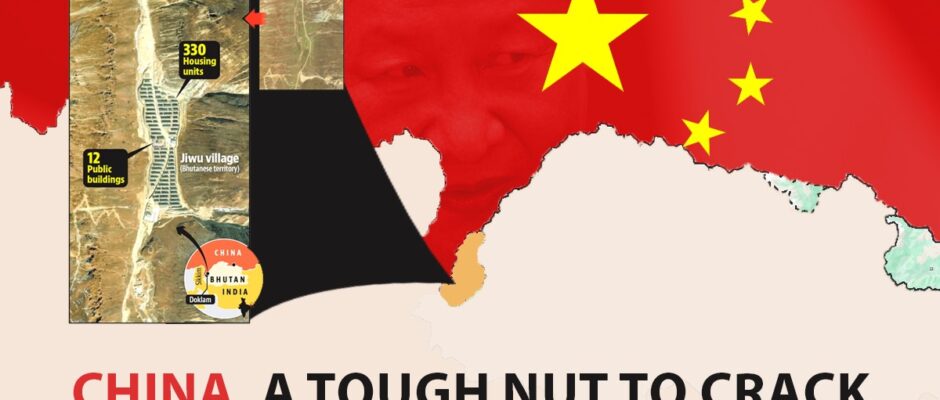
Bharat hits back on Chinese Communist Party’s false claims on Arunachal Pradesh. Global community including US recognize the dragon ploy. Rohan Giri There’s something innate in China that cannot change. It’s in its DNA to encroach on others. As part of its grand plan to usurp others land, properties and expand its hegemony, China and its ruling Communist Party of China (CPC) have tasted success in few areas while they eagerly look at grabbing neighbours’ territories. Tibet is one area where Chinese Communist Party has had large success in altering names of places, assert control on large swaps of land and change, culture, languages and life of ordinary citizens. Through coercion, China constructed certain structures to also advance on its border regions through coercive means. Similar attempts have been made with Bharat’s territories especially Arunachal Pradesh to assert its dominance in the region. Communist Party of China and its life time General Secretary Xi Jingping announced Chinese names to places in and around Arunachal Pradesh. Latest in the Chinese ploy of old and deceitful rhetoric is evidenced by statements made by People’s Liberation Army’s Senior Colonel Zhang Xiaogang, spokesperson for Chinese Defense Ministry. By intention, he claimed that southern region of Xizang, the Chinese nomenclature for Tibet, was integral component of China’s territory.  This was obvious reference to Arunachal Pradesh which China thinks is its own territory. Chinese Defense Ministry raked up the bogey on Bharat’s north-eastern state of Arunachal Pradesh after Sela Tunnel was constructed to enhance civic and military connectivity and capabilities in the state. The latest overtures by China expose the Chinese Communist Party ploy to initially seize Tibet and subsequently move in on Arunachal Pradesh. Bharat along with 17 other countries, mostly neighbours, has experienced adverse consequences of persistently making unsubstantiated claims by Chinese Communist Party. Henry McMahon, then foreign secretary of Britain drew an 890-km border between Bharat and Tibet in 1914. Arunachal Pradesh was formerly referred to as North Eastern Frontier Agency before the establishment of the McMahon Line. On one side of McMahon, Tibet existed as an autonomous region while on the other Arunachal Pradesh was an Indian state. Chinese communist party falsely maintains that Tibet is one component of China and refuses to acknowledge this demarcation. China’s aspirations for territorial expansion had begun to gain momentum at this point. The act of manipulating maps to include some regions of Bharat has been observed since ancient times, hence its innate to its nature. Bogus claims of Chinese communists were undermined when Japanese forces launched an invasion of Arunachal Pradesh, north-eastern state of Bharat during Second World War. Additionally, emergence of Chinese expansionism posed an enormous threat to Bharat’s territorial integrity. During that period, the British-led Indian Army provided protection to Tawang of Arunachal Pradesh. Bharat has had consistently maintained a firm stance against China’s claims and Arunachal Pradesh residents have historically rejected  China’s expansionist aspirations and unsubstantiated assertions. Latest PLA statements on Arunachal Pradesh have come after Chinese Communist Party misleading names of 11 locations in Arunachal Pradesh. In addition to expressing their outrage, local populace actively engaged in peace marches on the roads, demonstrating their opposition to China. The protesting people were holding placards that read, “We stand by India” and “Arunachal is not part of China.” The posters in their possession had the message, “Don’t we know… How China is oppressing the people of Tibet and is always engaged in looting it? At any cost, we would not like the condition of Arunachal Pradesh to become like that of Tibet…” Individuals hailing from Arunachal Pradesh, holding tricolor flags, asserted that similar demonstration were held when China changed the names of six locations in 2017 and 15 locations in 2021. The misleading names were in the Chinese and Tibetan languages. In 2023, the controversy over stapled visas gained attention as Indian Wushu players were granted such visas by China. New Delhi-based think tank Center for Integrated and Holistic Studies, at that time, had reported that the “Stapled visas incident is seen more as one step further in China’s grand expansionist plan and communist vision to occupy others’ land disregarding international treaties, pacts and ‘gentlemen’ agreements to not change on-the-ground goal posts. Only way to put an end to this psycho-warfare like stapled visas is to firmly retake ‘Aksai Chin’ under its ‘illegal’ occupation since 1950s and held after the 1962 war.” Bharat and its government always said that Arunachal Pradesh was, is, and will remain integral to the country. China’s illegal expansionist strategy extended much beyond Arunachal Pradesh, Tibet, or Nepal. Countries and international communities need to be alert to such machinations and not succumb to mechanisms like debt trap, infrastructure development or other forms of avarice. (Author: Rohan Giri is a journalism graduate from Indian Institute of Mass Communication (IIMC) New Delhi, and Manager Operations at CIHS.)

Read More

Maldivian turn in the Tide: India’s safety net to China’s debt web

Shift in island nation’s strategic relations to curry favour with Chinese Communist Party bosses is fraught with danger of instability Rahul Pawa Maldives that has historically been a significant beneficiary of Bharat’s Neighbourhood First policy and a proximate maritime neighbour in the Indian Ocean Region, is re-positioning itself from the perspective of defense and security ties with Bharat. This reassessment is direct consequence of actions taken by newly anointed Maldivian President Mohamed Muizzu, who rose to power advocating an ‘India Out’ campaign. Influenced by the pro-Chinese Communist Party (CCP) stance of former President Abdulla Yameen, President Muizzu has made a decisive move away from the cooperative relationship his predecessor, Ibrahim Mohamed Solih, maintained with Bharat. This shift became particularly evident with a statement issued on November 18, in which President Muizzu’s office formally requested withdrawal of Indian military personnel from Maldives. This request, signifying a departure from longstanding military cooperation between the two nations was earlier  presented during a meeting with India’s Earth Sciences Minister Kiren Rijiju, who was in attendance at Muizzu’s swearing-in ceremony.  Escalating the situation further, Maldives is now scrutinizing over 100 agreements signed with India during Solih’s tenure, covering areas of defense and security. Mohamed Firuzul Abdul Khaleel, the undersecretary for Public Policy in Presidential Office, disclosed the stationing of 77 Bharatiya military personnel in Maldives, spanning various military assets covered this scrutiny. This reevaluation of ties and November 18 announcement underscore a significant geopolitical shift in the region, marking a potential realignment of Maldives’ foreign policy away from Bharat and marks a tilt towards China. Maldives’ strategic pivot towards China, away from its traditional alignment with Bharat, brings a multitude of vulnerabilities and challenges for the island nation as well. This shift not only strengthens China’s influence in a region historically under Indian sway but also risks exposing the Maldives to economic and political instability. The alignment with China poses significant risk of ensnaring Maldives in a debt trap, akin to Sri Lanka as in the case of Hambantota Port and other infrastructure projects. Considering the Maldivian economy’s heavy reliance on tourism, financial burden of Chinese investments could be unsustainable. Moreover, this shift in foreign policy may lead to internal political strife. Opposition to the ‘China-triggered’ policies and concerns over national sovereignty could ignite domestic unrest, potentially resulting in a divided and unstable political landscape. On international front, moving away from India might strain the Maldives’ relationships with other regional powers and Western allies, who view China’s expanding influence with apprehension. This could lead to lesser foreign aid and support from these nations. The strategic shift under influence of Chinese Communist Party (CCP) represents significant departure from Maldives’ historical relationship with India, a partnership that has been a bedrock of stability and support, instrumental in the nation’s development and security. India’s role has been particularly pivotal during times of crisis, such as the 1988 coup attempt, 2014 water crisis and 2004 tsunami, offering a balance of economic assistance, defense cooperation, and diplomatic support.  However, the new trajectory in favour of China opens Maldives to a host of risks that could have far-reaching consequences for its stability and wellbeing. Possible economic dependency on China, with looming threat of a debt trap, poses a significant danger to the Maldivian economy. This shift might not only leads to internal political instability but also exacerbate the nation’s environmental challenges. Maldives, already grappling with adverse impact of climate change and rising sea levels, may face further environmental degradation due to large-scale Chinese construction projects.  In essence, moving away from India could isolate the Maldives from a historically reliable and benevolent partner, steering it away from the sources of strength and stability that have been crucial for its growth and prosperity. As President Muizzu seeks to establish new geopolitical alignments, the Maldives navigates towards a precarious future. The allure of Chinese economic support, while tempting, carries substantial risks, including the potential loss of traditional allies and internal political turmoil. This strategic pivot could leave the Maldives in a vulnerable position, both economically and geopolitically, with limited room to manoeuvre in an increasingly complex and competitive international arena. The future, as it unfolds, is fraught with uncertainty and potential instability for the Maldives as it navigates these significant geopolitical shifts. (Author is Director – research at New Delhi based non-partisan think tank, Centre for Integrated and Holistic Studies)

Read More

Chinese Puppetry on Show!

Probing charges of money laundering, peddling of Chinese propaganda by NewsClick is not suppression of press freedom  K.A.Badarinath Noise on suppression of press freedom and free speech has not yet reached a crescendo. This noise has just begun in India with Left parties, their frontal organizations and anti-Modi political alliance partners going for the kill. Few activists from these political formations hit the streets on Wednesday protesting a probe against alleged China funded portal ‘NewsClick’ that reportedly laundered  money to bankroll the dragon’s ‘propaganda’ vehicle. Portal’s founder Prabir Purkayastha and his human resources head were rounded up by special operations unit of Delhi Police after having questioned over a dozen journalists, consultants and later seized their devices for further investigation. Big question therefore is why all the noise on purported suppression of press freedom in India? Well, this is not the first time that such false narrative was peddled or reported in domestic and foreign media outlets in last ten-odd years. Two big charges against ‘NewsClick’ and its front-enders is that the organization worked as ‘propaganda vehicle’ for China. And, second serious charge is that foreign funds were routed through a millionaire businessman Neville Roy Singham to take forward nefarious Chinese Communist Party agenda in India. Well, only an in-depth investigation will bring out the facts and stick out separated from the organized noise of fringe Left parties that claim to protect, cherish and embellish Mao’s jinxed political thought. Firstly, is it a crime to investigate possible wrong doing by anyone concerned with ‘NewsClick’? The probe was launched by Delhi Police, Enforcement Directorate and other agencies only after having filed a detailed first information report against the accused on August 17 taking cognizance of ‘Chinese Propaganda machine’ related reports that appeared in The New York Times. These very political formations and self-styled proponents of ‘free press’ that hit the streets have had sworn by NYT on more than one occasion to hit out at the Modi government. Now, what’s wrong in investigating ‘NewsClick’ based on newspaper reports and Enforcement Directorate’s own research? The New York Times had pointed to a global web of Chinese propaganda that involved American non-profits which stretched from Chicago to Shanghai. This web as per NYT had NewsClick as an active participant.   Now, why can’t the law enforcement agencies do their job of enforcing probity in public life, negate possible China propaganda campaign and stem laundering of foreign funds that made their way into ‘NewsClick’ during 2018 – 21 and used ‘against the Indian state’?  Does this tantamount to suppressing press freedom? Or, is initiation of an inquiry anti-democratic by any stretch of imagination? It’s rather surprising that newspapers like ‘The Hindu’ and ‘Indian Express’ that were at forefront of investigating Bofors scam in early ‘80s and ‘90s editorialized the police action on ‘NewsClick’ as smacking of supressing press freedom. And, it is rather laughable. Crackdown against suspected crime by elements inimical to Bharat’s interests or exposing ‘NewsClick’ handlers in US and China cannot be equated with Smt Indira Gandhi’s decision to suspend basic citizens’ rights, impose internal emergency and curb press freedom in 1975 after an adversarial verdict of Allahabad High Court. Wouldn’t Ramnath Goenka, founder of Indian Express and Kasturi Ranga Iyengar of ‘The Hindu’ turn in their graves at the suggestion of curbing press freedom for investigating against ‘NewsClick’ management and their handlers? As in case of any individual or organization, don’t journalists have basic responsibility to submit before law enforcement agencies seeking to get at the truth? Making hue and cry of a probe may not drown the truth about irregularities at ‘NewsClick’. At best, NewsClick is a scrappy outlet that used invectives and propaganda to try and corner Narendra Modi government. And, it gained prominence only after The New York Times investigation linked it to a network that funded pro-China campaigns. Similar noise and public outrage was on show after BBC India operations were scrutinized for violation of Indian taxation laws. Tax sleuths assessment forced BBC to admit that it had under-reported revenues, profits and thereby evaded taxes. Reuters, The Hindustan Times and The Mint newspapers reported that BBC under-reported incomes worth Rs 40 crore to evade taxes. Well, income tax assessment of UK government funded BBC accounts was blown out of proportion and several of these very propagandists had jumped in to cite suppression of press freedom. There was no plausible explanation on how enforcement of domestic tax laws was same as suppression of press freedom. In the first place, big question was how did a foreign government funded media organization gather courage to evade taxes? Certainly, India is neither a banana republic nor subservient outpost of the erstwhile British imperialist rulers. When news laundry, yet another website were surveyed by Income Tax officials in 2021, similar charges of ‘intimidation and press freedom’ were heaped against the law enforcement agencies. Rule of law is what matters. Whether it is Bharat Samachaar or Dainik Bhaskar, media organizations need to be upfront given their distinct responsibility to readers, people that go by what appears in the media and the country. If thousands of websites, newspapers, TV Channels, social media handles owned by Indians, domestic corporates and foreign collaborations have been freely undertaking news operations, then where’s this suppression of press freedom? Seeking accountability is not equivalent to suppression of press freedom and rights. Newspapers, magazines and other media outlets in India like elsewhere have taken an independent editorial line in sync with their beliefs, understanding and assessment of a government, its policies and political ideologies. Editorial positioning of a media organization is distinctly different from resorting to irregularities, wrong doing, anti-India propaganda or joining flanks with the enemy. Let’s not equate press freedom with irregularities and anti-India tacit operations. Freedom comes with responsibility. (Author is Director& Chief Executive of New Delhi based non-partisan think tank, Centre for Integrated and Holistic Studies)

Read More