CIHS – Centre for Integrated and Holistic Studies

Date/Time:

Blog Post

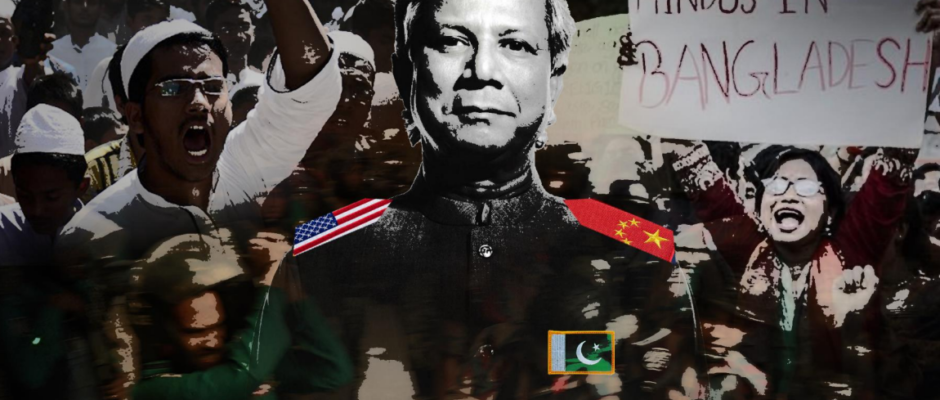
Situational Analysis - Geopolitics, Hindu Hate, Islamisation and Decay of Democracy in Bangladesh

Situational Analysis – Geopolitics, Hindu Hate, Islamisation and Decay of Democracy in Bangladesh

Decay of Democracy in Bangladesh Bangladesh faces a dangerous convergence of Islamic resurgence, targeted minority persecution, and democratic regression. This situational analysis explores convergence of internal unrest and external influence, especially through narrative warfare and strategic alignments, which has accelerated the deterioration of democratic governance and encouraged radical elements in the post-2024 scenario. For more details…….

Read More
A Terrorist Tech Review in Khorasan

A Terrorist Tech Review in Khorasan

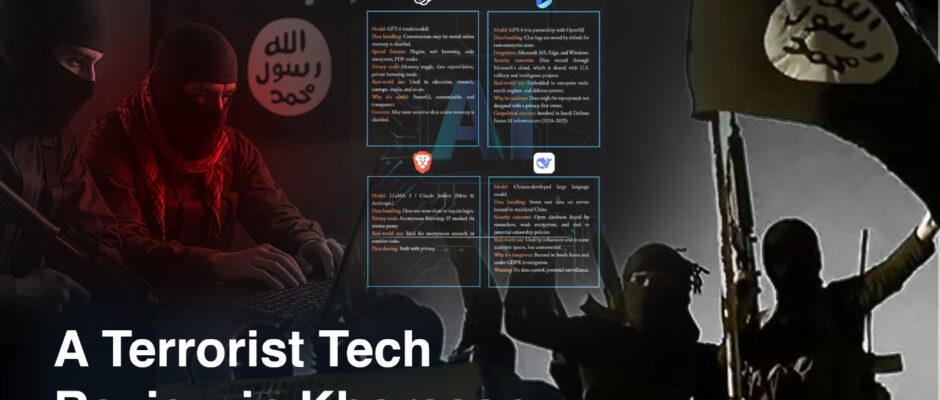
Broader implication is that counterterrorism efforts must adapt to an era of synthetic propaganda and AI-assisted operations. This means investing in new detection technologies, updating regulations for AI platforms, and perhaps rethinking how we monitor online terrorist communities without infringing on common people’s privacy. Rahul Pawa In June 2025, an unlikely tech column appeared in Voice of Khorasan, the English-language web terrorist propaganda magazine of ISIS-K (Islamic State Khorasan Province). Amid usual disillusions, Issue 46 featured a detailed comparison of popular AI chatbots; from OpenAI’s ChatGPT and Microsoft’s Bing AI to the privacy-focused Brave Leo and the Chinese bot dubbed “DeepSeek.” The tone resembled a consumer tech review, but the intent was deadly serious. The authors warned fellow jihadists about the risks of these tools, raising alarms about data privacy and surveillance. ChatGPT and Bing, they noted, might log user data or even expose a terrorist’s IP address, a potential death sentence for an terrorist on the run. They cautioned that generative AI could churn out false information or even mimic someone’s writing or speaking style, making it a double-edged sword for propaganda. After weighing the platforms, the magazine gave its endorsement: Brave’s Leo AI, integrated into a private web browser and requiring no login, was deemed the safest option for terrorists seeking anonymity. In essence, ISIS-K selected the chatbot that asks for the fewest questions in return, a chilling reminder that even terrorists prize privacy features. This surreal scene, a terrorist group rating AI assistants illustrates how terrorist organisations are eagerly probing the latest technology for their own ends. If Islamic State’s Afghan affiliate is producing in-house reviews of chatbots, it is because they see potential tools for propaganda, recruitment, and even operational support. And ISIS-K is not alone. Across the ideological spectrum, violent terrorists are experimenting with generative AI, ushering in a new chapter in the long history of terrorists exploiting digital media. From jihadists in remote safe houses to far left extremist cells in Western suburbs, terrorists are testing how AI can amplify their hateful messaging and help them evade detection. It’s a development that has counterterrorism officials on high alert, and for good reason. For decades, terrorist groups have been early adopters of new media. In the late 1990s, Al-Qaeda circulated grainy VHS tapes and CD-ROMs with lectures by Osama bin Laden. By the mid-2010s, ISIS perfected the art of online propaganda: slickly edited videos, encrypted chat channels, and multilingual web magazines reached recruits worldwide at the click of a button. The Islamic State’s media operatives earned a dark reputation as “innovators” in digital terror, leveraging YouTube, Twitter, and Telegram in ways governments struggled to counter. Now, generative AI is the latest technology wave and once again, terrorists are riding it. What’s different today is the power and accessibility of these AI tools. Modern generative AI can produce content that is startlingly realistic and tailored to an audience’s biases or emotions. This opens troubling possibilities for propaganda. Terrorist groups can now generate fake images, videos, and even interactive dialogues at scale, with minimal resources. In recent months, terrorists have used AI-created images and videos to stoke sectarian hatred and amplify conflicts. During the Israel counter strike on Hamas in 2023, for example, Hamas-linked propagandists circulated doctored visuals, including fabricated pictures of injured children and fake photos of Israeli soldiers in humiliating situations to inflame public emotion and spread disinformation. These AI-manipulated images blended seamlessly into the online information ecosystem, making it harder to separate truth from fabrication in the fog of war. ISIS and its offshoots have likewise ventured into deepfakes. Islamic State’s media affiliates reportedly published a “tech support guide” in mid-2023 instructing followers how to securely use generative AI tools while avoiding detection. Not long after, ISIS-K began unveiling AI-generated propaganda videos. Following a 2024 attack in Afghanistan, ISIS-K released a video bulletin featuring a fictitious news anchor, generated by deepfake technology calmly reading the group’s claims of responsibility. The video looked like a normal news broadcast, complete with a professional-looking anchor, except it was entirely fabricated by AI. In another case, after an assault in Kandahar, an ISIS-K propagandist created a second deepfake “Khurasan TV” clip, this time with a Western-accented avatar as the presenter. The goal is clear: lend terrorist propaganda a veneer of credibility and polish that previously required a studio and camera crew. Instead of grainy cellphone martyr videos, we now see digital avatars delivering the jihadists message in high definition, potentially fooling viewers (and automated content filters) that would dismiss overtly violent footage. As one security analyst observed, this marks a stark upgrade from the early 2000s when terrorist videos were rudimentary and “prioritised the message over higher production values” , today’s AI-crafted terror content can closely resemble legitimate media broadcasts. Why are terrorist groups so keen on generative AI? The answer lies in what these tools promise: speed, scale, personalisation, and a degree of deniability. A large language model can produce terrorist propaganda texts in multiple languages almost instantaneously, allowing a group like ISIS-K or al-Qaeda to tailor messages to different ethnic or national audiences without a large translation team. AI image generators can churn out endless visuals for memes, posters, or fake “news” proof, enabling agitators to flood social media with content that algorithmic moderation hasn’t seen before, thereby evading detection by hash-based filters that flag known terrorist photos. As Adam Hadley of Tech Against Terrorism warned, if terrorists manipulate imagery at scale with AI, it could undermine the hash-sharing databases that platforms use to automatically block violent content . In effect, generative AI offers terrorists a way to boost volume and variety in their online output, potentially staying one step ahead of content moderation efforts. Just as importantly, AI lowers the barriers for creating sophisticated lies. Misinformation and conspiracy theories can be mass-produced with ChatGPT-like models, which excel at mimicking authoritative tone or even an individual’s speech patterns. ISIS-K’s magazine explicitly noted this danger that AI can “create false information or mimic specific speech patterns”

Read More
Explainer Iran–Israel 12-Day War and lessons for India

Explainer Iran–Israel 12-Day War and lessons for India

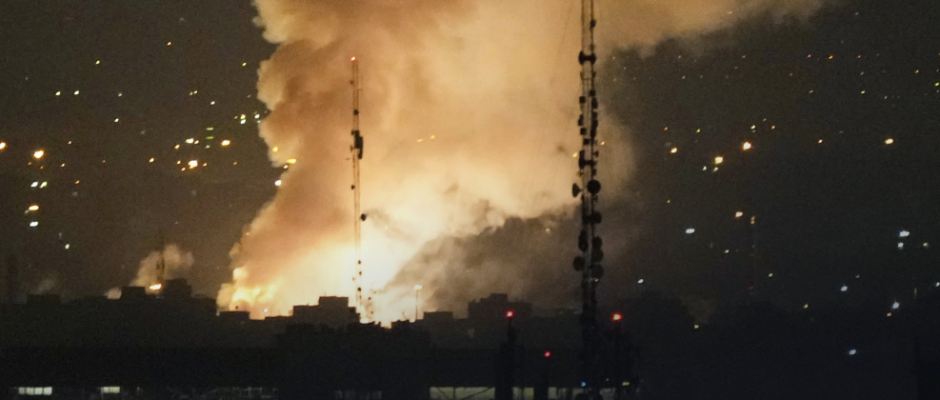
In just 12 days, Israel’s stealth jets, Iran’s missile swarms and a U.S. bunker-buster blitz sent shockwaves from Natanz to Wall Street. Beneath the fire and fury, Israel’s 90 % intercept rate, Tehran’s budget surge for missiles and oil’s 12 % price whiplash hold urgent clues for New Delhi. From layered air-defence to lightning-fast evacuations, we break down lessons for India.

Read More
Kashmir to Kyrenia, Modi Resets Eurasian Chessboard

Kashmir to Kyrenia, Modi Resets Eurasian Chessboard

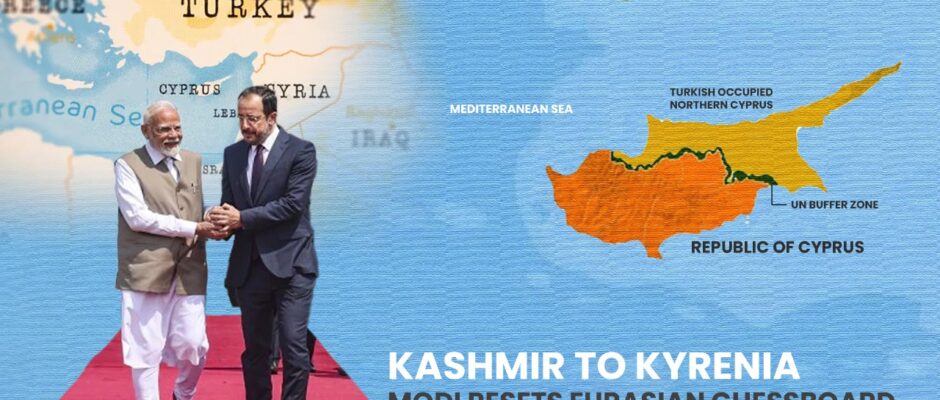
Modi’s choice of gift, a hand-knotted Kashmiri silk carpet, was a polite but firm reminder that Jammu and Kashmir is unquestionably India’s sovereign terrain, just as a reunited Cyprus remains Nicosia’s non-negotiable objective. Rahul Pawa The world took only passing notice when Prime Minister Narendra Modi touched down in Nicosia on June 15. Yet for close watchers of Eurasian geopolitics, the visit was a strategic inflection point: New Delhi’s most pointed riposte to Ankara’s unabashed support for Islamabad and a deft assertion of India’s own red lines on sovereignty. Turkey’s dictatorial President Erdogan has, for years, amplified Pakistan’s Jammu and Kashmir narrative at the UN, transferred unlawful killer drone technology to Rawalpindi, and aligned diplomatically after every India-Pakistan flare-up in May 2025.  For New Delhi, Indo-Pacific is no longer the only arena where coercive partnerships need balancing; the Eastern Mediterranean now figures prominently in India’s “extended neighbourhood.” With its 1974 invasion of Cyprus, Turkey occupies roughly 36 percent of the island, a fait accompli recognised only by Ankara. The occupation like the Pakistani Occupation of Jammu and Kashmir and territories of Ladakh namely Gilgit-Baltistan is rarely headline news.  But Modi’s landing in Cyprus made sure it briefly elbowed Gaza war, Red Sea shipping routes and Ukraine off analysts’ front pages. Nominally, the trip produced standard diplomatic deliverables: a joint declaration pledging intensified defence – industrial collaboration, an information-sharing framework on counter-terrorism & cyber security and expanded naval cooperation, Indian warships will make more calls at Cypriot ports and conduct joint search-and-rescue drills. What made the optics powerful was less the paperwork than symbolism. Modi’s choice of gift, a hand-knotted Kashmiri silk carpet, was a polite but firm reminder that Jammu and Kashmir is unquestionably India’s sovereign terrain, just as a reunited Cyprus remains Nicosia’s non-negotiable objective. The Cypriot leadership reciprocated by publicly thanking India for “standing up for sovereignty,” words that landed like a shot across the bow in Ankara, where strategic planners have banked on the Islamic world’s silence over Northern Cyprus. Modi offered no press-conference grandstanding; the statement of support appeared in the joint communiquéé and in Cyprus gratitude, proof that deliberate ambiguity often resonates louder than televised barbs. For decades Eastern Mediterranean has been Turkey’s strategic back-yard. The Turkish Navy exerts sea control; Turkish petroleum parastatals map offshore gas blocks; and Ankara leverages the “Cyprus question” to box out European Union pressure. India’s arrival alters that mental map. Regular Indian Navy port calls, if operationalised, will put a blue-water Asian presence at the doorstep of NATO’s southern flank. That has twin signaling value: to Turkey, that its actions in South Asia carry costs in its own neighbourhood and to the EU-27, that India is willing to shoulder limited security responsibilities in Europe’s periphery. The visit also dovetails neatly with the nascent India-Middle East-Europe Corridor (IMEC). Cyprus, an EU member and chair in 2026 with convenient trans-shipment facilities and legal clarity, can serve as the Mediterranean gateway for IMEC sea–land–rail lattice, reducing dependence on Suez chokepoint and giving Indian exporters a predictable entry point into the European single market. By grafting strategic access onto an economic corridor, New Delhi builds dual-use leverage without flaunting gunboat diplomacy. Domestically, Modi’s subtle poke at Ankara offers an answer to critics who argue that New Delhi is often too restrained when foreign capitals weaponise the Jammu and Kashmir discourse. Internationally, the gambit helps India consolidate support among small and medium European states that resent Turkish maximalism but lack the heft to counter it alone. For Nicosia, partnering with G-20 heavyweight boosts deterrence far beyond what Brussels has provided. There is a United Nations angle, too. Turkey’s military presence in Northern Cyprus violates multiple Security Council resolutions, but enforcement has languished. By throwing India’s diplomatic weight behind Cyprus’s territorial integrity, Modi has effectively globalised what Ankara hoped would remain a regional wrinkle. Elevated visibility complicates any future attempt by Turkey to extract concessions, whether on gas exploration blocs or on a two-state settlement, by holding European unity hostage. Great-power statecraft often hinges on narrative as much as kinetics. In Cyprus, Modi wrote a concise but compelling script: sovereignty is indivisible, occupations are unacceptable, and India has the agency to intervene, politically and symbolically, well beyond the Indian Ocean. In doing so, New Delhi inserted itself into a theatre where it had little historical presence, turned Turkey’s Cyprus problem into a talking point in South Asia, and reminded Pakistan that its external backers have vulnerabilities of their own. Analysts inclined to dismiss the visit as a minor European detour miss the slow-burn strategic dividend. Like Cheniere’s gas cargoes that transformed LNG markets after years of obscurity, today’s silk-carpet diplomacy may look mundane until the first Indian Navy destroyer docks in Limassol or the first IMEC freight train off-loads Indian pharmaceuticals bound for Central Europe. By then, the message to Ankara will require no amplification: alignments have consequences, and India now writes a few of the footnotes in the Eastern Mediterranean ledger. For a world fatigued by protracted altercations, Cyprus often feels like a frozen footnote to history. Modi’s masterstroke reminds us that frozen conflicts can thaw and when they do, new actors will shape the meltwater. The sooner chancelleries from Washington to Brussels internalise that reality, the better prepared they will be for the next iteration of Mediterranean geopolitics. (Rahul Pawa is director, research at New Delhi based think tank Centre for Integrated and Holistic Studies)

Read More
Radicalised Khalistanis, a Canadian Problem

Radicalised Khalistanis, a Canadian Problem

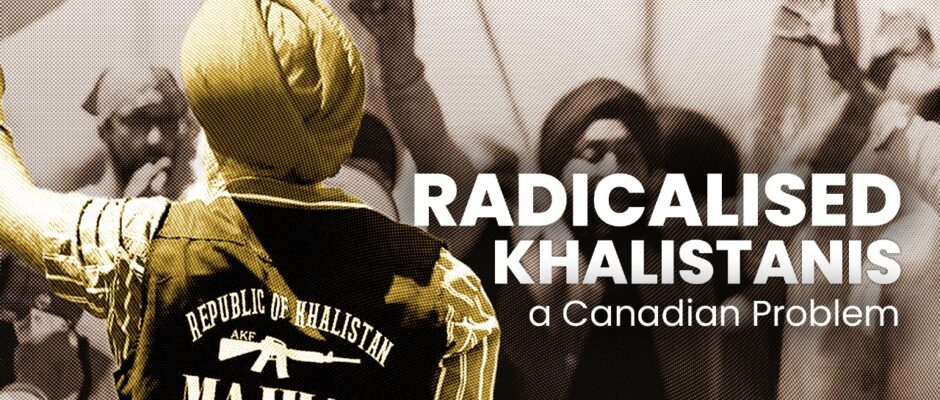
For years Canada’s mainstream parties have courted Sikh immigrants to win votes. Now, they pander to Khalistani extremists for political gains. Rahul Pawa As Prime Minister Narendra Modi arrived in Canada for the G7 summit, an unsettling scene greeted international media: young children brandished “Khalistan” flags and even defaced a Hindu temple in Surrey with secessionist graffiti. These images of toddlers taught to chant separatist slogans sparked outrage in India and around the world. Spokesman Sudeep Singh of the revered Patna Sahib Gurudwara, the birthplace of the tenth Sikh Guru, Guru Gobind Singh Ji warned that “the way children were used in the protests is highly condemnable”. Similarly, Sikh seminary leader Sarchand Singh Khyala condemned the videos as “spreading hatred by brainwashing children”. Dressed-up flags and violent symbols at public parades horrify many Sikhs abroad who see these stunts as political theatre, not Sikhism. Mainstream Sikh leaders make the same point: Khalistanis in Canada are a tiny fringe, not the Sikh community. In late realization of sorts, former Canadian Prime Minister Justin Trudeau has emphasized, “many supporters of Khalistan in Canada… do not represent the Sikh community as a whole.” Leading Sikh voices echo this. Jasdip Singh Jassee of Sikhs of America reminds Americans that “the vast majority of Sikhs globally, including in the US and Canada, do not support separatist agendas.” In India, religious seats like Takht Patna Sahib and Damdami Taksal have publicly denounced the protests. Their message is unequivocal: the Khalistan protesters are not Sikh martyrs. Patna Sahib’s spokesman notes that all of Sikhism’s pending issues are being resolved in India, so “there should not be such protests” against PM Modi “no Sikh can tolerate this.” In fact, these Khalistani stunts run directly counter to Sikh teachings. Sikhism emphasises service and harmony not hate or violence. Provincial Sikh leaders emphasise, “Sikhs have protected mandirs (Hindu temples)” as their sacred Dharmic duty. Yet last April in Surrey, vandals scrawled “Khalistan” on the pillars of Shree Lakshmi Narayana Mandir. This hate-crime – denounced by the temple as “an attack on a sacred space” would deeply sadden ordinary Sikhs. Jasdip Jassee said it was “disgusting” that extremists chose Diwali (a Sikh-protected festival) to vandalise a mandir, calling it “shameful” and against Sikh values. Similarly, Damdami Taksal (a mainstream Sikh seminary) has openly criticised Canadians who use children to insult India’s PM, saying these pro-Khalistan people “are spewing venom against India”. These Sikh authorities unanimously emphasise that Khalistan is not a Sikh cause and certainly not one worth teaching to children. On the contrary, Sikhism is deeply Dharmic and Indian. From the Punjabi heartland to global diaspora Sikhs celebrate their faith’s founder Guru Nanak and their tenets of service (seva) and protection.  India’s own armed forces and civil institutions reflect Sikh contributions: for example, Air Chief Marshal Arjan Singh (a Sikh) was made India’s first Air Force Field Marshal, and Sikh generals have led the Army in multiple wars. Sikh entrepreneurs, scholars and saints likewise uplifted Indian society. For modern Sikhs, the idea of carving out a separate nation feels alien only a “microscopic” minority even entertains it. A former Punjab Chief Secretary notes that hardcore Khalistani ideologues are “not even one per cent” of Sikh population while many others view Khalistan more as a business or polarising narrative. Polls agree Punjab elections show pro-Khalistan candidates picking up well under 1 – 2 per cent of votes in Sikh-majority districts. In short, the Khalistan idea has virtually no grassroots support back in India; it lives on only in select pockets abroad. So why does the Khalistan fringe loom so large in Canada? The answer lies in Canadian diaspora politics and foreign meddling. For years Canada’s mainstream parties have courted Sikh immigrants to win votes, often ignoring their excesses. Observers note a growing consensus among all Canadian parties to pander to Khalistan sympathies for electoral gain. Minister S. Jaishankar put it bluntly: by giving radical Sikhs impunity, “the Canadian government… is repeatedly showing that its vote bank is more powerful than its rule of law.” Veteran broadcaster Terry Milewski described it as a dirty deal: Canadian MPs attend Sikh parades and “look the other way” at posters of terrorists, in exchange for “10,000 votes… because the people of the gurdwaras will vote as we tell them”. In such a climate, small separatist groups found refuge on Canadian soil under the banner of free speech. Worse, intelligence services have cynically empowered them. Indian officials repeatedly assert that Pakistan’s ISI funds the Khalistani network in Canada. Union Minister Hardeep Puri openly called protestors “kiraye ke tattu” (mercenaries on hire) whose demonstrations were staged “from the neighbouring country [Pakistan] where they get funding.”  Security analysts back this up, several top analysts observe that these activists have their own underworld and are often involved in deadly gang rivalries and are essentially “helping Pakistanis spend whatever remains of their money”. Indeed, he warns that Sikh extremists in Canada “will continue to be funded and fuelled by the ISI”. Put bluntly, this looks less like a grass-roots Sikh movement than a criminal-intelligence network. It is a problem imported into Canada by a hostile state, not spawned by Sikh communities. The political consequences in Canada have been dramatic. In the 2025 federal elections, Jagmeet Singh, NDP leader who long voiced support for Sikh protesters, saw his party collapse. Singh lost his own seat and announced he would step down as leader. Earlier, in September 2024, Singh had even “ripped up” his confidence-and-supply deal with Trudeau’s “Liberals”, erasing the government majority he once helped engineer. Meanwhile Trudeau’s gamble backfired. As Sikh ally Singh turned on him, Trudeau’s Liberals barely clung to power under newcomer Mark Carney. By early 2025 Trudeau himself resigned as a result of his Khalistan miscalculation. In short, Ottawa’s flirtation with diaspora extremism not only frayed Canada-India ties, it torpedoed the careers of Western politicians. Against this turmoil, Sikhs have reaffirmed their core values. Sikh institutions wasted no time republishing lessons of unity. Damdami Taksal’s Sarchand

Read More
Operation Sindoor: India’s justified calibrated kinetic strikes Against Terror

Operation Sindoor: India’s justified calibrated kinetic strikes Against Terror

An unbroken thread links India’s 21‑year struggle against cross‑border terrorism, from the 2001 Parliament attack to the 2016 “surgical strikes” and the 2019 Balakot air strikes, into the present moment. On  22  April  2025 five Lashkar‑e‑Taiba gunmen slaughtered twenty‑six mostly Hindu tourists at Baisaran meadow near Pahalgam, Anantnag district, after segregating the victims by religion.[1] Within twenty‑four hours New  Delhi’s Cabinet Committee on Security (CCS) validated   “cross‑border linkages,” suspended the Indus Waters Treaty and ordered a graduated response “to bring the perpetrators and their sponsors to justice.”[2] Economic and diplomatic screws turned first: a blanket ban on Pakistani imports (2  May)[3] and reciprocal port closures (4  May)[4] reduced bilateral trade to zero and shrank the two High Commissions to skeletal staffs. Yet Pakistan army mortar fire persisted across the Line of Control, and Indian intelligence traced the Pahalgam cell to Lashkar training clusters in Pakistan and Pakistan‑occupied Jammy and Kashmir (PoJK). With public outrage mounting, the government authorised a justified calibrated kinetic strike, Operation  Sindoor.

Read More

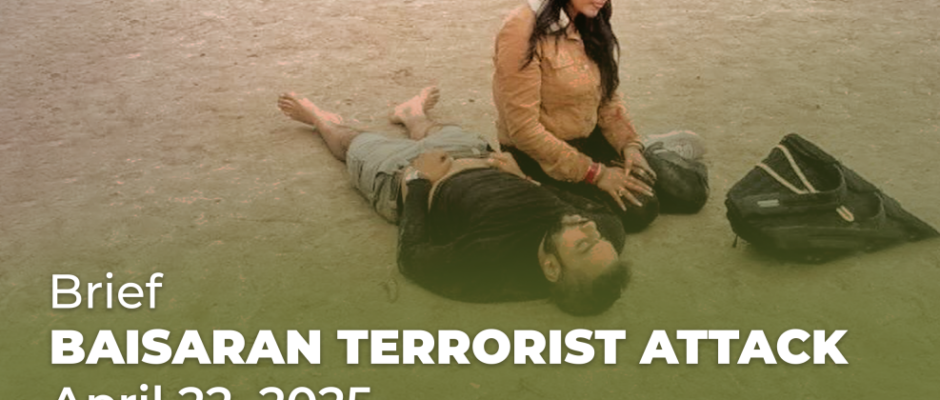
Brief on Baisaran Terrorist Attack – April 22, 2025

At approximately 2:30 PM on April 22, 2025, a group of terrorists opened indiscriminate fire on tourists at Baisaran meadow, some 6 km from the tourist town of Pahalgam in Anantnag district, Jammu & Kashmir. The Pakistan backed islamist terrorists exploited dense forest bordering the meadow to launch a deadly ambush on innocent tourists enjoying pony rides and foot tours of the so called ”Mini-Switzerland” claiming more than 26 lives and injuring 17 others. Our brief explains the deadly terrorist attack.

Read More
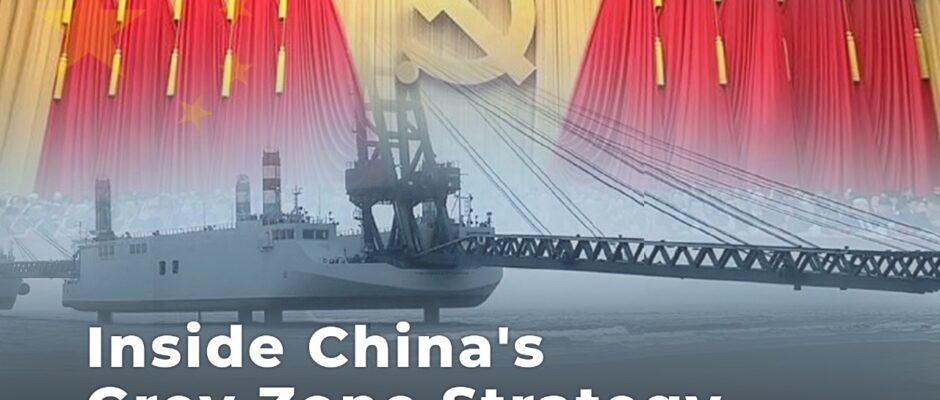
Inside China's Grey Zone Strategy

Inside China’s Grey Zone Strategy

Rahul Pawa In South China Sea, grey zone tactics unfold with laser-focused intent. Watching the PLA Navy’s manoeuvres or the maritime militia’s presence can, at times, feel like staring at a chessboard whose pieces inch forward one measured square at a time. The sight of special barges looming by the docks in Zhanjiang, China, went unnoticed by many who passed them on their daily commutes. To casual observers, these hulking platforms seemed little more than routine maritime fixtures. But for those with their eyes fixed on the shadows of international geopolitics, these barges signalled something far more ominous: a finely tuned exercise by the People’s Liberation Army (PLA) in what appeared to be over-the-shore logistics drills for a future military landing. In hushed circles in Taipei, Washington, Delhi and capitals across Asia, the question was no longer if China was meticulously preparing itself for conflict, but rather how it used the blurred space between war and peace to move closer to its global aspirations. In recent years, Chinese Communist Party (CCP) has demonstrated a distinct flair for “grey zone” strategies—actions that straddle the threshold between open conflict and the calm of peacetime. This approach is not entirely new; historical powers have long tested their adversaries with salami-slicing tactics, never crossing the bright red line that might spark a full-scale clash. Yet what sets the CCP apart is its calculated synchrony of economic, diplomatic, maritime, and cyber manoeuvres, pushing its objectives in precise increments. In effect, Beijing has mastered the subtlety of wrestling advantage while making it appear that the match has barely begun. In South China Sea, these grey zone tactics unfold with laser-focused intent. Watching the PLA Navy’s manoeuvres or the maritime militia’s presence can, at times, feel like staring at a chessboard whose pieces inch forward one measured square at a time. When disputes arise, the CCP often deploys fishing fleets that function like unofficial patrols, creating friction against neighbours like Vietnam or the Philippines. Although these fishing vessels seem harmless at a glance, their real purpose is to project CCP influence and thwart regional rivals from fully exercising their own sovereignty. Beijing’s “nine-dash line” claims—rejected as baseless by a United Nations Convention on the Law of the Sea (UNCLOS) arbitration panel—illustrate its sweeping claim over nearly the entire South China Sea. Yet China treats that ruling as little more than background noise. It has advanced its position through repeated harassment of Philippine resupply missions, demonstrating how a large naval fleet is not always necessary to assert dominance. Last year, when Philippine efforts to resupply the rusted BRP Sierra Madre near the Second Thomas Shoal were impeded by China’s Coast Guard and maritime militia. An agreement to ease tensions was eventually reached, but China then turned its gaze toward the Scarborough and Sabina Shoals, employing a range of coercive tactics that skirted just below the threshold of outright military force. This is precisely the effectiveness of Beijing’s grey zone philosophy: the CCP can repeatedly test the resolve of its neighbours and the broader international community without triggering a major conflagration. Unchallenged, those incremental gains morph into accepted realities—often reinforced by a parallel campaign of disinformation and cyberattacks that sow confusion and shape public perception. Indeed, the hallmark of the CCP’s grey zone strategy is its convergence with information operations. As the world has become more interconnected, data and narrative management have become invaluable pieces on the geopolitical chessboard. Taiwan’s National Security Bureau reported that Chinese agents circulated 60 percent more false or biased information in 2024 than in the previous year, an alarming trend that hints at a steady intensification of disinformation campaigns. It is, in effect, the other side of the same grey zone coin: while the PLA’s warships push deeper into contested waters, Beijing’s narratives undermine trust in democratic processes, making it that much harder for adversaries to mount a united response. Another front where Beijing flexes its grey zone muscles lies in the economic realm—a domain where “carrots and sticks” often speak louder than gunboats. CCP’s massive market provides an enticing lure for many nations, encouraging them to tread lightly on issues Beijing holds dear. At the same time, the CCP is quick to punish countries that challenge its aims. Witness how trade restrictions, investment blacklists, and targeted boycotts are deployed whenever a state brushes too close to opposing CCP’s territorial ambitions or welcoming dissidents. Even patrolling maritime areas in dispute can shut down foreign economic opportunities: by swarming neighbourly waters with large fishing fleets, CCP can intimidate local companies into abandoning lucrative projects such as oil and gas extraction. However, nowhere is the CCP’s grey zone approach more fraught with global tension than around Taiwan. For decades, Beijing has asserted that the island is a “breakaway province”, destined, eventually, for reunification—by force if necessary. Yet mounting a full-scale invasion comes with tremendous risk, both militarily and politically. Thus, CPC’s cross-strait strategy frequently focuses on intimidation and incremental pressure. Having declared its own Air Defense Identification Zone (ADIZ) over much of the East China Sea, the PLA has probed Taiwanese airspace with persistent sorties, testing and teasing the boundaries. Over the course of 2024, the PLA Navy stationed warships near Taiwan’s ADIZ, and by December that year, it conducted large-scale exercises with aviation and naval forces in an elaborate show of force. All of it served dual purposes: normalising frequent PLA military appearances in the region, and demonstrating that Taipei’s backers—chief among them the United States—may not muster the political will to intervene every time. For the United States and its allies, especially Japan, the grey zone creates a double bind. Acting too robustly against each provocation risks an escalation that no one wants, while complacency allows Beijing’s inroads to solidify into indisputable facts on the ground—or, in this case, at sea. The art of Beijing’s game lies in how it calibrates pressure just below that flashpoint. By the time foreign powers muster the will to intervene, the CCP has typically moved on to

Read More
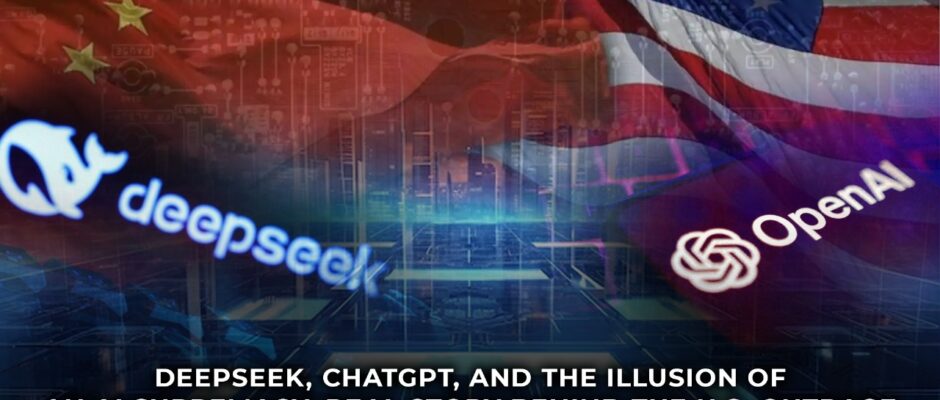
DeepSeek, ChatGPT, and the Illusion of an AI Supremacy: Real Story Behind the U.S. Outrage

DeepSeek, ChatGPT, and the Illusion of an AI Supremacy: Real Story Behind the U.S. Outrage

Rahul Pawa Next generation of AI breakthroughs will not necessarily emerge from trillion-dollar companies with exclusive access to compute power. Instead, they will come from those who can best refine, iterate and optimise open-source research. This is why the reaction in the U.S. is so intense. DeepSeek, particularly its “R1” model, sent a subtle tremor through the U.S. tech elite—one that quickly escalated into a storm. The Chinese-developed AI’s remarkable efficiency rattled Silicon Valley, with analysts bracing for yet another chapter in the intensifying technological arms race between the two tech powers. However, the real story isn’t China outpacing the U.S. in AI—this understanding is flawed. The true takeaway lies not in AI Supremacy but in rising influence of open research and open-source development, which are rapidly outpacing proprietary AI models. For years, the prevailing wisdom in Silicon Valley was that AI supremacy was dictated by scale and infrastructure. OpenAI’s ChatGPT, built on the Generative Pre-trained Transformer (GPT) model, was the epitome of this approach. It was trained on vast datasets, fine-tuned with Reinforcement Learning from Human Feedback (RLHF), and required enormous computational resources to function. ChatGPT’s dense Transformer architecture meant that every interaction activated all of its parameters, demanding substantial compute power, data centers, and high-end GPUs to sustain its performance.This resource-heavy approach made large-scale AI development an exclusive domain of tech giants. The assumption had long been that only organisations with billion-dollar budgets and state-of-the-art infrastructure could build competitive AI models. The underlying premise was that the future of AI would be controlled by those who could invest the most in proprietary architectures and data ecosystems. Then came DeepSeek, and with it, an unexpected disruption to this model. Unlike ChatGPT’s dense Transformer framework, DeepSeek employs a Mixture-of-Experts (MoE) architecture, an approach that activates only the most relevant subnetworks for each task. Instead of engaging all model parameters indiscriminately, DeepSeek selects only a subset of specialised expert networks, dramatically reducing computational costs while maintaining high performance. This efficiency allows DeepSeek to deliver state-of-the-art AI capabilities without the infrastructure overhead required by proprietary models like ChatGPT. But the real disruption is not just in DeepSeek’s technical design—it is in how it was built. DeepSeek did not emerge from secrecy. It was not necessarily developed in a classified government lab or through covert data acquisition. Instead, it was built using open-source tools and publicly available research—much of it originating from the West. The foundation of DeepSeek’s success is not Chinese innovation but the power of open-source AI research. It leveraged, Meta’s Llama, an open-source large language model whose architecture was freely available. PyTorch, a deep-learning framework widely used in AI development, originally developed by U.S. researchers. Mixture-of-Experts research, openly published in Western academic AI circles. China did not need to steal AI advancements—it simply used what was freely available, improved upon it, and released an optimised version. This is the real source of Silicon Valley’s unease. If DeepSeek can leverage open-source AI research, refine it, and deploy a highly efficient model at scale, then the playing field is no longer dictated by who has the largest dataset or the most compute power. The realisation that AI’s future is no longer monopolised by a few Western corporations is what is truly unsettling the industry. DeepSeek is simply the first proof of a larger trend: open-source AI models are overtaking proprietary ones in agility, accessibility, and efficiency. The AI race is no longer about who has the most resources, but who can most effectively iterate and optimise open research. The implications extend beyond economics and corporate dominance—they reach into geopolitics and national security. For years, the U.S. has sought to contain China’s AI ambitions through restrictions on high-performance semiconductor exports. The Biden administration imposed strict controls on the sale of Nvidia’s A100 and H100 AI chips to China, believing that limiting access to cutting-edge hardware would slow its AI development. But DeepSeek challenges that assumption. If AI can be built more efficiently, then hardware limitations become less of a bottleneck. DeepSeek suggests that AI models do not necessarily need massive compute power to be competitive—they need smarter, more efficient architectures. If this is true, then U.S. export restrictions may not be as effective as previously believed. Yet, to frame this purely as a U.S.-China competition misses the broader transformation taking place. DeepSeek is not a singular national achievement—it is evidence of a fundamental shift in AI development. The next generation of AI breakthroughs will not necessarily emerge from trillion-dollar companies with exclusive access to compute power. Instead, they will come from those who can best refine, iterate, and optimise open-source research. This is why the reaction in the U.S. is so intense. The fear is not that China alone has built a better model, but that the monopoly on AI development itself is weakening. If DeepSeek’s efficiency proves sustainable, then the assumption that AI innovation belongs only to the wealthiest institutions is no longer valid. DeepSeek doesn’t signal the U.S. losing its AI edge—it marks the broader shift that AI development is decentralising. The future of artificial intelligence will not be dictated by who has the largest corporate lab or the deepest computing resources, but by who is willing to embrace collaboration, efficiency, and open knowledge. Silicon Valley’s response to DeepSeek is telling. It is not about a loss of American technological superiority but about a loss of control over the AI narrative. The shift toward open-source AI threatens the dominance of proprietary models, and that is what has set off the alarm bells in Washington and within the ranks of major AI corporations. Lastly, DeepSeek is not an endpoint it is a harbinger of what is to come. The AI revolution is moving faster than anticipated, not because of geopolitical competition, but because of the power of shared knowledge. The next phase of AI will be defined not by who builds the biggest model, but by who can most effectively harness and refine what is already available to everyone. The U.S.

Read More
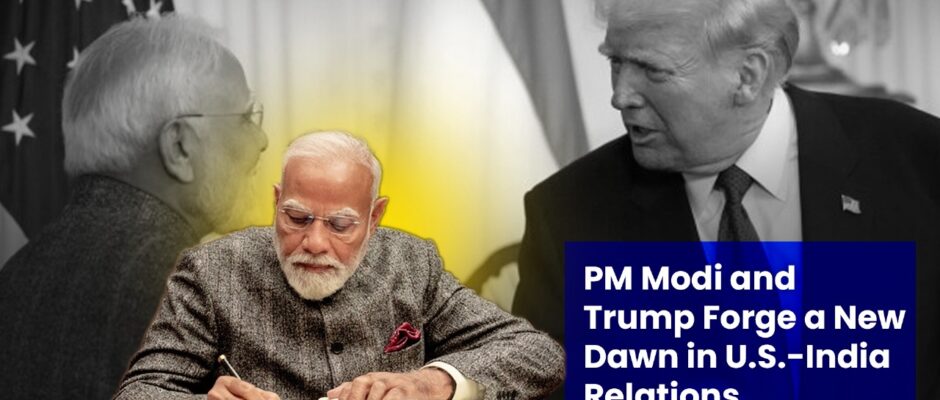
PM Modi and Trump Forge a New Dawn in U.S.-India Relations

PM Modi and Trump Forge a New Dawn in U.S.-India Relations

Prime Minister Modi’s visit to the United States not only deepened the strategic alliance between the two nations but also set in motion a cascade of initiatives that promise to reshape the geopolitical landscape for decades to come. Rahul Pawa In a dazzling display of strategic vision and personal rapport, Prime Minister Narendra Modi’s recent visit to the United States in February 2025 has set the stage for an era of renewed cooperation and transformative partnerships between two of the world’s most influential democracies. Against the backdrop of an increasingly complex global landscape, the visit showcased a masterclass in diplomacy, marked by high-level meetings, landmark agreements, and an inspiring confluence of ideas that spanned defence, trade, technology, energy, and cultural exchange. At the heart of this historic journey was the much-anticipated meeting between Prime Minister Modi and President Donald J. Trump in Washington, D.C. In an atmosphere that was as congenial as it was consequential, the two leaders not only reaffirmed the bedrock of the India-U.S. Comprehensive Global Strategic Partnership but also demonstrated a genuine personal rapport that resonated far beyond policy papers and strategic memos. Their conversation, punctuated by mutual admiration and forward-looking optimism, culminated in the launch of the ambitious U.S.-India COMPACT for the 21st Century—a transformative roadmap designed to deliver tangible results across defence, commerce, and technology within the year. In an era defined by intricate challenges—from rebalancing global tariffs and tackling illegal immigration to addressing the ramifications of the Russia-Ukraine issue—Modi’s discussions with President Trump were both candid and constructive. The leaders deliberated on the urgent need to streamline tariff structures to foster a more equitable trading relationship. They also exchanged views on sensitive judicial issues, such as the extradition of Tahawwur Rana, recognising that robust legal cooperation is pivotal in the fight against terrorism. This frank dialogue underscored their shared commitment to maintaining a rules-based international order, a cornerstone for global stability. A standout moment during the visit was Prime Minister Modi’s engaging discussion with Elon Musk, who, in his dual role as the head of the U.S. Department of Government Efficiency (DOGE) and CEO of Tesla, symbolised the seamless fusion of public policy and private innovation. In an exchange that was as energetic as it was visionary, Modi and Musk explored the boundless possibilities of emerging technologies—from space exploration and artificial intelligence to sustainable development. Musk’s presence, accentuated by the warmth of his family’s company, added a distinctly personal dimension to the dialogue, reinforcing the belief that when innovation is nurtured, boundaries dissolve and progress becomes inevitable. The visit was also a testament to the two nations unyielding commitment to security. In his meeting with U.S. National Security Advisor Michael Waltz, Prime Minister Modi delved into discussions centred on strategic technologies and defence industrial cooperation. The dialogue, which included pivotal discussions on civil nuclear energy and the deployment of small modular reactors, laid the groundwork for an enduring partnership aimed at fortifying both nations’ security frameworks. Equally significant was the meeting with U.S. Director of National Intelligence Tulsi Gabbard, where the emphasis was placed on bolstering intelligence sharing, particularly in the realms of counterterrorism and cybersecurity. These high-level engagements highlighted a shared understanding: that in today’s volatile global environment, the integration of traditional and technological security measures is indispensable. One of the most consequential outcomes of the visit was the announcement of a new ten-year major defence partnership framework. This comprehensive agreement is poised to not only enhance the interoperability of the two nations’ armed forces through expanded defence sales and co-production initiatives but also to foster the development of cutting-edge autonomous systems via the newly established Autonomous Systems Industry Alliance (ASIA). Such initiatives are testament to the strategic foresight of both nations, ensuring they remain at the vanguard of modern warfare and intelligence-sharing capabilities. In parallel, enhanced military collaboration was underscored by plans for expanded joint exercises such as the “Tiger Triumph” tri-service exercise. This commitment to operational readiness and mutual trust stands as a bulwark against both conventional and unconventional threats, ensuring that the armed forces of India and the United States are ever-prepared to respond to emerging global challenges. On the economic front, the visit heralded a bold new chapter with the introduction of “Mission 500”—an ambitious initiative aiming to double bilateral trade to $500 billion by 2030. This visionary target is complemented by ongoing negotiations for a comprehensive multi-sector Bilateral Trade Agreement, expected to streamline trade practices and dismantle barriers to market access. Modi’s discussions emphasised the importance of greenfield investments and regulatory reforms designed to create an enabling environment for business expansion, ensuring that the economic benefits of the strengthened partnership are widely shared. Energy security, a linchpin of national stability, featured prominently in the agenda. The U.S.-India Energy Security Partnership was designed to guarantee reliable, sustainable, and affordable energy supplies through joint initiatives in oil, gas, and liquefied natural gas (LNG). Complementing this was the reaffirmation of the U.S.-India 123 Civil Nuclear Agreement, aimed at advancing civil nuclear cooperation through the development of U.S.-designed reactors in India. Special emphasis was placed on the development of small modular reactors—an innovation set to revolutionise energy generation by being both cost-effective and environmentally sustainable. Perhaps one of the most forward-looking initiatives announced was the U.S.-India TRUST (Transforming the Relationship Utilizing Strategic Technology) initiative. This comprehensive programme is poised to catalyse innovation by fostering collaboration among governments, academia, and the private sector in fields as diverse as artificial intelligence, semiconductors, and quantum computing. In tandem, the INDUS Innovation Bridge aims to bolster industry–academic partnerships and create secure, trusted supply chains for vital technological components, thereby enhancing both nations’ self-reliance and resilience in an increasingly interconnected global economy. The discussion also extended to strategic mineral recovery and civil space cooperation. Recognising the critical role of raw materials in technological advancement, efforts to accelerate the recovery of essential minerals like lithium and cobalt were highlighted. Joint space projects, including a NASA-ISRO collaboration, are poised to propel both nations into a leadership role in

Read More