
CIHS – Centre for Integrated and Holistic Studies

Date/Time:

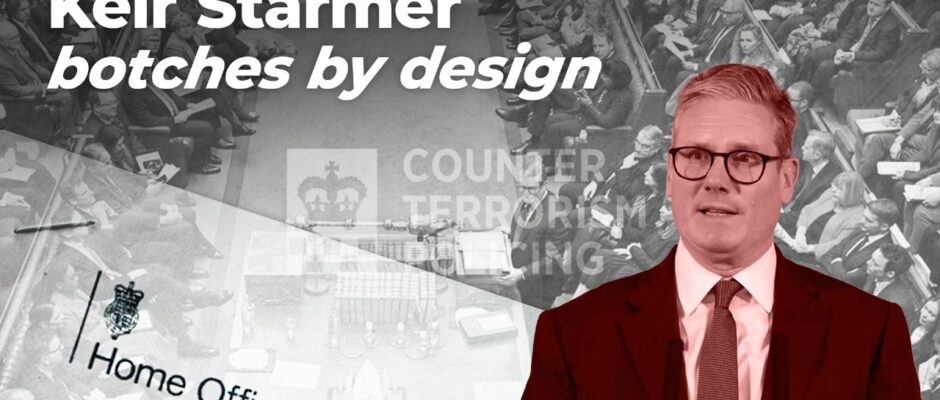
Keir Starmer Botches by Design

Keir Starmer Botches by Design

United Kingdom’s counter-extremism policy botches up by intent. It’s a political weapon against Hindus and offers shield for islamists. Dr. Shailendra Kumar Pathak United Kingdom’s government’s proposed new counter-extremism policy may not be well intentioned. It’s being perhaps calculative and an ideological weapon designed to shield Islamists while turning Hindus scapegoats. UK’s Home Ministry document, ‘Extremely Confused: The government’s new counter-extremism review revealed’, authored by Andrew Gilligan and Dr. Paul Stott for Policy Exchange think tank throws insights into anti-Hindu thinking of Keir Starmer government in London. This policy manipulates language, distorts extremism definitions and provide protective shield to most dangerous groups while targeting those who seek to challenge Islamist and leftist orthodoxy. The report is in itself a response to UK Home Ministry counter-extremism document prepared under the influence of left-wing and Islamist-aligned bureaucrats. Figures such as Sara Khan, Iman Atta and Robin Simcox, known for their self-proclaimed progressive and Islamist-leaning advocacy, have had significant impact on shaping this policy direction. These figures have past associations with organizations that downplay role of Islamist ideology in terrorism and instead push for a “decolonial” or “grievance-based” framework that excuses extremist behaviour. By shifting from an ideology-based to a behaviour-based approach, UK government has removed Islamism from scrutiny, despite its overwhelming role in extremism while falsely constructing a “Hindu nationalist threat” to create moral equivalence where none exists. The report highlights how Islamist terror has been responsible for 94 per cent of terrorism-related deaths in UK since 1999. Yet, the policy assigns vague, neutral labels like “grievance-based extremism” or “online radicalization” to Islamist violence. Instead of acknowledging well-documented role of Islamist ideology in grooming gangs, blasphemy violence and jihadist attacks, the policy frames these acts as “problematic behaviours” detached from ideology. “The Sprint de-centres and downplays ideology in general and Islamism in particular,” the report states, making it clear that the government is deliberately avoiding naming the most pressing extremist threat. This ensures that counter-terror resources are wasted monitoring low-level social grievances while radical mosques and Islamist networks continue operating freely. At the same time, Hindutva and Hindu nationalism are explicitly named as threats—despite no Hindu terror cases in UK. This is a deliberate effort to demonize Hindus, forcing them into a defensive position where any resistance to Islamist aggression is framed as extremism. This distortion is not accidental; it is a product of Left-Islamist alliance. The leftist establishment sees Islamist groups as allies against nationalism, traditional values, and Western identity. By falsely portraying Hindus as aggressors, they create a justification to police and silence Hindu voices. The Leicester riots of 2022 epitomized this dynamic—Islamist mobs attacked Hindu homes, temples and businesses, yet the media and government falsely framed Hindus as the perpetrators. The Policy Exchange report specifically identifies Islamist groups such as Muslim Engagement and Development (MEND) and CAGE as key influencers in shaping this policy direction. Both organizations have a history of defending Islamist extremism, with MEND previously accused of enabling hate speech and CAGE notorious for its support of jihadist figures, including defending ISIS executioner Mohammed Emwazi (“Jihadi John”). CAGE’s leadership has been linked to figures such as Moazzam Begg, who has defended convicted terrorists and consistently opposed counter-terrorism measures aimed at dismantling jihadist networks. New counter-extremism policy ensures that future anti-Hindu violence will be ignored or worse, justified under guise of fighting “Hindutva extremism.” The Policy Exchange report warns, “Expansionary definitions also risk triggering even greater and more distracting political controversy than now, from both right and left,” demonstrating that this shift will not only harm Hindus but weaken counter-extremism efforts altogether. Similarly, Khalistani separatist figures like Avtar Singh Khanda—who played a significant role in radicalizing Sikh youth—are downplayed as mere “diaspora activists.” The policy’s refusal to acknowledge Khalistani terror confirms its politically motivated agenda. How UK’s Counter-Extremism Policy Manipulates Language to Protect Islamists and Target Hindus Group Government Label Real-World Impact Islamists and Jihadists “Grievance-based extremism,” “youth violence,” “online radicalization,” “extreme views” De-ideologizes Islamist violence, making it appear as personal problem rather than a systemic movement Islamic Grooming Gangs “Organized exploitation,” “group-based sexual abuse” Avoids acknowledging religious, ethnic patterns behind these crimes Islamic Blasphemy Extremists (e.g., Batley Grammar incident) “Marginalized voices reacting to offense” Shields Islamic radicalism from accountability, while punishing those who ‘provoke’ them Hindus who defend themselves “Hindu nationalist extremism,” “Hindutva radicalization” Creates false equivalence between Hindu self-defense and Islamist violence Khalistani Extremists “Sikh activism,” “diaspora advocacy” Downplays their links to terrorism, separatist violence Broader objective behind this policy seems to create a permanent mechanism for ideological suppression. By expanding extremism to include vague categories like “misogyny,” “conspiracy theories,” and “online subcultures,” the government has provided itself with a sweeping tool to criminalize dissent. The Policy Exchange report specifically criticizes this shift, saying that “including a range of other crimes and social ills in the remit risks swamping already stretched interveners and counter-terror police with tens, if not hundreds, or thousands of new cases.” This ensures that anyone critical of Islamism, mass immigration or leftist policies can be surveilled and targeted. The reversal of protections against recording “non-crime hate incidents” further exacerbates this problem, allowing police to build unofficial records against individuals who express politically inconvenient views. Meanwhile, Islamists benefit immensely from this shift. By removing ideology from counter-extremism, the government ensures that radical preachers, jihadist recruiters and extremist organizations are treated as victims of social grievances rather than as threats to national security. This will make it even harder for law enforcement to track and dismantle jihadist networks. The rebranding of Islamist extremism as “behavioural concerns” allows Islamists to operate with near impunity while those who challenge them face legal persecution. “The Sprint may have been influenced by the events of Southport,” the report notes, warning that using lone incidents of violence as justification for broad policy shifts risks erasing the real threats posed by ideological extremism. This is not counter-extremism—it is state-sponsored assault on Hindus and a deliberate act of political repression. Instead of drawing comparison to Jewish experience, it is more
Read More
How Paranoia Fuels Extremism in the West

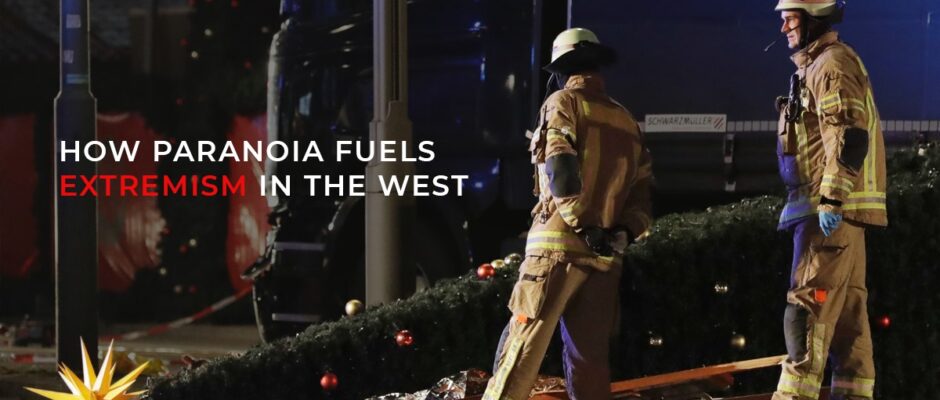
How Paranoia Fuels Extremism in the West

Political leaders, irrespective of alignment, must reject zero-sum polarisation in favour of constructive engagement. Rahul Pawa In contemporary politics, the dichotomy of so-called “left” and so-called “right” often feels antiquated, especially in today’s age where these terms trace their origins to ancient seating arrangements in the French Estates-General. Yet, this outdated framework persists, weaponised to sow division and fuel hysteria. A particularly troubling trend is how the so-called left amplifies fears of right-wing to stoke paranoia, demonise opposition, and justify authoritarian measures. This approach had often skewed public perception, contributed to polarisation and even incited extremist acts. Case studies from United States, France, United Kingdom and other European nations highlight how this phenomenon unfolded with devastating outcomes. Recently held US elections offered a stark example. In the lead-up, left-leaning media and political figures frequently portrayed right-wing factions as existential threats to democracy. After Supreme Court’s controversial decision on gun control and abortion, fear-mongering narratives accused conservative groups of orchestrating a “rollback of rights.” Protests turned violent in some cities with activists attacking federal buildings and clashing with law enforcement. Demonising right-wing ideological thought extended beyond policy critiques, painting all conservatives as complicit in fostering extremism. This framing ignored nuances of political diversity and fueled retaliatory violence such as targeting of conservative candidates campaign offices in swing states. In France, narrative weaponisation during 2022 presidential elections against Marine Le Pen and National Rally party is illustrative. Left-leaning factions likened Le Pen’s platform to resurgence of France’s Vichy-era authoritarianism framing her as threat to democratic values. Media narratives blamed her rhetoric for purported rise in hate crimes, despite scant evidence linking her supporters to such incidents. Simultaneously, left-wing protests turned violent, targeting police and municipal buildings in urban centres like Paris and Marseille. The overlooked irony is that these violent outbursts mirrored extremism that left purportedly opposed. In United Kingdom, post-Brexit era saw left campaigners amplifying fears of xenophobia and regressive nationalism. Following murder of Labour Member of Parliament, Jo Cox in 2016, left-leaning media individuals and outlets portrayed Brexit movement as intrinsically tied to hate and division. This framing extended into parliamentary debates where MPs opposed to Brexit were hailed as defenders of democracy against imagined and cooked up right-wing threats. The left’s relentless focus on demonising the rightist values and ideas overshadowed legitimate policy debates on sovereignty and economic strategy. This polarisation contributed to incidents like violent altercations outside polling stations during 2019 general elections. Germany’s 2019 Halle synagogue attack became another flashpoint for left leaning strategists pointed to what they peddled as rising right-wing extremism to be dominant security threat. While this attack was a serious incident of antisemitic violence, narrative focus eclipsed broader challenge posed by jihadist terror. For instance, 2016 Berlin Christmas market attack where 12 lost lives and injured dozens, underscored the enduring threat of Islamist extremism. Yet, narratives from left-leaning factions consistently prioritised framing right formations as more of immediate danger. This may be part of a design to gloss over Islamist-linked plots and incidents that represented significant public safety risks. Across Europe, similar dynamics have unfolded. In Sweden, immigration debates have been marred by accusations of xenophobia directed at right-wing parties, stifling substantive discussions on integration and crime. Giorgia Meloni’s leadership of Brothers of Italy party was met with relentless attempts to associate her with fascist ideologies. Such narratives not only polarised electorates but also led to erosion of public trust in democratic institutions. By framing right wing formations as omnipresent threat, left not only fueled cycles of insecurity and reactionary extremism but also covered up their own irrelevance. Consequences of weaponising paranoia are far-reaching. Left groupings of every shade and variety have by design in fact exacerbated polarisation, radicalisation of individuals on both ends of the spectrum and undermined societal cohesion. Cyclical nature of this rhetoric—where fear of the right justifies retaliatory measures—perpetuates violence and distracts from addressing genuine threats. For instance, 2023 French riots following a police shooting were framed by left-leaning media as response to systemic racism and right wing policies. This framing overshadowed law enforcement’s perspective and criminal elements involved in unrest further polarising public opinion. To mitigate destructive impact of these narratives, a commitment to nuanced, fact-based discourse is essential. Media outlets may have to prioritize accuracy over sensationalism ensuring balanced reporting that reflects complexity of security challenges. Civic education initiatives should empower citizens to critically evaluate political rhetoric, fostering resilience against manipulation. Political leaders, irrespective of alignment, must reject zero-sum polarisation in favour of constructive engagement. Left campaigners weaponisation of fear highlights a troubling trend in present day politics. By demonising right political parties, individuals and groups what’s being done is to amplify paranoia and exacerbate cycles of extremism, undermining the democratic fabric of society. Case studies from United States, France, United Kingdom and beyond reveal dangers of such narratives underscoring urgent need for evidence-based engagement and mutual respect. In an era where simplistic labels fail to capture political realities, societies must transcend outdated binaries and recommit to principles of objectivity, transparency and fairness. (Author is Research Director at Centre for Integrated and Holistic Studies, New Delhi based non-partisan think-tank) (Author is Research Director at Centre for Integrated and Holistic Studies, New Delhi based non-partisan think-tank)

Read More

Daily Mail Goes Bonkers on Leicester Violence!

An article titled ‘Violent ethnic clashes in Leicester last year’ by Abul Taher & Nicholas Pyke propagates agenda based myths far from reality  First, the article heavily relies on unidentified “UK security sources” without providing specific names or verifiable evidence to support the writers’ claims. Lack of transparency in sourcing the write up raises questions on credibility and reliability of the information presented. The write up attempts to establish a false link between Indian political activists associated with Prime Minister Narendra Modi’s Bharatiya Janata Party (BJP) and ethnic clashes in Leicester. However, the writers have no evidence whatsoever to establish a direct causal link between political activists in India and violent and murderous rioters. It’s grossly misleading to attribute the entire chain of incidents to a specific political party or its members.  The writers audaciously misquote Charlotte Littlewood, a research associate at the Henry Jackson Society, a think tank that did a detailed study on the Leicester violence. Littlewood clarified the context and nuances of her statements. As per her tweet, she did not believe that attacks on Hindu homes should be dismissed as mere “spin.” She expressed concern about Hindus safety in the UK who face unjust blame for political events abroad.  Littlewood stated that while she found links between those who led the Muslim onslaught and criminal groups in Pakistan, she did not find any evidence of BJP / RSS links with Hindu activists that resisted the violence. She mentioned that she had not seen the evidence presented by The Daily Mail regarding BJP involvement between the cricket match and marches.  Littlewood acknowledged presence of individuals linked to Pakistan in the clashes and highlighted potentially problematic nature of evidence suggesting BJP involvement, as it would demonstrate disregard for peace and security in UK.  She did not believe that BJP “escalated” the situation. She asserted that her comment was paraphrased and tensions were primarily local, with foreign influence becoming apparent after the initial Hindu march, exacerbating anti-Hindu and anti-Muslim sentiments, particularly online, as per findings of a report conducted by the US-based Network Contagion Research Institute. She reportedly said that the article appeared one-sided and would contribute to perception of a violent UK Hindu nationalist threat.  The referenced study by Network Contagion Research Institute (NCRI) sheds light on significant impact of malicious narratives propagated through social media and digital platforms, highlighting their purported role in instigating the unrest.  The study identified false reports and conspiracy theories fueling ethnic hatred towards the Hindu community, perpetuating Hinduphobic sentiments and intentions.  Influencers such as Majid Freeman, known for his vocal support of slain ISIS fighters and Al Qaeda utilized social media platforms to propagate and amplify these false theories that directly impacted unrest in Leicester. Linguistic analysis done by NCRI revealed a significant disparity in mentions of words “Hindu” and “Muslim” on Twitter, with “Hindu” being mentioned over 40 per cent more frequently. The Hindu community was predominantly portrayed as conspirators and aggressors involved in a supposed global project seeking supremacy and dominance.  NCRI’s AI models identified that over 70 per cent of incitements to violence were targeted against the Hindu community while only 30 per cent were against Muslims. These patterns of reciprocal escalation are likely to continue unless social media platforms take proactive measures to address the misuse of their products, which contributes to on-street violence and aggression against vulnerable communities.  The Daily Mail’s article heavily relies on unidentified “UK security sources” and lacks transparency, casting doubts on its credibility. The article showcases chronic bias against Hindu community and reflects the institutional prejudice of The Daily Mail. Additionally, the misquotations and misrepresentations of Charlotte Littlewood’s statements further undermine accuracy of the article. This baseless reporting perpetuates unfounded allegations and contributes to misinformation, potentially causing harm and perpetuating negative stereotypes about the Hindu community.

Read More

The Queen Cherished Her Time in India

Neha Dahiya / New Delhi, India Princess Elizabeth Alexandra Mary, the first child of the then future King George VI and Queen Elizabeth (The Queen Mother), was born on April 21, 1926 in Mayfair, London. At twenty five years old, Princess Elizabeth ascended to the British throne and became Queen of the United Kingdom and other Commonwealth realms on February 6, 1952, and was commonly known as Elizabeth II. The British throne is inherited according to descent, gender, legality, and religion. According to British common law, a sovereign’s children or a sovereign without children’s closest collateral line inherits the Crown. Elizabeth was third in line for the British throne during her grandfather’s rule, behind her father and her uncle Edward. Even though her birth sparked curiosity in the public, it was not anticipated that she would become queen as her uncle Edward was still young and was most likely to be married and have his own children, who would succeed Elizabeth in the line of succession. She became second in line to the throne after her father when her grandfather passed away in 1936 and her uncle succeeded as Edward VIII. After his anticipated marriage with divorced socialite Wallis Simpson sparked a constitutional crisis later that year, Edward abdicated. As a result, George VI, Elizabeth’s father, ascended to the throne. It was then that Elizabeth became the presumed successor because she did not have any brothers. After her father, George VI, passed away on February 6, 1952, Elizabeth II succeeded to the throne and was immediately crowned queen by her privy and executive councils. The custom of waiting a proper amount of time after a king dies before holding such events meant that the coronation was held more than a year later. Elizabeth II was crowned on June 2, 1953, at Westminster Abbey in London. Until her death on Thursday, September 8, 2022, at age ninety-six, Elizabeth II was the oldest current monarch and head of state in the world. In her record-breaking 70 years as monarch, Queen Elizabeth II set a lot of milestones. Elizabeth ruled for approximately seventy years and four months, during which over fifteen British prime ministers, including Winston Churchill, Margaret Thatcher, Boris Johnson, and Liz Truss, served under Queen Elizabeth II. The finest achievement of Britain’s Queen Elizabeth, who passed away on Thursday after serving as monarch for 70 years, was to keep the monarchy popular throughout decades of seismic political, social, and cultural change that threatened to render it out of date. In the spotlight of an increasingly intrusive and frequently hostile media, she helped steer the institution into the modern era by eliminating court ritual and making it somewhat more open and accessible. Queen Elizabeth II travelled to India on multiple occasions. In 1961, her first state visit with her husband, Prince Philip, came over 15 years after India gained its independence from the British in 1947. She was the first British monarch to ascend to the throne. On her official visit to India, the Queen visited historical sites including Taj Mahal in Agra, Hawa Mahal in Jaipur, and the ancient Hindu city of Varanasi in Uttar Pradesh while touring the cities of Mumbai, Chennai, and Kolkata. She participated in several events, spent days at a maharajah’s hunting lodge, and rode an elephant. The royal couple attended the monumental Republic Day parade on January 26, 1961, as special guests. Following their state visit in 1961, Queen Elizabeth and Prince Philip returned to India in November 1983. Almost two decades later, her visit coincided with a summit of Commonwealth leaders and in 1997, when India was celebrating 50 years of its Independence from the British. It was the Queen’s first public appearance following Princess Diana’s funeral. During her three state visits, the Queen treasured her time in India.”The warmth and hospitality of the Indian people, and the richness and diversity of India itself, have been an inspiration to all of us,” she said. Today, as a mark of respect towards the longest reigning British Monarch, India will observe a one-day state mourning on September 11, 2022. Subsequently, in a statement issued by the ministry of Home Affairs, Government of India, it was stated that the Indian National Flag will be flown at half-mast on all buildings in India on the day of mourning, and on that day, there won’t be any formal entertainment. (Neha Dahiya is a specialist content writer at Centre for Integrated and Holistic Studies)

Read More