
CIHS – Centre for Integrated and Holistic Studies

Date/Time:

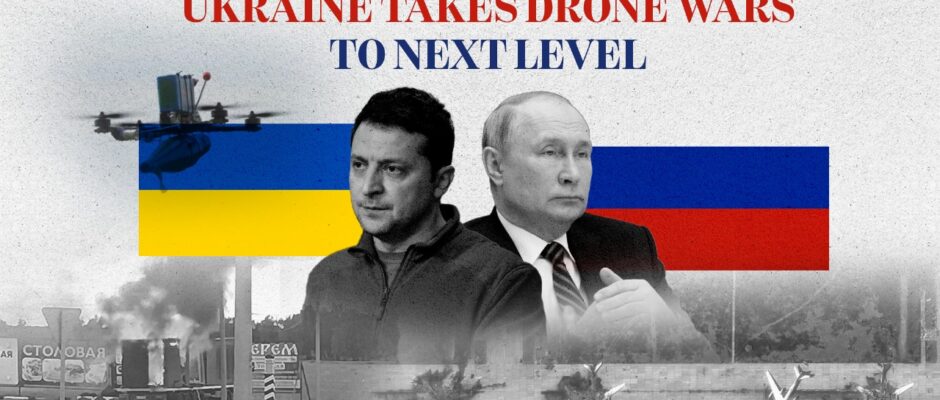
Ukraine Takes Drone Wars to Next Level

Ukraine Takes Drone Wars to Next Level

From Trojan Horse to pager bombs, Ukraine’s drones have rewritten war tactics while Russia puts up a red face. N. C. Bipindra Ukraine’s audacious drone attacks on airbases deep inside Russian territory are so brazen that such tactics have never been attempted before. The targeting of five Russian airbases — one of them over 4,500 km away from the Ukrainian border has reportedly destroyed over 40 military aircraft, including some long-distance bombers that were tormenting Ukrainians for nearly two years now. The use of cheap, off-the-shelf modified and armed drones is asymmetry in warfare taken to the next level. The drone strikes on June 1, 2025, are now being likened to Israeli Mossad pager bombs that took out a massive number of Hezbollah terror operatives inside Lebanon and the visit of unknown gunmen to wanted terrorists inside Pakistan in recent years. The drone attacks came after a long-drawn-out plan by Ukrainian military along with its intelligence units. The Ukrainians packed the armed drones onto cargo trucks and hid them with wooden planks under the truck roofs. Once the trucks reached too close to four airbases that were targeted —  Belaya in Siberia’s Irkutsk region, Olenya in Arctic Murmansk area, Ivanovo Severny near Ivanovo city, Dyagilevo in Ryazan and Ukrainka in Russia’s Far East the drones swarms were unleashed on Russian military aviation assets parked there. While the Belaya base in Irkutsk region was some 4,500 kilometers (2,800 miles) from Ukraine’s border with Russia, the Olenya base near Murmansk in the Arctic Circle was more than 2,000 kilometers (1,200 miles) from Ukraine’s border. The shortest distances covered by drone-carrying trucks were to Diaghilev airbase in Ryazan Oblast, some 520 kilometers (320 miles) from Ukraine and Ivanovo air base for Russian military transport aircraft was some 800 kilometers (500 miles) from the border. These visible distances notwithstanding, Ukraine’s daring drone attacks under Operation Spider Web targeted Ukrainka, the furthest airbase at over 8,000 km in Russia’s East, too far away from the war frontline. In Trojan-horse style attacks, Ukraine launched 117 drones concealed in container trucks, according to one Ukrainian account, striking with precision at airbases across Russia. Ukraine seems to have chosen this covert operation because the Western missiles supplied to it, such as the American ATACMS and European Storm Shadow, lacked the range to reach so deep inside Russia. Ukraine has been using drones against Russian targets, including Moscow, for last three years now. But majority of these drone attacks have been intercepted by Russians, essentially due to low speed of these unmanned aerial vehicles. Operation Spider Web’s audacity essentially played out due to Ukraine smuggling them into Russia and deploying them next to its target sites. Russia, obviously, was complacent with security of at least three of the five air bases, comfortable in the thought that it was too deep inside its territory for Ukrainians to even think of targeting them, a devastating mistake in defence preparedness, when military operations were prolonged beyond what was first envisaged when it began in February 2022. Moscow had presumed its airbases and military facilities deep inside its territory were safe, given their distance from Ukraine. Russia-Ukraine war, progressing for last three years now, has turned the warfare paradigm upside down. Till the Russia-Ukraine war began over Kyiv’s attempt to join the anti-Russia military bloc in the North Atlantic Treaty Organisation (NATO), military thought leadership was talking for nearly two decades about a short, swift and destructive warfare. Russia’s obvious military strength notwithstanding, its military operations did not result in quick surrender of a comparatively weaker Ukraine. The Russian neighbour a nation that was once part of the Soviet bloc held back the military onslaught for a while and by doing so, got the support of its friends in NATO. The US, Germany and other NATO nations sent billions of dollars’ worth arms and ammunition, battle tanks, air defence systems and fighter jets to Ukraine for its David vs Goliath moment. Satellite images, videos and photographs of the damage on these five airbases show Russia’s Tu-160, Tu-22 and Tu-95 nuke-carrying bombers key to their air power were hit badly with plumes of black smoke rising. Among destroyed air assets of Russia were Ilyushin Il-78 airborne refueling aircraft and advanced A-50 early warning and control aircraft a prized possession for airborne intelligence and radar warnings. Though Russia had tried to protect these assets with decoys, these measures failed miserably. Whether Western powers were involved in planning and execution of Operation Spider Web will be known later as more details of Ukraine’s attacks on Russia become public. But what could be worrying both Ukraine and NATO nations would be Russia’s response to Operation Spider Web. Ukraine and its friends in the West would be hoping that Ukraine’s drones circumventing Russian defenses and blowing up their military aviation assets would cause a major psychological blow to Russia’s air force. Truth be told, Operation Spider Web did lift Kyiv’s spirits and it is a dent to Moscow’s morale. But what they may have discounted is that Russia still holds air superiority overall against Ukraine and it may come back to deliver a crushing blow to Ukrainians at a place and time of its choosing, including an unequal nuclear response. If the nukes get involved in Russia’s war, then it could be game over for both Ukraine and NATO. The current Russia-Ukraine peace talks in Istanbul have already stalled, with Russian officials signaling no desire for compromise. The Ukrainian drone strike could mean the end of peace with Russia altogether. In response, Britain has announced a £350 million package to supply 100,000 drones to Ukraine by April 2026, reinforcing Kyiv’s growing drone warfare capabilities. In the second Armenia-Azerbaijan war for Nagorno-Karabakh region in 2020, Azerbaijani forces widespread use of drones was seen as crucial in determining the conflict’s outcome in their favour. Since then, drone warfare, particularly the asymmetric nature of advantage cheap, easily modifiable unmanned aerial systems bring to the table, has been a major focus

Read More

War on Inflation Must Continue

Second cut in duties on petrol & diesel, GST rates and further increase in interest rates may be some options to fight price rise K.A.Badarinath / New Delhi Spectre of high inflation and higher interest rates is back with a vengeance. Heady mix of the two make a lethal combination and turn out to be biggest sore points for a growth oriented finance minister like Nirmala Sitharaman. One is reminded of the high inflation and interest rates that singed the Indian economy during 2009 – 14 when the governance was under control of Harvard trained veterans like Dr Manmohan Singh as Prime Minister and Palaniappan Chidambaram as finance minister. India’s modern economic history bears testimony to their complete incompetence and failure thereby derailing the famed growth story that stood test of times till then. In 2009, G-20 Presidents and Prime Ministers had gathered in a summit mode at Pittsburgh in US to discuss the economic turmoil heaped on the world owing to collapse of American financial markets that has had contagion effect across geographies. The then US President Barrack Obama famously said that world leaders at the head table leaned heavily on wisdom of Dr Singh to steer the economy out of woods. Well, Dr Singh’s prescription may have had worked for others that went by the rule book. But, India’s economic turmoil thereafter was too huge owing to ‘inaction’ and ‘policy paralysis’ combined with rampant corruption that was hallmark of UPA government in its second tenure. Consumers paid through their nose. Investors lost big time. Real incomes of most people were lost. Pink slips were order of the day notwithstanding economic rescue packages announced by the inept UPA government with Pranab Mukherjee in finance ministry. Kitchen budgets had to be cut. Purchases had to be postponed by force. And, this phenomenon continued till 2014 when the Narendra Modi led juggernaut swept Lok Sabha polls and the first BJP-led majority government came to power post-independence. Today again, globally induced inflation has raised its ugly head again. Inflation in wholesale market has hit a record high of 15.08 per cent in April 2022. At retail level, the consumer price index is inching towards 8 per cent mark. Vegetables (23.24 per cent), Potatoes (19.84 per cent), wheat (10.7 per cent) have contributed big time to inflation last 13-months that has been in double digits. When the WPI passes through to consumers in next few months, the impact is bound to be devastating whether a policymaker concedes or not. Hardening of fuel and power inflation at 38.7 per cent in April 2022 would make things worse for consumers that have been worst hit hard due to two-years of Covid 19, Russia – Ukraine conflict and consequent spurt in commodity prices. Unlike the UPA of yesteryears or Joe Biden’s present democratic administration in US, Indian government headed by Prime Minister Narendra Modi has been proactive in limiting consumers and middle-class salaried peoples’ woes. Otherwise, tackling inflation would not have been prioritized over growth with sudden interest rate hike of 40 basis points and increase in cash reserve ratio, Standard Deposit Facility and Marginal Standing Facility. Another round of rate hikes has been anticipated by money policy experts when the multi-member policy committee of RBI meets next month. Another 50 basis points increase is what has been factored in by the markets. Pulling inflation below the acceptable six per cent at retail level is an imperative from which neither the RBI nor the Modi government can escape. Nirmala Sitharaman, on her part, began rolling out measures to counter surge in inflation beginning November 2021. Excise duty on diesel and petrol were slashed. This led to revenue losses of over Rs 49,500 crore. She was willing to absorb these revenue losses too. Food, fuel and fertilizer subsidies form a big chunk of Nirmala Sitharaman’s budget that projected a total spending of Rs 39.45 lakh crore (US $ 527 billion) during this fiscal. She will have to consider tinkering with subsidies to negate impact of high input costs for economy owing to elevated price levels internationally. While the cost push has had its run leading to high inflation globally, easing demand may bring in some respite for finance minister Sitharaman. But then, this war on inflation and prices has to continue in the Indian context like most other economies internationally. Finance Minister Sitharaman and RBI governor Shakti Kanta Das may have to reconcile at sacrificing more of projected 7.5 per cent growth this fiscal with spill over impact for 2023-24. While none should risk stagflation or recession, a fresh round of cut in taxes on petroleum products may have to be attempted to cool down inflationary pressures. Both states and centre may have to act in tandem on this front. Foregoing revenue may turn out to be a clincher for both central and state governments. Fortunately, buoyant money and equity markets, continued demand for goods and services has kept industrial manufacturers and service providers on toes to deliver. As the rate hikes seep in, slowing demand may make things trickier in few months from now. There’s very little elbowroom for the government to rejig the goods and services tax rates. In any case, slash in GST rates can be done only in consultation with state finance ministers that are already under tremendous pressure to meet ends. In this backdrop, government’s decision to continue with infrastructure thrust and spending of Rs 7.5 lakh crore this fiscal is refreshing. This only means that next round of interest rates hike may be front-loaded. Another possibility that government may have to consider is a flexibly designed economic rescue package that needs to be rolled out on mission mode. (Author is Director & Chief Executive of Centre for Integrated and Holistic Studies based in New Delhi.)

Read More

Russia-Ukraine Crisis: India’s Foreign Policy Implications

Rahul Pawa / New Delhi On February 23, 2022, Russian President Vladimir Putin announced a “special military operation” in Ukraine. Russia has long opposed Ukraine joining the European Union (EU) and North Atlantic Treaty Organization (NATO), the West’s defensive military alliance. He accused NATO of threatening Russia’s “historic future as a nation” and announced Russia’s military operation in Ukraine. “The purpose of this operation is to protect people who, for eight years now, have been facing humiliation and genocide perpetrated by the Kyiv regime,” Putin added. Subsequently, several media outlets reported explosions in numerous locations and large-scale Russian military operations throughout Ukraine. Ever since Ukraine’s pro-Russian president, Viktor Yanukovych, was overthrown in 2014 after months of protests against his government, Russian President Vladimir Putin has regularly flagged Ukraine of being taken over by extremists. Russia responded by seizing Crimea’s southern region and sparking a revolution in the east, backing hardliners against Ukrainian soldiers in a war that has claimed 14,000 lives. Regardless, the current issue has its roots in the disintegration of the Soviet Union. Ukraine, a former Soviet republic, had the world’s third-largest nuclear arsenal when the Soviet Union disintegrated in the early 1990s. The US and Russia collaborated with Ukraine to de-nuclearise the country. In a series of diplomatic deals, Kyiv returned hundreds of nuclear warheads to Russia for security assurances against a possible Russian assault. However, the assurances did not stand; below, we examine the 2022 Russia-Ukraine Crisis and discuss India’s foreign policy implications in that context. Download Explainer – Russia Ukraine Crisis (Author is the Director for Research at Centre for Integrated and Holistic Studies)

Read More