CIHS – Centre for Integrated and Holistic Studies

Date/Time:

Bharat’s G-20 Presidency for World

Roadmap for human centric, inclusive & green development with climate justice; re-designing multilateral banks, leadership for global south big takeaways Narendra Modi During its time, India achieved the extraordinary: It revitalised multilateralism, amplified the voice of the Global South, championed development, and fought for the empowerment of women. Today marks 365 days since India assumed the G20 presidency. It is a moment to reflect, recommit, and rejuvenate the spirit of Vasudhaiva Kutumbakam — “One Earth, One Family, One Future”. As we undertook this responsibility last year, the global landscape grappled with multifaceted challenges: Recovery from the Covid-19 pandemic, looming climate threats, financial instability, and debt distress in developing nations — all amid declining multilateralism. In the midst of conflicts and competition, development cooperation suffered, impeding progress. Assuming the G20 chair, India sought to offer the world an alternative to the status quo, a shift from a GDP-centric to human-centric progress. India aimed to remind the world of what unites us, rather than what divides us. Finally, the global conversation had to evolve — the interests of the few had to give way to the aspirations of the many. This required a fundamental reform of multilateralism as we knew it. Inclusive, ambitious, action-oriented, and decisive — these four words defined our approach as G20 president, and the New Delhi Leaders’ Declaration (NDLD), unanimously adopted by all G20 members, is testimony to our commitment to deliver on these principles. Inclusivity has been at the heart of our presidency. The inclusion of African Union (AU) as a permanent member of G20 integrated 55 African nations into the forum, expanding it to encompass 80 per cent of the global population. This proactive stance has fostered a more comprehensive dialogue on global challenges and opportunities. The first-of-its-kind ‘Voice of the Global South Summit’, convened by India in two editions heralded a new dawn for multilateralism. India mainstreamed the Global South’s concerns in the international discourse and has ushered in an era where developing countries take their rightful place in shaping the global narrative. Inclusivity also infused India’s domestic approach to G20, making it a People’s Presidency that befits the world’s largest democracy. Through “Jan Bhagidari” (people’s participation) events, the G20 reached 1.4 billion citizens, involving all states and Union Territories (UTs) as partners. And on substantive elements, India ensured that international attention was directed to broader developmental aims, aligning with the G20’s mandate. At the critical midpoint of the 2030 agenda, India delivered the G20 2023 Action Plan to Accelerate Progress on the Sustainable Development Goals (SDGs), taking a cross-cutting, action-oriented approach to interconnected issues, including health, education, gender equality and environmental sustainability. A key area driving this progress is the robust Digital Public Infrastructure (DPI). Here, India was decisive in its recommendations, having witnessed the revolutionary impact of digital innovations like Aadhaar, UPI, and Digilocker first-hand. Through the G20, we successfully completed the Digital Public Infrastructure Repository, a significant stride in global technological collaboration. This repository, featuring over 50 DPIs from 16 countries, will help the Global South build, adopt, and scale DPI to unlock the power of inclusive growth. For our One Earth, we introduced ambitious and inclusive aims to create urgent, lasting, and equitable change. The Declaration’s Green Development Pact addresses the challenges of choosing between combating hunger and protecting the planet, by outlining a comprehensive roadmap where employment and ecosystems are complimentary, consumption is climate-conscious, and production is planet-friendly. In tandem, the G20 Declaration calls for an ambitious tripling of global renewable energy capacity by 2030. Coupled with the establishment of the Global Biofuels Alliance and a concerted push for Green Hydrogen, the G20’s ambitions to build a cleaner, greener world are undeniable. This has always been India’s ethos, and through Lifestyles for Sustainable Development (LiFE), the world can benefit from our age-old sustainable traditions. Further, the Declaration underscores our commitment to climate justice and equity, urging substantial financial and technological support from the Global North. For the first time, there was a recognition of the quantum jump needed in the magnitude of development financing, moving from billions to trillions of dollars. The G20 acknowledged that developing countries require $5.9 trillion to fulfil their Nationally Determined Contributions (NDCs) by 2030. Given the monumental resources required, the G20 emphasised the importance of better, larger, and more effective Multilateral Development Banks. Concurrently, India is taking a leading role in UN reforms, especially in the restructuring of principal organs like the UN Security Council that will ensure a more equitable global order. Gender equality took centre stage in the Declaration, culminating in the formation of a dedicated Working Group on the Empowerment of Women next year. India’s Women’s Reservation Bill 2023, reserving one-third of India’s Parliament and state legislative assembly seats for women, epitomises our commitment to women-led development. The New Delhi Declaration embodies a renewed spirit of collaboration across these key priorities, focusing on policy coherence, reliable trade, and ambitious climate action. It is a matter of pride that during our presidency, G20 achieved 87 outcomes and 118 adopted documents, a marked rise from the past. During our G20 presidency, India led deliberations on geopolitical issues and their impact on economic growth and development. Terrorism and the senseless killing of civilians are unacceptable, and we must address them with a policy of zero tolerance. We must embody humanitarianism over hostility and reiterate that this is not an era of war. I am delighted that during our presidency, India achieved the extraordinary: It revitalised multilateralism, amplified the voice of the Global South, championed development, and fought for the empowerment of women everywhere. As we hand over the G20 presidency to Brazil, we do so with the conviction that our collective steps for people, planet, peace, and prosperity, will resonate for years to come. (Author is Prime Minister of India)

Read More

Maldivian turn in the Tide: India’s safety net to China’s debt web

Shift in island nation’s strategic relations to curry favour with Chinese Communist Party bosses is fraught with danger of instability Rahul Pawa Maldives that has historically been a significant beneficiary of Bharat’s Neighbourhood First policy and a proximate maritime neighbour in the Indian Ocean Region, is re-positioning itself from the perspective of defense and security ties with Bharat. This reassessment is direct consequence of actions taken by newly anointed Maldivian President Mohamed Muizzu, who rose to power advocating an ‘India Out’ campaign. Influenced by the pro-Chinese Communist Party (CCP) stance of former President Abdulla Yameen, President Muizzu has made a decisive move away from the cooperative relationship his predecessor, Ibrahim Mohamed Solih, maintained with Bharat. This shift became particularly evident with a statement issued on November 18, in which President Muizzu’s office formally requested withdrawal of Indian military personnel from Maldives. This request, signifying a departure from longstanding military cooperation between the two nations was earlier  presented during a meeting with India’s Earth Sciences Minister Kiren Rijiju, who was in attendance at Muizzu’s swearing-in ceremony.  Escalating the situation further, Maldives is now scrutinizing over 100 agreements signed with India during Solih’s tenure, covering areas of defense and security. Mohamed Firuzul Abdul Khaleel, the undersecretary for Public Policy in Presidential Office, disclosed the stationing of 77 Bharatiya military personnel in Maldives, spanning various military assets covered this scrutiny. This reevaluation of ties and November 18 announcement underscore a significant geopolitical shift in the region, marking a potential realignment of Maldives’ foreign policy away from Bharat and marks a tilt towards China. Maldives’ strategic pivot towards China, away from its traditional alignment with Bharat, brings a multitude of vulnerabilities and challenges for the island nation as well. This shift not only strengthens China’s influence in a region historically under Indian sway but also risks exposing the Maldives to economic and political instability. The alignment with China poses significant risk of ensnaring Maldives in a debt trap, akin to Sri Lanka as in the case of Hambantota Port and other infrastructure projects. Considering the Maldivian economy’s heavy reliance on tourism, financial burden of Chinese investments could be unsustainable. Moreover, this shift in foreign policy may lead to internal political strife. Opposition to the ‘China-triggered’ policies and concerns over national sovereignty could ignite domestic unrest, potentially resulting in a divided and unstable political landscape. On international front, moving away from India might strain the Maldives’ relationships with other regional powers and Western allies, who view China’s expanding influence with apprehension. This could lead to lesser foreign aid and support from these nations. The strategic shift under influence of Chinese Communist Party (CCP) represents significant departure from Maldives’ historical relationship with India, a partnership that has been a bedrock of stability and support, instrumental in the nation’s development and security. India’s role has been particularly pivotal during times of crisis, such as the 1988 coup attempt, 2014 water crisis and 2004 tsunami, offering a balance of economic assistance, defense cooperation, and diplomatic support.  However, the new trajectory in favour of China opens Maldives to a host of risks that could have far-reaching consequences for its stability and wellbeing. Possible economic dependency on China, with looming threat of a debt trap, poses a significant danger to the Maldivian economy. This shift might not only leads to internal political instability but also exacerbate the nation’s environmental challenges. Maldives, already grappling with adverse impact of climate change and rising sea levels, may face further environmental degradation due to large-scale Chinese construction projects.  In essence, moving away from India could isolate the Maldives from a historically reliable and benevolent partner, steering it away from the sources of strength and stability that have been crucial for its growth and prosperity. As President Muizzu seeks to establish new geopolitical alignments, the Maldives navigates towards a precarious future. The allure of Chinese economic support, while tempting, carries substantial risks, including the potential loss of traditional allies and internal political turmoil. This strategic pivot could leave the Maldives in a vulnerable position, both economically and geopolitically, with limited room to manoeuvre in an increasingly complex and competitive international arena. The future, as it unfolds, is fraught with uncertainty and potential instability for the Maldives as it navigates these significant geopolitical shifts. (Author is Director – research at New Delhi based non-partisan think tank, Centre for Integrated and Holistic Studies)

Read More

India’s Firm Message to Canada: Tackle Khalistani Extremism, Preserve Bilateral Ties

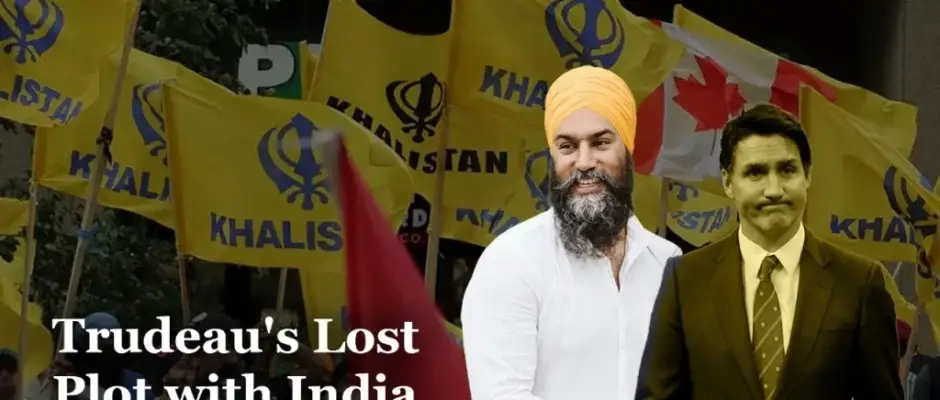
Rohan Giri Diplomatic relations between India and Canada have been thrown into a state of disarray after insinuations on possible  Indian involvement in murder of Hardeep Singh Nijjar, a proscribed terrorist identified as a member of Khalistan Tiger Force. These claims by Canadian Prime Minister Justin Trudeau have ignited tensions, prompting a sharp rebuke from India’s Ambassador to Canada, Sanjay Kumar Verma that criticised Canada for damaging bilateral relations. Verma asserted that the accusations lack substantial evidence and may have been influenced by high-level directions. Allegations of India’s involvement in reported murder of Hardeep Singh Nijjar, a Khalistani terrorist who had obtained Canadian citizenship, emerged after Canadian Prime Minister Justin Trudeau’s address in the country’s Parliament on September 18. He had claimed to have “credible evidence that the Indian government assassinated a Canadian citizen on Canadian soil.” This serious assertion put a strain on bilateral relations. However, India recognised as a robust and healthy democracy, has no historical record of engaging in such clandestine activities and consistently championed the path of peace both regionally and globally. In an interview to ‘The Globe and Mail’, Indian envoy Sanjay Kumar Verma offered a forceful rebuttal to these allegations chastising Canada for failing to furnish any concrete or pertinent details that would substantiate their accusations. He expressed apprehension regarding the investigation’s integrity, hinting at possibility of high-level interference in investigative proceedings. The accusations triggered significant diplomatic fallout and unilaterally Canada escalated further by suspending an Indian diplomat. Retaliating, India declared a Canadian senior diplomat persona non grata and requested the Canadian government to withdraw a substantial number of its diplomatic staff from India. This diplomatic spat loomed as a potential threat to the broader bilateral engagement between the two countries. Verma scrutinised validity and admissibility of the purported evidence underpinning Canada’s claims, pointing out that diplomatic exchanges were safeguarded by international law and not admissible in a legal context or for public revelation. He called on Canada to explain the methods used to obtain these conversations and raised the possibility that the alleged wiretaps could have involved impersonated voices. India has on multiple occasions drawn attention to its pending extradition requests, which it alleges Canada has consistently overlooked. Following the accusations against India, the Ministry of External Affairs labeled Canada as a “safe haven for terrorists, gangsters, and criminals.” This characterisation is not made lightly; it mirrors the perception of contemporary Canada and has added further tension to the already strained diplomatic relations. The fabric of India-Canada relations has been further frayed by a deeply troubling series of events in Canada. There is a growing wave of hostility, as sacred Hindu sites and the assets of the Indian community have come under repeated attack. This disturbing trend has escalated to a point where the safety of Indian diplomats in Canada is now in jeopardy.  The aftermath of the killing of Hardeep Singh Nijjar has unleashed a torrent of direct threats and vitriolic hate speech aimed at the Indian diplomatic corps. The atmosphere of intimidation has been starkly illustrated by the appearance of menacing posters throughout Canada. These posters not only advocate for the assassination of Indian officials but audaciously depict them as adversaries of the Canadian state, ratcheting up the diplomatic tension to an alarming degree. This volatile situation casts a shadow over the Indian community in Canada and puts the diplomatic ties between the two nations on a knife-edge. In a comprehensive analysis, as an international think tank, Centre for Integrated and Holistic Studies, raised alarm in its latest report about the escalating threat of Khalistani extremism in Canada, particularly during Prime Minister Trudeau’s administration. The report stressed that this radical movement, bolstered by Pakistani support, has intensified, putting a strain on Canada’s social fabric and its long-standing multicultural values. Ties between Canada and India have deteriorated, attributed in part to Trudeau’s interactions with Khalistani proponents and his unsubstantiated accusations against India. These actions have not only marred Trudeau’s leadership but reflect political influence of Jagmeet Singh, the NDP leader known for his Khalistani linkages and frequent anti-India commentary.  CIHS report warned that the Canadian government’s perceived indifference towards growing Khalistani presence could incentivise separatist sentiments, potentially triggering a secessionist referendum. Such developments threaten Canadian unity and sovereignty.  The think tank underlined the urgency for Canada to repair its diplomatic relations with India. Moreover, it called on Western nations to tackle Khalistani extremism with an unwavering adherence to the rule of law and a commitment to security, human rights, and democratic principles. The response to this issue is critical, the report concludes, as it will significantly shape the future of international relations and the global order. Trudeau has seemingly overlooked these critical issues. The unchecked growth of separatist movements poses a real and significant threat to the security of Canada. It seems he fails to acknowledge the true character of terrorism, which knows no religious or ideological limits. No amount of diplomatic veneer can mask this reality. Historical patterns suggest that the consequences of neglecting such threats often have a way of returning to their origin with compounded force Addressing these challenges with substantive dialogue and addressing the influence of Khalistani factions in Canada is crucial for restoring confidence and strengthening the bilateral relationship. The current diplomatic impasse highlights the importance of adhering to diplomatic norms, international law, and the protection of envoys abroad. Prime Minister Justin Trudeau’s approach, which seems to prioritise internal political advantages over international protocol, reflects a departure from statesmanlike conduct. Such a strategy may jeopardise the diplomatic bond with India and other law-abiding democracies worldwide. (author is manager – operations at New Delhi based non-partisan think tank, Centre for Integrated and Holistic Studies)

Read More

Technology Paradox!

Manipulation in technology becomes an effective tool with terrorists, fraudsters and dictates political conversations posing fresh challenges to humanity K.A.Badarinath Technology works weirdly. Human mind behind evolving technologies globally is all the more weird. When Prime Minister Narendra Modi gave a call to undertake research in areas of technology, innovation and development to further socio-economic progress, there were sneers and jeers especially the cynics. Reports appearing in media seek to underline significance of reorienting technology and scientific research to further Bharat’s development and economic prosperity. But, instances of technology manipulation have shaken Bharat’s conscience. Mahdev app is one of several fraudulent platforms that crept into the system and helped the crooks launder money, betting by vulnerable people, spread corrupt practices and bankroll political parties. About 22 such apps and websites were either restricted or banned completely by Bharat’s government this Sunday. Reports quoting Enforcement Directorate documents suggest that Rs 508 crore was paid to Chattisgarh chief minister Bhupesh Baghel as kickbacks for facilitating technology driven betting apparently managed and manipulated from Dubai. These funds were to support campaign of Indian National Congress fighting anti-incumbency in legislative assembly elections. Promoting corrupt practices through the instrument of technology is what has come to fore. Weird brains behind crafted technology platforms to further betting and entice vulnerable people with promise of big money may require closer scrutiny. Making conscious attempt to hoodwink law enforcement agencies by harvesting technology to ‘rob’ people of their hard earned money need to be recognized by ‘evolved societies’ that push for big technology foray. It’s not just technology driven software programmed betting apps that wreaked havoc on gullible people in Bharat as was the case with Mahadev App that was largely operated and managed from Dubai by its promoters and were hand in glove with Bhupesh Bhagel government’s bigwigs and ruling party bosses in the state. At a meeting of Thinkers Forum in Karnataka, Finance Minister Nirmala Sitharaman recently pointed to technology driven apps that were used by fraudsters and speculators to work up or pull down specifistocks, investment instruments apart from drumming up support as well as marketing Ponzi schemes. Genuine investors and savings of hard working people were bound to be lost to unscrupulous elements that manipulated technology to perpetuate financial crimes. Recent cash for questions scam being investigated by an ethics committee of Parliament also have a similar narrative. The accused Member of Parliament from opposition, Trinamool Congress Mahua Moitra apparently passed on her official mail login and passwords to corporate houses. Mail ID of this jet-setting MP were used and abused by corporate houses to steer Parliamentary discussions on issues that possibly relate to them. Dubai was the favourite destination for this MP from where her mail ID was logged in over 45 times by alleged handlers. A sweep of servers access and technology interface for this mail ID revealed the way she operated in conjunction with her corporate masters from whom she reportedly received expensive gifts and unlimited hospitality. Quick spread of artificial intelligence will not only disrupt Bharat’s society like any others, increase in financial crimes driven by technology is a foregone conclusion. Unprecedented advances in computer vision, languages processing, robotics have only complicated the world of money. Fraudsters are bound to have a hay day given issues relating to safety, accountability and transparency of technology driven, artificial intelligence propelled processes that govern the world of finance, banking, insurance, pension funds and markets. UK Prime Minister Rishi Sunak had recently compared dealing with artificial intelligence to emergence of internet or electricity several decades earlier. Rishi Sunak is right when he says that artificial intelligence brought with it fears that’s unparalleled in history of human evolution. Apart from large scale frauds, artificial intelligence and other cutting edge technologies have also brought fears of cyber-attacks, disinformation and it was an effective tool in hands of criminals and terrorists. Though the Bletchley declaration boasted of 29 countries including China and European Union being signatories to an alliance on artificial intelligence, there were enough naysayers especially the technology honchos of Meta and Tesla variety. From simple financial frauds to dictating political conversations, technology has emerged as the biggest threat in the hands of lumpen elements , terror mongers of every shade, variety & religious denomination apart from human disruptors. Moulding technology for human welfare, progress and development, spread of prosperity is the biggest challenge. (author is Director and Chief Executive of New Delhi based non-partisan think tank, Centre for Integrated and Holistic Studies)

Read More

‘Terror is anti-humanity’

Bharat’s strategic independence was displayed while it rejected Hamas terror on Israel but extended support to free, viable Palestine with a message to friends & foes alike K.A.Badarinath Strategic independence has been the key to Bharat’s foreign policy formulation while engaging with global powers. And, furthering Bharat’s offensive and defensive interests is primacy to this policy. Globally, zero tolerance to expansionist, jingoistic political thought and rejecting every form of terror irrespective of caste, creed, gender, region, religion, faith and colour is something Bharat feels strongly about. Concept of ‘Vasudaiva Kutumbakam’ – entire humanity as one big global family – has been the corner stone to Narendra Modi government’s engagement internationally in last nine years. These three basic tenets of foreign policy have worked reasonably very well when Bharat stayed away from joining the pro or anti-Russian fronts. Instead of joining the NATO forces blindly or going Russia way whole hog, Bharat espoused its own line. Strategic independence in thought and actions saw Bharat condemning the violence and bombardment by Russian forces that invaded Ukraine. Bharat did not join hands with European Union or for that matter US to single out Russia. In the same vein, Ukraine was given all possible humanitarian assistance and extricated Indians that were stuck in the war zone. Such independent line is expected to deliver results for Bharat in dealing with Islamist terror outfit Hamas attack on neighbouring Israel, home to Jews. In a week, the conflict between Islamist terrorists and Jews has escalated into full war having adverse impact in the gulf region and beyond. War between Jews and Hamas terrorists is expected to heighten further with no end in sight anytime soon. It was important for New Delhi to get its act right in dealing with the situation given that her interests in middle-east are too huge and Israel has been a dependable partner in half a dozen areas. Within first few hours, Prime Minister Narendra Modi described the Hamas campaign as ‘terror attack’ and condemned unequivocally in two tweets. Prime Minister Modi’s telephonic conversation with his Israeli counterpart Benjamin Netanyahu fortified India’s position against terror, terrorism and terrorists that wreaked havoc on Israel and Jews. At G-20 Parliament Speakers conclave that’s underway in New Delhi, Prime Minister Modi elaborated further and said ‘terrorism was against humanity’. Second part to Bharat’s policy on Hamas – Israel war was unveiled at a foreign media briefing this Thursday. India reiterated its decades old position for ‘an independent, viable and sovereign’ Palestine state that co-exists peacefully with Israel’ in West Asia. While Bharat does not tolerate, terror, terrorism and terrorist outfits like Hamas, it is not against carving out a Palestinian state. Drawing distinct differentiation between Hamas and Palestine is a significant point in Bharat’s Middle-East policy. This differentiation is conceptually and strategically significant vis-à-vis the Western powers and European nations. Subrahmanyam Jaishankar led foreign policy team seems to have sent out clear signals to both friends and foes alike by reiterating its support for Palestine state. The message from Bharat is straight and simple. The US and its partners in NATO cannot take Bharat for granted on the issue as was the case in Russia – Ukraine conflict. Coming out strongly in favour of a ‘free, independent and viable’ Palestine state and rejecting Hamas is also important given that Muslims rallied in country after country either in support of Hamas or advocating Palestinian cause. In the fast evolving situation, Bharat recognized her responsibility towards Middle East Muslims that seek a ‘peaceful’ Palestine state and at the same time stood like a rock with Jews in Israel. Bharat’s position is in continuation of its historic association with the Palestine movement. This policy has however taken twists and turns, evolved over the years in light of ‘terror’ outfits like Hamas posing serious threat to humanity. Bharat’s continued engagement with both Sunni and Shia dominated nations on political and economic fronts seem to have dictated her nuanced position. This policy also factors in the importance of aligning with Jews in Israel, US and Europe while rejecting Hamas ‘in toto’. By extending support to independent Palestine state via bilateral negotiations, Bharat has been pragmatic in finding lasting solution for peace in Middle East. It may not have been a cake walk for Bharat to evolve her position on Israel – Hamas conflict given her recent engagements with United Arab Emirates, Saudi Arabia, players in the Gulf and North Africa including Egypt, Iran, Qatar, Kuwait, Bahrain etc. Even the Muslim world is divided in the middle on terrorist organizations like Hamas. For instance, UAE and Bahrain that are party to Abrahams accord with US have limited to extending tactical support to cause of Palestine and not toed the Hamas ‘terror’ line. Similarly, Saudi Arabia has been muted in its responses to Hamas terror. Egypt is not with Hamas. Jordan and Qatar have different positions vis-à-vis Palestine state and Hamas. Organizations like Hezbollah from Lebanon and Islamic State fighters may have extended their unqualified support to Hamas. Iran’s supreme leader Seyyed Ali Hosseini Khamenei is yet another significant figure that stood behind Hamas terror act. But, Muslim world as such is not united completely. Apart from the fault lines among Arab nations, Bharat being home to over 210 million Muslims – both Sunnis and Shias – cannot ignore the impact of conflict within its own minorities. Isolation and elimination of terror outfits like Hamas, ISIS, Hezbollah, Taliban or such religious fundamentalists should be the global priority. For this to happen, a common definition of ‘terror’ may have to be achieved internationally without ‘ifs and buts’. (Author is Director & Chief Executive of New Delhi based non-partisan think tank, Centre for Integrated and Holistic Studies)

Read More

Doves in Droves!

Indian debt market with foreign funds influx of US $ 30 billion after JP Morgan, Bloomberg indexation reflect confidence of global financial community K.A.Badarinath A quiet transformation that has gone less noticed in India is that of its debt market which is in for bigger overhaul. Strong growth story, reforms in debt market, decisive leadership of Narendra Modi government have created fresh opportunities for foreign investors in the nascent debt market with potential and promise. After over years of intense negotiations, Indian sovereign bonds will make it to Bloomberg and JP Morgan’s emerging markets index. Getting benchmarked on these two indices would lead to about $ 30 billion inflows into Indian debt paper that’s largely confined to government banks and financial institutions. US bank J P Morgan recently announced inclusion of 23 government bonds worth $ 330 billion on its emerging markets index. This will be staggered out over ten months beginning June 28, 2024 to March 2025. Close on the heels, Bloomberg Index Services has given firm hint that Indian bonds will be part of its indices globally. While Bloomberg reported discussions with its clients that are largely banks and investment companies, JP Morgan has more or less completed this exercise. As per reports, large investors in government debt internationally expected Bloomberg to include India bonds in first quarter of next fiscal in India beginning April 1, 2024. Inclusion of Indian treasury issued  rupee denominated bonds under fully accessible route (FAR) are part of JP Morgan and Bloomberg indices would lead to large global investors taking big exposure in Bharat’s paper. Reserve Bank of India (RBI), Bharat’s central bank in consultation with Indian government had opened a new channel named, Fully accessible route (FAR), through which non-resident investors were permitted to invest in specified Indian securities without caps. This foreign investors’ window was formally opened in 2020. In the indexation of JP Morgan and Bloomberg, Indian bonds are set to get maximum weightage of 10 points globally and 8.7 points in emerging markets indices. India’s finance minister Nirmala Sitharaman is right on track when she says that stability, policy consistency and reforms has made Bharat’s famed growth story all the more robust and sustainable. With emergence of India as a strong manufacturing hub for top companies like Apple, Nokia, Boeing, Samsung and Amazon, equity markets turned ebullient with fresh equities investments moving away from China. A similar situation is getting unravelled in debt market with investors shifting away from China that’s struggling to keep its growth estimates in short and medium term positive and healthy given hiccups in the post-Covid 19 recovery. In contrast, India is expected to log fastest growth next two years with 6.1 per cent in 2023 as per International Monetary Fund. This weighs against US’s 1.8 per cent and global aggregate of 3 per cent. China losing steam, Russia taken out of the indices following Ukraine war and healthy economic growth in India has egged foreign investment firms, rating agencies and large banks to look at Bharat’s debt paper eagerly. Finance Minister Sitharaman may have been a wee bit conservative when she projected inflows of US $ 23 billion after inclusion of Indian debt paper on JP Morgan Bond Index. Goldman Sachs, the prominent US investment bank and services company, has however projected $ 30 billion in 2023-24 when top investors rebalance their exposure internationally. Chinese debt paper was in demand way back in 2019. Of late, Chinese paper has begun to lose support given its shaky economic fundamentals that may translate into larger interest in Indian debt market. Hitherto, treasury debt paper was largely restricted to government owned banks and financial institutions while a very small chunk was available for retail investors and mutual funds. Foreign investors seem to be factoring huge infrastructure investment plans rolled out by Narendra Modi government. And, second factor that may propel rebalancing their exposure is outcome of legislative assembly elections in five states followed by Parliament polls before June 2024. Projected manifold increase in foreign funds flow into India debt paper goes well with ‘on the ascent’ narrative of Narendra Modi’s ruling BJP and its allies that have begun a spirited campaign ahead of states and federal elections. No doubt that RBI and Indian government are experimenting big by enabling foreign investors to take large exposure in Indian paper. This may eventually translate into RBI losing some flexibility in money policy formulation and shifting to market-led dynamics. One cannot ignore the contrarian view as well. Foreign investors taking exposure worth US $ 25 – 30 billion in government stock of over Rs 100 lakh crore or US $ 1.2 trillion is too little and too late. If one were to factor fresh borrowing of Rs 1.65 lakh crore each year, these inflows would add depth to the Indian debt market without having material impact on monetary policy formulation in near future. Unanimous view however is the robustness, inclusiveness and sustainability of India’s growth story built on strong economic fundamentals. Financial community’s confidence in Indian story reaffirms that doves are back in droves. (author is Director & Chief Executive at New Delhi based non-partisan think tank, Centre for Integrated and Holistic Studies)

Read More

Chinese Puppetry on Show!

Probing charges of money laundering, peddling of Chinese propaganda by NewsClick is not suppression of press freedom  K.A.Badarinath Noise on suppression of press freedom and free speech has not yet reached a crescendo. This noise has just begun in India with Left parties, their frontal organizations and anti-Modi political alliance partners going for the kill. Few activists from these political formations hit the streets on Wednesday protesting a probe against alleged China funded portal ‘NewsClick’ that reportedly laundered  money to bankroll the dragon’s ‘propaganda’ vehicle. Portal’s founder Prabir Purkayastha and his human resources head were rounded up by special operations unit of Delhi Police after having questioned over a dozen journalists, consultants and later seized their devices for further investigation. Big question therefore is why all the noise on purported suppression of press freedom in India? Well, this is not the first time that such false narrative was peddled or reported in domestic and foreign media outlets in last ten-odd years. Two big charges against ‘NewsClick’ and its front-enders is that the organization worked as ‘propaganda vehicle’ for China. And, second serious charge is that foreign funds were routed through a millionaire businessman Neville Roy Singham to take forward nefarious Chinese Communist Party agenda in India. Well, only an in-depth investigation will bring out the facts and stick out separated from the organized noise of fringe Left parties that claim to protect, cherish and embellish Mao’s jinxed political thought. Firstly, is it a crime to investigate possible wrong doing by anyone concerned with ‘NewsClick’? The probe was launched by Delhi Police, Enforcement Directorate and other agencies only after having filed a detailed first information report against the accused on August 17 taking cognizance of ‘Chinese Propaganda machine’ related reports that appeared in The New York Times. These very political formations and self-styled proponents of ‘free press’ that hit the streets have had sworn by NYT on more than one occasion to hit out at the Modi government. Now, what’s wrong in investigating ‘NewsClick’ based on newspaper reports and Enforcement Directorate’s own research? The New York Times had pointed to a global web of Chinese propaganda that involved American non-profits which stretched from Chicago to Shanghai. This web as per NYT had NewsClick as an active participant.   Now, why can’t the law enforcement agencies do their job of enforcing probity in public life, negate possible China propaganda campaign and stem laundering of foreign funds that made their way into ‘NewsClick’ during 2018 – 21 and used ‘against the Indian state’?  Does this tantamount to suppressing press freedom? Or, is initiation of an inquiry anti-democratic by any stretch of imagination? It’s rather surprising that newspapers like ‘The Hindu’ and ‘Indian Express’ that were at forefront of investigating Bofors scam in early ‘80s and ‘90s editorialized the police action on ‘NewsClick’ as smacking of supressing press freedom. And, it is rather laughable. Crackdown against suspected crime by elements inimical to Bharat’s interests or exposing ‘NewsClick’ handlers in US and China cannot be equated with Smt Indira Gandhi’s decision to suspend basic citizens’ rights, impose internal emergency and curb press freedom in 1975 after an adversarial verdict of Allahabad High Court. Wouldn’t Ramnath Goenka, founder of Indian Express and Kasturi Ranga Iyengar of ‘The Hindu’ turn in their graves at the suggestion of curbing press freedom for investigating against ‘NewsClick’ management and their handlers? As in case of any individual or organization, don’t journalists have basic responsibility to submit before law enforcement agencies seeking to get at the truth? Making hue and cry of a probe may not drown the truth about irregularities at ‘NewsClick’. At best, NewsClick is a scrappy outlet that used invectives and propaganda to try and corner Narendra Modi government. And, it gained prominence only after The New York Times investigation linked it to a network that funded pro-China campaigns. Similar noise and public outrage was on show after BBC India operations were scrutinized for violation of Indian taxation laws. Tax sleuths assessment forced BBC to admit that it had under-reported revenues, profits and thereby evaded taxes. Reuters, The Hindustan Times and The Mint newspapers reported that BBC under-reported incomes worth Rs 40 crore to evade taxes. Well, income tax assessment of UK government funded BBC accounts was blown out of proportion and several of these very propagandists had jumped in to cite suppression of press freedom. There was no plausible explanation on how enforcement of domestic tax laws was same as suppression of press freedom. In the first place, big question was how did a foreign government funded media organization gather courage to evade taxes? Certainly, India is neither a banana republic nor subservient outpost of the erstwhile British imperialist rulers. When news laundry, yet another website were surveyed by Income Tax officials in 2021, similar charges of ‘intimidation and press freedom’ were heaped against the law enforcement agencies. Rule of law is what matters. Whether it is Bharat Samachaar or Dainik Bhaskar, media organizations need to be upfront given their distinct responsibility to readers, people that go by what appears in the media and the country. If thousands of websites, newspapers, TV Channels, social media handles owned by Indians, domestic corporates and foreign collaborations have been freely undertaking news operations, then where’s this suppression of press freedom? Seeking accountability is not equivalent to suppression of press freedom and rights. Newspapers, magazines and other media outlets in India like elsewhere have taken an independent editorial line in sync with their beliefs, understanding and assessment of a government, its policies and political ideologies. Editorial positioning of a media organization is distinctly different from resorting to irregularities, wrong doing, anti-India propaganda or joining flanks with the enemy. Let’s not equate press freedom with irregularities and anti-India tacit operations. Freedom comes with responsibility. (Author is Director& Chief Executive of New Delhi based non-partisan think tank, Centre for Integrated and Holistic Studies)

Read More

Maldivian Mirage, China Political Tightrope!

Maldives stands at a crucial juncture with President-elect Muizzu’s apparent tilt towards China signalling potential tectonic shift in regional alignments. While the allure of Chinese investments is evident, past patterns suggest that such engagements often come with strings attached, risking economic independence with potential threats to sovereignty. The historical bond with India rooted in mutual respect and shared interests, has ensured stability and growth for the Maldives. As the Maldives navigates its diplomatic path, it’s imperative to recognise the long-term implications of these choices. Over-reliance on China, given its track record, might provide short-term gains but could lead to long-term vulnerabilities, threatening Maldives autonomy, regional harmony and its historically enriched and etched relationship with India.

Read More

Canada’s Darkening Horizon: Red Flags and Alarming Trends

The dynamics between India and Canada are treading on thin ice, revealing a landscape where Canada’s interests seem to be diverging significantly from Prime Minister Trudeau’s actions and statements. It’s crucially morphing into a “Canada versus Trudeau” scenario, highlighting an urgent call for a recalibration of Canada’s stance. Dive deeper into the unfolding scenario and explore potential resolutions in CIHS special report on “Canada’s Darkening Horizon: Red Flags and Alarming Trends”

Read More