CIHS – Centre for Integrated and Holistic Studies

Date/Time:

Pakistan at Crossroads: 27th Amendment and Vanishing Republic

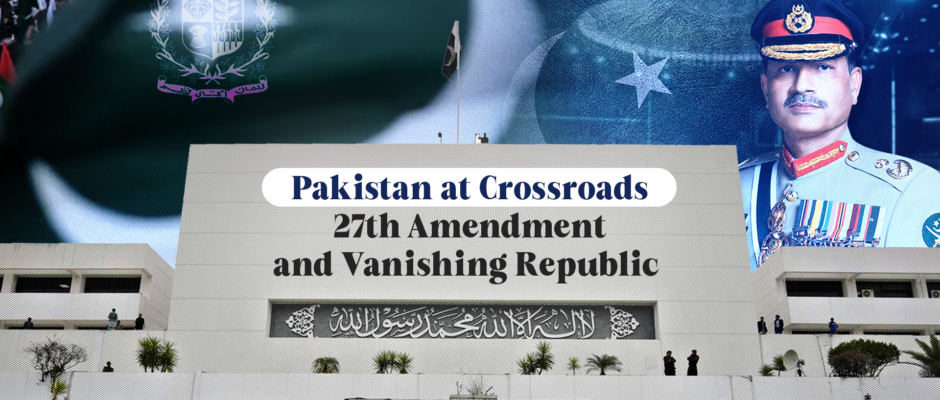
Arun Anand When a state alters the rules that govern it, the transformation can arrive with force—or with formality. Pakistan’s 27th Amendment represents the latter: a political restructuring that wields the authority of a coup but cloaks it in legality. Rather than suspending the constitution or dissolving parliament, it reshapes the constitution from within, erasing previous checks on military power. That distinction is crucial—one disrupts the system; the other remakes it. At the heart of this recalibration stands Asim Munir. His promotion to Field Marshal and the proposed establishment of a Chief of Defence Forces position do more than elevate his career—they institutionalize what was long an informal dominance. Unlike Ayub, Zia, or Musharraf, who ruled by toppling constitutions, today’s strategy seeks to embed military supremacy within the constitutional framework itself—ensuring that, in the future, the army can govern without the need to overthrow. The change is deceptively small in language and vast in consequence. Replace one title with another; place all services under a single command; harden immunities around senior officers; tweak judicial mechanisms so the courts have less room to operate free of executive pressure. Each clause reads like technocratic housekeeping. Taken together, they create a new architecture: an army whose institutional primacy is not merely tolerated but constitutionally protected. That is legal militarism rather than extra-legal rule. This is not an academic quarrel over drafting. It is a political settlement about who counts as the ultimate arbiter of public affairs. Under the old ambiguity, civilian leaders could plausibly claim the last word, even while the military shaped the range of choices behind the scenes. The amendment seeks to collapse that ambiguity in one direction. Why would civilian parties, visibly weakened and electorally vulnerable at times, agree to such a reconfiguration? The motives are painfully direct. Pakistan’s political class operates in a narrow corridor: economic collapse, fragmented coalitions, a restive opposition, and a media space that oscillates between sensationalism and censorship. Under these pressures, cohabitation with the military promises immediate stability. It keeps riots at bay, opens channels to patronage, and provides a shield against judicial harassment or street mobilisation. Short-term survival, in other words, is a powerful incentive. Yet political survival bought by reliance on the barracks is a pyrrhic achievement. Civilian parties have historically gained legitimacy by standing up to military overreach. Opposition to the establishment, even when risky, has often been the most reliable source of political capital. When a leader defies the generals and survives, that defiance becomes a badge of authenticity. By contrast, parties that appear to defend or normalise the military’s dominance surrender the claim to be an alternative. They transform from contesting forces into managers within a narrower, military-shaped consensus. This is the arithmetic of erosion. Short-term gains for the party in power can lead to long-term erosion of its moral and political standing. Consent, in this context, is not neutrality; it is a transfer of legitimacy. A constitution stamped by the military’s imprimatur becomes less a shield of pluralism than a vehicle for managed politics. Democracies do not die in dramatic moments alone; they wither when the forms of democracy remain but their essence, the capacity of political actors to challenge and to be challenged on equal footing, is hollowed out. Those who enable this constitutional realignment may imagine that they will keep the benefits: stability, access to resources, and the ability to govern without constant confrontation. But history is unsparing about such bargains. Iskander Mirza appointed Ayub and found himself dispossessed within days. Zulfiqar Ali Bhutto, who navigated the generals’ world, was later tried and executed under military rule. Nawaz Sharif’s flirtation with the military ended in exile. Power that is lent by a stronger institution is rarely returned intact. The amendment also alters the foundation upon which other institutions stand. The judiciary, already a site of contestation, risks becoming a subsidiary player if a new constitutional forum strips the Supreme Court of powers or if transfer mechanisms for judges are altered to reduce their independence. Provinces that won space under the 18th Amendment see their gains threatened if federal competencies are recentralised or if finances are reconstituted in ways that favour central control. The fragmentation of federal bargains bolsters local grievances, and these grievances become fuel for instability, precisely the outcome the army claims to preempt. There is a particular irony to the present moment that is worth stressing. Civilian politicians once drew their energy from popular resistance to an overbearing establishment. That very act of resistance could convert electoral weakness into credible leadership. Today, however, many politicians choose acquiescence because the immediate costs of resistance, jail, economic disruption, and the threat of engineered crises look intolerable. They trade a precarious moral authority for a steady foothold in the office. The problem is that this lease rarely extends beyond the lifetime of a political cycle, and its renewal depends on the goodwill of the institution whose favour they bought. And yet the public mood complicates any neat diagnosis of decline. Ordinary Pakistanis are weary; years of economic pain and political turbulence have dulled their appetite for dramatic confrontation. Some will welcome the promise of order; others will shrug their shoulders. That fatigue provides the ideal conditions for legalised domination: the population tolerates constraint for the promise of relief. But tolerance is not acquiescence; it is the brittle glue that holds an unstable settlement together until it snaps. When Munir leaves the scene, and he will, as all men do, the institution he helped constitutionalise will remain. The following chief benefits from a script rewritten to favour the uniform, drawing authority from not just force but law. Undoing that script will require more than an election or a public outcry; it will demand a sustained political project that reconstructs constitutional checks, reenergises provincial autonomy, and restores judicial independence. That project is possible but arduous; it requires actors willing to risk more than a short-term office. History’s lesson is stark: military dominance dressed as legality is harder to overthrow

Read More

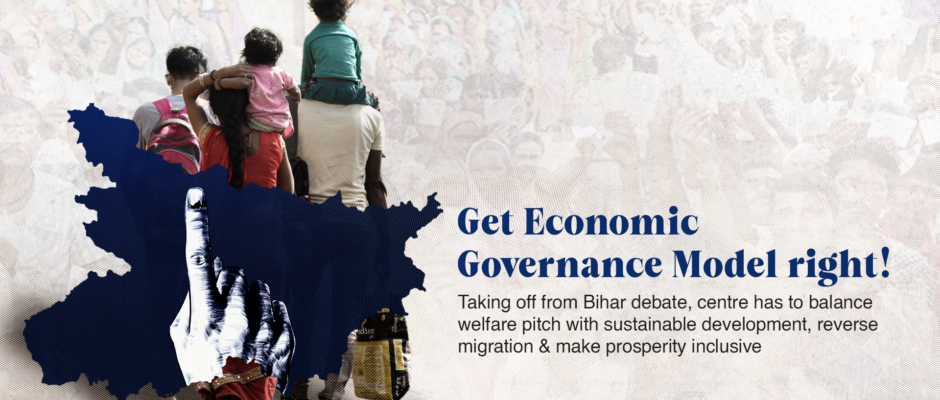
Get Economic Governance Model right!

Taking off from Bihar debate, centre has to balance welfare pitch with sustainable development, reverse migration & make prosperity inclusive K.A. Badarinath Two simultaneous developments have had happened. Both these, though unconnected, have a linkage of sorts. Our most vibrant state, Bihar has gone to polls and a new government will be in place few days from now. On the other end, finance minister Nirmala Sitharaman has begun a mammoth exercise to present her next federal budget on February 1, 2026. One could be wondering as to what’s the linkage between the two albeit even indirectly. This budget will have to put together a new model for socio-economic development taking on board political freebies that are promised in state legislative assembly elections or Lok Sabha polls. Freebies, Revdies & Social welfare Not many socio-economic analysts or thinkers would support the idea of a welfare state in a globally inter-connected world of markets, investments and trade that’s fiercely competitive. Ahead of state elections, Nitish Kumar led BJP – JDU alliance with splinter parties in tow announced two big projects. Through Mukhya Mantri Mahila Rojgar Yojana (MMRY), Rs 10,000 was given to each of 1.5 crore women through direct benefits transfer (DBT). About 1.1 crore elderly women, widows and disabled were given enhanced pension of Rs 1100 from earlier Rs 400 per month. The two schemes alone added an extra outgo of Rs 14240 crore that constitute about six per cent of total revenue expenses of Rs 252,000 crore for 2025-26. Over and above, BJP – JDU led National Democratic Alliance has promised free power, water supply, one crore jobs, higher support to farmers etc in its bid to return with a thumping mandate. Some bracket these freebies as tools for socio-economic empowerment while others call them ‘Revdis’ or vote doles’, the sweet snack made out of sesame seeds and jiggery. Well, the debate is not about direct benefit transfers which have been refined by Narendra Modi government as surest way of reaching benefits to the needy, eliminate inefficiency and pilferage of funds. Larger question is what’s the sustainable model of economic governance that Bharat should adopt to expand, deepen her growth story and spread prosperity? Cash doles can at best act as booster dose for economic empowerment on temporary basis but unsustainable in the long run as experienced in several states including Karnataka, Himachal Pradesh and now Madhya Pradesh and Maharastra. Skilling and competencies, creating work opportunities for goods and services, low-cost credit support to making large chunk capital investments that create jobs may be sustainable. No two economists agree on either of the models for development. A blend of these two approaches may be workable in the medium to long term. Taking Bihar as latest to join the bandwagon of states on the cusp of economic development, Finance Minister Nirmala Sitharaman would do well in providing clarity on approach to economic development. For several years, NDA, BJP and Prime Minister Narendra Modi resisted temptation of going populist through their campaigns in states and centre. But, competitive populism practiced by its political rivals has pushed NDA to rethink on ‘freebies’ or cash doles as a ‘winning formula’ and ‘economic empowerment’ tool. Both, Karnataka and Himachal Pradesh states have been pushed into economic chaos or deep debt burden by respective Congress governments that promised the moon in their political campaigns drawing inspiration from Aam Admi Party’s manifestos in Punjab and Delhi. Therefore, big question to be addressed by finance minister Sitharaman was salience of freebies. Mirgration & Economic Empowerment Both NDA and opposition parties led Maha ghatbandan have made huge promises on jobs to win votes in Bihar. One crore jobs have been promised by NDA and one government job in each Bihar family is what Rashtriya Janata Dal has promised. Jobs creation, investments and migration have direct and intricate linkages in Bihar and elsewhere. As per New Delhi based Institute for Human Development, over 65 per cent households in Bihar cutting across caste lines have at least one migrant each. Their remittances constitute at least 50 per cent of a household’s income. Outward migration from Bihar tripled rural wages centred in construction and agriculture sectors. The data suggests manufacturing employs a measly five per cent people. It’s near impossible to provide jobs to growing youth population. As per the institute, in 2025, 12.8 lakh youngsters completed secondary school education and over 27 per cent of state’s population was aged below 15 years. For different states, these numbers may differ. But still, youngsters below 15-years age would constitute a whopping 15.6 per cent of total population in Bharat. Creating opportunities in manufacturing, services and agriculture apart from exports from rural India is relatively more sustainable to tackle migration. A comprehensive survey on opportunities, jobs, industry, agriculture and exports in each state should dictate our policy priorities. Sridhar Vembu of Zoho Corporation has demonstrated that he could lead a global corporation even while being in a remote Tamil Nadu village. Remote working by professionals across sectors has allowed them to move out of cities while they discharged job related tasks. Huge network of roads, rail, ports, airports infrastructure, data and telecom connectivity in semi-urban and rural areas should come handy in formulating a policy against migration. First step will be to stop this migration out of villages. Secondly, reversing the migration back to villages and finally reversing brain drain from the country should be an economic priority. Re-modelling our economic development paradigm with migration at centrality of policy making should be attempted. Ultimately, economic growth should be sustainable in long run, translate into prosperity for last man standing in the spirit of Antyodaya, make welfare and opportunities inclusive while expanding global linkages. Getting the economic governance model right is the challenge. (Author is Director & Chief Executive of New Delhi based non-partisan think tank, Centre for Integrated and Holistic Studies)

Read More

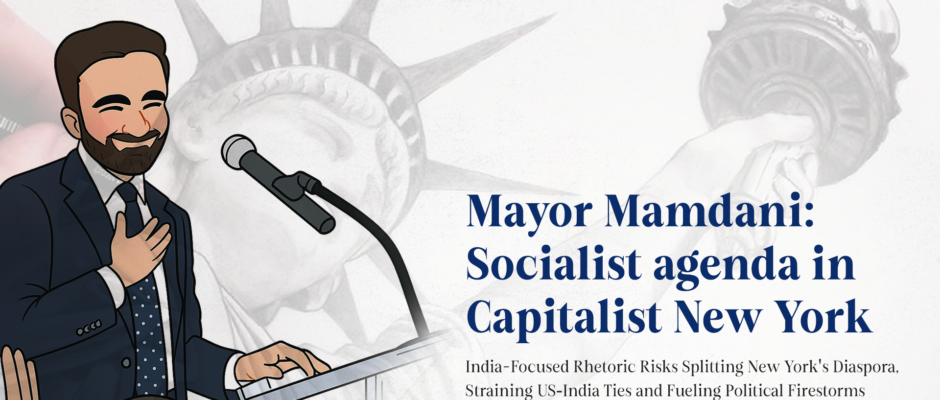
Mayor Mamdani: Socialist agenda in Capitalist New York

India-Focused Rhetoric Risks Splitting New York’s Diaspora, Straining US-India Ties and Fueling Political Firestorms N. C. Bipindra Zohran Mamdani’s victory marks a striking moment in New York politics: a young, Muslim, democratic socialist, son of filmmaker Mira Nair and Mahmood Mamdani, will lead US largest city at a time of heightened identity politics and global polarization. His biography helps explain ferocity of the debate around him. It’s his stance on India-related issues, Kashmir, Palestine, criticism of Prime Minister Narendra Modi and pointed public comments about Gujarat that has transformed what might otherwise be a municipal governance story into a transnational political flashpoint. This is not just about ideology; it is about how rhetoric issued from City Hall can fracture diaspora coalitions, complicate diplomatic ties and provide political fodder for opponents at home and abroad. Mamdani’s critics, ranging from conservative commentators to influential diaspora organizations argue that some of his statements are one-sided, factually shaky and politically inflammatory. Misinformation on Gujarat Row over his remarks about Muslims in Gujarat is instructive. Opponents in India and beyond called out a claim he made suggesting a dramatic demographic or social shift in Gujarat’s Muslim population; fact-checkers and Indian commentators quickly disputed that account, saying it mis-states census data and on-ground socio-economic diversity of Muslims in the state. Whether these were careless rhetorical flourishes or substantive errors, they gave immediate ammunition to critics who charge Mamdani with repeating misleading narratives about India. No Sympathy for Israelis, Kashmiri Pandits On Palestine and Kashmir, Mamdani’s record reflects unmistakable activism. His vocal support for Palestinian rights, his positions on settlement funding and public statements criticising Modi government’s purported human rights record have resonated with some New Yorkers particularly youngsters and left leaning advocacy networks. But these positions have alarmed others. Jewish social groups and centrist constituencies have warned that his rhetoric can blur lines between legitimate criticism of Israeli policy and statements that some interpret as insufficiently condemnatory of extremist violence; that perception has hardened a political fault line in a city with world’s largest Jewish population outside Israel. Jewish Reactions to Mamdani Several mainstream Jewish organizations issued cautious, measured statements after the election, underscoring their vigilance about anti-semitism while also acknowledging internal divisions over Israel policy – a reflection of broader tension Mamdani now inherits. Importantly, most stinging critiques do not simply target Mamdani’s policy preferences; they attack his credibility. Opponents say his India-related assertions sometimes rely on sweeping narratives rather than granular, verifiable evidence. In public fora and on social media, detractors frame those statements as kind of moralising shorthand that, in a globalised information environment, can be magnified into misinformation or selective history-telling. Indian Americans Call Him Biased For New York’s diverse South Asian community that encompasses people with attachment to India, Pakistan, Bangladesh and beyond: such simplifications risk alienating those who do not see their lived realities reflected in Mamdani’s public claims. The result is a fractured coalition: socialist base that propelled him to victory and diaspora groups who feel caricatured or dismissed. Another dimension is geopolitical optics. Mayors generally have limited formal capacity to change US foreign policy, but New York’s Mayor remains a global figure whose words carry diplomatic weight. Misinformation as a Weapon Critics warn that incendiary or ill-substantiated claims about India could complicate US–India municipal and cultural ties, from sister-city arrangements to trade and philanthropy, and could be seized upon by political actors in New Delhi eager to paint American democrats as biased or hostile. That risk is magnified because India has a politically active and often transnational diaspora that reacts swiftly to public statements by prominent figures; controversy can therefore ripple back to New Delhi and become a bilateral talking point. Indian American community in New York has sharply criticised his comments on India, as “bigotry and bias” against Indian communities, and called him “divisive, discriminatory, and unbecoming.” Fanning Domestic Polarisation Domestically, Mamdani’s India-focused controversies also feed a very immediate vulnerability: nationalised political polarisation. President Donald Trump and conservative pundits have already shaped a narrative casting Mamdani as dangerously radical, a framing Trump used in the campaign to argue that federal funds should be withheld should Mamdani assume office. That nationalisation of a municipal election transforms local disputes over housing and transit into existential fights over patriotism, security and cultural loyalty. In a hyper-partisan media environment, claims about “misinformation” on issues like Gujarat riots or about Pakistan/India politics can be weaponised to de-legitimize policy initiatives, no matter how pragmatic their intent. Keeping Governance Promises Policy implications matter. If Mamdani wants to deliver on his agenda, rent stabilisation, transit relief, childcare expansion, he must secure broad administrative cooperation, funding and buy-in from constituencies that feel threatened by his rhetoric. That requires the kind of political translation that sanctified rhetoric rarely achieves: careful, evidence-based communication; clear sourcing for claims about international events; and consistent, unequivocal condemnations of violence and extremism coupled with nuanced critiques of state policies. Failing that, even feasible policies will be cast through the prism of identity and foreign-policy controversy, making compromise harder and governance costlier. Gujarati Muslim Father, Punjabi Hindu Mother There is, however, an opening: Mamdani’s background and family story provide him with a platform to reframe the debate. His parents’ Indian origins, public intellectualism, and filmmaking sensibility give him rhetorical gifts that could be used to de-escalate rather than inflame. By commissioning independent fact-finding on contested claims, clarifying past statements and engaging directly with South Asian and Jewish community leaders not as adversaries but as partners in city governance, he could shift the narrative from cultural combat to municipal competence. That won’t please hardliners on either side, but it could blunt attacks that center on his credibility rather than his policies. Fueling Identity Politics Finally, case of Zohran Mamdani is a cautionary tale about modern urban leadership: global identity politics are now inseparable from municipal governance. Mayors must navigate local service delivery while managing transnational reputations and diaspora sensibilities. For Mamdani, pragmatic path is clear even if politically costly: root his public statements

Read More
Nepal Stares at Uncertainty!

Nepal Stares at Uncertainty!

A stable, open, vibrant Himalayan nation retaining its Hindu core with cultural, civilizational and spiritual underpinning is most sustainable. K.A.Badarinath Peace and tranquillity, political stability and nursing the tiny Himalayan nation, Nepal to normalcy is pivotal to enduring growth and sustained development in South Asia. Bharat’s nearest and one of the most trusted partners, Nepal went through a lot in last couple of weeks. Disturbing and painful scenes of complete anarchy, loss of 19 young lives, scores injured, iconic Parliament, Supreme Court and other top-end buildings burning to ashes in part or completely painted a distressing picture of this picturesque country. There’s no place for corrupt, authoritarian or anti-people regimes that let down their own people. Be it Bangladesh, Nepal or Sri Lanka, zero tolerance to corruption is something that each will have to prioritize as basic tenant of a democratic polity. And, Nepali political leadership of all hues and shades have got thoroughly exposed after they failed to provide corrupt-free governance. Social media related policies were incidental and served as trigger for youngsters to hit the road. Eight major political formations with diverse ideologies and linkages like Nepali Congress, CPN-UML, Moist Centre, Jan Samajwadi Party, CPN – United Socialist, Loktantrik Samajbadi Party, Rashtriya Janmorcha that dominated the political arena today find themselves out of the system after K.P.Oli led coalition was forced out by the youngsters. Kathmandu Mayor Balen Shah and Sudan Gurung that apparently played a key role during the protests seem to have shifted behind the screen in their activities. While uncertainty stares in Nepal, an interim government headed by Prime Minister Sushila Karki and her three ministers do not fit into any of these political parties. And, they would find it difficult to find their in moving forward. Given that the young protesters did not have centralized leadership or entity that led the violent protests, the interim government will have to carve out its own socio-political space. Home Minister Om Prakash Aryal, Power Minister Kulman Ghising and finance Minister Rameshwar Khanal appointed by the first lady Prime Minister reportedly enjoy clean image and do not come with political baggage of any kind. Their work in respective areas stands out. All the four including Prime Minister Karki seem to have western orientation either due to their profession or outlook. Hence, their work in the government would be subjected to closer scrutiny by all stakeholders in Nepal. For the first time, overtly professional Nepal army had to play a semi-political role leading to dissolution of Parliament, formation of interim government that will lead the country into general elections in March 2026. To its credit, Nepal Army displayed exemplary professionalism by not taking reins of governance and backed the Karki regime to see through difficult transition next few months. Also, it is immensely possible that political parties that lost people’s confidence may realign to bounce back to centre stage seeking a second chance. After adoption of the new constitution ringing in democracy in 2008, fourteen governments were formed, dislodged with political alignments happening all through. None of these political formations were able to complete the mandated five-year term after an election. In these 18-years of political turbulence marked by twists, turns and realignments, India stood as beacon of strength to lend a helping hand in the Himalayan nation’s transition to democracy. Notwithstanding political ideologies of a government that ruled Kathmandu, India stood firmly with Nepal in its socio-economic development journey as a steadfast partner with no strings attached. If Prime Minister Narendra Modi and external affairs minister S.Jaishankar’s statements are any indication, India continues to be firmly behind Nepal. One also needs to watch out for cold play from Communist China and Republican US while Nepal struggles to end uncertainty and get back its rhythm. Hard part for Nepal would be to retain its basic Hindu character while diverse ideological formations and external forces come into play. There were wild guesses that the former monarchs were behind protests which were proved wrong. An open, vibrant and bustling Nepal retaining its Hindu core in terms of its cultural, civilizational and spiritual orientation is what would sustain itself as a sovereign nation. (Author is Director and Chief Executive of non-partisan New Delhi based think-tank, Centre for Integrated and Holistic Studies)

Read More
100 Years’ Journey of RSS: New Horizons

100 Years’ Journey of RSS: New Horizons

As the Rashtriya Swayamsevak Sangh enters its Centenary Year, a special 3-day lecture and interaction series of “100 Years’ Journey of RSS: New Horizons” was organised at Vigyan Bhawan, New Delhi, from 26–28 August 2025. The event, marked by thoughtful deliberations and inspiring addresses, brought together swayamsevaks, intellectuals, foreign dignitaries from more than 20 countries viz., US, UK, Russia, China, Germany, Japan, Australia, Nepal, Sri Lanka, Argentina, Malaysia, Indonesia, New Zealand, Uzbekistan, ⁠Kazakistan, Denmark, ⁠ Isreal, (to name a few), foreign media viz., BBC, AFP, DW, Sputnik, Reuters, NYT, WSJ, Kyodo News and many others, to look back and see the future. Sarsanghchalak, Dr. Mohan Bhagwat Ji, in his keynote address presented a deep insight into the Sangh’s journey since 1925. He brought before the gathering the fact that the Sangh had not been born due to some passing cause, but due to a timeless civilisational requirement, to cultivate character, cohesion, and service in society. He noted that whereas Sangh’s first one hundred years have been committed to establishing a robust infrastructure and national consciousness, the coming century will require newer models of involvement in the areas of education, technology, nature, culture, and international discoursed. During the three days, there were thematic sessions discussing crucial aspects of the Sangh’s contribution: Nation First and Social Harmony, Civilisational Continuity in a Changing World, and Empowering Communities for Self-Reliant Bharat. Representatives from various walks of life deliberated on how the Sangh’s quiet and consistent efforts in villages, towns, and cities have brought up a generation with sanskars and with the confidence to tackle contemporary issues. The exchanges brought out one shared spirit: that the 100-year RSS pilgrimage is not so much a history of expansion, but a living witness to the dynamism of selfless service and cultural consciousness. As Sangh embarks on its second century, the challenge is to widen horizons, adopting inclusiveness, innovativeness, and greater social connect, yet staying rooted in the fundamental vision of ekatmata, sewa, aur rashtra-nirman (unity, service, and nation-building). Three day event at Vigyan Bhawan ended with a fresh commitment, that the Centenary of RSS will not only marks a glorious past but also plant the seeds of a brighter, harmonious, and self-assured Bharat for the future generations. “Sanghachhadhwam, Samvadadhwam, Sam Vo Manamsi Janatam” (Let us move together, let us speak together, let our minds be in harmony.) — Rig Veda

Read More
Bali Jatra Reflects Bharat’s Maritime Prowess

Bali Jatra Reflects Bharat’s Maritime Prowess

India and Southeast Asia share civilizational connect, maritime and cultural heritage that’s now dubbed as Global South. Dr Aniket Pingley Connections between India and Southeast Asia go back more than two thousand years, shaped by vast waters of Indian Ocean. These seas were not barriers but bridges, linking ports of ancient India with the islands and coastal regions of what we now call Southeast Asia. Merchants, monks, artisans and travelers carried more than goods; they carried stories, languages, faiths and practices. Over time, these exchanges left enduring marks on societies from Sumatra to the Malay Peninsula and beyond. In many ways, Southeast Asia became a mirror that reflected civilizational outreach of Bharat. Trade was the most visible layer of this relationship. India exported textiles, spices, beads and ivory while importing gold, tin, camphor and exotic wood from Southeast Asia. These exchanges were never limited to commerce alone. Maritime routes were also pathways for ideas. Ramayana and the Mahabharata were retold in local languages; Sanskrit and later Pali shaped courts and religious practices and Indian temple architecture inspired monuments from Angkor in Cambodia to Borobudur in Indonesia. The very names of places such as Yogyakarta, Ayutthaya and Srivijaya testify to these cultural flows. These interactions reveal how India’s influence went beyond its borders helping to form cosmopolitan societies in Southeast Asia that were both rooted in local traditions and open to outside influences. Diplomatic and political exchanges played an important role. Rulers in Java, Bali and Sumatra often drew on Indian ideas of kingship, legitimizing their authority through symbols and rituals derived from the subcontinent. The legend of King Airlangga of Java, for example, shows how Indian epics and models of governance were woven into local traditions [5]. Similarly, in Malay Peninsula, early polities combined maritime trade with cultural borrowing from India, laying the foundations for the region’s lasting connections with the subcontinent [7]. These layers of connection commercial, cultural, religious and political formed a civilizational network that is now increasingly referred to as “Global South.” India’s historic outreach demonstrated how societies of South could link with each other, exchange resources, and build hybrid cultures without external domination. This perspective is particularly important today as countries of Asia, Africa, and Latin America seek greater cooperation outside the traditional frameworks of the West [7]. Bali Jatra: Memory of the Ocean Voyages Odisha, known as Kalinga in ancient times, was a formidable maritime power. Its strategic location along Bharat’s eastern coast made it a hub for trade and cultural exchange. Major ports like Tamralipti, Palur and Manikapatna were bustling centres of commerce, facilitating movement of goods and ideas between India and Southeast Asia. It is in this context that festival of Bali Jatra (Baliyatra), celebrated in Cuttack, Odisha, hold such significance. Literally meaning “voyage to Bali,” the festival commemorates the journeys once undertaken by Sadhabas or Odia merchants, who sailed across the Bay of Bengal to trade with Java, Bali, Sumatra and other parts of Southeast Asia [1][2]. During full moon of Kartik Purnima every year, families in Odisha still set afloat small boats made of banana bark, paper, or cork, symbolizing vessels that once braved seas. The Balinese celebration of Nyepi, Hindu New Year, bears similarities to rituals of Kartik Purnima in Odisha. Both festivals involve offerings to the gods, prayers for prosperity and rituals closely tied to agricultural and maritime cycles. The practice is more than a regional ritual; it is a living archive of India’s maritime past. Bali Jatra reminds us that Indian Ocean trade was not incidental but central to Bharat’s engagement with Southeast Asia. At its height, these voyages established a dense web of relationships that enriched both sides. For Southeast Asia, Indian traders brought goods and technologies that supported local economies. For India, the voyages opened access to new markets, resources and cultural influences. The festival, therefore, is not only about nostalgia but also about acknowledging an interconnected past. Today, Bali Jatra has grown into one of the largest open-air fairs in Asia, attracting millions of visitors [3]. It showcases not just Odisha’s heritage but wider story of India’s role in maritime Asia. The festival includes cultural performances, food, handicrafts, and exhibitions that highlight the living traditions of seafaring communities. It also increasingly serves as a site of cultural diplomacy, inviting participation from Southeast Asian countries whose histories are tied to these voyages. Contemporary Relevance & Policy Play The significance of Bali Jatra does not end with heritage. It has clear implications for policy and diplomacy in the present. India and ASEAN today are strategic partners, cooperating in trade, security and cultural exchange. Yet for these partnerships to deepen, they need narratives that bind them beyond statistics. Bali Jatra provides one such narrative, rooted in shared history and civilizational connect. For Bharat’s policymakers, the festival is an example of India’s civilizational diplomacy. The presence of diplomats and foreign representatives at recent Bali Jatra celebrations shows growing recognition of its potential [3]. By inviting Southeast Asian leaders, academics, and artists to participate in the event, India can use the festival to create dialogues that are both cultural and strategic. Such engagements could align with forums like the Delhi Dialogue and ASEAN–India summits [8], making cultural heritage an integral part of foreign policy. For Southeast Asian nations, acknowledging festivals like Bali Jatra opens space to emphasize shared heritage while respecting national diversity. Countries such as Indonesia and Malaysia, where Indian cultural imprints remain visible, can view these connections not as relics of the past but as foundations for renewed cooperation. Policy research papers from think tanks such as Institute of Strategic and International Studies Malaysia already suggest that cultural diplomacy can strengthen the Comprehensive Strategic Partnership between India and Malaysia [6]. Similarly, Indonesian scholars point to the shared legacy of figures like King Airlangga as a reminder of intertweaved histories [4]. For the academic community, Bali Jatra offers a platform for dialogue on the meaning of the Global South. As scholars note, the Global South is not only

Read More
Primer – Caste Census in Bharat: Policy, Politics & Social Justice

Primer – Caste Census in Bharat: Policy, Politics & Social Justice

Caste Census in Bharat: Policy,Bharat’s renewed push for caste based enumeration or census is not just a domestic administrative reform but a landmark moment in the global conversation around equality, representation and justice. After nearly a century since last comprehensive caste enumeration in 1931, the upcoming 2027 census promises to confront deep inequalities embedded in Bharat’s social structure.

Read More
Damn EU Oil sanctions!

Damn EU Oil sanctions!

Strategic autonomy coupled with its right to source crude at affordable prices and quality is non-negotiable. Here’s New India… By NC Bipindra Latest round of sanctions announced by European Union on July 18, 2025, has opened a new chapter in the growing geopolitical standoff between Brussels and New Delhi. For the first time, EU has directly targeted Indian oil trade, specifically naming Nayara Energy’s Vadinar refinery which is majority-owned by Russia’s Rosneft. The EU sanctions, coming as it does within days of NATO Secretary General Mark Rutte’s warning about secondary sanctions on India, are part of these regional institutions’ crackdown on what it calls indirect financing of Kremlin’s war in Ukraine. At the heart of this issue lies India’s continued and unapologetic purchase of discounted Russian crude. India has been refining this oil and exporting resultant diesel and jet fuel, some of which flows back into Europe. While New Delhi views this as a perfectly legal and economically sound strategy, Brussels sees it as a dangerous workaround that weakens Western sanctions regime. What makes this clash more than a bureaucratic quarrel is its broader significance for global energy markets, economic diplomacy and tests limits of Western pressure in a multipolar world. Why Is the EU Escalating Pressure on India over Russian Oil Purchases? EU wants to isolate Russia economically. India, however, is determined not to compromise its energy security and strategic autonomy, the principles it considers non-negotiable. From European perspective, India’s growing role as a refinery hub for Russian crude threatens to undercut its sanctions framework. Eighteenth package of EU sanctions which includes lowering price cap on Russian crude to about $ 47.60 per barrel and sanctioning over 100 tankers in Russia’s so-called “shadow fleet,” is aimed at choking off alternative routes for Russian oil revenue. By focusing on Indian exports and targeting refineries like Vadinar, Europe is sending a clear message that it will go after any actor — state or private — that contributes to propping up Moscow’s war chest. What are Its Strategic Imperatives? But India isn’t taking this lightly. Ministry of External Affairs responded swiftly and sternly, calling the EU’s actions unilateral and unjust. Officials in New Delhi accused the bloc of practicing double standards, pointing to Europe’s own imports of Russian LNG and uranium even after war in Ukraine escalated. Energy security, Indian leaders assert, is not just a matter of policy but a constitutional duty, especially for a developing nation with over 1.4 billion people striving for economic growth and social stability. From New Delhi’s standpoint, its trade with Russia is both lawful and pragmatic. Indian officials frequently cite EU Regulation 833 / 2014, which states that once a good is substantially transformed in a third country, it is no longer considered to originate from the sanctioned country. India’s External Affairs Minister Dr. S. Jaishankar and Petroleum Minister Hardeep Singh Puri have made this argument repeatedly, maintaining that diesel refined in India is legally distinct from the Russian crude it was made from. The economic logic behind this policy is also compelling. Minister Puri has stated that importing discounted oil from Russia has saved India billions of dollars, helped stabilise inflation and shielded consumers from worst of global energy shock. In a world still reeling from economic aftershocks of the pandemic and the war, these savings have helped India remain on a steady growth trajectory while other economies faltered. India’s position is also shaped by deeper strategic calculations. The country has long prided itself on its foreign policy of non-alignment, now recast as “strategic autonomy.” This allows New Delhi to navigate complex relationships with both the West and traditional partners like Russia without being forced to pick sides. India’s close defence and energy ties with Moscow continue, even as it deepens cooperation with the United States and European Union in other areas like technology, trade, and counterterrorism. What are India’s Strategic Options? Rather than cave in to external pressure, India has quietly but effectively diversified its oil imports. Over past year, it has increased purchases from Middle Eastern countries, United States, Brazil and new suppliers in Africa and Latin America. This diversification has enabled India to demonstrate that it is not wholly dependent on Russian oil, even as it defends its right to continue buying it. At the same time, India has expanded its investment in natural gas, renewables and long-term energy security. A 15-year LNG deal with United Arab Emirates’ ADNOC, for example, will bring in one million tonnes of gas annually, supporting the country’s gradual shift toward cleaner fuels. India’s resilience is also built on its ability to conduct trade outside of Western financial and logistical systems. Russia has set up rupee-based trade settlements, used vostro accounts through Indian banks and relied on non-Western insurance and shipping firms. This alternative infrastructure insulates India-Russia energy trade from Western sanctions to a large extent and helps maintain stability despite external disruptions. Even as EU tightens restrictions and hints at possible secondary sanctions, India continues to find new export markets for its refined petroleum products. Africa, Southeast Asia and Latin America have emerged as key destinations where buyers are less concerned about the origins of crude and more focused on price and availability. These regions offer India a buffer against any loss of European markets, keeping its refineries running and export revenues intact. At the legal level, India has pushed back forcefully the very idea of violating sanctions. Indian legal experts argue that under international law, unilateral sanctions not backed by United Nations are not binding. New Delhi has taken this position consistently and has also pointed out hypocrisy of Europe’s own uneven implementation of sanctions where Russian LNG and enriched uranium remain untouched by embargoes. Behind all this lies a larger philosophical question. Should developing countries bear the brunt of economic disruptions caused by conflicts they did not start and do not control? India has answered this with a firm no. It argues that energy access at affordable prices is a matter of global

Read More
Deepening Crisis

Deepening Crisis

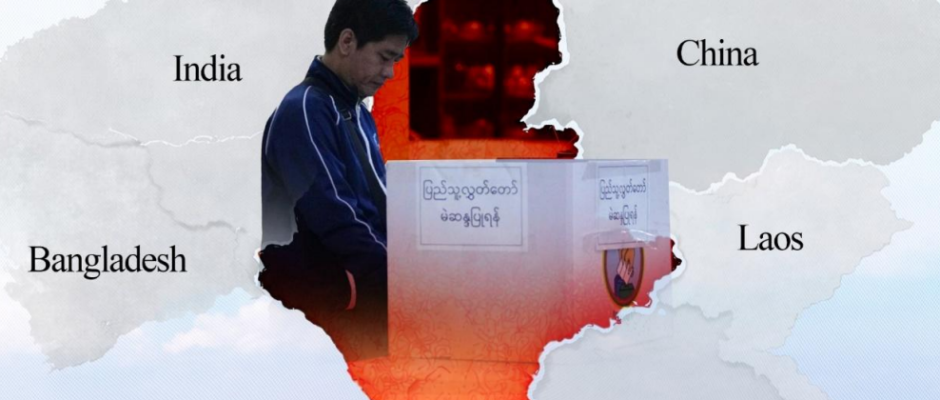
Shrinking democratic space, Yunus going jihadist way and western powers weary of his idiosyncrasies has turned Bangladesh a hotspot.  Rohan Giri Bangladesh is in the midst of a major crisis given the political chessboard that exposes changing power dynamics, jihdist takeover, assertion of the military junta and people left to fend for them with the state giving up on governance. It’s not mere domestic political reconfiguration but a crisis in the making with both national and regional consequences. At the heart of this narrative lies decline of a figure once championed in Western capitals, Muhammad Yunus and subdued recalibration of power that tells extensively about where Bangladesh is headed and how the world must understand this transition. Muhammad Yunus, once hailed as a Nobel laureate and Grameen Bank microfinance model builder, was long seen as a link with Western liberal values.  But in today’s Dhaka, Yunus no longer commands the stature of a unifying reformist and an elderly statesman. His legal troubles, political marginalisation and increasing distance from the country’s current power centres suggest a systemic and perhaps irreversible break from liberal-democratic experiment that he once symbolised. His estrangement from the Bangladesh Nationalist Party (BNP), historically the principal opposition to erstwhile ruling Awami League, marks a decisive shift. Even Yunus lacks institutional support from security establishments, rendering such alliances practically ineffective. A recent massive rally titled “Rally for Establishing Youth Political Rights” was held in Dhaka by three BNP-affiliated groups, Jatiyatabadi Chhatra Dal, Jubo Dal, and Swechchhasebak Dal as Yunus left for a four-day visit to Japan. BNP Acting Chairman Tarique Rahman addressed the rally virtually, criticising the Yunus-led government. Days earlier, a BNP delegation demanded an election roadmap by December and urged the interim government to avoid long-term policy decisions especially on issues like the Rohingya corridor and Chattogram port. The political gap left after fall from the Awami League’s unquestionable supremacy has not resulted in democratic transition, realignment of democratic forces.  Once a prominent player in Bangladeshi politics, Awami League under Sheikh Hasina, has been accused of authoritarian drift, methodical repression of opposition and getting alienated from voters. The conditions are ripe for alternative centres of power to emerge not necessarily from existing political formations but actors whose influence is wielded from behind the veil of legitimacy. One such actor is Bangladeshi military that has distanced from Yunus. Historically, taking a cautious, if not aloof, approach to overt governance. The current climate indicates its willingness to fill the power vacuum. Notably, words and postures emanating from within the army reflect displeasure with both existing political leadership and personalities, like Yunus, who are frequently portrayed as associated with Western liberal objectives. The military’s reluctance to re-embrace Yunus reveals a deeper strategic concern: aligning too closely with an internationally admired but locally polarising individual risks alienating burgeoning nationalist sentiments and undermining internal cohesion. Compounding the uncertainty is reemergence of hardline Islamic factions, particularly the Jamaat-e-Islami, long banned but far from being irrelevant. In times of institutional fragility, such groups often find space to maneuver, projecting themselves as defenders of moral order and religious authenticity. Their attempt to “call the shots” politically, often through proxies and sympathetic networks, is no longer a fringe development but a potential axis of influence, especially in disenfranchised and conservative constituencies. Under the guise of populism and faith-based legitimacy, ideological extremists are bound to acquire traction due to the Awami League and BNP’s combined weakness or non-existence in political arena. In this calculus, pro-democracy actors, while vocal and active, remain largely performative in impact. The civil society fabric of Bangladesh, which once brimmed with journalistic bravery, legal advocacy, and grassroots mobilisation, now finds itself overpowered by a combination of state repression, media censorship and judicial intimidation. Though aligned ideologically with purported liberal reformists such as Yunus, these elements are neither organised nor empowered to counter the influence of either the security apparatus or resurgent Islamist formations. Individuals who are more concerned with maintaining institutional or ideological domination than with preserving democracy are increasingly filling the gap left by middle-ground political participation. From a geopolitical standpoint, these internal realignments have not escaped the attention of regional and global powers. United States, under shifting administrations, have shown signs of strategic disinterest in Yunus continued involvement in Bangladeshi politics. At the same time, US seems to be investing in other forms of influence projection, most notably through declaration of interest in Saint Martin’s Island, a location with increasing significance due to its naval and logistical potential. Although formally within Bangladeshi territory, US maneuvers signal a willingness to challenge regional hegemonies through presence rather than partnership. Interestingly, the Bangladeshi army’s own worldview appears increasingly decoupled from traditional alignments. While military engagement with China continues through defence procurements and limited logistical cooperation, the army remains skeptical of Pakistan, a country with which historical scars and ideological differences remain deeply etched. Since New Delhi is well aware of Pakistan’s ongoing attempts to retain influence in Dhaka through both ideological and illegal means, this suspicion may be a means of fostering understanding with India. India’s own perspective on these developments is complex and evolving. New Delhi has traditionally favoured stability over unrest in its eastern neighbourhood. Assam Chief Minister Himanta Biswa Sarma has however articulated concerns about Bangladesh’s vulnerability to becoming a chokepoint, a potential “chicken neck” in a broader strategic contest involving China, US and radical Islamic networks. The parallel highlights a concern about India’s own strategic bottleneck, the Siliguri Corridor and how instability in Bangladesh could lead to logistical and security issues in the northeast. Indian engagement, therefore, is not only about diplomatic alignment but about protecting crucial linkages and resisting China’s growing influence. The present course of Bangladesh raises uneasy concerns for democracies in the West. Common trends that are frequently disregarded in favour of short-term strategic collaboration or economic stability include the emergence of hardline forces, dwindling liberal voices and the assertion of military prerogative. If these trends are not addressed, they run the risk of combining to

Read More
Disruption In World Order Guaranteed!

Disruption in World Order Guaranteed!

Donald Trump’s second term may not allow ‘business as usual’ approach to global affairs given underpinnings of ‘Make America Great Again’ thrust. K.A.Badarinath Across continents one big question that’s seriously debated and pored over is what’s in store during second term of President Donald Trump that would kick off in three weeks from now. Jokes, boardroom banter, hate, repulsion to cult following notwithstanding, Donald John Trump cannot be ignored as President United States of America (USA) given the landslide mandate that Americans have given him. One can rest be assured, he would make next four years very eventful at Oval Office after having gained serious insights into functioning of the Presidential role in his first term that ended in turbulence. Trump would not let the world forget in a hurry that he’s the only President who has been returned to White House after eviction from White House after Grover Cleveland several decades ago. Hence, it’s not surprising that from Africa, Asia, Europe to West Asia, tongues have begun to wag on state of play with staunch and determined Republican President at the hot seat in White House. But, what can easily be predicted is pursuit of aggressive ‘America First’ and ‘Make America Great Again’ that would dominate Trump Presidency on all fronts, be it economy, investment and trade, civilizational ties, diplomatic engagements, wars and conflicts in which US has direct or indirect linkages. Ultra nationalist sentiment of Western variety will have a sway during Trump regime within and beyond American borders. Expressive articulation of America First and Make America Great Again cannot be missed. A thorough review of all engagements including Israel, Ukraine and other conflict zones would become a priority for President Trump. And, rogue states like Pakistan are expected to face big time shove if Trump has his way. China may top Trump agenda with 50 per cent tariffs proposed on all exports to United States to rebalance bilateral trade. These levies would turn as many products non-competitive forcing Bejing to rethink its export strategy using third country labels to overcome the proposed tariff barriers. Bharat along with other BRICS member countries have already been put on alert as Trump has threatened with 100 per cent tariffs if the big developing countries went ahead with a common currency regime rivalling the American dollar. ‘De-dollarization’ move apart, Bharat may have to revisit its list of 30 US goods identified in 2018 and approached World Trade Organization for levying retaliatory tariffs on US. Also, sticky issues like Gautam Adani’s case in American courts and reported life bid on Khalistani terrorist Gurupatwant Singh Pannun will have to be dealt with deftly. Of late, growing anti-Bharat sentiment being belted out by American media outlets especially following Sriram Krishnan’s appointment as advisor on artificial intelligence to Trump may have to be addressed. Future of H1B work visas, US citizenship to children of such visas has turned absolutely uncertain. President Trump may have to take a call on this key issue. On two occasions in his first term, Trump had referred to 50 per cent restrictive duties on Harley Davidson motorcycles by Bharat. Even after his re-election in recent weeks, President-elect Trump described Bharat as ‘tariff king’. He conveniently chose to not refer to hiked tariffs on Indian steel and metallic products exports by him in his first term. Though the volume and value of defence exports to US are modest at US $ 1.5 billion, they may come under scanner of quixotic Trump. There are several such Indian export items that may be put to scrutiny by new regime. No wonder, Prime Minister Narendra Modi despatched his foreign minister Subramanyam Jaishankar to US in preparation for bilateral engagement with the ‘Don’. Modi who shares personal rapport with Donald Trump is expected to find a way out given that Indian investors are waiting in the wings to take larger positions – directly or indirectly — in US markets. President Trump would prioritize huge cuts in ‘federal spending’ of ‘non-essential’ and ‘non-strategic’ expenses by his government given the burgeoning long term deficits that US has piled up over years. Every dollar spent may be accounted for especially with technology czars like Elon Musk breathing down the neck pushing for ‘government efficiency’ on resources. Under President Trump, ‘radical left lunatics’ may get a big bashing on the butt that would eventually inflict damage on support structures for democrats. These Left hardliners have been peddling narratives that ‘liberal, open democratic character’ of US was under threat once the ‘Don’s’ second term began in 2025. Narrative battles in US between Left leaning ‘self-proclaimed’ liberals and Republicans under Donald Trump are expected to intensify further. Basically, ‘business as usual’ may not be possible with Donald Trump. Be it Canada, Panama, Greenland, Syria or elsewhere, there’s bound to be restlessness in Republican White House demanding a big changeover. Donald Trump seeking to turn Canada into 51st state of US sent shivers for Justin Trudeau who’s fighting with his back to the wall seeking re-election later next year. Here again, Trump demanded lowering of tariffs and in return offered US security cover to Canadians as fifty first state. Similarly, Panama was put on notice by Donald Trump who made two significant points from his perspective. One, the Panama Canal was being illegally controlled by Chinese people liberation army and the tariffs on movement of American goods were too huge that warranted a rollback. Thirdly, Donald Trump may have hit a raw nerve when he sought American pound of flesh in administration of resources-rich Greenland. Given that European Union has effective control on Greenland, Brussels may not take Trump’s comments rather lightly and forced to engage with him on the issue apart from legal migration and infiltration across US and EU member countries. Donald Trump may like to leave his imprint as a global leader in his four-year regime that’s bound to be eventful and has the potential to change face of global engagement. (Author is Director & Chief Executive at

Read More