CIHS – Centre for Integrated and Holistic Studies

Date/Time:

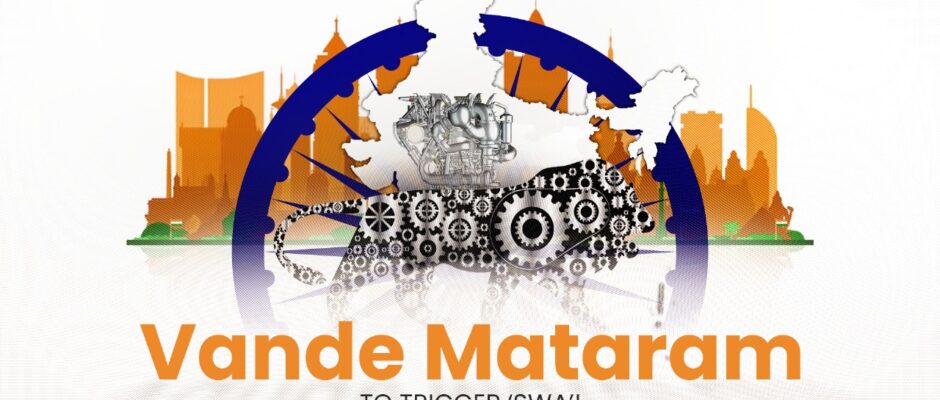
Vande Mataram to Trigger ‘Swa’!

Vande Mataram to Trigger ‘Swa’!

From home grown tech, goods, services to Bharat’s way of resolving her problems would celebrate the spirit of ‘Swa’ to’swadeshi’! K.A.Badarinath The national song ‘Vande Mataram’ that caught the imagination of all freedom fighters for united Bharat against British occupation seeking ‘swaraj’ a la self-rule has turned 150. Bankim Chandra Chattopadhyay penned the verses in 1875 and this became the swan song for complete freedom and rejection of foreign rule, goods and services. This very song can serve as inspiration for a united, developed country of 1.5 billion people overcoming both internal and external challenges. And, rightly, central executive council of Rashtriya Swayamsevak Sangh (RSS) that held three-day conclave in Jabalpur earlier this week announced one-year long campaign to celebrate and revive the spirit of ‘Vande Mataram’. It was first voiced at the Congress session in 1896 by none other than Bharat Ratna Rabindranath Tagore. And, the delegates at Congress session were swayed by this national song. It also turned the ‘mantra’ against British and sung by icons like Maharashi Arbindo, Madame Bhikaji Cama, renowned poets like Subramanya Bharati, Lala Hardayal and Lala Lajpat Rai apart from reformers like Dayananda Saraswati. Mahatma Gandhi had deftly used ‘Vande Maataram’ to greet people even in his letters to fellow compatriots and freedom fighters. When ‘Vande Mataram’ turned 100, ironically, the Congress-led government restricted its singing in 1975 after then Prime Minister Smt Indira Gandhi imposed internal emergency, trampled upon citizens’ fundamental and democratic rights. Most democratic institutions including both houses of parliament were dissolved and began two-year near lunatic undemocratic rule to stay in power. Hence, the entire Sangh parivar that bore the brunt of a criminal rule in New Delhi, seems to have decided to ring in the spirit of ‘Vande Mataram’ after 50-years. The national song treated on par with national anthem is sought to reunite the entire country’s citizenry against divisive forces seeking to weaken the fundamentals of the society on lines of caste, creed, sex, region, religion and faith. ‘Vande Mataram’ has the big potential to rekindle the spirit of ‘Swa’ (selfhood) and ‘Bharatiyata’ (Indian-ness) against forces of disruption having linkages with foreign powers. From villages, counties, communities to the entire nation, Vande Mataram could inject the sense of belonging for Bharat, resurrect its civilizational ethos, celebrate its diversity and unite to become a developed country laying a firm path for other nations to move along as well. RSS Sarkaryavah Dattatreya Hosabale has emphasised on reviving the spirit of ‘swa’ as the basis for national renaissance, development and bringing about inclusive prosperity in Bharat setting aside differences within some sections. ‘Swa’ includes reliance on domestic resources, talent, ideas, innovations and technology that could define Indian-ness. For instance Sridhar Vembu’s arattai can be our basic communication medium as against Whatsapp. For instance, building our own Kaveri engine that can power passenger and fighter aircraft should be our priority as against building Russia’s SJ-100 aircraft. As Dattatreya Hosabale said, ‘Swa’ or ‘Swadeshi’ should not translate into complete ‘isolation’ from Bharat’s perspective. It only means that heavy dependencw on domestic resources, desi talent, home grown technologies, innovations and human mind. From aerospace engineering, defence production to information technology, self-reliance should become the key word in spirit, content or processes. Puritan ‘Swadeshi’ way coupled with multiple global partnerships would bring about resilience to Bharat’s campaign for her socio-economic renaissance. One is reminded of Russia buckling under US pressure to deny Bharat the cryogenic engines technology to power her rockets and missiles. Russian space agency Glavcosmos revised its 1994 pact with Indian Space Research Organisation (ISRO) to deny the cryogenic engines technology and limited to supply nine engines. And, ISRO scientists outflanked the global space powers to rise from ashes and dominate the space sector. Big positive in this campaign is also Narendra Modi led government’s move to join the parivar campaign on ‘Vande Mataram’. If the recent Home Ministry memorandum is any indication, Prime Minister Modi will lead the nation to rekindle the spirit of ‘Vande Mataram’ way on Friday, November 7 that’s Akshay Navami. Last month itself, Union Cabinet had through a resolution decided to celebrate ‘Vande Mataram’ till November 7 next year. This campaign would become more purposeful if the governance at every level adapts ‘swadeshi’ as the ‘mantra’ Overtaking Japan or Germany, competing for the top of the stack position vis-à-vis China and US on economic front is a doable project if the spirit of ‘swa’ in every sector was applied. From governance reforms to celebrating diverse languages of Bharat’s people, governments, political formations and leadership will play a significant role. (Author is Director & Chief Executive of New Delhi based non-partisan think tank, Centre for Integrated and Holistic Studies)

Read More
Trump’s Tantrums & Lies!

Trump’s Tantrums & Lies!

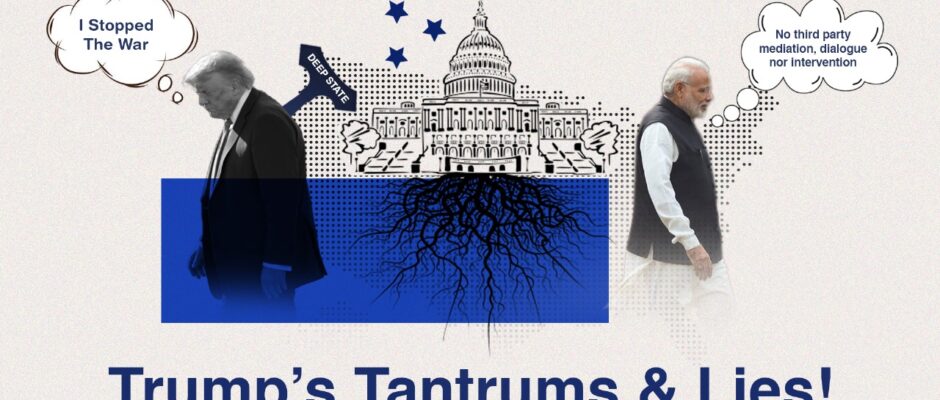
Quixotic dealing with strategic allies untenable, US may lose out on India and get cornered as the deep state and left lobbies plays dirty. K.A.Badarinath Overwhelming opinion amongst intelligentsia is that US President Donald Trump is throwing tantrums and lying through his teeth. His repeated claims from Washington DC, Kananaskis – the venue for G-7 summit – and elsewhere have come under close scrutiny internationally. First big claim that President Trump made was to have successfully mediated between Bharat and Pakistan during the week-long conflict to avert a nuclear war. The two countries fought a limited war following daylight murder of 26 tourists in Pahalgam of Jammu and Kashmir by ISI sponsored terrorists in April 25, 2025. Yesterday, Indian Prime Minister Narendra Modi categorically debunked President Trump’s falsified claims from White House and outside. Neither was there any mediation, dialogue nor intervention by President Trump to pause the armed conflict. Instead, ‘Operation Sindhoor’ was paused only at specific and desperate request of Pakistan military establishment through regular channels of communication after Bharat pounded its airbases deep. In fact, Trump had gone ahead and tweeted to claim his leadership role in dissuading the South Asian neighbours from going to a major nuclear war. Yesterday, President Trump went a step further and pointed out that international media did not write about his ‘stellar role’ as peacenik between the arch rivals. On the contrary, in his 35-minutes telephonic conversation with Trump, Modi unambiguously stated that the latter had no role whatsoever. Indian foreign office ‘read out’ by Secretary Vikram Misri clearly dismissed in most certain terms any mediation by President Trump. What’s laughable is that Donald Trump repeated his bombastic claim from Oval office that he stopped the war even after getting a ‘earful’ from Modi. Second big claim of President Trump that trade deal between India and US was used as leverage to bring around Prime Minister Modi. Again, this has been outright dismissed outright by India. President Trump’s suggestion that trade deal in the works between India and US leveraged to prevent a larger war was again billed as ‘preposterous’ and ‘untrue’. To drive home India’s unambiguous position on war with terror infested Pakistan, Modi firmly and politely declined Trump’s invite to stop over in Washington DC for a chat citing ‘prior commitments’.  One cannot recall if American President’s invite was ever declined by Indian leadership in the past. Few things have been stated crystal clear to President Trump in the telephonic conversation whether he liked it or not. India will not and never accept mediation with Pakistan. This is key articulation of the country’s policy as part of its ‘strategic autonomy’ framework. Yet another point made was that funding, sponsoring and abetting terrorism will now on be considered war against India and not Proxy war. And, hence, Bharat reserves the right to hit back in a manner it deems fit. Thirdly, Jammu & Kashmir is non-negotiable, integral to India and only discussion could be on areas under illegal occupation of Pakistan. In last few weeks, India exercised maximum restraint in not taking on President Trump’s claim either directly or indirectly. Yesterday’s phone call between the two leaders reflected clarity in articulation India’s position.  On the parallel, General Asim Munir of Pakistan getting close to White House, having a closed door lunch with President Trump is something that clearly indicates complete disruption in US foreign policy under Republican Presidency. Reports that President Trump promised hitherto denied defence technologies to Pakistan for using its territory to strike against Iran has its own implications. Old foreign policy hands have an independent analysis on the chain of events including President Trump’s claims that have been eventually denied by Indian foreign secretary Misri. Entire rule book in diplomatic niceties have been consigned to dust bin by President Trump and his bunch of policy advisors from corporate world while dealing with Presidents and Prime Ministers. Hosting General Asim Munir has its own nuances and messaging for sure. President Trump seems to have realized that General Munir could be deployed to could push the American agenda in Asia. Using Pakistani airbases and army entry – exit points across 1000 kilometres long border with Iran will only expand the war theatre between Israel and Iran. Courting Pakistan at most critical junctures have had happened even in the past. Hence, Trump – Munir lunch may not have come as a big surprise for some Indian security hawks. Also, Donald Trump may be looking at a defunct and rudderless Pakistan as ‘potential market’ for clinching transactional business deals as well as go down in human history with a ‘peace nobel’ courtesy Islamabad’s leadership. One big suspicion is that American deep state may be playing dirty against Prime Minister Modi’s decisive leadership as it had attempted at  denying his re-election for a third consecutive term. Cosying up of Pakistan military establishment with Republican White House may have come after a successful trade deal hammered out by Trump and Chinese Communist Party’s iron-fisted President Xi Jingping. In ultimate analysis, President Trump comes out as an ‘undependable ally’ for anyone including Bharat. Disruptions in equations with friends and foes may be treated with equanimity by the slippery Trump administration. Rising American societal unrest that has begun to show up in demonstrations and protests may only deepen threatening the very idea of ‘United States of America’. American deep state and Left aligned lobbies entrenched over decades are bound to exploit the churn to their advantage. In the process, there’s huge possibility of President Trump getting cornered. In the process, Trump may lose out on India. (Author is Director & Chief Executive of New Delhi based think tank, Centre for Integrated and Holistic Studies)

Read More
Vision That Works for Bengal Region

Vision That Works for Bengal Region

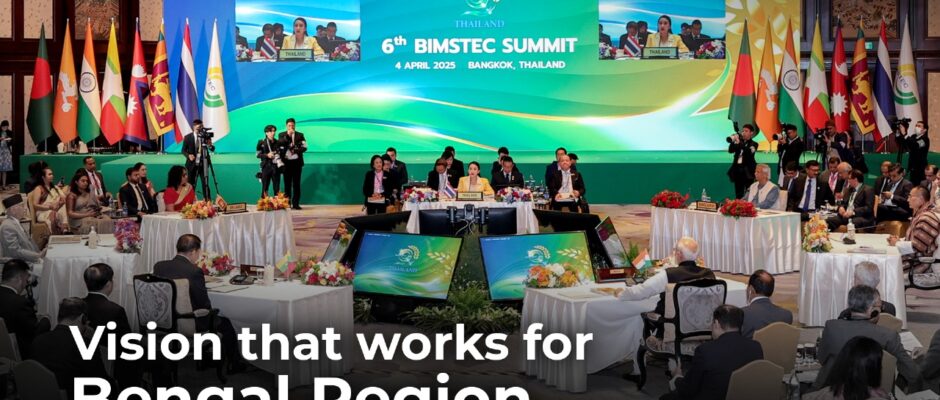
India’s 21-point Action Plan operationalizes cooperation through commerce, climate, connectivity and culture anchored in grounded capabilities. Rohan Giri For regional groups like BIMSTEC comprising seven nations straddling South and Southeast Asia there’s hardly a big need for grand declarations. Instead, practical architecture is need of the hour. The 21-point action plan discussed at the recent BIMSTEC summit in Bangkok, Thailand may provide a window of opportunity. The plan mooted by Prime Minister Narendra Modi may provide the template for sustainable relations between member-countries to navigate complexity of inter-dependence, climate risk and digital transition. The proposal has gained significance due to the timing and not ambitious objectives it seeks to achieve. Given that it is under-networked, Bay of Bengal region finds a key role that it can play in supply chain resilience, energy connection and climate vulnerability. A structured cooperation to deal with key issues is essential for sustaining the relationship for shared prosperity of people in the region. For instance, setting up Bay of Bengal Chamber of Commerce and the decision to hold an annual business summit will work wonders for the region. Emphasis on business and trade recognizes that economic integration is not only a desired goal but a necessity to further regional integration and ward off global disruptions. The move to explore possibility of undertaking trade in local currencies would help mitigate vulnerability to external financial disturbances. Deliberations on shift to digital infrastructure are equally well-founded. Recognizing uneven digital capacities in the region, the idea of conducting pilot research on applicability of India’s Digital Public Infrastructure (DPI) is prudent. Without pushing for adoption of digital infrastructure put together by Bharat, the proposal gains importance as it provides a clear path to digitizing economies in the region. The recommendation to look at possibility of interlinking India’s Unified Payments Interface (UPI) with regional payment systems reflects the urgent need for smoother cross-border financial flows that can positively impact tourism, small businesses and migrant remittances in segments often neglected. On physical infrastructure, it is still a long way to traverse while digital and financial corridors provide instant mobility. Reducing friction in transactions is inevitable if formal trade between countries were to flourish over long run and phase-out unofficial trade. The design of the plan seems to respect this peaceful realism. The action plan’s emphasis on disaster management and climate readiness shows where it exhibits greater insight. Along with cooperation between national disaster response authorities, the idea of creating a BIMSTEC Centre of Excellence for Disaster Management addresses a particularly acute regional vulnerability. Countries in Bay of Bengal region experience regular earthquakes, floods, and cyclones. Hence, the idea of a regional centre for excellence to manage disasters is more of shared insurance against environmental volatility. Similarly, space technology cooperation is important not to further geopolitical ambition but rather as an appreciation of vital involvement in remote sensing and satellite data. This will help in agricultural planning, weather forecasting and coastal surveillance. The idea of constructing ground training centers and cooperate on nano-satellites answers the quiet revolution in space democratisation. Access to space-based data can significantly impact small and mid-sized countries in BIMSTEC determining the difference between informed governance and ongoing vulnerability. The projects to train 300 young people each year; grant scholarships in forestry and traditional medicine and organize capacity-building programmes for diplomats and healthcare professionals highlight the commitment to regional prosperity. Collaborative efforts and sharing resources is an important component of this cooperation. Recommendations do not advocate depending just on institutions of any one nation. Rather, they advise utilizing existing resources and capabilities to help people in the area. For example, public health where the support for traditional medicine research and cancer care training program through Tata Memorial Centre answers both epidemiological trends and cultural settings. These are not meant to be soft-power weapons. These are responses to address gaps in healthcare impacting millions of people. Calls for security cooperation without securitisation and proposed ministerial level conclave to solve shared issues like cybercrime, terrorism, and trafficking are bang on the dot. Soft security threats which often undermine governance in post-pandemic global order pose a greater challenge than traditional military hazards. Energy integration is one area that can be fast tracked with a regional electric grid link. With Energy Centre now operational in Bengaluru, the plan aims to go beyond statements to technological harmony. Dynamic load balancing, made possible by shared grid infrastructure, lowers storage needs, fits with climate targets, and helps balance loads. These are required for sustaining economic growth in medium to long term. Youth involvement and cultural interaction, regional athletics meet and Hackathon presents a gentler but not softer approach to regionalism. These are areas that enable development of shared generational identity Many times, multilateral organizations fail not because of bad policies but loss of public credibility. Sporting and cultural interactions act as slow-burning engines to create relationships that legislation by itself cannot support. A long-standing focus for BIMSTEC is maritime connectivity which is sought to be furthered by the plan to set up Sustainable Maritime Transport Centre. The plan emphasises not only shipping routes but research, creativity and capacity-building. Given the Bay of Bengal’s growing strategic relevance for world supply chains and the environmental hazards of overuse, this emphasis provides a relevant junction between economic value and environmental sensibility. Collectively, the 21 ideas do not suggest that a new pole in world affairs is emerging. They do not assert extraordinary uniqueness. Rather, they capture demands of modern regionalism. They respond to pragmatic questions that legislators all through Global South face: How might regional cooperation be less vulnerable? How can one build without overreaching? How can one integrate without imposing control? India’s approach is conditional upon regional needs and not grandiose or minimalist. It understands that leadership in multilateral environments, especially among close neighbours is something to be operationalised through credibility, patience and alignment rather than declarations. The recommendations stay anchored in viability by providing existing institutional capability instead of building whole new systems. (Author is a doctoral

Read More
Prime Minister Narendra Modi’s USA Visit

Prime Minister Narendra Modi’s USA Visit

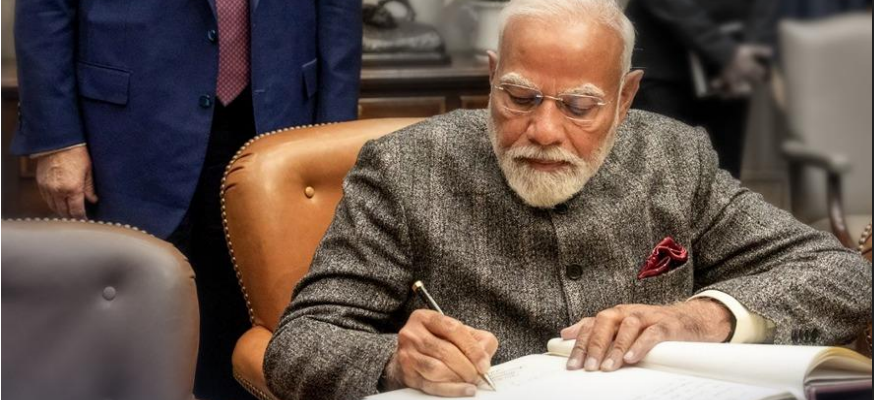
Prime Minister Narendra Modi’s visit to the United States in February 2025 represents a significant milestone in the evolution of the India-U.S. relationship. This visit was not only a display of high-level diplomacy but also a demonstration of both nations’ commitment to addressing contemporary challenges while harnessing emerging opportunities in multiple domains. With a focus on strategic defense, innovative technologies, economic reforms, and multilateral cooperation, the visit set the stage for a renewed and expansive partnership between the two democracies. This report outlines the key engagements, strategic dialogues, and transformative initiatives that were announced during the visit. It aims to provide a comprehensive overview of the discussions and agreements reached, highlighting the broad range of issues that are set to shape the future of bilateral relations.

Read More
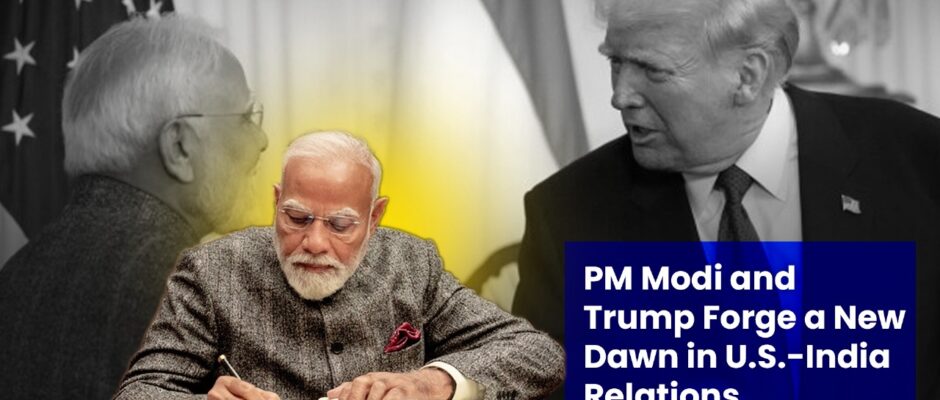
PM Modi and Trump Forge a New Dawn in U.S.-India Relations

PM Modi and Trump Forge a New Dawn in U.S.-India Relations

Prime Minister Modi’s visit to the United States not only deepened the strategic alliance between the two nations but also set in motion a cascade of initiatives that promise to reshape the geopolitical landscape for decades to come. Rahul Pawa In a dazzling display of strategic vision and personal rapport, Prime Minister Narendra Modi’s recent visit to the United States in February 2025 has set the stage for an era of renewed cooperation and transformative partnerships between two of the world’s most influential democracies. Against the backdrop of an increasingly complex global landscape, the visit showcased a masterclass in diplomacy, marked by high-level meetings, landmark agreements, and an inspiring confluence of ideas that spanned defence, trade, technology, energy, and cultural exchange. At the heart of this historic journey was the much-anticipated meeting between Prime Minister Modi and President Donald J. Trump in Washington, D.C. In an atmosphere that was as congenial as it was consequential, the two leaders not only reaffirmed the bedrock of the India-U.S. Comprehensive Global Strategic Partnership but also demonstrated a genuine personal rapport that resonated far beyond policy papers and strategic memos. Their conversation, punctuated by mutual admiration and forward-looking optimism, culminated in the launch of the ambitious U.S.-India COMPACT for the 21st Century—a transformative roadmap designed to deliver tangible results across defence, commerce, and technology within the year. In an era defined by intricate challenges—from rebalancing global tariffs and tackling illegal immigration to addressing the ramifications of the Russia-Ukraine issue—Modi’s discussions with President Trump were both candid and constructive. The leaders deliberated on the urgent need to streamline tariff structures to foster a more equitable trading relationship. They also exchanged views on sensitive judicial issues, such as the extradition of Tahawwur Rana, recognising that robust legal cooperation is pivotal in the fight against terrorism. This frank dialogue underscored their shared commitment to maintaining a rules-based international order, a cornerstone for global stability. A standout moment during the visit was Prime Minister Modi’s engaging discussion with Elon Musk, who, in his dual role as the head of the U.S. Department of Government Efficiency (DOGE) and CEO of Tesla, symbolised the seamless fusion of public policy and private innovation. In an exchange that was as energetic as it was visionary, Modi and Musk explored the boundless possibilities of emerging technologies—from space exploration and artificial intelligence to sustainable development. Musk’s presence, accentuated by the warmth of his family’s company, added a distinctly personal dimension to the dialogue, reinforcing the belief that when innovation is nurtured, boundaries dissolve and progress becomes inevitable. The visit was also a testament to the two nations unyielding commitment to security. In his meeting with U.S. National Security Advisor Michael Waltz, Prime Minister Modi delved into discussions centred on strategic technologies and defence industrial cooperation. The dialogue, which included pivotal discussions on civil nuclear energy and the deployment of small modular reactors, laid the groundwork for an enduring partnership aimed at fortifying both nations’ security frameworks. Equally significant was the meeting with U.S. Director of National Intelligence Tulsi Gabbard, where the emphasis was placed on bolstering intelligence sharing, particularly in the realms of counterterrorism and cybersecurity. These high-level engagements highlighted a shared understanding: that in today’s volatile global environment, the integration of traditional and technological security measures is indispensable. One of the most consequential outcomes of the visit was the announcement of a new ten-year major defence partnership framework. This comprehensive agreement is poised to not only enhance the interoperability of the two nations’ armed forces through expanded defence sales and co-production initiatives but also to foster the development of cutting-edge autonomous systems via the newly established Autonomous Systems Industry Alliance (ASIA). Such initiatives are testament to the strategic foresight of both nations, ensuring they remain at the vanguard of modern warfare and intelligence-sharing capabilities. In parallel, enhanced military collaboration was underscored by plans for expanded joint exercises such as the “Tiger Triumph” tri-service exercise. This commitment to operational readiness and mutual trust stands as a bulwark against both conventional and unconventional threats, ensuring that the armed forces of India and the United States are ever-prepared to respond to emerging global challenges. On the economic front, the visit heralded a bold new chapter with the introduction of “Mission 500”—an ambitious initiative aiming to double bilateral trade to $500 billion by 2030. This visionary target is complemented by ongoing negotiations for a comprehensive multi-sector Bilateral Trade Agreement, expected to streamline trade practices and dismantle barriers to market access. Modi’s discussions emphasised the importance of greenfield investments and regulatory reforms designed to create an enabling environment for business expansion, ensuring that the economic benefits of the strengthened partnership are widely shared. Energy security, a linchpin of national stability, featured prominently in the agenda. The U.S.-India Energy Security Partnership was designed to guarantee reliable, sustainable, and affordable energy supplies through joint initiatives in oil, gas, and liquefied natural gas (LNG). Complementing this was the reaffirmation of the U.S.-India 123 Civil Nuclear Agreement, aimed at advancing civil nuclear cooperation through the development of U.S.-designed reactors in India. Special emphasis was placed on the development of small modular reactors—an innovation set to revolutionise energy generation by being both cost-effective and environmentally sustainable. Perhaps one of the most forward-looking initiatives announced was the U.S.-India TRUST (Transforming the Relationship Utilizing Strategic Technology) initiative. This comprehensive programme is poised to catalyse innovation by fostering collaboration among governments, academia, and the private sector in fields as diverse as artificial intelligence, semiconductors, and quantum computing. In tandem, the INDUS Innovation Bridge aims to bolster industry–academic partnerships and create secure, trusted supply chains for vital technological components, thereby enhancing both nations’ self-reliance and resilience in an increasingly interconnected global economy. The discussion also extended to strategic mineral recovery and civil space cooperation. Recognising the critical role of raw materials in technological advancement, efforts to accelerate the recovery of essential minerals like lithium and cobalt were highlighted. Joint space projects, including a NASA-ISRO collaboration, are poised to propel both nations into a leadership role in

Read More

RSS Reflects Bharat’s Soul, Spirit & Identity

Congress creating fuss on government officials being allowed to associate with Sangh is regressive and part of self-centred political machinations Vinod Kumar Shukla The July 9, 2024 order of Indian government lifting restrictions on government officials from associating with Rashtriya Swayamsevak Sangh (RSS) has kicked up a needless row. An authoritarian decision of then Prime Minister Indira Gandhi on November 30, 1966 was overturned by Narendra Modi government. Indira Gandhi’s alibi to restrict government officials from participating in RSS activities was that they should keep away from ‘political parties or any organisation which takes part in politics’. While impugned order related to government officials keeping away from politics, extending it RSS was untenable as it’s an all-embracing Hindu centric organization that’s neck deep in bringing about change. Self-centred political machinations of Pandit Jawaharlal Nehru and later Indira Gandhi led Congress led to ban on RSS rather than latter being a political entity. Well, Congress leadership seems to have gone one step further to create a ruckus in the Parliament and outside on lifting restrictions on government officials freely involving themselves in selfless service activities of the Sangh. Home Ministry directive issued earlier this month referred to previous orders of November 30, 1966, July 25, 1970 and October 28, 1980. It stated that these instructions have been reviewed and decided to remove RSS from these orders meant for political entities. On all three occasions, RSS was banned and restrictions imposed owing to selfish Congress leadership that never allowed any other organization to flourish in socio-economic space post-independence from imperial British rule. Successive Congress governments were forced to lift restrictions and ban on RSS given the ‘tyrannical nature’ of the political decisions at highest level. Nehru-led government first banned RSS in 1948 hiding behind assassination of Mahatma Gandhi instead of accepting its administrative failure. It’s well established that a disinformation campaign was unleased by Congress and its cohorts to falsely implicate RSS in assassination of Mahatma Gandhi which exposed its hollowness and reeked lack of ‘fair play’ in public space. From Kapur Commission to many subsequent writings clearly suggest that Sangh has no role in Mahatma’s assassination whatsoever.  But for political gains and appeasement politics of Congress, lies about RSS involvement were peddled for decades and even today. On each of the occasions that Nehru or people from Congress first family were on slippery ground of losing power, they resorted to such tactics and gimmicks in the past to divert the peoples’ attention. Congress history is replete with suggestions that Nehru was not the popular choice to be appointed Prime Minister. It was he was Mahatma Gandhi’s intervention that led to Nehru’s coronation. Knowing very well that post-independence euphoria would evaporate shortly and nationalist ideology was gaining credence, Gandhi’s assassination was used to discredit RSS. By doing so, Nehru sought to consolidate his position within the fledgling Congress and outside.  Painting RSS with ‘communal’ taint has been part of Congress’ larger divisive political agenda and it put up a smoke screen on its pro-Muslim agenda and appeasing Muslims. Secularism was added to Preamble of the Constitution in 1976 through a Constitutional amendment. Carving out a minorities’ ministry, Waqf Act, Shah Bano case, Places of Worship Act and proposed Communal and Targeted Violence Bill are some examples that reflect anti-Hindu agenda of Congress. This is where Congress feels threatened by the RSS especially after its gradual decision in political space. Contrary to Congress allegations or charges, RSS is all inclusive and not elitist or exclusive organization. Sangh is more focused on socio-economic transformative projects that translate to social transformation.Over 125,000 service projects across economic empowerment, education and healthcare are being run Sangh swayamsevaks, parivar affiliates and in partnership with community-led organizations. From running schools in far-flung tribal areas to providing healthcare with a healing touch amongst most neglected tribal groups through selfless volunteerism is something RSS has done all through. RSS has been continuously engaged in rebuilding the nation in last 99-years and it continues to double up its efforts as the Sangh enters the centennial year in 2025.RSS contribution to national security, unity, integrity and Swayamsevaks selfless service during natural disasters is something that one cannot easily forget. Social leadership evolved by RSS to run these service projects is unique in trying circumstances. Lifting restrictions on government employees participation or association with RSS would only strengthen the Indian democratic credentials that are open and flexible sans intolerance of Congress variety. Rahul Gandhi’s comparison of RSS with theocratic and regressive Muslim Brotherhood and claims of Muslim League being a rounded secular organisation reflects Congress leadership’s mind-set that’s anti-Hindu and anti-Bharat. Sangh, by no stretch of imagination can be designated as a political organisation. Congress and its ecosystem shameless spread of lies on RSS only reflects the oldest political party’s degenerative positioning in ideological terms. In the process, the grand old party has easily forgotten that many of its former members have moved on to the Sangh parivar bandwagon. Also, on its rolls there are several leaders that have been groomed by RSS in their formative years. Even on independence movement, contributions and yeoman role played by several organizations including RSS have been systematically relegated to side-lines even as Congress continues to seek complete control on the legacy of the struggles against colonial rule. Latest decision of Modi government to lift restrictions on government employees joining or participating in RSS activities was logical extension of Hindu renaissance that has redefined Bharat’s spirit, soul and identity. (Author is a senior journalist and associated with Centre for Integrated and Holistic Studies, a non-partisan think-tank based in New Delhi)

Read More

Vienna Waltz for NSG

Modi’s visit to Austria signals global leaders to act decisively on nuclear governance, stability, innovation and facilitate India entry into NSG Rahul Pawa In a momentous visit that marks a significant milestone in India’s diplomatic history, Prime Minister Narendra Modi landed in Vienna on Wednesday after a successful tour of Russia. This visit, the first by an Indian Prime Minister to Austria in 40 years, underscores Modi’s strategic vision to elevate India’s global standing, particularly in the realm of nuclear technology and security. Austria, a key participating government of the Nuclear Suppliers Group (NSG), plays a pivotal role in shaping global nuclear policy. For India, securing NSG participating government status has been a long-held aspiration, one that Prime Minister Modi has tirelessly pursued. The NSG, a body of 48 participating governments that seeks to prevent nuclear proliferation by controlling the export of materials, equipment, and technology that can be used to manufacture nuclear weapons, represents a global group that India has sought entry into for over a decade. India’s quest for NSG entry began in earnest after its landmark civil nuclear agreement with the United States in 2008. This agreement, which allowed India access to civilian nuclear technology and fuel from other countries despite not being a signatory to the Nuclear Non-Proliferation Treaty (NPT), was a significant diplomatic achievement. However, for India to fully benefit from global nuclear commerce, NSG entry is crucial. It would provide India with greater access to nuclear materials and technology, enhancing its energy security but most importantly allowing India to contribute more significantly to global nuclear governance efforts. Modi’s visit to Vienna comes at a time when the global tech and security landscape is rapidly evolving. India’s potential inclusion in the NSG should be viewed not only as a recognition of its impeccable nuclear safety and clean usage record but also as a crucial step toward strengthening global nuclear technology and innovation. Austria’s influence within the NSG makes it a crucial ally for India in this pursuit for global good. India’s entry to the NSG has been a topic of discussion at multiple NSG plenaries over the past decade. Despite substantial support from several strong participating governments, Communist Party of China’s (CPC) opposition has been a significant obstacle. At the 2016 NSG plenary in Seoul, CPC insisted that India’s application could not be considered until the group agreed on criteria for non-NPT (Non-Proliferation Treaty) signatories, effectively blocking India’s bid despite strong backing from other major powers. CPC’s consistent stance against India’s entry, citing rules, procedural issues and the need for consensus, has frustrated many NSG members who view India’s inclusion as beneficial for global nuclear governance efforts and nuclear commerce. Meanwhile, India has made significant advancements in nuclear technology, particularly with its ambitious plans to develop thorium-based reactors. Thorium, a safer and more abundant alternative to uranium, promises to revolutionise nuclear energy. India’s expertise in thorium technology positions it as a leader in this field, with the potential to offer cleaner and safer nuclear energy solutions worldwide. The development of the Advanced Heavy Water Reactor (AHWR), designed to use thorium as its primary fuel, marks a significant stride in this direction. Several key NSG members, including the United States, France, Switzerland, and the United Kingdom, support India’s bid, arguing that India’s impeccable nuclear record, responsible nuclear behaviour, and potential contributions to global nuclear security make it a suitable candidate for the NSG. However, despite India’s commendable nuclear track record and significant advancements in nuclear technology, the Communist Party of China’s (CPC) objections to India’s entry into the NSG are perceived as a strategic maneuver to maintain its dominance in South Asia. CPC’s rationale appears to be rooted in a desire to prevent a regional competitor from accessing advanced nuclear technology and materials, thereby preserving its own strategic leverage. This stance is further complicated by CPC’s continued support for rogue nations like Pakistan and North Korea, which have contentious nuclear programs. By blocking India’s NSG entry, CPC not only undermines global efforts to foster responsible nuclear governance and energy security but also hampers broader international goals of enhancing nuclear safety, advancing technological progress in the nuclear sector and avoiding institutional scrutiny of its support to Pakistan and North Korea. As India continues its ascent as a major economic and technological power, its influence on the future of nuclear energy and security becomes increasingly crucial. PM Modi’s visit to Vienna transcends mere diplomacy; it is a powerful call for the world to acknowledge the evolving dynamics of global nuclear governance. The moment has arrived for the international community to move beyond regional politics and strategic rivalries, embracing a future where India’s contributions play a vital role in shaping global nuclear policies. During his visit, PM Modi is likely to engage in high-level discussions with Austrian leaders, emphasizing the mutual benefits of trade, business cooperation, collaborations, and significantly, India’s imminent NSG entry. This visit serves as a clear signal to the international community to recognise the significance of including India in the NSG and to act decisively in the interest of nuclear governance, stability and innovation. (Author is Director – Research, Centre for Integrated and Holistic Studies, a New Delhi based non-partisan think tank)

Read More

Strategic Autonomy, Balancing Powers

Indo-Russian summit strengthened special & privileged strategic partnership. India offers to play role of a peacenik in Ukraine conflict Dr. Punit Gaur Indian Prime Minister Narendra Modi’s two day visit to Russia has been watched keenly across world capitals. Especially so, given that it is the first bilateral engagement of Modi in his third term and it coincided with North Atlantic Treaty Organization (NATO) summit in Washington DC. Modi’s Russia visit to participate in the twenty second annual summit of India and Russia invited sharp reactions from Indian allies and foes alike. From US, European Union to Ukraine, there were comments on what Prime Minister Modi should be doing in Moscow. The Moscow summit is a first after President Vladimir Putin’s visit to New Delhi in 2021 and this engagement has come in the backdrop of ongoing conflict on East European front with Ukraine. Perhaps, global leaders expected serious talks between Modi and Putin that paved for a swift and organic end to the bloody conflict in Ukraine. To their great comfort, Prime Minister Modi did not let them down, Modi made serious attempts to counsel and convince President Putin that peace in the region was not possible with blood on hands. At the same time, Modi played a balancing act not to annoy his host in Moscow who spent most of the two days with Indian Prime Minister. On its part, Keiv expressed its disappointment on Modi’s visit to Moscow though President Zelensky is fully aware of Bharat’s position vis-à-vis Russia. Resilience in relations between the two partners who have evolved relations despite challenges may not have missed Zelensky while stating the obvious on Modi’s Moscow visit. Even White House and European Union may have known the inseparable strategic relations between Bharat and Russia. Several firsts marked Prime Minister Modi’s visit to Moscow. The milestones crossed during the visit underscore profound significance attached to this bilateral engagement. Russia’s highest state decoration, the Order of St Andrew was bestowed on Modi that may not go well with India bashers. This award signifies PM Modi’s efforts to cultivate bilateral relations between India and Russia. In 2000, India took the initiative to commence the cycle of annual summits between two countries at highest level. The tradition of having structured high-level discussions has been easily recognized by both sides as a way to take the bilateral relations to next level each time. India-Russia trade has seen an unprecedented surge to more than US $ 65 billion in 2022 owing to diverse products and services and there’s no denying the fact that energy constitute a big chunk of this bilateral transactions. India’s continued oil and gas dealings with Moscow have not gone well with the Western powers. US $ 100 billion bilateral trade targeted in six years during Modi’s visit is yet again a milestone that can be easily achieved. In recent years, Russia’s Far East and Arctic have drawn India’s attention as possible strategic investment sites. Though national currencies account for 60 per cent trade between India and Russia, the urgency for quicker and more real-time settlement of transactions is growing, especially in backdrop of Russia that got delinked from SWIFT ecosystem. Ignoring the unilateral sanctions on Russia and threats from US, India has not only maintained but strengthened its diplomatic and commercial ties with Moscow. These ties fraught with challenges and underscores the need for more diversified trade. Additionally, India has increased military collaboration with Russia announcing plans to work together on weapon manufacture, joint deployment of troops, vessels and fighter jets and access to military installations. India and Russia call on visa-free travel would significantly boost tourism and people-to-people connectivity. The move to allow students and visitors to use national currency, clearances for MiR cards in India and RuPay cards in Russia is again a significant first. The proposal to open two more consulates in Russia underlines the importance of economic and cultural ties and holds the potential for further economic growth.   Bharat’s decision to go ahead with ‘strategic autonomy’ on multilateral issues is what most allies have been trying to come to terms with. When Modi and Putin spoke at Uzbekistan in 2022 during Shanghai Cooperation Organisation (SCO) conference, he reportedly told the Russian president, “This is not the time for war.” This stance was reiterated during Modi’s Moscow visit while amplifying Bharat’s policy framework. India adopted an autonomous neutral stance regarding Ukraine and did not sign a joint communiqué at the Switzerland Summit last insisting on conditions for participation of all parties including Russia for lasting peace. Upholding UN Charter’s tenets, especially concerning value of preserving national sovereignty and territorial integrity was also insisted upon in Switzerland as well as Russia now. India firmly rejected the idea of using force to settle disputes. Peaceful negotiation and diplomacy are the most critical approaches for all disputes and this position reflected in Modi’s engagement with Russia. One significant development is Bharat’s willingness and commitment to offer a platform and play the role of a mediator for the peace process has again come to fore. At the same time, Bharat has emphasized that Russia should guarantee safety and repatriation of its citizens who are employed by Russian military ever since the conflict between Russia and Ukraine began. President Putin’s ready agreement on this request is a significant take away from Moscow. Russia seeks to create a multipolar world order and India vying for for a key role among Global South countries regard one another as crucial political allies. Russia continues to be an essential supplier of weapons, energy and space technology, all of which India views as necessary for its transition to become a major developed country by 2047.  Modi’s trip to Russia not only demonstrates New Delhi’s intention to grow ties with Russia but underscores the potential for significant mutual benefits and the importance of India’s strategic autonomy. (Author is a Research Fellow at Indian Council of World Affairs with focus on Eurasia)

Read More

Hindu Manifesto 2024

On Saturday, June 8, the British Hindu community officially unveiled the Hindu Manifesto 2024. A long-overdue manifesto will emphasise a shared commitment to the advancement of not just British Hindus but the entire nation. Rohan GIRI             With the United Kingdom’s (UK) general election set for July 4, 2024. British Hindus are at a critical juncture. Due to its historical unwillingness to engage in political discourse, the community frequently regarded politics as a taboo subject. Many people do not vote, whereas some vote without thinking about the long-term consequences for themselves, their community, and the nation at large. According to the 2021 UK Census, British Hindus make up about 1.7% of the UK population, or approximately one million people. Despite their small numbers, their contributions to the British economy are unparalleled. As a community, they are among the top taxpayers, and their contributions to UK’s National Health Service (NHS) are imperative, with a large number of doctors, nurses, engineers, and other professionals. Additionally, Indians employ tens of thousands of individuals. British Hindus are a well-educated community that is self-sufficient, independent, and prosperous. Their commitment to prosperity and the rule of law reflects their extremely low numbers in British prisons, accounting for less than 0.3 percent of the total prisoners. Despite the community’s alignment with British values and society, it has minimal influence in British politics. This arena, where policies are formulated, laws enacted, and narratives established, demands a significant voice to shape the future. Unfortunately, British Hindus are often underrepresented or misrepresented in education, academia, media, and politics, both locally and nationally. They frequently face attacks, vilification, and maligning, with no substantial collective response to defend their interests and set the record straight. The next general election presents a crucial opportunity for the community to voice their thoughts. Parliamentary candidates must understand that British Hindu votes cannot be taken for granted. The community seeks fair representation and recognition of its contributions, highlighting Sanātan Hindu Dharma as an asset to Britain. The next general election presents a crucial opportunity for the community to voice their thoughts. Parliamentary candidates must understand that British Hindu votes cannot be taken for granted. The community seeks fair representation and recognition of its contributions, highlighting Sanātan Hindu Dharma as an asset to Britain. It is time for British Hindus to claim their seat at the table, shaping and influencing the country’s future. This involvement is not just a right but also a duty, or Dharma. The Hindu Manifesto 2024, launched by the British Hindu community, contains seven crucial pledges that the community expects from parliamentary candidates and future governments. These assurances are designed to ensure the protection, promotion, and progress of Hindu values and interests within the broader British society. The Seven Assurances of the Hindu Manifesto UK 2024: “Recognising Anti-Hindu Hate as a Religious Hate Crime: This expectation demands the identification and prosecution of groups and individuals that perpetrate anti-Hindu hatred. Recognising such acts as religious hate crimes will ensure that they are taken appropriately and addressed accordingly. Protecting Places of Hindu Worship: Ensuring the safety and purity of Hindu temples and places of worship is critical. This promise aims to preserve these precious areas from damage and attacks. Access to Fairer Education: This involves advocacy for an education system that accurately represents Hindu culture and contributions, as well as ensuring that textbooks are inclusive and unbiased. Equal Representation and Opportunities for Hindus: This protection aims to address Hindus’ underrepresentation in numerous sectors by struggling for equal opportunities in employment, politics, and other areas. Streamlining Immigration: The need for fair and efficient immigration laws that make it easier for people looking to join family in the UK or contribute to the British economy. Healthcare and Social Care: Encourage and enhance access to healthcare and social care services for Hindus while also addressing their special needs and concerns. Acknowledging and Protecting Dharmic Values: It aims to understand and respect the Hindu Dharmic way of life by consulting with the community while legislating on intra-community issues affecting the UK Hindu community, by facilitating infrastructure for religious ceremonies such as marriage and cremation, by commissioning a memorial for Hindu soldiers who served and died for the UK, and by understanding that the connection between UK Hindus and India (Bharat) is spiritual rather than political.” The Hindu Manifesto is a call to all parliamentary candidates and political parties to engage with and support the Hindu community in their respective areas. It has already received endorsements from various parliamentary candidates who have declared their support for the manifesto and its goals. As the general election approaches, the Hindu Manifesto will act as a guide for British Hindus, reminding them of their ability to shape the political landscape and ensure their community’s interests are reflected and safeguarded. This election is a critical opportunity for British Hindus to establish their presence, demand fair representation, and contribute to determining the future of the UK in a way that recognises and appreciates their substantial contributions. The election is an opportunity for British Hindus to turn their contributions, concerns, and expectations into legitimate political influence. The substantial participation and widespread support for the Hindu Manifesto 2024 can demonstrate to political leaders that the community is a force to be reckoned with, worthy of representation and consideration in policies. The ramifications of this participation will extend far beyond election day, potentially ushering in an era where British Hindus’ voices are fundamental to national conversations, their needs are met, and their values are upheld in the halls of government. (Author: Rohan Giri is a journalism graduate from Indian Institute of Mass Communication (IIMC) New Delhi, and Manager Operations at CIHS.)

Read More

Fresh Set of Challenges for Modi 3.0

Khalistanis, Naxalites, Kashmiri subversives gaining legitimacy in Parliament demands fresh thinking and strategy K.A.Badarinath As Bharat’s Prime Minister Narendra Modi readies to take reins at centre for a third consecutive term, challenges, known and unknown may have to be dealt with on priority basis. Commentators of every hue and shade have written copiously on Prime Minister Modi’s tenacity or lack of it to run a coalition government with Telugu Desam and Janata Dal (United) and half a dozen others in tow. Challenges identified here are different and mostly new to tackle right away. For a year, Amritpal Singh, a Khalistani extremist who waged a war on Punjab Police has been put away in Dibrugarh jail of Assam. Waris Punjab De chief who hitherto owned a logistics company in Dubai is being tried for crimes including possible treason after having led a mob on Ajnala police station in Punjab. He’s being tried under National Security Act (NSA) from April 2023. His reported linkages with Pakistani spy agency, ISI to source weapons to spill violence on streets of Punjab are some of the allegations against Amritpal Singh. The 31-year old radical Khalistani separatist will have to be dealt with by Modi government when eighteenth Lok Sabha opens for newly elected members of Parliament to take oath. From Khadoor Sahib in the Punjab, Amritpal Singh was elected a member of Lok Sabha after having trounced his Congress rival. Security forces that laid trap in and around Punjab after the Ajnala incident will now have to provide security cover to the ‘Honourable Member of parliament’. Singh was successful in recent elections with highest majority of 1.97 lakh votes in Punjab. Member-elect from Khadoor Sahib will have to be respectfully escorted by the very security forces from jail to Parliament. Election Commission of India (ECI), Lok Sabha Speaker and the new government apart from courts will have to bear with his idiosyncrasies on Khalistan, the imaginary separate Sikh state. One big positive however is that the avowed Khalistani will have to take a pledge as per Bharat’s Constitution and work within the country’s governance system. Protocols to deal with him will change overnight. Second case will be Sarabjeet Singh Khalsa, son of Beant Singh who killed then Prime Minister Indira Gandhi following Operation Blue Star. Sarabjeet is the new Member of Parliament elected from Faridkot and a fundamentalist. Though an independent candidate, hitherto Sarabjeet Singh Khalsa was with Siromani Akali Dal – Amritsar. This party has had Simranjit Singh Mann as its member in Lok Sabha from Sangraur previously represented by Chief Minister Bhagwant Singh Mann. Sarabjeet Singh Khalsa’s plank as an independent in Faridkot was to seek justice for desecration of Guru Granth Sahib in October 2015. On October 12 that year, Sikhs’ holy book was desecrated in Behbal Kalan and a couple of days later two sikh youth were killed. This very is part of Faridkot constituency. Even after election, Khalsa and Mann along with several Khalistani separatists shouted slogans for a separate Sikh state at Golden Temple, the highest seat of Sikh Panth in Amritsar. While Sarabjeet is regarded a fundamentalist, his election and allegiance to Bharat’s Constitution as a Parliament Member may ring in some positivity. But, there’s denying that going forward Sikh panthic politics has come here to stay and traditional Sikh parties like Shiromani Akali Dal will have to make way for new alignments and forces especially aligned with extremist and terror elements globally. Modi government will have to redraw its Punjab strategy in sync with new realities. Third member who could turn tricky for Narendra Modi government is Sheikh Abdul Rashid who’s serving his term in Tihar jail. He’s been elected to lower house from Baramulla after trouncing former Chief Minister Omar Abdullah of National Conference. Popularly known as engineer Rashid, he’s been in high security Tihar jail for over five years in cases relating to money laundering and funding terror in the Kashmir valley from across the border and elsewhere. Oppression, revenge and jail term were emotionally put forth by his sons to garner votes for engineer Rashid. While Rashid’s swearing in as Lok Sabha member would turn an eyeball event, abrogation of Article 370, Jammu and Kashmir assembly elections may come back to focus. Courts have to take a call on his interim bail to facilitate his swearing in. After a gap of 25-years, Communist Party of India – Marxist Leninist (Liberation), Left extremist group will enter the parliament with two  of its members in Rajaram Singh from Karakat constituency. His comrade, Sudhama Prasad defeated BJP minister and high profile R K Singh from Arrah. Both these constituencies are in Bihar. The party that draws inspiration from one of left extremist movement, Charu Mazumdar, has moved into public space from arms struggle and is part of the opposition, Indi alliance. CPI-ML Liberation shifted gears and moved away from Kondapalli Seetaramaiah faction’s Peoples’ War group that still is in the midst of waging a war against the state.  Mainstreaming of naxalites with entry into Parliament and state legislatures is a tribute to Bharat’s democracy. But, spread of Left extremist political ideology overtly may demand a fresh strategy from Modi government. Chandrashekhar Azad alias Ravan is yet another figure from Uttar Pradesh that BJP-led alliance that needs to watch out for.  Chandrashekhar will represent Nagina Lok Sabha constituency in the lower house after having won the seat with a margin of over 1.51 lakh votes. He is regarded as a self-established Dalit leader after having setup the Bhim Army. His activism extends to a decade. On March 15, 2020, Chandrashekhar launched Azad Samaj Party (Kanshiram) to mainstream his political activism overtly. Initially, he looked at a tango deal with Akhilesh Yadav’s Samajwadi Party (SP). But, Chandrashekhar felt let down when his party was offered just two seats in the Lok Sabha elections by SP. Azad’s direct involvement in Saharanpur violence led to his arrest under National Security Act by the Uttar Pradesh government. Delhi Police denied him

Read More