CIHS – Centre for Integrated and Holistic Studies

Date/Time:

Civilisational Dialogue and Global Oneness

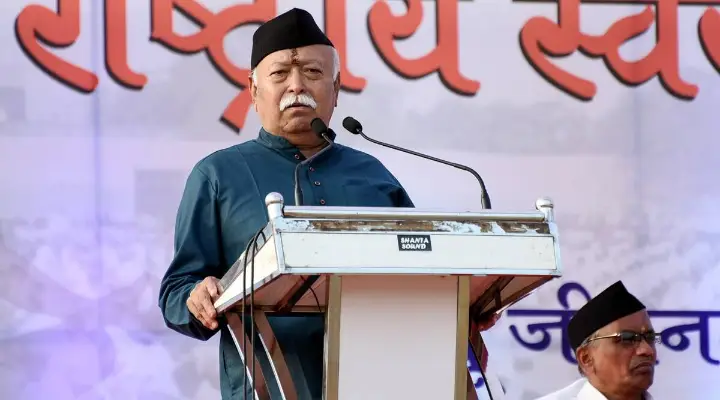
A century of service, and the centenary visit of Dr Mohan Bhagwat to the United States, Canada and the United Kingdom. On 25 August 2026, Dr Mohan Bhagwat, Sarsanghchalak of the Rashtriya Swayamsevak Sangh, began a three nation tour of the United States, Canada and the United Kingdom, at the invitation of local associations and community organisations in each country. The visit falls within the centenary year of the movement he leads, and the head of the world’s largest socio-cultural voluntary movement rarely addresses audiences abroad. Across the three countries the tour opens a civilisational dialogue, in gatherings of the diaspora and in meetings with Hindu organisations, community associations and leaders drawn from science, technology, business, academia and public life.Hindu organisations, community associations and leaders draw This brief sets out the context. It traces the hundred year journey of the RSS from a small gathering in Nagpur in 1925 to more than one hundred thousand local gatherings sustained without fees, salaries or external funding, and records the service that has accompanied it, from the three thousand Partition relief camps of 1947 to the 342,000 swayamsevaks who served at 67,000 locations during the pandemic. Its closing chapters turn to what that century offers the world. Vasudhaiva Kutumbakam, the world is one family, is not an inheritance to be recited but a working proposition, and it is placed here alongside the lessons of a hundred years on harmony in societies, on the family, on ecology, on self reliance and on civic character. These are questions every society is now asking. They are offered freely to all who are asking them.

Read More

Let the Dice Roll!

RSS chief’s message of Universal Oneness in New York, Toronto & London would put to rest intellectual terrorism of extreme intolerant variety. K.A. Badarinath There are ways to silence and push into a corner an opponent. You can vilify, frame, abuse or discredit him or her. You can try and delegitimise or caricature someone to reflect your antipathy or sheer opposition to him or her. If the opponent is an organization with irrefutable and unassailable standing, then go after its boss. This is how Rashtriya Swayamsevak Sangh (RSS) sarsanghchalak Dr Mohan Bhagwat has been targeted. In the brilliant movie ‘The Taj Story’ directed by Tushar Amrish Goel, Paresh Rawal who plays the lead role of Vishnu Das talks about ‘intellectual terrorism’ of obnoxious variety that distorts Bharat’s history, ethos and teachings. While trying to frame RSS and Bhagwat, perhaps this strategy was operationalized big time in the Western landscape of US, Canada and United Kingdom by usual ‘intellectual terrorists.’ Such characters who claim to be intellectuals were branded as ‘dimagi naxals’ by Prime Minister Narendra Modi in his 80-th Independence Day address from ramparts of Red Fort. Though, Modi spoke of those with naxal or Left extreme mindset with conviction to annihilate opponents in Indian context, such elements have been active and extreme even in Western theatre. When RSS Chief Dr Mohan Bhagwat touches down in New York today, the noise seeking ban on RSS is bound to hit the stratosphere. A handful of Left extremists and radical Islamists have been on rampaging spree across social media with their ‘intolerance’ and demand to prevent RSS chief from participating as keynote speaker at an inter-faith conference of over 6000 US residents in Madison Square Garden on this Saturday. Over 200 organizations have come together to hold this ‘Universal Oneness’ conference to send out a message of interconnectedness under aegis of Ahead (American Hindus for Engagement and Dialogue) Forum. This civilizational dialogue in US will feature multi-faith leaders to promote spirituality, peace, engagement at societal level in the backdrop of conflicts and wars waging in West Asia and Eastern Europe. Scores of civic leaders, representatives of public institutions, community and interfaith organizations representatives apart from huge Hindu community in United States is expected to converge at ‘universal oneness’ conference. Such gatherings are scheduled to happen in both Toronto and London during next fortnight as RSS chief criss-crosses Canada and United Kingdom to spread the message of community service, environment friendly lifestyles, civic engagement, family systems, sustainable development alternatives and above all ‘Vasudaiva Kutumbakam’ that denotes entire world as one big happy family. One is reminded of the historic Parliament of Religions held in Chicago, Illinois on September 11, 1893 where Swami Vivekananda had taken stage with the message of universal oneness and introduced Hindutva or Hinduness as a way of life seeped in tolerance, inclusiveness and universal acceptance. Harmony amongst people pursuing different faiths was the core of Swami Vivekananda’s message then. And, today its no different. RSS chief Dr Mohan Bhagwat goes there with message of ‘universal oneness’ for peace and prosperity of global communities. Rooted in respect and harmony, this dialogue of faith leaders is expected to open a big dialogue on global stage. In recent years, His holiness Dalai Lama, Martin Luther King Jr to Pope Francis have pushed for ‘global togetherness’ for communities around the world to prosper against backdrop of conflicts, disease, backwardness, illiteracy, limited access to resources or excessive consumerism having destabilizing effect on humanity. Amidst the good, bad and the ugly campaigns happening around the world, RSS chief would take positive message of peace from Bharat, present the RSS related facts, selfless service done in 100-years and clear misconceptions on Hindutva and Bharat. A forward looking statement on what next going forward is again a big possibility. While diaspora engagement, meetings with business persons and prominent Indian origin people are scheduled in New York, Bhagwat would meet top Sikh community leaders in Toronto and London. Canada leg of Dr Bhagwat’s trip in particular is significant given calls by Khalistani extremists mounting an aggressive anti-Hindu campaign. While most Sikh leaders, businessmen, community and public representatives have dissociated from Khalistani narratives against Bhagwat and RSS, Islamist radicals (not many Muslims) propelled by Pakistan’s dirty tricks department seems to have supported the campaign. In both London and Toronto apart from New York, Hindu diaspora dialogue, different stakeholders’ meetings would mark RSS chief’s visit to Western world. Dr Bhagwat’s visit would be in continuation of the civilizational dialogue that RSS General Secretary Dattatreya Hosabale initiated earlier this year as part of the centennial thrust. Creating a market place for goods, services with production and consumption at the core has been central to Western concept of globalization. With the message of universal oneness, spiritual oneness and sanatan dharmic values, Dr Bhagwat would pursue his own view of globalization once initiated by the Hindu faith leaders like Swami Vivekananda. Taking global interconnectedness beyond technology and economic spread is something central to RSS chief’s visit to three top western countries. Let’s hear him out!(author is a veteran journalist, Director & Chief Executive of Centre for Integrated and Holistic Studies, a non-partisan think tank based in New Delhi)

Read More

RSS Chief Sides with Gen Z, Alpha

Were Jantar Mantar protests peaceful to trigger dialogue in spirit of ‘reasoned debate’ to forge consensus on education reforms? K.A. Badarinath Bharat’s youth who fall under 35-years age bracket total to over 800 million. Only a few thousands of these youngsters joined Cockroach Janata Party (CJP) led Jantar Mantar protests on NEET paper leak last month. Genuine students, irrespective of their ideological moorings, that sought educational reforms, corrective measures against paper leaks may not be treated as ‘anti-national’. And, they have the right to protest, take to streets in a peaceful formation or even get loud. Protests are one way of leading to consensus on core education issues in a large diverse democracy like India that’s on path to constant reform. In a democratic polity like India’s, protests are perfectly fine. Even this instrument of protests has to be used with lots of wisdom and responsibility in forging consensus on reforming education system that may have fallen short of student’s expectations and aspirations of youth. This seems to be tone and tenor with which Rashtriya Swayamsevak Sangh (RSS) chief Dr Mohan Bhagwat for the first time articulated the organization’s position on recent protests in New Delhi while interacting with thousands of Gen Z and Gen Alpha at an event in Mumbai on Thursday. The 49-days protests were however not entirely peaceful as envisioned by Bharat’s Constitutional visionary Dr Bhimrao Ramji Ambedkar in several of his writings. RSS chief made a specific reference to Dr Ambedkar’s line on peaceful protests in his public interaction with youth. Ambedkar held peaceful protests on several occasions unlike violence, hooliganism and stone pelting witnessed in recent Jantar Mantar protests infiltrated by rowdy sheeters, drug peddlers, rapists and criminals. Dr Ambedkar had led thousands of people in 1927 against caste-based discrimination in accessing drinking water from wells. This protest is easily seen as one of the most unique and popular as ‘Mahad Satyagraha.” Kalaram Temple entry satyagraha in 1930 was yet another peaceful movement that was held under leadership of Dr B.R. Ambedkar seeking end to untouchability of low caste Hindus. Ambedkar sought equal rights to temple entry in Nashik as an issue of ‘fundamental human dignity’. In a speech on November 25,1949, Dr Ambedkar had argued stringently against unconstitutional methods and disruptions terming them as ‘grammar of anarchy’. In fact, Dr Ambedkar wanted communities, citizens groups and stakeholders to take recourse to constitutional means like Parliament and elections for seeking redress to their issues. When Dr Bhagwat referred to Ambedkar’s line on peaceful protests, not many would have gauged the context and its significance. RSS chief’s messaging seems to be crystal clear. There’s no place for violence unlike what happened during the CJP protests. Culture of reasoned debate in Bharat was highlighted by the RSS chief in the context of protests held by students. Well, did the protestors trigger a reasonable debate on their issues? It’s a big question. Second big rider pointed to by Dr Mohan Bhagwat was that protests should not lead to divisions in the society or bring about divisiveness. But, did the Jantar Mantar protests pass this test? Well no. Only some genuinely concerned students and their families were there seeking changes in education system. But then, anti-social elements took control of narratives as well as the dais at Jantar Mantar. Stone pelting was resorted to by anti-social elements akin to what we had witnessed in Kashmir valley terrorists backed street incidents. Students’ issues took a back seat. Instead, protests got politicised with several opposition parties jumping in lending an anti-Modi twist to the protests. Left extremists who joined the protests claiming to be heirs of Dr Ambedkar were in fact seeking relevance as their guerilla war waged against democratic institutions got wiped out. In fact, the RSS chief brought the conversation back on issues that mean a lot to students and youth. Dr Mohan Bhagwat pushed for setting aside six per cent of GDP for education making it affordable and accessible to all. RSS has also argued against commercialization of educational institutions as avenues for profiteering at the cost of students and youth. At the same time, RSS chief has pin pointed to ‘collective responsibility’ of entire Indian society for taking education to all and not leaving it in exclusive domain of government. So, bringing meaningful debate on education engaging students and youth as big stakeholders may be the way forward. (Author is Director & Chief Executive of Centre for Integrated and Holistic Studies and a veteran newsman)

Read More

‘LGBTQs have a right to live honourably’

In an interview to Organiser, a news weekly, RSS Sarsanghchalak Dr Mohan Bhagwat talked about several issues like women taking part in Sangh and LGBTQ rights. “Every now and then, a minor question crops up which is blown out of proportion by media, because the so-called neo-Left finds it pioneering, like say LGBT/Transgender issue. But these are not new issues. We too have these problems; they have always been there. But till now they did not raise any noise. These people also have a right to live,” said RSS Sarsanghchalak Dr Mohan Bhagwat ji. Sarsanghchalak Dr Bhagwat ji further said, “Without much hullabaloo, we have found a way, with a humane approach, to provide them social acceptance, bearing in mind they are also human beings having an inalienable right to live. We have a transgender community; we did not see it as a problem. They have a sect and their own deities. Today, they have their own mahamandaleshwar too. During Kumbh, they are accorded a special place. They are part of our everyday life. When a child is born, they come to sing at our homes. They have been part and parcel of our traditions. Even though they have a separate community space, they are also a part of the mainstream. We have never waxed eloquent about this arrangement; we’ve never turned it into a subject of global debate.” “Problem of LGBT is a similar one. Jarasandh had two generals—Hans and Dimbhaka. When Krishna fanned the rumour that Dimbhaka has died, Hans committed suicide. That is how killed those two generals. Come to think of it: what does the story suggest? This is the same thing. The two generals were in that sort of relationship. It is not that these people have never existed in our country. People with such proclivities have always been there; for as long as humans have existed. Since I am a doctor of animals, I know that such traits are found in animals too. This is biological, a mode of life. Now there is much fuss over the issue; we will have to acknowledge this too. We want them to have their own private space and to feel that they, too, are a part of society. This is such a simple issue. We will have to promote this view because all other ways of resolving it will be futile. Therefore, on such matters, the Sangh relies on the wisdom of our traditions,” Sarsanghchalak Dr Mohan Bhagwat ji added. (Courtesy: Organiser Weekly)

Read More