CIHS – Centre for Integrated and Holistic Studies

Date/Time:

Radicalised Khalistanis, a Canadian Problem

Radicalised Khalistanis, a Canadian Problem

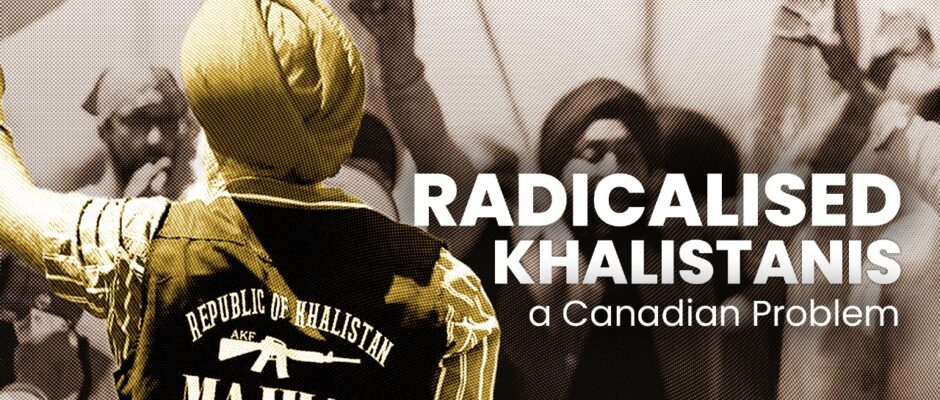
For years Canada’s mainstream parties have courted Sikh immigrants to win votes. Now, they pander to Khalistani extremists for political gains. Rahul Pawa As Prime Minister Narendra Modi arrived in Canada for the G7 summit, an unsettling scene greeted international media: young children brandished “Khalistan” flags and even defaced a Hindu temple in Surrey with secessionist graffiti. These images of toddlers taught to chant separatist slogans sparked outrage in India and around the world. Spokesman Sudeep Singh of the revered Patna Sahib Gurudwara, the birthplace of the tenth Sikh Guru, Guru Gobind Singh Ji warned that “the way children were used in the protests is highly condemnable”. Similarly, Sikh seminary leader Sarchand Singh Khyala condemned the videos as “spreading hatred by brainwashing children”. Dressed-up flags and violent symbols at public parades horrify many Sikhs abroad who see these stunts as political theatre, not Sikhism. Mainstream Sikh leaders make the same point: Khalistanis in Canada are a tiny fringe, not the Sikh community. In late realization of sorts, former Canadian Prime Minister Justin Trudeau has emphasized, “many supporters of Khalistan in Canada… do not represent the Sikh community as a whole.” Leading Sikh voices echo this. Jasdip Singh Jassee of Sikhs of America reminds Americans that “the vast majority of Sikhs globally, including in the US and Canada, do not support separatist agendas.” In India, religious seats like Takht Patna Sahib and Damdami Taksal have publicly denounced the protests. Their message is unequivocal: the Khalistan protesters are not Sikh martyrs. Patna Sahib’s spokesman notes that all of Sikhism’s pending issues are being resolved in India, so “there should not be such protests” against PM Modi “no Sikh can tolerate this.” In fact, these Khalistani stunts run directly counter to Sikh teachings. Sikhism emphasises service and harmony not hate or violence. Provincial Sikh leaders emphasise, “Sikhs have protected mandirs (Hindu temples)” as their sacred Dharmic duty. Yet last April in Surrey, vandals scrawled “Khalistan” on the pillars of Shree Lakshmi Narayana Mandir. This hate-crime – denounced by the temple as “an attack on a sacred space” would deeply sadden ordinary Sikhs. Jasdip Jassee said it was “disgusting” that extremists chose Diwali (a Sikh-protected festival) to vandalise a mandir, calling it “shameful” and against Sikh values. Similarly, Damdami Taksal (a mainstream Sikh seminary) has openly criticised Canadians who use children to insult India’s PM, saying these pro-Khalistan people “are spewing venom against India”. These Sikh authorities unanimously emphasise that Khalistan is not a Sikh cause and certainly not one worth teaching to children. On the contrary, Sikhism is deeply Dharmic and Indian. From the Punjabi heartland to global diaspora Sikhs celebrate their faith’s founder Guru Nanak and their tenets of service (seva) and protection.  India’s own armed forces and civil institutions reflect Sikh contributions: for example, Air Chief Marshal Arjan Singh (a Sikh) was made India’s first Air Force Field Marshal, and Sikh generals have led the Army in multiple wars. Sikh entrepreneurs, scholars and saints likewise uplifted Indian society. For modern Sikhs, the idea of carving out a separate nation feels alien only a “microscopic” minority even entertains it. A former Punjab Chief Secretary notes that hardcore Khalistani ideologues are “not even one per cent” of Sikh population while many others view Khalistan more as a business or polarising narrative. Polls agree Punjab elections show pro-Khalistan candidates picking up well under 1 – 2 per cent of votes in Sikh-majority districts. In short, the Khalistan idea has virtually no grassroots support back in India; it lives on only in select pockets abroad. So why does the Khalistan fringe loom so large in Canada? The answer lies in Canadian diaspora politics and foreign meddling. For years Canada’s mainstream parties have courted Sikh immigrants to win votes, often ignoring their excesses. Observers note a growing consensus among all Canadian parties to pander to Khalistan sympathies for electoral gain. Minister S. Jaishankar put it bluntly: by giving radical Sikhs impunity, “the Canadian government… is repeatedly showing that its vote bank is more powerful than its rule of law.” Veteran broadcaster Terry Milewski described it as a dirty deal: Canadian MPs attend Sikh parades and “look the other way” at posters of terrorists, in exchange for “10,000 votes… because the people of the gurdwaras will vote as we tell them”. In such a climate, small separatist groups found refuge on Canadian soil under the banner of free speech. Worse, intelligence services have cynically empowered them. Indian officials repeatedly assert that Pakistan’s ISI funds the Khalistani network in Canada. Union Minister Hardeep Puri openly called protestors “kiraye ke tattu” (mercenaries on hire) whose demonstrations were staged “from the neighbouring country [Pakistan] where they get funding.”  Security analysts back this up, several top analysts observe that these activists have their own underworld and are often involved in deadly gang rivalries and are essentially “helping Pakistanis spend whatever remains of their money”. Indeed, he warns that Sikh extremists in Canada “will continue to be funded and fuelled by the ISI”. Put bluntly, this looks less like a grass-roots Sikh movement than a criminal-intelligence network. It is a problem imported into Canada by a hostile state, not spawned by Sikh communities. The political consequences in Canada have been dramatic. In the 2025 federal elections, Jagmeet Singh, NDP leader who long voiced support for Sikh protesters, saw his party collapse. Singh lost his own seat and announced he would step down as leader. Earlier, in September 2024, Singh had even “ripped up” his confidence-and-supply deal with Trudeau’s “Liberals”, erasing the government majority he once helped engineer. Meanwhile Trudeau’s gamble backfired. As Sikh ally Singh turned on him, Trudeau’s Liberals barely clung to power under newcomer Mark Carney. By early 2025 Trudeau himself resigned as a result of his Khalistan miscalculation. In short, Ottawa’s flirtation with diaspora extremism not only frayed Canada-India ties, it torpedoed the careers of Western politicians. Against this turmoil, Sikhs have reaffirmed their core values. Sikh institutions wasted no time republishing lessons of unity. Damdami Taksal’s Sarchand

Read More
NYT Faulters, Khalistanis Go Beserk

NYT Faulters, Khalistanis Go Beserk

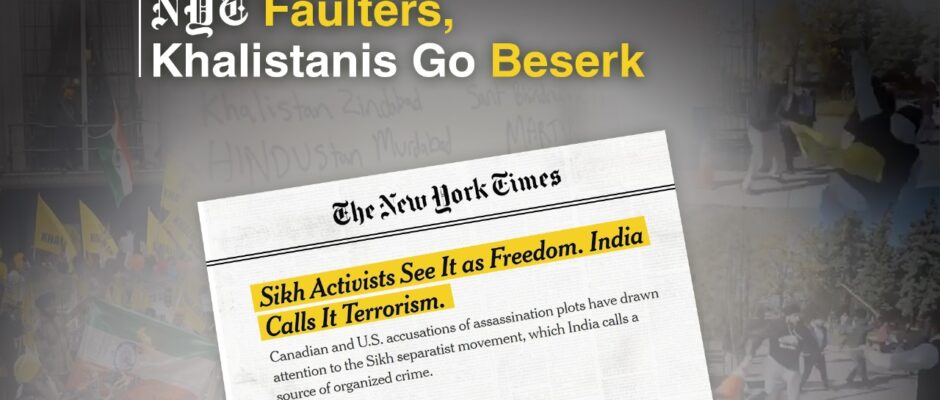
Indian security concerns cannot be reflected from Khalistani terror lens. Rohan Giri Is it reasonable for reputed media platforms like The New York Times to arrive at conclusion even before piece the facts? In her recent piece, “Sikh Activists See It as Freedom. India Calls It Terrorism,” Anupreeta Das paints the Indian response to Khalistani extremists’ movement as ‘overtly harsh and not based on genuine security concerns’. The writer avers that Indian position against Khalistanis was overtly influenced by Hindu nationalist motives rather than security concerns. A closer look at the article reveals limited scope of investigation, relying on selected sources that shaped public perception in a skewed way. By referring to select incidents, individuals, the write up risks simplifying a complex geopolitical issue, missing both historical and current context needed for a well-rounded understanding. Emphasis on Canadian, US Perspectives The article opens by focusing on Canadian and US claims of assassination plots against a terrorist thereby implying that India’s responses were excessive as “Khalistan movement” was regarded as a bygone issue. The New York Times or Anupreeta Das presented evidence to conclude that Indian government had any role in assassinations. The write up also seem to have ignored the nuanced and ongoing nature of Khalistan issue within and beyond India’s borders. Khalistan-linked activities have not disappeared into thin air and Indian officials are cautious about connections between separatist groups, criminal elements and terror networks—connections that merit thorough analysis rather than dismissal as nationalism-driven rhetoric. Findings from Indian and international intelligence agencies point to violent but fringe Khalistani elements receiving support, both material and ideological, from Pakistan, particularly through the Inter-Services Intelligence (ISI), known for its dirty tricks to destabilize India. This interlinked dynamic, often referred to as “bleed India with a thousand cuts” strategy is noted in several independent reports. Overlooking this context leaves out a significant geopolitical layer in the discussion. What about Khalistan-Linked Violence? One striking omission is the absence of data on violent history of Khalistan movement and its continued association with criminal activities. 1980s and 1990s saw that Punjab was virtually torn apart by extremist violence with thousands of civilians, law enforcement personnel and officials impacted by Khalistani terrorism. Ignoring these historical facts reduces the weight of ongoing vigilance against terrorist movements. By leaving out the history of violence and its effect on Punjab’s socio-economic landscape, the article doesn’t fully address why the Indian government views the Khalistan issue as a legitimate security concern. Indian law enforcement including National Investigation Agency (NIA), reports that recent crimes tied to Khalistan include drug trafficking, gang violence and extortion contributing to Punjab’s drug crisis. A 2023 NIA report estimated that drug-related crimes in Punjab make up nearly 60 per cent of all drug cases nationwide, underscoring seriousness of the issue and suspected role of Khalistani networks. The absence of such statistics paint an incomplete picture of the government’s concerns. Cherry Picking of Experts The NYT article relies heavily on selective quotes from experts and analysts who cast India’s approach as extreme or unjust. For instance, statements from Gunisha Kaur on purported targeting of Sikhs under national security are included without broader context of the debate. By emphasizing voices critical of India’s measures against separatism, the article overlooks other scholars, counterterrorism experts, and analysts who have recognized valid security challenges India faces with Khalistan-linked extremism. Certain Khalistani groups exploited Sikh religious sentiment to justify violent actions and criminal enterprises. Multiple forums have highlighted ties between these factions, drug and arms smuggling networks, often supported by ISI. Leaving out such perspectives raises questions about balance and intent to inform versus sway readers. Impact of Biased Reporting on Public Understanding When impactful media like The New York Times publish such pieces with biased slant, they risk cementing stereotypes and shaping public opinion misleadingly. For readers less familiar with Khalistan issue, India’s actions might appear authoritarian rather than responses to real and documented threats. Reporting with an apparent “predetermined” conclusion reinforces narratives that misrepresent India’s security concerns as mere authoritarian impulses. This approach can erode trust in international relations. For instance, framing Canada’s reluctance to act against pro-Khalistan activists as a free speech issue disregards that many Western nations actively counter extremist ideologies promoting violence, from neo-Nazism to Islamist extremism. Yet when addressing Khalistani extremism, Canada’s stance is portrayed as liberal tolerance rather than a political decision. This selective framing risks distorting public understanding of global security policies, potentially engendering sympathy for extremist movements. Conflating Sikh Identity with Khalistan Das’ article could be read as equating India’s vigilance over Khalistani separatism with attack on Sikh identity, an oversimplification that overlooks the fact that most Sikhs globally do not support Khalistan. For instance, San Jose California Gurudwara chief Bhupinder Singh Dhillon gave only five-minutes ultimatum to Khalistani supporters and drove them out of Nagar Kirtan. Similarly, Ujjal Dosanjh, former premier of British Columbia and federal cabinet minister under Liberal prime minister Paul Martin told Canadian newspaper ‘National Post’ that “a silent majority of Sikhs does not want to have anything to do with Khalistan, adding that less than five percent of the total Canadian Sikhs support Khalistani movement.” India is home to one of the largest Sikh populations, with significant representation in the military, government, and business. Articles like Das’ risk alienating this community by implying Sikh identity aligns with separatism, which could strain relationships within the Sikh diaspora and between Sikhs and the Indian state of Punjab. India’s Broader Counter-Terrorism Efforts India’s response to separatism is not limited to Khalistan issue but spans various secessionist and insurgent movements from left-wing extremist naxalites to Islamist terrorism. In each instance, India’s approach has been complex, encompassing political dialogue, social programmes and security measures. For example, reducing violence in Kashmir through de-radicalization and security efforts shows a strategy aimed at balancing security with stability. Ignoring broader policies and isolating Khalistan issue risks misrepresenting India’s comprehensive security approach. Importance of Balanced Journalism Responsible media coverage should present readers with a complete view, allowing them to

Read More

Guardians or Bystanders!

Canadian police remain mute spectators to violence and vandalism unleashed in Hindu temples by Khalistani extremists backed by Trudeau. Rahul Pawa On a quiet Diwali weekend, two temples in Canada, long-standing beacons of peace for Hindu diaspora became flashpoints of violence. In Brampton, at Hindu Sabha Mandir where a towering 55-foot statue of Lord Hanuman stands in majestic repose, sanctity of worship was violently interrupted.  In Surrey, around same time, similar desecration played out but with an unsettling twist: Canadian police, rather than offering protection from violence, reportedly turned their back on the very devotees they are sworn to safeguard. This spiraling saga of aggression against Canada’s Hindu community speaks of growing dissonance, one in which Anti-hindu allegiances and violent extremist ideology have found combustible alignment. These events call into question not Canadian authorities role in preserving peace and apparent lack of justice in face of rising extremism against Hindus. The incidents bear markings of a broader issue that Canada under the guise of neutrality may have dangerously fueled. Hindu Sabha Mandir in Brampton stands as a symbol of spiritual and cultural unity for Hindu community with its towering Hanuman statue —serving as proud reminder of ancient heritage in Canadian landscape. Yet, as Indian consular officials visited the temple to offer routine services, scenes of unrest unfolded that shattered the temple’s tranquility. Khalistani extremists, aligned with banned Sikhs for Justice extremist group, staged a violent protest that devolved into open aggression against temple-goers. Video footage shared across social media captures harrowing moments as Hindu devotees were set upon, beaten, and confronted with huge sticks by extremists. Aggressive violence by these extremists was unprovoked assault on peaceful community engaged in their sacred observances. Sikhs for Justice, a group with known links to Pakistan and history of terrorism linked to violent Khalistan secessionist movement had explicitly voiced their desire to disrupt consular services outside official premises, claiming these events posed a “threat” to Khalistani cause. Peel Regional Police, responsible for overseeing law enforcement in Brampton, have faced sharp criticism for their response or lack of it. Widespread violence notwithstanding, no arrests were made, a decision that many say reflects a worrisome leniency. Peel Police released a brief statement pledging to “investigate any acts of violence or threats,” yet to date, no charges have been filed. This inaction starkly contrasts with the force’s rapid response to similar instances of disorderly conduct in other communities. For Hindu Canadians, these events highlight troubling trend. Liberal MP Chandra Arya condemned the incident, calling attention to what he described as “free pass” given to Canadian Khalistani extremists. As he noted, “These extremists receive a degree of immunity that raises serious questions about Canada’s commitment to protecting its citizens equally.” Across the country in Surrey, a gathering of Hindu devotees at a temple similarly faced intimidation from Khalistani extremists operating with impunity in Canada. As people of all ages congregated to pray, the Khalistanis arrived with charged slogans, invoking Hardeep Singh Nijjar, a notorious Khalistani extremist recently slain under murky circumstances. Far from remaining a peaceful protest, the event quickly turned menacing, with calls for Hindus to “go back to their country.” Yet what unfolded next is perhaps more disturbing than the protest itself. As tensions escalated, members of the Royal Canadian Mounted Police (RCMP) intervened—but not to protect the threatened Hindu worshippers. Instead, in an act that has left the Hindu community in shock and disbelief, RCMP detained three Hindu devotees who were then escorted from temple grounds in full view of the protestors who had incited the incident. The reason for these detentions remains undisclosed, but the message it sent was clear: the victims of intimidation were cast as the culprits. This police action has left many questioning the RCMP’s impartiality. At a time when Hindus in Canada felt increasingly vulnerable, police response was inadequate or complicit. The pattern of law enforcement intervening against Hindu Canadians, rather than protecting them, has fostered deep resentment and fear. A local temple spokesperson pleaded for calm, reminding the community to await further information but the undercurrent of fear was palpable. Canadian authorities’ seeming unwillingness to protect Hindus or even acknowledge the intimidation they face revealed a chasm in the justice system they are meant to trust. Indian High Commission in Ottawa released a statement expressing disappointment at the violence allowed to mar routine consular events. “As in previous years,” the statement read, “the High Commission and Consulates General of India have planned consular camps during this period to assist local life certificate beneficiaries.” However, despite clear forewarning and requests for heightened security, Canadian authorities failed to prevent Khalistani disruption. This dereliction of duty has left Hindus in Canada and beyond questioning the nation’s dedication to ensuring safety for all religious communities. Diplomatic tensions sparked by Canadian Prime Minister Trudeau between Canada and India have simmered in recent months, with baseless accusations fueling discord. Yet Canada’s handling of these incidents hints at something more insidious— normalization of extremism under the guise of free speech. It appears that Canada is struggling, or perhaps choosing not to confront, a deeply ingrained bias in its approach to law enforcement where Khalistani sympathisers were concerned. India’s high commission has been left with few choices but to remind Canadian authorities of their duty to protect citizens and consular staff engaged in routine activities. The community they represent, however, feels abandoned, exposed to aggression with no recourse to justice. As Canada’s Hindu diaspora reflects on these violent episodes, an unsettling reality emerges: their homeland may be an ocean away, but the conflicts it faces seem to have followed them to Canadian shores. Devotees who once sought refuge in Canada, a country that promised peace and safety, now find themselves targeted, harassed, and abandoned by a system that seems unwilling to defend their rights. In these attacks, there is bitter irony—Canada’s celebrated multiculturalism, once source of pride, has been weaponised against the very people it claimed to protect. As Canadian authorities continue to walk the line

Read More

Ottawa Falls

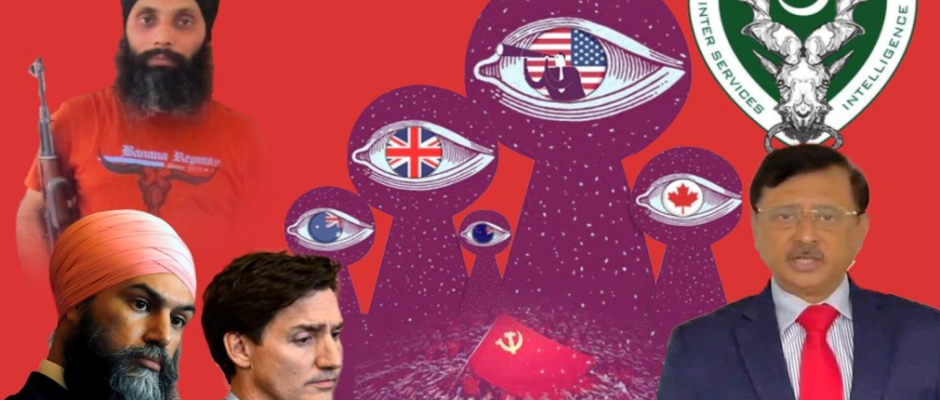
Justin Trudeau’s biggest blunder was to rely on ISI, CCP to tie up with anti-India Khalistani extremists; Five Eyes, US deep state purported inputs to make baseless accusations against India. “At that point it was primarily intelligence, not hard evidentiary proof,” Canadian Prime Minister Justin Trudeau stated during foreign interference inquiry, alluding to the claims he made against India, linking ‘Indian agents’ to Khalistani Canadian terrorist Hardeep Nijjar’s death in a gang war outside the gurdwara in Surrey, Canada.

Read More
Festering Wound, Khalistani Terror in Canada

Festering Wound, Khalistani Terror in Canada

Anti-Bharat vitriolic by Canadian Prime Minister led bilateral relations to an abyss. Steering troubled relations to normalcy rest with Ottawa. Rohan Giri Diplomatic relations between India and Canada have been thrown into abyss following insinuations on India’s possible involvement in murder of Hardeep Singh Nijjar, a proscribed terrorist identified as key member of Khalistan Tiger Force. Canadian Prime Minister Justin Trudeau seems to have personally contributed to skewed debate on Nijjar who’s sought to be turned a hero by his government whose performance reportedly is tardy and found wanting on many fronts. A sharp rebuke from India’s Ambassador to Canada Sanjay Kumar Verma for damaging Indo-Canadian relations seems to be very much in order given anti-Bharat stance pronounced strongly by Prime Minister Trudeau for political purposes. Verma asserted that accusations by Canada lacked substance and may have been influenced by forces that were inimical to Bharat. Allegations of India’s involvement in reported murder of Hardeep Singh Nijjar, a Khalistani terrorist who had obtained Canadian citizenship, emerged after Canadian Prime Minister Justin Trudeau’s address in the country’s Parliament on September 18. He had claimed to have “credible evidence that the Indian government assassinated a Canadian citizen on Canadian soil.” This baseless allegation put a strain on bilateral relations as no credible evidence was shared by Ottawa to support its claims. India recognized as a robust and healthy democracy has no historical record of engaging in such clandestine activities and consistently championed the path of peace both regionally and globally. In an interview to ‘The Globe and Mail’, Indian envoy Sanjay Kumar Verma offered a forceful rebuttal to these allegations chastising Canada for failing to furnish any concrete or pertinent details that would substantiate their accusations. He expressed apprehension regarding the investigation’s integrity, hinting at possibility of high-level interference in investigative proceedings. The accusations triggered significant diplomatic fallout and unilaterally Canada escalated further by suspending an Indian diplomat. Retaliating, India declared a senior Canadian diplomat persona non grata and requested Canadian government to withdraw a substantial number of its diplomatic staff from India. This diplomatic spat loomed as a potential threat to broader bilateral engagement between two countries. Verma questioned validity and admissibility of purported evidence underpinning Canada’s claims pointing out that diplomatic exchanges were safeguarded by international law and not admissible in a legal context or for public revelation. He called on Canada to explain methods used to obtain these conversations and pointed to possibility of wiretaps and impersonated voices to justify Ottawa’s claims against New Delhi. India has on multiple occasions drawn attention to pending extradition requests which it alleges Canada has consistently overlooked. Following accusations, Bharat’s Ministry of External Affairs labeled Canada as a “safe haven for terrorists, gangsters, and criminals.” This characterization was not made lightly; it mirrors perception of contemporary Canada. Otherise, fabric of Indo-Canadian relations has been further frayed by a deeply troubling series of events in Canada. There is a growing wave of hostility, as sacred Hindu sites and assets of the Indian community have come under repeated attack. This disturbing trend has escalated to a point where safety of Indian diplomats in Canada is now in jeopardy.  After Hardeep Singh Nijjar was killed, a torrent of direct threats and vitriolic hate speech was unleashed against Indian diplomatic corps. Atmosphere of intimidation and outright bullying has been starkly illustrated by appearance of menacing posters throughout Canada. These posters not only advocate for assassination of Indian officials but audaciously depict them as adversaries of Canadian state, ratcheting up the diplomatic tension to an alarming degree. This volatile situation casts a shadow over Indian community in Canada and puts the diplomatic ties between the two nations on a knife-edge. In a comprehensive analysis, as international think tank, Centre for Integrated and Holistic Studies, raised alarm in its latest report about the escalating threat of Khalistani extremism in Canada, particularly during Prime Minister Trudeau’s administration. The report stressed that this radical movement, bolstered by Pakistani support, has intensified, putting a strain on Canada’s social fabric and its long-standing multicultural values. Ties between Canada and India have deteriorated, attributed in part to Trudeau’s interactions with Khalistani proponents and his unsubstantiated accusations against India. These actions have not only marred Trudeau’s leadership but reflect political influence of Jagmeet Singh, NDP leader known for his Khalistani linkages and frequent anti-India commentary.  CIHS report warned that the Canadian government’s perceived indifference towards growing Khalistani presence could incentivise separatist sentiments, potentially triggering a secessionist referendum. Such developments threaten Canadian unity and sovereignty.  The think tank underlined the urgency for Canada to repair its diplomatic relations with India. Moreover, it called on Western nations to tackle Khalistani extremism with an unwavering adherence to the rule of law and a commitment to security, human rights, and democratic principles. The response to this issue is critical, the report concludes, as it will significantly shape the future of international relations and the global order. Trudeau has seemingly overlooked these critical issues. The unchecked growth of separatist movements poses a real and significant threat to the security of Canada. It seems he fails to acknowledge the true character of terrorism, which knows no religious or ideological limits. No amount of diplomatic veneer can mask this reality. Historical patterns suggest that the consequences of neglecting such threats often have a way of returning to their origin with compounded force. Addressing these challenges with substantive dialogue and addressing the influence of Khalistani factions in Canada is crucial for restoring confidence and strengthening the bilateral relationship. The current diplomatic impasse highlights the importance of adhering to diplomatic norms, international law, and the protection of envoys abroad. Prime Minister Justin Trudeau’s approach, which seems to prioritise internal political advantages over international protocol, reflects a departure from statesmanlike conduct. Such a strategy may jeopardise the diplomatic bond with India and other law-abiding democracies worldwide. (Author is a doctoral fellow at Amity University in Gwalior, content manager at Centre for Integrated and Holistic Studies, New Delhi)

Read More

Testing Times in Canada

Trudeau regime will have to address core issue of terrorism to keep its relations with Bharat intact or face consequences. Pummy Pandita Eyebrows were raised when Canadian Parliament paid homage to Hardeep Singh Nijjar, a hardcore Pakistan-backed Khalistan terrorist and named in several anti-Bharat campaigns globally. One minute’s silence by Canadian Parliament members to Nijjar, a wanted criminal in Bharat, does not augur well either for bilateral relations or global campaign against terrorism of all shades and hues. Prime Minister Justin Trudeau seems to be playing with ‘Khalistani fire’ to stay in office and even sacrifice the strong and sound footed relations with India at the altar of preserving his political fiefdom with support from the extremist group. It’s not just one minute’s silence that matters! Trudeau hailing Nijjar ‘for his persistent efforts in advancing the diversity and inclusion ideals that Canada cherishes’ is something that’s gross and unpalatable. By buying peace with Khalistanis that campaign for a separate sovereign state which most Sikhs do not support, Trudeau exposed his political opportunism. He seems to have conveniently banked on anti-Bharat forces to portray himself as someone who genuinely cares about his country. In the process, Trudeau has succeeded in appeasing his political crutch group in Khalistanis and diverted attention from Canada’s burning issues. In fact, Indian-descent Member of Parliament Chandan Arya exposed the extremist role of Canadian Khalistani elements when Air India flight 182 was bombed midday 39-years back on June 23. Incidentally, this very day is remembered in Canada as National Day of Remembrance for victims of terrorism. In the mid-air bombing of Kanishka aircraft carrier 329 innocent lives including crew members was lost to terrorists that made Canada their home. Rightly so, Arya pointed to the ideology responsible for Kanishka attack that’s alive and kicking with a small chunk of Canadians. Recent celebration of Indian Prime Minister Smt Indira Gandhi is yet another incident where terrorism is glorified, violence mainstreamed, hate and violence eulogized. It also indicates that dark forces responsible for these terror events are getting regrouped and portends terrible events to come. Khalistan movement’s past is rife with murder and bloodshed. Tens of thousands of Hindus and Sikhs have been slaughtered by terrorists not just in India but in US, Australia, the UK, and Germany among others. People in Canada seem to have forgotten that tend to forget that 39 years ago when terrorists [Talwinder Singh Parmar (Canadian citizen), Inderjit Singh Reyat (held both British & Canadian citizenship), Ajaib Singh Bagri (US citizen), Ripudaman Singh Malik, Surjan Singh Gill, Hardial Singh Johal, Daljit Sandhu and Lakhbir Singh Rode (all Canadian citizens) bombed Air India flight. Regretfully, there are still locations in Canada where people who pray to these very terrorists as ‘demi-gods’. Gurpatwant Singh Pannun of Sikhs for Justice open threat to Hindu Canadians life is nothing but “glorification of terrorism” and acceptance of hate crimes under the pretext of “freedom of expression”. Canada has fallen under Trudeau’s gross mismanagement making it an extreme version of Pakistan. Canadian economy that was in shambles has not yet fully recovered. Meagre income that ordinary Canadians are able to earn is negated by inflation overhang that continues to roil the economy. Cost of living in Canada has about tripled in three years. Steep spike in housing rents left many individuals without a place to live. Over 40,000 people died in eight years due to drug overdose and the country is fast emerging as narco-terrorism hub. As Pakistan is falling Islamic terrorism, Canada has gone the Khalistani way.[1] Since his minority government depends on the backing of New Democratic Party led by Khalistani Jagmeet Singh, Justin Trudeau has gone his way. Trudeau, much like his alliance partner Jagmeet finds nothing wrong with pro-Khalistan operations being carried out on Canadian soil. Justin Trudeau’s open support to a terrorist such as Nijjar has given legitimacy to violence committed by the Khalistani groups in Canada. In addition to endangering security of Hindus residing in Canada, Trudeau has snatched rights of common Canadian citizens to profit from shifting geopolitical conditions. Trudeau, who claims Indian involvement in Nijjar’s murder, remained silent on Karima Baloch, an activist who fled persecution by Pakistani government and settled in Canada. Trudeau twiddled his thumb when opposition leader Michael Chong charged that he was being targeted by a Chinese diplomat. Canada’s evolution as a safe sanctuary for Pakistan-backed Khalistani terrorism is the result of Trudeau’s silence on legitimate interests of Canadian residents that he breaks only when one terrorist is killed as part of his vote-bank politics. Canada as a nation will now pay the price for appeasement of Khalistanis by its Prime Minister who is responsible from harbouring organised crime, help terrorists and criminals. Trudeau has isolated Canada from Western world. What a catastrophe! Indian is upset with Canadian theatrics. “India stands at the forefront of countering menace of terrorism and works closely with all nations to tackle this global threat. 23 June 2024 marks 39th Anniversary of cowardly terrorist bombing of Air India flight 182 (Kanishka) in which 329 innocent victims including 86 children lost their lives in one of the most heinous terror-related air disasters in history of civil aviation,” it said in a statement.[2] Canada’s unflinching support to anti-India forces may disturb the delicate applecart. Bracing up to fight terrorists of Khalistani or Islamist shades is in global interest. (Author is head of operations at Centre for Integrated and Holistic Studies, a non-partisan think tank based in New Delhi) References: [1] https://www.news18.com/opinion/opinion-canada-has-become-new-pakistan-thanks-to-trudeaus-soft-spot-for-khalistan-8585898.html [2] https://economictimes.indiatimes.com/news/india/india-marks-kanishka-flight-anniversary-as-canadian-parliament-honors-khalistan-terrorist-hardeep-singh-nijjar/articleshow/111110391.cms?from=mdr

Read More

Fresh Set of Challenges for Modi 3.0

Khalistanis, Naxalites, Kashmiri subversives gaining legitimacy in Parliament demands fresh thinking and strategy K.A.Badarinath As Bharat’s Prime Minister Narendra Modi readies to take reins at centre for a third consecutive term, challenges, known and unknown may have to be dealt with on priority basis. Commentators of every hue and shade have written copiously on Prime Minister Modi’s tenacity or lack of it to run a coalition government with Telugu Desam and Janata Dal (United) and half a dozen others in tow. Challenges identified here are different and mostly new to tackle right away. For a year, Amritpal Singh, a Khalistani extremist who waged a war on Punjab Police has been put away in Dibrugarh jail of Assam. Waris Punjab De chief who hitherto owned a logistics company in Dubai is being tried for crimes including possible treason after having led a mob on Ajnala police station in Punjab. He’s being tried under National Security Act (NSA) from April 2023. His reported linkages with Pakistani spy agency, ISI to source weapons to spill violence on streets of Punjab are some of the allegations against Amritpal Singh. The 31-year old radical Khalistani separatist will have to be dealt with by Modi government when eighteenth Lok Sabha opens for newly elected members of Parliament to take oath. From Khadoor Sahib in the Punjab, Amritpal Singh was elected a member of Lok Sabha after having trounced his Congress rival. Security forces that laid trap in and around Punjab after the Ajnala incident will now have to provide security cover to the ‘Honourable Member of parliament’. Singh was successful in recent elections with highest majority of 1.97 lakh votes in Punjab. Member-elect from Khadoor Sahib will have to be respectfully escorted by the very security forces from jail to Parliament. Election Commission of India (ECI), Lok Sabha Speaker and the new government apart from courts will have to bear with his idiosyncrasies on Khalistan, the imaginary separate Sikh state. One big positive however is that the avowed Khalistani will have to take a pledge as per Bharat’s Constitution and work within the country’s governance system. Protocols to deal with him will change overnight. Second case will be Sarabjeet Singh Khalsa, son of Beant Singh who killed then Prime Minister Indira Gandhi following Operation Blue Star. Sarabjeet is the new Member of Parliament elected from Faridkot and a fundamentalist. Though an independent candidate, hitherto Sarabjeet Singh Khalsa was with Siromani Akali Dal – Amritsar. This party has had Simranjit Singh Mann as its member in Lok Sabha from Sangraur previously represented by Chief Minister Bhagwant Singh Mann. Sarabjeet Singh Khalsa’s plank as an independent in Faridkot was to seek justice for desecration of Guru Granth Sahib in October 2015. On October 12 that year, Sikhs’ holy book was desecrated in Behbal Kalan and a couple of days later two sikh youth were killed. This very is part of Faridkot constituency. Even after election, Khalsa and Mann along with several Khalistani separatists shouted slogans for a separate Sikh state at Golden Temple, the highest seat of Sikh Panth in Amritsar. While Sarabjeet is regarded a fundamentalist, his election and allegiance to Bharat’s Constitution as a Parliament Member may ring in some positivity. But, there’s denying that going forward Sikh panthic politics has come here to stay and traditional Sikh parties like Shiromani Akali Dal will have to make way for new alignments and forces especially aligned with extremist and terror elements globally. Modi government will have to redraw its Punjab strategy in sync with new realities. Third member who could turn tricky for Narendra Modi government is Sheikh Abdul Rashid who’s serving his term in Tihar jail. He’s been elected to lower house from Baramulla after trouncing former Chief Minister Omar Abdullah of National Conference. Popularly known as engineer Rashid, he’s been in high security Tihar jail for over five years in cases relating to money laundering and funding terror in the Kashmir valley from across the border and elsewhere. Oppression, revenge and jail term were emotionally put forth by his sons to garner votes for engineer Rashid. While Rashid’s swearing in as Lok Sabha member would turn an eyeball event, abrogation of Article 370, Jammu and Kashmir assembly elections may come back to focus. Courts have to take a call on his interim bail to facilitate his swearing in. After a gap of 25-years, Communist Party of India – Marxist Leninist (Liberation), Left extremist group will enter the parliament with two  of its members in Rajaram Singh from Karakat constituency. His comrade, Sudhama Prasad defeated BJP minister and high profile R K Singh from Arrah. Both these constituencies are in Bihar. The party that draws inspiration from one of left extremist movement, Charu Mazumdar, has moved into public space from arms struggle and is part of the opposition, Indi alliance. CPI-ML Liberation shifted gears and moved away from Kondapalli Seetaramaiah faction’s Peoples’ War group that still is in the midst of waging a war against the state.  Mainstreaming of naxalites with entry into Parliament and state legislatures is a tribute to Bharat’s democracy. But, spread of Left extremist political ideology overtly may demand a fresh strategy from Modi government. Chandrashekhar Azad alias Ravan is yet another figure from Uttar Pradesh that BJP-led alliance that needs to watch out for.  Chandrashekhar will represent Nagina Lok Sabha constituency in the lower house after having won the seat with a margin of over 1.51 lakh votes. He is regarded as a self-established Dalit leader after having setup the Bhim Army. His activism extends to a decade. On March 15, 2020, Chandrashekhar launched Azad Samaj Party (Kanshiram) to mainstream his political activism overtly. Initially, he looked at a tango deal with Akhilesh Yadav’s Samajwadi Party (SP). But, Chandrashekhar felt let down when his party was offered just two seats in the Lok Sabha elections by SP. Azad’s direct involvement in Saharanpur violence led to his arrest under National Security Act by the Uttar Pradesh government. Delhi Police denied him

Read More

Canada Unsafe for Indians & Hindus

Recent years have posed significant challenges to Canada’s reputation as a safe destination for immigrants, particularly for Indians. Nation’s appeal as a place of opportunity and inclusivity notwithstanding, reports of hate crimes, violence against Indians, Hindus and racial prejudice have increased. This radicalism and governmental biases have mounted concerns regarding safety. (Author Pummy Pandita is head of operations at Centre for Integrated and Holistic Studies, a non-partisan think tank based in New Delhi)

Read More

Dreams, Promising Careers to Abrupt Death!

Harsh realities faced by Indian students seeking opportunities in US, Europe, UK & Australia need immediate recognition with comprehensive solutions Rohan Giri Shocking murder of Chirag Antil, 24-year-old student in Vancouver, Canada brings to fore pressing concerns that overseas students in particular from India faced while studying abroad. Chirag’s murder is not a singular instance. It’s culmination of several other such cases.  It should be seen in light of the troubling trend of violence that impacts students who travel to several countries across geographies for education, leisure, work and business apart from leisure. A string of murders or deaths that were reported by media houses from different countries prompts immediate concerns about the adequacy of safety and protection measures for these expatriates. Since beginning of 2024, more than eleven Indian students in United States alone have tragically died, either as victims of murder or under suspicious circumstances. Chirag’s case follows an unsettlingly recognizable pattern: like most such occurrences, police investigations continue without capturing any of the perpetrators. US and Canadian authorities and media outlets till now have viewed many of these incidents as part of crime statistics and road rage. But, it’s important to recognize that each of these incidents signifies a profound and tragic loss for the families who have endured loss of their children. Chirag, hailed from Sonipat, Haryana, aspired to continue his studies in Canada. But, abrupt end to his life casts a long shadow over safety and wellbeing of our youngsters in these self-proclaimed advanced societies and nations. The response—or lack thereof—from local authorities, as well as perceived indifference, can exacerbate the family’s trauma. According to Chirag’s brother, Romit, communication from Canadian police has been minimal leaving the family to grapple for answers and support. Chirag’s murder has till date not been directly linked to targeted killing, but it is important to recognize the general threat perception for Indian diaspora in certain regions including threats from extremist groups.  Khalistani extremist activity has been of significant concern in parts of Canada apart from US, European cities and UK. These extremist elements have had targeted persons of Indian origin over the years, creating a climate of fear and insecurity among the community. Violence plagues Vancouver as multiple gangs often engage in clashes, frequently involving innocent bystanders in their violent fights. Harsh Khatri, a close friend of Chirag Antil has told Glacier Media, “Antil was in the wrong place at the wrong time and misidentified.” Although Khatri did not explicitly attribute the occurrence to any particular gang or plot, the hint was apparent: these gangs are still actively and dangerously operative in Vancouver. A violent rampage from December 2020 to May 2021 highlights this dark reality resulting in loss of over fifteen lives due to gang-related violence. These violent clashes reflect picture of a city grappling with a persistent battle against gang violence where misidentification could lead to death. The city’s cycle of violence is heavily influenced by drug traffickers operating at medium to high levels. On March 30, 2024 gunfire broke out during daytime hours causing mayhem on streets of downtown Vancouver. The incident occurred on a Saturday afternoon, causing frightened visitors to quickly seek shelter in surrounding establishments and cafés. Eyewitness claimed that the assault was directed towards a specific individual who is believed to be a member of the infamous Brothers Keepers gang. The victim was inside a black SUV when bullets ruthlessly penetrated it. With a sense of urgency, the impaired vehicle rushed uncontrollably from an alley onto Robson Street, resulting in a collision with another SUV. In the midst of this disorder, two dogs sustained bullet injuries, requiring immediate medical attention from a veterinarian. There were no other injuries recorded. Nevertheless, the individuals responsible for the shootings are still unidentified and not apprehended and this resulted in the community not being able to cope with the ongoing recurrence of violence associated with gangs. Situation emphasizes the importance of strong and effective support mechanisms for students, both from the countries hosting them and from their home country’s diplomatic channels. The efforts made by Chirag’s family to bring his body back to their home country Bharat with the help of an internet fundraising platform (GoFundMe) and involvement of Indian authorities highlight larger problem of bureaucratic and logistical obstacles that can intensify the sorrow experienced by grieving families. Indian government and its diplomatic missions overseas have consistently expressed concern about escalation in extremist activities and their potential consequences for security of Indian diaspora. Indian students in Canada have an extra level of vulnerability which necessitates that they be more cautious and take stronger security measures. Extremist factions have a tendency to escalate isolated incidents into larger confrontations or deliberate assaults on individuals with Indian affiliation. The lack of immediate and transparent communication from Canadian authorities, as described by the family, points to a need for improved international cooperation on such sensitive incidents. Diplomatic entities must proactively engage and support nationals in distress, ensuring they do not navigate foreign legal and procedural mazes alone. Chirag’s death brings to light essential measures for safety of international students. Educational institutions and local governments must bolster their efforts to ensure these young individuals are not just seen as temporary residents or tuition payers but as integral, protected members of the community. Enhanced safety measures, clear communication channels and dedicated support for international students are imperative to prevent such tragedies and nurture a truly inclusive and secure environment. Tragic end to Chirag Antil’s promising journey is a call for action by all stakeholders involved in international student mobility. It’s a reminder of the responsibilities that host nations like US, European members, UK and Australia should shoulder towards these young lives, far from home, in pursuit of their avocation. (the author is Head of Content at Centre for Integrated and Holistic Studies, a New Delhi based non-partisan think-tank)

Read More

Trudeau’s Lost Plot with India

Trudeau’s political gambits with Canada-based extremists threaten to undermine the fabric of Canada’s national interests, casting a long shadow over its democratic values and international relations, especially with India. Rahul PAWA  In a development that could further complicate the already strained ties between Ottawa and New Delhi, a commission established by the Trudeau administration to probe foreign interference allegations has officially called on the government to release information about India’s possible role in meddling with Canada’s electoral processes. This request unfolds against a backdrop of concerns raised by the Canadian Security Intelligence Service, which has pointed to covert efforts by China to influence the outcomes of Canada’s recent federal elections. A top-secret briefing report, later obtained by various news organizations, highlights the urgent need for Canada to strengthen its defences against such covert activities. The document sheds light on the sophisticated and wide-ranging campaign led by the People’s Republic of China, leveraging everything from diplomatic channels to grassroots community organizations to influence every stratum of society and governance. Adding a new layer to the narrative, the agency has expanded its scrutiny to include India, expressing its apprehensions in a detailed three-page memo that categorises India alongside China as a formidable threat to the democratic integrity of Canada. The report expressly singles out India, anticipating an uptick in interference efforts and strongly advising on the critical importance of bolstering Canada’s democratic systems and institutions to guard against external meddling. In an unfolding scenario that seems straight out of the saying ‘the pot calling the kettle black’, Prime Minister Justin Trudeau, recently labeled as the worst Canadian Prime Minister in the last fifty years, is fervently aiming for a fourth term in office—a milestone last reached in 1908. Despite facing significant hurdles, including trailing behind the opposition Conservatives in polls throughout 2023, Trudeau is unwavering in his quest for re-election, seeking to surpass the achievements of his father, Pierre Trudeau, who narrowly missed winning a fourth electoral term in 1979. Yet, Trudeau’s relentless pursuit of power bears a hefty price for the Canadian people, especially against the backdrop of deteriorating ties with India, the world’s fifth-largest economy, which is seemingly distancing itself from Trudeau’s politics. This growing estrangement is largely credited to Trudeau and his close confidant, Jagmeet Singh Dhaliwal of the New Democratic Party. Since ascending to office in 2015, Prime Minister Justin Trudeau, in alliance with Jagmeet Singh, has navigated the complex waters of Canadian politics with a strategy that leans heavily on the support of Pakistan backed and homegrown Khalistani separatist factions in Canada. This reliance is not merely a reflection of contemporary political strategy but also echoes a longstanding tradition within Canadian politics of providing sanctuary to individuals and organizations known for their dissent against Indian sovereignty. Throughout his tenure, Canada’s political landscape has seen Trudeau’s open endorsement of factions with a history of terrorism and violence within the Khalistani context, a stance that became more marked in the face of competition for the same voter base from Jagmeet Singh. This tactical courtship of Khalistani supporters and sympathisers by Trudeau has significantly influenced his administration’s policies towards India and its substantial diaspora in Canada evidenced by stands taken during India’s farmers protests and during illegitimate referendum dramas in Canada. This demographic, consisting of individuals from both India and Pakistan represents a critical vote bank, ostensibly enabling Trudeau to maintain his grip on power. However, this approach has raised concerns over the compromise of the broader interests of the Canadian people, highlighting a scenario where Trudeau’s political gain is seemingly placed above national welfare. Further demonstrating how their own Prime Minister has placed political gain above all, disrupting the delicate balance between fulfilling national interests and chasing personal political ambitions, especially by jeopardising the economic, moral, and internationally friendly relations with India and her citizens.  In a resolute and unified rebuttal to the latest misadventure to the accusations raised by the commission under the Trudeau government, the Indian Foreign Ministry vehemently dismissed the accusations as “baseless,” “absurd,” and “motivated.” The Ministry highlighted that similar claims had been brought up during Trudeau’s discussions with the Indian Prime Minister, only to be “completely rejected.” Furthermore, the statement from the Indian Foreign Ministry emphasised, “It is not the policy of the Government of India to meddle in the democratic processes of other countries. Contrary to these allegations, it is, in fact, Canada that has been found interfering in India’s internal matters.” The statement also reiterated India’s longstanding concern regarding Canada’s approach towards separatists, terrorists, and anti-India groups. This sharp rebuttal does more than just dismiss the claims; it redirects the focus onto the underlying diplomatic friction between the two nations, emphasizing India’s strongest objections to Canada’s treatment of elements opposed to Indian interests. The intensifying diplomatic standoff between Ottawa and New Delhi marks a pivotal moment, casting a spotlight on Prime Minister Justin Trudeau’s approach of political appeasement toward Canada-based Khalistani extremist factions. This strategy, aimed at securing votes and maintaining power, appears to have jeopardised the broader interests of Canada in favour of Trudeau’s personal political ambitions. The engagement with Khalistani elements by the Trudeau administration has not only soured relations with India but also underscored the fragile interplay between domestic political tactics and the responsibilities of international diplomacy. The firm rejection by the Indian government of the allegations put forth by a commission established under Trudeau’s government deepens the diplomatic divide, signalling a dramatic shift away from a foundation of mutual respect and shared democratic ideals. This situation has led to a moment of reckoning, with India responding with decisive words that challenge the veracity of the Canadian Prime Minister’s stance, thereby reshaping the contours of an intricate bilateral relationship. (Rahul Pawa is director of research at the Centre for Integrated and Holistic Studies in Delhi, India, specialising in international law, crime, security, future-tech & futuristic warfare.)

Read More
  • 1
  • 2