
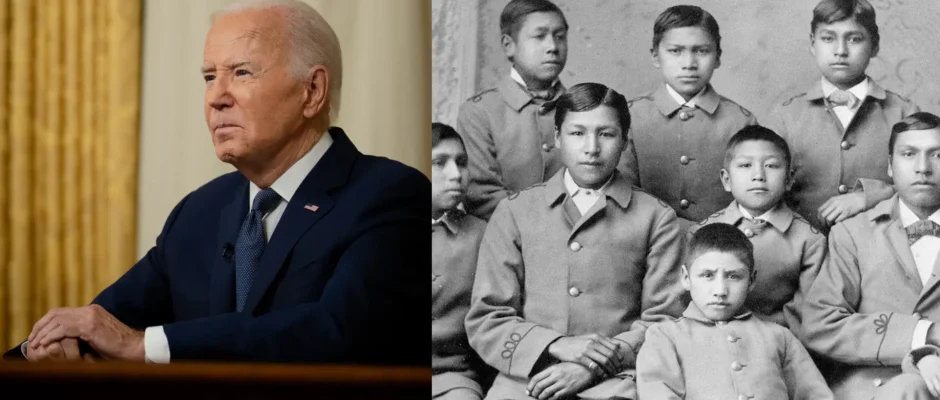
Is it Biden’s Electoral Stunt?
An apology to Native Americans for boarding school atrocities and mayhem by Church and government may not garner votes Pummy M Pandita Examining most sinister facets of American history has begun with outgoing President Joe Biden administration dramatically admitting to injustices and grave crimes committed against Native Americans especially the boarding school atrocities. The public apology to Native American communities for violence and cultural erasure that occurred during the boarding school era comes in the midst of tough election for democrats while Biden claims that ‘it was a crucial step’ in healing centuries-old scars. But key question still stands: is an apology sufficient? Native American history is characterised by unrelenting quest for cultural erasure and survival, as well as trauma, sorrow, and resiliency. A particularly sad period in this history is the era of Native American boarding schools when children were taken from their homes and sent to institutions managed by evangelists in an effort to “civilise” them. Languages, holy customs and ties that bind families and communities were all shattered in the catastrophic massacre committed by these institutions. In a bid to shape them into what was perceived by Church as ideal of Western culture, many children endured severe punishments, emotional and physical abuse and frequently had their identities taken away. These policies caused irreversible harm, leaving Indigenous communities’ collective psyche with wounds that endure for generations. One of the bloodiest periods in contemporary history was the European colonization of native Americans, violence, exploitation and dehumanization that followed has influenced indigenous cultures and societies to this day. Deliberate uprooting, exploitation and near-eradication of Native American communities from days of first European settlers in 15th century is a grave tale of imperial aspiration posing as civilising missions. Native Americans’ lives are still profoundly affected by extensive wounds that have been inflicted on their land, traditions and histories. Children from indigenous communities in US and Europe baptized by force were tortured in the process of making them ‘civil’ and thousands lost their lives as many were buried live in the ‘Indian schools’. Doctrine of Discovery gave European kings authority to assert claims to territories that their explorers had “discovered” with logic that Native Americans who were considered “uncivilised” and “heathen,” had no right to their ancestral areas. In order to support the European agenda, Native people were de-humanized and land was turned into a resource to be conquered rather than a place to be revered. Colonizers brought enslavement, environmental degradation and bloodshed with them when they brought “civilization” and Christianity coupled with ‘forced evangelism’ of grave variety. Additionally, Native populations were forced into exploitative labour and economic dependency by European colonists. Native Americans were turned instruments of colonial wealth and forced labour in mines and plantations. An exploitative dynamic that persisted far into the periods of industrialization and capitalism was further cemented when their lands were turned into resources for Europeans to plunder. Native American communities continued to be among most economically disadvantaged and marginalized groups in United States, demonstrating long-term economic effects of these policies. Deb Haaland, first Native American Cabinet secretary, during her interaction with reporters earlier this week said, “For more than a century, tens of thousands of Indigenous children, as young as four years old, were taken from their families and communities and forced into boarding schools run by the US government and religious institutions. This includes my own family. For decades, this terrible chapter was hidden from our history books. But now, our administration’s work will ensure that no one will ever forget.” Native American Community members may not be fully convinced that a word of apology will correct the inhuman acts. Lakota People’s Law Project Director Chase Iron Eyes was quoted as saying, “An apology is an acknowledgment of wrongdoing, but it is not any form of redress. An apology is just the beginning of a necessary truth-telling. An apology is a nice start, but it is not a true reckoning, nor is it a sufficient remedy for long history of colonial violence.” Cherokee Nation Principal Chief Chuck Hoskin Jr said, “We know from experience that true healing goes beyond words — it requires action, resources, and commitment. Cherokee Nation publicly acknowledged our own role in the painful history of Cherokee Freedmen and have worked to address positive change, and so too can this country.” President Biden’s apology is touted as indication that Democratic White House acknowledges these historical wrongs. For some, the apology may not seem genuine given that it comes ahead of the Presidential elections on first Wednesday next month. Essential question however is whether an apology is enough to mend wounds that are so profound that they span generations? The state-approved ‘Indian’ schools were subjected to severe, long-lasting harm because they were specifically designed to deprive Indigenous children of their culture and identity. No matter how well-written or sincere the words sound, they cannot reverse or erase the suffering that Indigenous communities endured. For Native Americans, healing will take more than just words; it will require action that recognises the pain in concrete ways. Imagine a scar from a serious injury that cannot be erased by apology. What is left is an obligation to address causes of the scar in the first place as well as to acknowledge the anguish. Even though the government’s apology is long overdue, if it is made alone, it could be seen as meaningless. Destabilization of native society was a result of systemic violence that went beyond boarding schools and included resources exploitation, forced relocations and treaty violations. Only by changing policies and providing continuous assistance that enable native communities to recover their sovereignty, manage their lands and revive their cultures will there be true reparation. It’s critical to recognize that reconciliation is a multifaceted, continuous process rather than a single apology-marked event in the midst of a presidential election seeking to garner votes. Democrats must pledge to prevent mistakes of the past from happening again if it hopes to make significant progress. In addition, failing to