CIHS – Centre for Integrated and Holistic Studies

Date/Time:

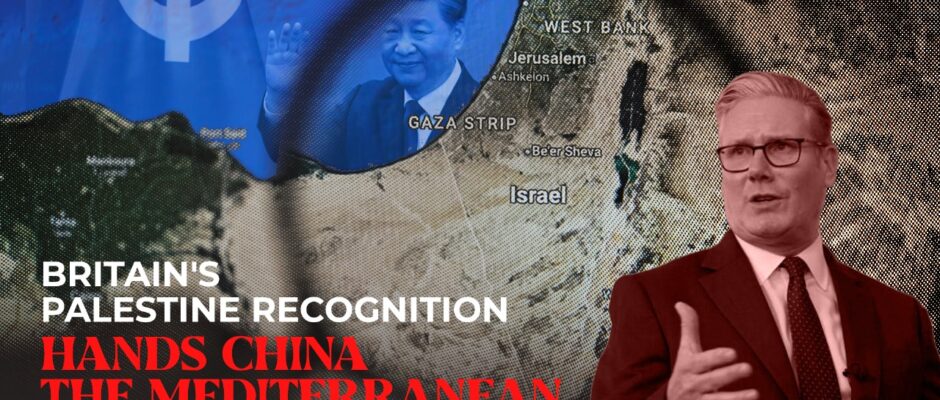
Britain's Palestine Recognition Hands China the Mediterranean

Britain’s Palestine Recognition Hands China the Mediterranean

CCP spent six decades cultivating Palestinian movements, embedding influence in Western activism and positioning itself as the indispensable power in a post-American WestAsia. Britain just made that job easier. Rahul Pawa On 21 September 2025, Prime Minister Keir Starmer broke with decades of U.K. policy formally recognising the state of Palestine. It was Britain’s most consequential West East move since the 1917 Balfour Declaration, made over explicit U.S. objections and Israeli fury. In London’s rush to show moral leadership, one reality was ignored: Beijing had spent six decades preparing for this moment. The CCP’s Palestinian project began in the 1960s. Between 1965 and 1970, Beijing sent small arms, mortars and anti-tank weapons to the Palestine Liberation Army and the Popular Front for the Liberation of Palestine. It trained cadres at the Whampoa Military Academy in Nanning and dispatched instructors to Syria and Algeria. In May 1966 Palestine Liberation Organization Chairman Ahmad al-Shuqairy thanked “Peking” for constant arms and training shipments. After the Six Day War in 1967, Israeli commanders displayed captured Chinese-made AK-47s, 81mm mortars and chemical decontamination gear seized in Gaza and Sinai. Alongside, Beijing also built a diplomatic bridge. In December 1995 it opened a foreign office in Gaza; a de facto embassy to the Palestinian Authority, decades before most Western states considered recognition. Its message to Palestinians was consistent: you can count on us when the West won’t. By Xi Jinping’s era the posture turned strategic. In 2017 the PLA opened its first overseas military base in Djibouti, a Red Sea hub housing thousands of Chinese troops. Beijing secured port stakes from Gwadar in Pakistan to Haifa in Israel, embedding itself along the arteries that supply Europe and the Gulf. A 25-year strategic agreement with Iran in 2021 locked in $400 billion in Chinese investments across oil, gas and transport corridors. CCP’s pattern is clear: first ports, then troops. Djibouti proved it, Hambantota confirmed it, Gaza may be next. Beijing has already demonstrated how commercial access becomes military power, and a recognised Palestine gives it the opening to repeat the same playbook on the Mediterranean. While Beijing built bricks abroad it built narratives at home. State-aligned Arabic media channels and TikTok streams pump out Gaza content at scale. A July 2025 Program on Extremism report mapped how the CCP’s influence runs through Western activism itself. That report details how Shanghai-based tech investor Neville Roy Singham, a onetime Huawei adviser, poured millions into U.S. and U.K. activist groups after Hamas’s October 7, 2023 attack. Groups like the People’s Forum, ANSWER Coalition and “Shut It Down for Palestine” became organising hubs for anti-Israel protests. BreakThrough News, their media arm, live-streamed marches while praising Xi Jinping Thought and Maoist revolution. Investigators concluded the effect was “to project the CCP as a defender of justice while undermining U.S. influence.” In December 2023 the People’s Forum hosted a “China75” event lauding Beijing’s governance model; by early 2024 its funding spiked from under $500,000 to $4.4 million as it expanded pro-Palestinian actions. The same network underwrote protests at Columbia University and in Whitehall, echoing CCP state rhetoric about “imperialist Zionism.” When Starmer spoke to recognise Palestine, Beijing didn’t improvise. Chinese State media instantly framed Britain’s recognition as vindication of the CCP’s “historic” support for Palestinian independence. Chinese diplomats in Ramallah pointed out they had welcomed Mahmoud Abbas to Beijing two years earlier and had pushed a ceasefire plan in 2023. They reminded Palestinian officials who had invested in them when no one else would. With London’s imprimatur, a Palestinian government now has every incentive to turn to CCP for reconstruction finance and infrastructure contracts. Beijing can bolt these onto its Belt and Road Initiative, locking in leverage over a new state at the heart of the Levant. U.S. influence, already eroded by drift and divided Congresses, will shrink further. China’s record speaks for itself. In Djibouti, commercial port access became a PLA base within three years. In Sri Lanka, Chinese loans turned into a 99-year lease at Hambantota. CCP has cultivated a pattern: ports, logistics, security co-operation and then military presence. If Palestine’s future leadership wants investment and security guarantees, CCP will deliver both. Even a small PLA signals unit or intelligence station would tilt the Eastern Mediterranean’s security balance. By presenting any facility as humanitarian or anti-piracy, Beijing can minimise Western backlash while gaining a front-row vantage on Israel, Egypt and NATO operations. Britain’s recognition may have been meant as a rebuke to Israel. However, in practice it is a strategic gift to Beijing. It signals to the Arab world that the West’s will is fractured and that China, not America, not Europe is the constant patron. It creates a diplomatic vacuum China is already moving to fill, from Gaza reconstruction bids to Palestinian security training. This is not hypothetical. Chinese firms dominated Iraq’s post-2003 oil fields; they built most of Africa’s new ports in the last decade. Palestine is a likely next. And unlike the United States or the U.K., the CCP fuses infrastructure with intelligence collection and military access as policy. Starmer’s Downing Street statement marks not the dawn of West Asia peace but a milestone in Beijing’s global ascent. The CCP spent six decades cultivating Palestinian movements, embedding influence in Western activism and positioning itself as the indispensable power in a post-American West Asia. Britain just made that job easier. (Rahul Pawa is director, research at New Delhi based think tank Centre for Integrated and Holistic Studies)

Read More
Is Islamic Alliance in offing, With Ambiguities

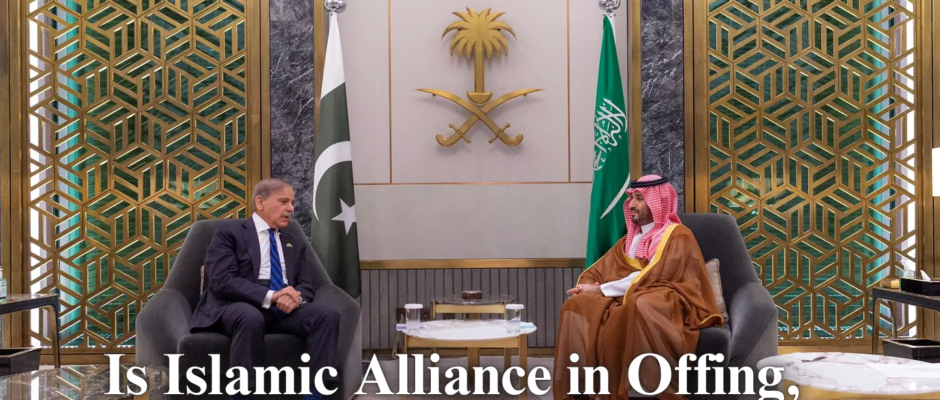
Is Islamic Alliance in Offing, With Ambiguities 

Only a true test, a moment of crisis, will reveal whether this new alliance is as ironclad as advertised, or more of a strategic signal than a binding shield. Rahul Pawa When Saudi Arabia and Pakistan signed a sweeping mutual defense agreement in Riyadh this month, it marked a strategic pivot. The agreement, termed a “Strategic Mutual Defence” agreement declares that an attack on one is an attack on both, echoing NATO’s famous Article 5 commitment. It’s an unprecedented pledge between the guardian of Islam’s holiest sites and the only Muslim nation armed with nuclear weapons. Yet behind the celebratory rhetoric, the agreement’s true scope and weight remain uncertain. A NATO-Style on paper, the agreement’s collective defense vow is explicit: “any aggression against either country shall be considered an aggression against both” Pakistan’s government said. In practice, much is left vague. Notably, the agreement is silent on whether Pakistan’s nuclear arsenal, the Islamic world’s only nukes is now at Saudi Arabia’s disposal. Pressed about a potential Pakistani “nuclear umbrella” for Riyadh, a senior Saudi official would only say the agreement “encompasses all military means”. This careful ambiguity hints at a broad commitment while stopping short of any explicit nuclear guarantee. Another grey area is the agreement’s status. Riyadh and Islamabad pointedly call it an “agreement” and not a treaty. By definition, though, any written inter-state accord intended to bind is a treaty under international law, regardless of its label. The absence of a published text and the flexible wording suggest the parties prefer some wiggle room. Saudi Arabia has pursued grand defense coalitions before like a 2015 pan-Islamic military alliance against terrorism that proved “more symbolic than operational”. This time, the language of collective defense is tied to plans for concrete cooperation (joint exercises, intelligence-sharing, arms training). Whether it matures into a robust alliance or remains largely aspirational will only be clear with time. The agreement’s timing is telling. It came days after a surprise Israeli airstrike in Doha, Qatar that killed Hamas figures and stunned the Gulf States. Qatar hosts a major US airbase, yet Washington did not prevent the strike, a jolt to regional confidence in American protection. Saudi Arabia, already uneasy about U.S. reliability, seized the moment to bolster its own security. Officially, Riyadh says the deal “institutionalises” long-standing cooperation rather than targeting any specific incident. Still, it unmistakably signals that the kingdom can seek safeguards beyond the U.S. umbrella. The agreement even revived talk of an “Islamic NATO.” Saudi Arabia binding itself to Pakistan, Islam’s spiritual heart partnering with its only nuclear-armed state is a powerful image. Observers speculate that other Muslim countries might one day align under a similar framework. Yet longstanding sectarian and political rifts (Sunni vs Shia, Arab vs non-Arab) have doomed past unity efforts. For now, the Riyadh-Islamabad agreement is as much a message to big powers as a foundation for any broader alliance. Perhaps the toughest diplomatic test for Riyadh is managing the agreement’s fallout in New Delhi. India has spent years cultivating Saudi Arabia as a partner, a top source of oil, investment and Islamic-world backing on contentious issues. A formal Saudi-Pakistani security link is exactly what India hoped to avoid. New Delhi “would not welcome an explicit security tether between its principal energy supplier and its strategic rival,” one analysis noted. In effect, the agreement edges Saudi Arabia closer to Pakistan, risking awkward strain in Saudi-India ties. Indian government reacted in measured tones, acknowledging the agreement  and saying it would “study the implications” for her security. The real worry in New Delhi is not that Saudi forces would fight on Pakistan’s side which remains far-fetched but that Pakistan will feel politically bolstered by Riyadh’s backing. Pakistani hardliners may adopt a tougher posture in future confrontations, believing a wealthy Arab power has their back. There’s also concern that Saudi aid or arms could flow to Pakistan over time, indirectly strengthening India’s longtime foe. Aware of these optics, Saudi officials have been quick to reassure India. One senior official stressed that Saudi’s relationship with India “is more robust than it has ever been” and vowed to keep deepening it. Riyadh clearly wants to show it can defend its interests with Pakistan without abandoning its friendship with India. Even so, the balancing act is delicate. New Delhi will likely respond by tightening its own strategic bonds, for instance, with Israel, a close defense partner – and by quietly urging Riyadh to stay neutral in South Asian issues. Much progress in India-Saudi relations has come in recent years, and both sides have incentives to prevent this new alignment from derailing that momentum. As the dust settles, the Saudi–Pakistan agreement stands as a bold statement, but one not yet tested by crisis. Its ripple effects are already evident. Israel, which had been inching toward a historic normalisation with Riyadh, now sees that prospect put on hold Washington, too, must grapple with a Gulf ally hedging its bets on security. Ultimately, the agreement’s significance will hinge on how seriously Riyadh and Islamabad implement it. Regular joint drills coordinated planning or clear mutual defense protocols could turn the promise into genuine deterrence. Absent that, skeptics may view it as more posturing than substance. History offers caution: Pakistan’s past defense agreement s (such as Cold War alliances with the U.S.) often fell short when real wars loomed, and Gulf unity schemes have tended to fragment under pressure. For now, Saudi Arabia has made a dramatic bid to diversify its security options, a gamble on Pakistan’s reliability and on charting a more independent course without alienating old partners. If the gamble succeeds, it could redraw the strategic map of the Middle East and South Asia. If it falters, it will remind everyone that even grand agreements can carry unspoken caveats. Only a true test, a moment of crisis will reveal whether this new alliance is as ironclad as advertised, or more of a strategic signal than a binding shield. (Rahul Pawa is director, research at New Delhi

Read More
Lions, Shadows & Silk Roads

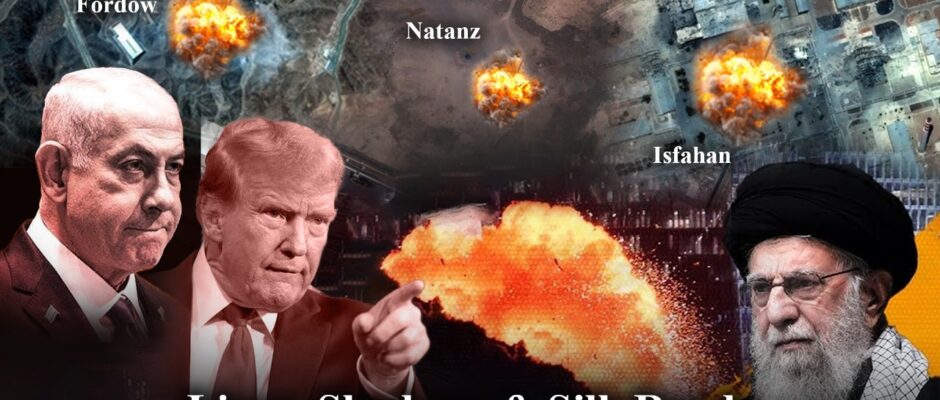
Lions, Shadows & Silk Roads

Israel-Iran clash reshaped West Asia’s strategic chessboard with US getting in. India will have to display maturity, dexterity, openness and exercise its strategic autonomy. N. C. Bipindra The Middle East was thrust into dramatic escalation of hostilities as Israel launched “Operation Rising Lion,” a comprehensive preemptive military campaign against Iranian targets, taking out military and nuclear facilities, on June 13, 2025. The operation, which included airstrikes, cyber-attacks and targeted assassinations was Israel’s most extensive cross-border military endeavour in recent years. In response, Iran activated proxy militias, launched missile attacks via Islamic Revolutionary Guard Corps (IRGC) and escalated its hybrid warfare tactics across the region. After calling for asking Iran to surrender, US President Donald Trump approved American air strikes completely obliterating three key Iranian nuclear facilities at Natanz, Fordow and Isfahan, yet noting “now is the time for peace.” This confrontation has far-reaching implications for regional stability, global oil markets, US foreign policy and emerging trade corridors like India-Middle East-Europe Economic Corridor (IMEC) and India-Isreal-UAE-USA (I2U2) group. For India, which has been investing heavily in regional diplomacy and infrastructure partnerships such as IMEC and I2U2, the conflict raises urgent questions about risk, resilience and realignment in its West Asia strategy. Operation Rising Lion, Israel’s Gambit Israel’s Operation Rising Lion was triggered by a surge in Iranian backed attacks on Israeli diplomatic and economic interests in northern Iraq, Syria and transfer of precision-guided missiles to Hezbollah in Lebanon apart from repeated calls for use of nukes to annihilate Israelis. The operation marked a shift in Israel’s longstanding “campaign between the wars” doctrine into an open and assertive military campaign targeting Iranian infrastructure, weapons convoys and senior commanders in multiple theatres. Key components of the operation included coordinated airstrikes on IRGC installations, targeted killing of senior operatives, military leadership and taking out nuclear facilities. The operation included cyber strikes and group covert attacks that disrupted Iranian air defence networks, missile stations and fuel supply chains. Anticipating a counterstrike from Iran, Israel deployed its new laser-based missile defence system which had been tested successfully against Iranian cruise missile barrages. Most of the Iranian attacks were intercepted though some have penetrated the air defence system to hit Israeli cities and towns including a hospital complex. Israel declared the operation a strategic necessity to “decapitate Iran’s regional encirclement architecture” and pre-empt future multi-front attacks including the nukes. While tactically effective, it has risked triggering a full-scale war with Iran and its axis of resistance apart from getting US and Russia-China involved in the war. Iran’s Proxy Retaliation, Strategic Posturing Iran’s counter-response blended military retaliation, strategic ambiguity, and proxy warfare. Apart from direct state-to-state confrontation with Israel — still a risky escalation — Iran relied heavily on asymmetric tactics. Iran fired hundreds of drones and rockets into Israel, overwhelming Iron Dome systems despite Israeli air superiority. The Houthis, an Iranian proxy in Yemen, have dubbed the US strikes on Iran as a “declaration of war” and have fired several missiles at Israel. Iran’s missile strike on Israel marked the first direct hit from Iranian territory since the April 2024 skirmish, indicating a new threshold of confrontation. Though Iran is trying to avoid full-scale war, its response is carefully calibrated to bleed Israel politically and militarily, while also testing the resolve of US deterrence commitments in the region. US Strategic Overstretch? The US was quickly pulled into the maelstrom, just over a week into the launch of military hostilities. Though Trump only issued warnings for a week, providing intelligence support to Israel and deploying at least two aircraft carriers to the region, his administration seems to have decided that enough is enough. Washington now faces accusations of strategic inconsistency. While it pushed for de-escalation publicly, on the parallel it supported Israeli operational aims covertly. This dualism will further strain US ties with Gulf States like Oman and Kuwait who fear further regional de-stabilisation. Furthermore, as tensions peaked, Trump administration’s G7 engagement was interrupted, which complicates America’s long-term global balancing act. Disruptions, Opportunity for India India has deep economic, energy and strategic stakes in West Asia. Operation Rising Lion and its aftermath present both direct threats and unexpected opportunities for New Delhi. IMEC Corridor in Jeopardy: The IMEC, announced at the 2023 G20 Summit, depends on regional stability across UAE, Saudi Arabia, Israel, and Jordan. The Israel-Iran conflict has disrupted port operations in Haifa and Eilat, key to IMEC’s Mediterranean leg. It has jeopardised land connectivity across Jordan due to increased Israeli military mobilisation. The insurance premiums on Red Sea maritime routes are expected to spike by about 35 per cent hurting Indian exporters. While not dead, IMEC’s viability is now under serious question until a ceasefire or détente is re-established. I2U2 Faces Diplomatic Strain: The I2U2 grouping aimed at high-tech cooperation, food security and infrastructure investment now faces political turbulence. UAE, a key I2U2 pillar, is deeply wary of regional conflict spilling over and has called for restraint putting it at odds with Israel’s aggressive posture. India is caught between maintaining its longstanding ties with Israel and its desire to deepen linkages with Iran, UAE and the Arab world, especially after recent Chabahar Port developments. India’s diplomatic tightrope is getting narrower. Energy Security and Diaspora Risks: Iran’s retaliation threatens commercial shipping in the Strait of Hormuz if India is seen backing Israel. While largely rhetorical, these threats would increase Brent crude prices beyond current rates, putting India’s inflation control at risk. There is heightened concern on nine million-strong Indian diaspora in the Gulf, as militias near Kuwait and Bahrain showed signs of mobilisation. India has had to yet again evacuate her citizens from Iran, Israel and the spill over of the conflict to other States in the region would compound the evacuation tasks on hand. Strategic Recommendations for India In navigating the evolving West Asian crisis, India must pursue a multi-vector strategy. It must reinvigorate strategic neutrality. India must avoid taking sides publicly while conducting quiet shuttle diplomacy between Israel, Iran and Gulf countries. A role in

Read More

Israel’s Right to Defend is Absolute

Hamas and Hezbollah have just escalated their threat level, nuisance value thereby altering the delicately balanced West Asia power equations Rahul Pawa As Saturday dawned bright and sunny on the important Jewish day of observance, Israel was jolted by unexpected assault from Palestinian terrorists linked to Hamas in Gaza. With cold precision, Hamas backed by Hezbollah orchestrated a sweeping, multifaceted assault against Israel presenting one of the gravest challenges to the Jewish nation faced in half a century. In this nefariously orchestrated operation, diverse array of tactics was employed by Hamas, the dreaded Sunni Islamist outfit. This included gliders and parachutes with weapons that took to skies, naval vessels for maritime intrusion and heavily-armed terrorists advancing on foot. Hamas audacity became evident with launch of rockets in thousands, some daringly aimed at Jerusalem. The sheer scale of this aggression not only resonates with its immediate impact but raises significant concerns, setting off global alarm, attention and unease. In a recorded message, Hamas terror commander Mohammed Deif referred to the assault as “Operation Al-Aqsa Storm.” He urged Palestinians in various regions to unite in the fight and emphasized on return to their revolution. He pointed to alleged Israeli hostilities and tensions surrounding Al-Aqsa Mosque in East Jerusalem as a catalyst. This sentiment was echoed by Hamas political leader Ismail Haniyeh who rallied Muslims worldwide to defend Al-Aqsa and Islam’s sacred mission. The overarching message to Israelis was not just about Palestinian cause but conveyed deep religious conviction, viewing Israelis, predominantly Jews as betrayers of the ‘Islamic divine will’. Fallout of this Hamas terror attack was catastrophic. About 22 Israeli towns and critical military installations were under siege with human toll painting an even grimmer picture. For Israelis, the ordeal was nightmarish, ceaseless, and unimaginable. As hours ticked by, families huddled in their homes, in hope of getting relief from encroaching Hamas terrorists infiltrating their communities. At a music festival southern Israel, young attendees from around the world faced a tragic and ruthless fate. In a dark twist, Hamas brazenly broadcast their acts turning their reign of terror into a spectacle for the world. Israeli families including women and children bore the brunt of this mindless violence with numerous abductions and heart-wrenching scenes streamed live. The world witnessed trauma of a wounded young Israeli woman dragged into Gaza and an Israeli Defense Forces (IDF) soldier’s tragic fate displayed for all. Shockingly, the reaction to this brazen act of terrorism in certain quarters was inconceivably jubilant. Pro-Hamas videos found enthusiastic distribution and received cheers from its supporters around the world, including far-left factions in the West and India. Celebrations erupted in Tehran and Ramallah with Iran’s own parliamentary body voicing chilling chants of “Death to Israel” inside its Parliament. The intent was clear: every harrowing moment inflicted on the Israelis was meant not just as an act of terror but also as a message, an open humiliation. In response to multiple infiltrations and rocket launches from Gaza Strip, Israel’s Prime Minister Benjamin Netanyahu declared that Israel was now in a state of war. He vowed retaliation against Hamas and underscored Israel’s unwavering right to self-defense. By Saturday, prominent global leaders including Joe Biden, Narendra Modi and Rishi Sunak voiced their solidarity with Israel. Their condemnation of unprecedented aggression by Palestinian terror group, Hamas was resolute. Moreover, the US, UK and several nations unequivocally affirmed Israel’s right to defend itself. Several hours later, Israel retaliated fiercely in Gaza resulting in significant casualties. The conflict’s ripple effects were felt as far as Lebanon with clashes between Israel and Hezbollah and in Alexandria, where two Israeli tourists were killed. Israeli airstrikes targeted strategic points in Gaza including residences and Hamas officials’ homes leading to over 300 fatalities. With ongoing ground confrontations in southern Israel, the military was criticized for not thwarting the initial attack. Israel has now deployed a substantial force around Gaza and plans to evacuate Israelis near the territory’s border. Hamas attacks which commenced in early hours of Saturday has to date tragically resulted in loss of over 800 lives and injuries to more than 2000 individuals. Importantly, implications of the events in Israel stretch far beyond the immediate trauma and retaliatory defense response. Streaming pro-Hamas videos depicting grave violations against Israeli civilians and detained IDF personnel amount to crimes against humanity. In a startling breach, Hamas terrorists from Gaza managed to infiltrate southern Israeli border in a very short span of time catching Israeli defense posts off guard. This raises eyebrows given the sophistication and depth of Israel’s intelligence and surveillance operations especially focused on monitoring Hamas. Several Western commentators point to serious intelligence lapse from within Israel and its global partners. Inefficiency of Israeli Defense Forces (IDF) funded at a staggering $23.6 billion annually also posed serious questions. When Israeli citizens found themselves enmeshed in their darkest hour, the defense forces seemed conspicuously absent. Even hours into the crisis, rapid response from the military was lacking and the political leadership appeared equally paralyzed, failing to provide clarity or direction. The nation, so often lauded for its security prowess seemed collectively stunned. With the state’s apparatus seemingly in a state of inertia, a haunting silence enveloped the nation’s psyche. The events challenge conventional beliefs about the robustness of Israel’s defense and political machinery.   Hamas, with swift terror acts sought to humiliate Israel. By kidnapping children, desecrating the fallen and broadcasting their acts, they aimed to instill fear and expose perceived Israeli vulnerabilities. These actions by Hamas, once considered a mere regional irritant, have substantially shifted the strategic landscape. Their provocations have transcended previous boundaries, deeply challenging Israel’s long-held defensive strategies.  These events have catalyzed unity among Israelis across political and social spectra. While internal differences persist, Hamas actions have crystalized the pressing need for a united front against the common enemy. The images and narratives from recent events serve as painful reminders of perils of a divided stance.  In the face of this enhanced threat level, Israel’s stance is bound to evolve.

Read More