CIHS – Centre for Integrated and Holistic Studies

Date/Time:

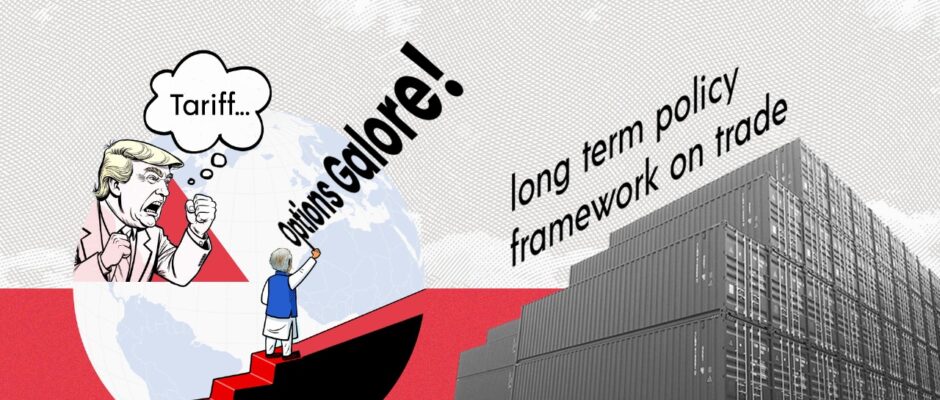
Options Galore!

Options Galore!

Putting in place long term policy framework on trade, investments, currencies, geo-political alignments to protect Bharat’s interests must be priority. K.A.Badarinath United States President Donald Trump’s adversarial tariff policy on India has largely been regarded ‘flip flop’ hinting at fluid stance and diabolical in spirit and content. From being most favoured trading ally with minimal tariff proposal of 10 per cent in April 2025, India has been bracketed in the list of enemy countries that attract highest impost of 50 per cent. Numbers and data apart, there has been a lot of noise, nervousness and anxiety as clock ticked 4 pm in last few days in India. It’s at about that time of the day Trump first announced 25 per cent and later doubled it to 50 per cent triggering a flurry of activity. Old timers did not miss the drama, show shah and high decibel drama that Trump put on these days targeting one or other trading partners.  It was the turn of Bharat in last few days. A 21-day window announced for tariffs to kick in signalled that Trump was open to negotiation before inking the trade deal. It’s one way of exerting pressure on New Delhi’s negotiators to sign on a ‘bad trade deal’ which means granting US unhindered access to agriculture, fisheries and dairy sector in India. President Trump’s optimism to drive a hard bargain also reflects from his statement, “it’s only been eight hours, let’s see what happens…you are going to see a lot more and some secondary sanctions”. The eight hour time frame referred to by Trump hints at his ‘wait, watch and strike’ attitude in the midst of serious negotiations. Contrary to drama associated with Trump’s diatribe, India’s response has been mature, measured and nuanced in last fortnight within and outside the parliament. Unreasonable, unfair and unjustified is how India described Trump’s executive order on 50 per cent levy. For the first time, Prime Minister Narendra Modi stuck his neck out and took it upon himself the consequences of tariffs tantrums thrown by President Trump. Modi said unequivocally that he was willing to pay a heavy personal price as Trump’s tariffs would impact large number of labour intensive and rural sectors. First, Prime Minister Modi has taken personal responsibility for the impact trade pact and tariffs would have on 1.4 billion plus Indians. Modi’s statement at M.S.Swaminathan International Centenary Conference on Thursday is very significant. He’s not willing to compromise on protecting farmers, rural people interests and labour intensive industrial sectors. Also, he was willing to face the political flak and pay heavy personal price on consequences given opposition parties’ intransigent line on United States. Prime Minister Modi understands that throwing open the agriculture sector to US is not only economically unviable but politically unsalable to the core Hindu vote bank, Sangh parivar and the ecosystem. On factual analysis, Modi government will have to deal with adverse impact on GDP growth of 0.2 – 0.4 per cent in case tariffs finally stay at 25 per cent during this fiscal. Top analysts estimate that entire US $ 86.5 billion annual goods exports from India to United States may turn non-competitive or commercially viable. Given that US is top market for India and constitutes about 18 per cent of its global goods exports and constitutes 2.2 per cent GDP, strains have begun to appear on near future. Given Prime Minister Modi’s steadfast commitment to protect India’s national interests, Indian negotiators are breathing easy. The proposed 50 per cent duties, if they kick in finally, translate to unannounced trade sanctions or embargo on India thereby worsening the strain in relations between the two countries. One big fall out that’s largely speculated was that India may not buy F-35 stealth fighter jet aircraft from United States. Factual position so far is that after US offered to sell these jets, formal negotiations have not yet begun. And, these discussions may remain a non-starter. Secondly, India may consider imposing retaliatory duties on 28 US products including its apples and walnuts given the precedent in 2019 to counter restrictive levies Washington DC had imposed on Indian steel and aluminium products. Thirdly, the arc of dis-engagement between India and US may widen for the time being unless recalibrates its trade and tariff policies. Fourthly, an aggressive campaign may be launched by the ruling party and the government to go local and opt for ‘made in India’ products and services. Fifthly, Prime Minister Narendra Modi may mobilize people in socio-economic spheres for adapting ‘swadeshi’. Sixthly, realigning India’s trade, investment, economic, geo-strategic relations may be a big option. Russia, China and other countries engagement may be enhanced to counter-balance US Republican White House under President Trump’s stewardship. Aligning with countries like Brazil who have been put on high tariff line by US could be an option. Seventhly, present developments may lead to expanding time tested foreign policy of strategic autonomy to protect India’s offensive and defensive interests. This may also be the right moment to promote south – south trade engagement. Eighthly, upcoming conclaves of Shanghai Cooperation Organization (SCO), Quad and BRICS may be occasions for India to sharpen its policy framework for global engagement. Ninthly, evolving an independent financial architecture, decoupling from US dollar or hastening BRICS currency to opt for diversification in payments may also be considered. Tenthly, putting in place medium and long term policy on currencies and oil will go the India way. (Author is Director and Chief Executive of non-partisan New Delhi based think tank, Centre for Integrated and Holistic Studies)

Read More
Modi Magic for Middle Class Works Wonders

Modi Magic for Middle Class Works Wonders

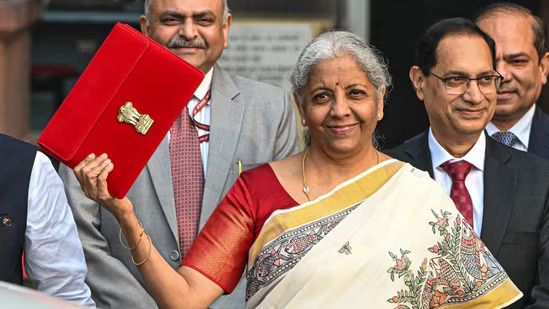
Consumption led growth, deregulation & reforms coupled with political and economic consolidation is what the budget attempts smartly! K.A.Badarinath Prime Minister Narendra Modi led government’s first full budget in its third term has deftly managed numbers, stuck to fiscal prudence & consolidation glide path, fiscal deficit reined in, borrowings manageable and put the economy on a consumption overdrive by providing huge tax relief of Rs 102660 crore. The vast middle class taxpayers who are also biggest consumers of goods and services will dance home with the goodies provided by finance minister Nirmala Sitharaman that presented her eighth consecutive budget for the Modi government on Saturday. Relief in personal income tax through rejig in both slabs and rates is the highest provided by any government in post-independence history of Bharat. And, there’s a big political message as well. Stick to the right of centre BJP-led National Democratic Alliance without drifting away. And, you will only be happy. This message is particularly important after Prime Minister Modi led alliance managed a wafer thin majority in Lok Sabha during last general elections. Also, Prime Minister Modi, BJP and NDA seem to be in no mood to let up the consolidation drive undertaken in assembly elections of Maharastra, Haryana and elsewhere post-Lok Sabha elections in June 2024. Also, in National Capital Region, Delhi’s assembly elections set for February 5, BJP has targeted the middle-class voters who are also taxpayers in a big way There may be naysayers that point fingers at huge tax exemptions and relief and Nirmala Sitharaman’s strategy to spend Rs 50.65 lakh crore to perk up growth in medium term beyond seven per cent in especially challenging conditions internationally. She has definitely not announced any ‘run away’ spending but put money where its seriously required to avoid the much feared ‘middle income trap’, keep the economy competitive, combative and at the same time expand smartly. Putting more than Rs 100,000 crore in hands of taxpayers, rewarding them handsomely for their contribution and thereby perk up consumption demand is to take economic growth way beyond 6.3 – 6.8 per cent projected in economic survey presented on Friday. Projected fiscal deficit at 4.4 per cent for 2025-26 over 4.8 per cent in current fiscal is achievable given buoyancy in tax receipts and reflects government’s steadfast commitment to consolidation, limit borrowings and shift big to infrastructure spending on capital account at Rs 15.48 lakh crore that translates to over 3.1 per cent of GDP. Borrowings would be limited at Rs 11,53,834 crore next fiscal to actual Rs 11,62,678 crore in the year ending March 31, 2025. Over next one year beginning April 1, 2025, the country’s gross domestic product in actual terms would expand to Rs 356,97,923 crore as against Rs 324,11,406 crore projected for 2024-25. Deregulation and fresh bout of reforms as an economic strategy – both policy side and taxation – recommended in Economic Survey have been accepted by Modi government. Taking stock of regulations and lifting controls has been corner stone of government’s liberalization programme when the economic liberalization was fine-tuned by Atal Bihari Vajpayee regime two decades back. Fresh overtures to reform, deregulate and thereby liberalize the economy is something Modi government would pursue to realize its full potential as it readies the journey to ‘developed nation’ status free from poverty by 2047. Focusing on agriculture, investments, micro, small & medium enterprises (MSMES) apart from exports as four growth engines is refreshing and a departure from traditional ways of looking at four economic pillars. At a time when assorted Left leaning farmers groups hit the ground seeking legal guarantee for minimum support prices (MSP) for their produce, Modi government has presented a different model to make farming a profitable enterprise, push up rural prosperity and take the famed Bharat growth story to hinterlands. Apart from sprucing up agricultural credit, mission for pulses, cotton, developing 100 agriculture-based districts, Makhana mission and initiative for vegetables and fruits is noteworthy.  Focusing on Micro, small and medium enterprises as growth engine is something that will gel well with the BJP’s core constituency of small businesses. And, it makes eminent sense to take these over 4.5 crore small enterprises up the value chain and align them to export markets to deliver both goods and services. Fund of Funds for start-ups, prioritizing footwear, leather and toys, extending first time entrepreneurship to five lakh scheduled caste and tribes women and ‘make in India’ for the world schemes would expand the landscape of these enterprises that have become hallmark of Bharat’s industry in last ten-odd years. Announcement on national manufacturing mission for MSMEs is something that will lead to consolidation of these tiny enterprises but also provide framework for nurturing and embellishing their operations in long term. The two growth engines that are significant are investments and exports given global uncertainties especially in Europe, return of Donald Trump as American President, China and Russia getting closer on geo-political front. Setting up an omnibus export mission, bringing the MSMEs to put them on export mode and involving banks, financial institutions is a pragmatic way of tiding over the global uncertainties especially in wake of ‘Make America Great Again’ and ‘Make Europe Great Again campaigns. Setting up global capability centres in different states and bharat trade net for easing documentation related issues for exporters would only add to ease of exporting Bharat’s goods and services to global consumers. Government led investments in infrastructure, mobilizing global resources for large signature projects would trigger private and foreign funds commitment to both green field and expansion projects. One big opportunity for both private and foreign players would be 100 Gw nuclear power projects that would eventually replace the heavily polluting coal-fired power plants. Nuclear mission will provide an opportunity for foreign players apart from putting together a regulatory framework given that the sector is being opened up for first time. For the first time in last few years, Bharat has opened the insurance sector wider for foreign investments with 100 per cent

Read More

Seven Red Flags That Can Sour India’s Growth Story

By Balbir Punj The 2024-25 budget is a smart fusion of political stratagem, coalition compulsions and a slew of deft moves to accelerate economic growth to help realise PM Modi’s resolve to turn India into a developed nation by 2047. However, given the domestic constraints and dismal emerging global economic scenario, the NDA Government’s quest to make India a global financial powerhouse is fraught with serious challenges. The wars in Ukraine and Gaza have disturbed global supply lines and devastated the world markets a great deal. No wonder the latest forecast for global growth five years from now, at three per cent, is the lowest in decades. The rise of India would be hamstrung by a bleak international scene, for a vibrant Indian economy will need to increasingly engage with the rest of the world. The budget is undoubtedly an exercise to retrieve the political ground the BJP lost to the opposition in the last Lok Sabha polls. But it’s not populist or irresponsible. The underlying theme is fiscal prudence and consolidation. The promise to peg the fiscal deficit at 4.9 per cent of GDP in 2024-25 is a significant reduction from 5.6 per cent last year. Finance Minister Nirmala Sitharaman has also reiterated her resolve to reduce the deficit to below 4.5 per cent by next year. The misgivings about India emerging as a developed nation over two decades from now aren’t entirely misplaced. India faces some insurmountable challenges that are difficult to deal with, particularly with a fractured polity that has evolved post-2014. Outrageous toxic narratives – completely divorced from facts and reality – are banded about to derail the public discourse.  ‘Caste-identity’ – a divisive signature tune – is the season’s flavour. What’s the basis for believing that Modi’s vision of a developed India is not just a pipe dream but something doable? His track record. During his previous two terms, Modi managed to break the mould. Defying the system, he ensured the delivery of benefits to ordinary people sans any leakage. Modi made available gas connections, foodgrains, toilets, housing, drinking water, and road connectivity to crores of Indians. As a result, poverty levels dropped drastically, and today, India is among the world’s fastest-growing large economies, with a GDP growth above eight per cent. But here is the proverbial catch. The aspirations of millions who have moved out of morasses of poverty have since outgrown what the state freebies can offer. This exploding phenomenon is full of unchartered challenges and unexplored opportunities for the country. The expectations of India’s young millions have soared to unprecedented levels. They now want access to a decent standard of living. But can India meet their aspirations? Seven red flags can hold the country back and sour its dreams. #Education and Jobs: Among the “real” challenges India faces, the Economic Survey (2023-24) has outlined the lack of jobs. According to the survey, the country must create an estimated 78.5 lakh jobs annually. The government has launched five schemes to fix the problem. It’s a patchwork solution and leaves the core of the problem untouched. The issue is not unemployment. It’s that of ‘unemployable’. Leaving aside some islands of world-class academic excellence, most organisations styling as educational institutions don’t dispense education or talent but degrees. The state-run educational system is broken. There is no serious effort to resurrect it. According to the 2023 Annual Survey of Education, almost a quarter of all youth (14-18 years) cannot fluently read a class 2 text in their regional language. Only 43% can solve simple division sums. There are millions of slots waiting for qualified candidates. India ranked seventh in a talent shortage, with 81 per cent of employers reporting difficulty finding a skilled workforce. The skill gap is estimated at 2-2.5 million. It’s difficult to miss the irony – millions of jobs are going abegging, and countless remain unemployed. Rising Trade Gap with China: India-China trade touched almost $118 billion, with India’s exports at only $16.67 billion, with a trade deficit of over $100. The Economic Survey has termed it a “challenge”, a “Chinese Conundrum”, and a problem sans a solution. There appears to be no escape from the fact that China would continue to be the overbearing trade partner, with sinister implications for India’s security. Bureaucracy: Rampant corruption and inefficiency have been India’s bane. To Modi’s credit, corruption is nearly extinct in the top echelons of politics and babudom at the centre. However, the twin evils of graft and sloth continue to gnaw at the system from within. The raging NEET controversy and the scandal involving Puja Khedkar, a probationary IAS officer (now under investigation), underline the unsavoury fact of the extent to which the rot has set in. No plans, however perfect they may be, can work till the delivery mechanism is fixed. Judicial Reforms: To repeat an adage, justice delayed is justice denied. These statistics speak for themselves.  In 2024, the total number of pending cases of all types and at all levels stood at 5.1 crores, including over 180,000 court cases pending for more than 30 years in district and high courts. Agriculture: The growth in agri-GDP in 2023-24 (FY24) was just 1.4 per cent as per the latest provisional estimates. The second advance estimate was, in fact, only 0.7 per cent. This sector engages 45.8 per cent of the workforce. Most of those claiming to be ‘kisans’ are, in fact, victims of disguised unemployment. Giving 5 kg/per capita/month of free rice or wheat is a dole. Vested interests (read so-called farm protests of 2020-21) successfully sabotaged all efforts to introduce reforms in this sector. This large section of India’s population has to be partnered in the country’s success story. Distorted Narratives: Foreign-funded groups have been hijacking popular mandates using globally tested tool-kits by building narratives based on white lies, half-truths and twisted facts. The ‘toolkit’ was used during India’s CAA and farm law protests. Power Outage: Per capita electricity consumption in India jumped from 16 units in 1947 to 1327

Read More

Going green from grey!

Green hydrogen is the new energy frontier to conquer. India has the potential to decarbonize its economy, embark on clean journey to future and give tough competition to US and EU K.A.Badarinath Going green on energy front and decarbonizing Indian economy estimated to be US $ three trillion is a gigantic task for any government. Bharat i.e. India will have ‘first mover’ advantage in making a tectonic shift in energy production, consumption and exports. The advantages in moving to green hydrogen from the grey version are too many. Challenges are countless. Indian government’s announcement to set up a dedicated hydrogen mission in the federal budget of 2021-22 attracted the ire of usual sceptics that include the naysayers. When Prime Minister Narendra Modi launched the mission in September 2021post his independence day address from ramparts of the Red Fort not many were willing to get ready for a transformative change in the country’s energy matrix. On Wednesday, the Cabinet’s decision to in hydrogen energy and make an initial investment of Rs 20,000 crore (approximately $ 3 billion) demonstrates Indian government’s readiness to move away from carbon fuels, cut the massive import bill on crude oil and address serious environment sustainability apart from larger climate change issues. If India can take the lead in Conference of Parties (COP) 27 and make decisive push on solar energy in sync with civilizational life styles and tap the huge potential Sun offers, there’s no reason why green energy mission cannot deliver. In September 2022, US democratic administration led by President Joe Biden had decided to pump in US $ 7 billion in green hydrogen hubs to export the gas worth 10 million tonnes by 2030. Similarly, entire European Union has committed US $ 5.2 billion on hydrogen energy to decarbonize the economy in 27-member countries. In this context, India’s decision to increase the green hydrogen through dedicated hubs to five million tonnes, set up 125 megawatts green hydrogen based energy generation capacity and undertake research in this nascent area is forward looking and doable. In the process, the government proposes to reduce its hydrocarbon imports by a whopping Rs. 100,000 crore, mobilize investments worth Rs 800,000 crore and create 600,000 direct and indirect jobs in next seven years. Quickly creating cost competitive electrolysers capacity to produce green hydrogen will be the clincher. Most of public investments by the central government would be to create these capacities. Providing early fiscal and monetary incentives through this green hydrogen hubs and dedicated mission will go a long way in creating green energy economy. Outcomes from this green energy campaign could be enormous. The way our industries produce products, service providers operate, the way we move around or transport goods and changes in energy sector will be huge. Though hydrocarbons based crude, naphtha, gas and coal would continue to be our main stray for energy generation in short term, the tactical shift in this scenario seems inevitable. One big challenge in this shift is developing cutting edge technologies, keeping up the curve and optimizing the costs to derive the best for commercial users in electrolysers to produce hydrogen and its derivatives with multi-fold applications. Second big issue could be making available cost-effective debt and equity funds. Finance Minister Nirmala Sitharaman should use the budget to be unveiled on February 1 to set up a dedicated green hydrogen development finance company to take the lead. Indian government may invest about Rs 5000 crore as initial equity capital to mobilize funds from both bilateral and multi-lateral sources, if required. Hydrogen hubs, whether it is pilots or large scale, need not be limited to big corporates like the Reliance or Adanis that have big plans in tapping green energy. Mukesh Ambani led Reliance Industries Ltd had announced in January 2022 its plans to make a shift to green energy across the entire value chain beginning with 20 GW energy production capacities by 2025.  Gautam Adani has not minced words in his investment commitment in green hydrogen technologies, infrastructure and generation capacities after the Independence Day speech of Prime Minister Modi in 2021. Most corporate board rooms in private sector, state-run energy enterprises have already been abuzz with discussions on foray into the green hydrogen as the next energy frontier to be conquered. Third big challenge will be evolve partnerships globally that would not cannibalize Indian green hydrogen ecosystem, know-how and companies. Carefully choosing dependable partners in the international arena that add value to the Indian ecosystem could be another decider. Fourthly, success of this policy framework would be in democratizing the entire value chain with a slice of cake for both small and large companies while the energy start-ups providing the edge. Fifthly, states will have to now jump into the fray and make hay out the ecosystem for green hydrogen as was done in the solar power panels’ capacities, generation projects and the whole chain ending with end-consumers. Sixthly, since India is eyeing a huge export market for its electrolysers, their maintenance and services, a dedicated export promotion mission may have to be mounted. But, the biggest challenge will be to counter below the cost cheaper and low-grade Chinese products that are likely to flood the markets once the dragon country gets some relief from blanket envelope of Covid 19 pandemic. Seventhly, identifying dedicated institutions of excellence to pursue research into the green hydrogen technologies and setting aside funds against deliverables in innovation knowhow should be done concomitantly. Eighthly, data collation and tracking developments in this area internationally on real time basis should be prioritized to keep India above water in this sector. Ninthly, green hydrogen should become an effective instrument to diversify India’s clean energy alternatives that include hydro-electric power, solar energy apart from nuclear power. It’s also time for India to chug ahead with coal sequestration as a diversified enterprise as a green alternative. Tenthly, evolving a healthy mix of both hydrocarbon based energy sources with increasing shift to newer areas like green hydrogen may have to be

Read More