
CIHS – Centre for Integrated and Holistic Studies

Date/Time:

PM Modi Leads India’s Global AI Charge

PM Modi Leads India’s Global AI Charge

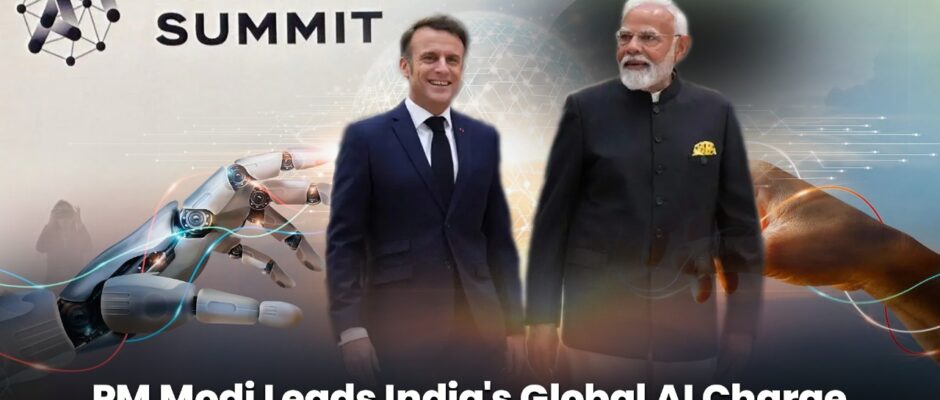
Rahul Pawa When the next AI Summit convenes, it will be on Indian soil, in a country that is scripting its own AI destiny one built on access, equity, and innovation. In the heart of Paris, under the ornate ceilings of the Grand Palais, the world witnessed a pivotal moment in technological history. The AI Action Summit, co-chaired by French President Emmanuel Macron and Indian Prime Minister Narendra Modi, convened global leaders, tech magnates, and policymakers to chart the future of artificial intelligence (AI). The two-day summit, held against the backdrop of rapid technological advancements, became a stage where India positioned itself not just as a participant but as a formidable force in the global AI ecosystem. Prime Minister Modi, in his opening address, eloquently stated, “We are at the dawn of the AI age, where this technology is fast writing the code for humanity and reshaping our polity, economy, security, and society.” He emphasised the unparalleled impact of AI, urging collective global efforts to establish governance frameworks that uphold shared values, address inherent risks, and build trust among nations. Governance, he asserted, was not merely about risk management but about fostering an environment where innovation could thrive, ensuring AI’s benefits reach all, particularly the so called “Global South”. As the summit unfolded, world leaders laid out their stakes in the AI race. French President Emmanuel Macron made a bold statement, unveiling a €109 billion investment in France’s AI sector. With characteristic flair, he highlighted France’s clean energy advantage, stating, “Here, there is no need to drill. It’s plug, baby, plug.” His words highlighted the urgency of aligning AI innovation with sustainable infrastructure, a challenge that nations around the world are grappling with. Meanwhile, U.S. Vice President JD Vance struck a different tone, advocating a laissez-faire approach to AI development. He warned against overregulation, suggesting that excessive oversight could stifle innovation. “We must allow AI to evolve freely, driven by market forces rather than bureaucratic constraints,” he remarked, in sharp contrast to Europe’s push for tighter AI governance. The European Commission’s President Ursula von der Leyen, however, took a measured stance, emphasizing the need for responsible AI development. “AI must be an enabler, not a disruptor. We must strike the right balance between innovation and ethics, ensuring technology serves humanity, not the other way around,” she stated, reinforcing the bloc’s commitment to structured AI oversight. Amid these competing visions, it was Modi’s announcement that India would host the next AI Summit that sent a resounding message. India, he declared, was not content with being a consumer of AI but was determined to be a key architect of its future. With its vast population, diverse linguistic landscape, and thriving tech ecosystem, India offered a unique testing ground for AI models that could be scaled globally. The timing of Modi’s announcement was strategic. Just last year, the Indian Cabinet had approved an ambitious ₹10,300 crore outlay for the IndiaAI Mission, a sweeping initiative designed to cement the country’s position as a global AI powerhouse. This mission, spanning the next five years, aims to build a robust AI infrastructure, develop indigenous AI models, and foster innovation through public-private partnerships. A key pillar of this initiative is the IndiaAI Compute Capacity, a scalable infrastructure deploying over 10,000 Graphics Processing Units (GPUs) to power AI research and applications. India’s AI ambitions extend beyond infrastructure. The IndiaAI Innovation Centre (IAIC) is set to become a hub for cutting-edge AI research, focusing on developing Large Language Models (LLMs) tailored to India’s linguistic multiplicity. The initiative will also enhance the IndiaAI Datasets Platform, ensuring access to high-quality, bias-free datasets critical for developing fair and accurate AI systems. As Modi took the stage once again to discuss the ethical challenges of AI, his message was clear—AI must be transparent, inclusive, and free from biases that perpetuate social inequalities. “We must build quality data sets, free from biases. We must democratise technology and create people-centric applications. We must address concerns related to cybersecurity, disinformation, and deep fakes. And we must also ensure that technology is rooted in local ecosystems for it to be effective and useful,” he emphasised. Bias in AI, he warned, was one of the most pressing concerns of the modern era. From image recognition systems that favour Western-centric depictions to healthcare AI models that perform poorly on non-white populations, the risks were vast. “Ask AI to generate an image of a person writing with their left hand, and it is likely to depict a right-handed writer instead, because right-handed examples dominate its training data,” he explained, offering a simple yet profound example of how deeply embedded biases can shape AI’s outputs. The urgency of ethical AI governance was emphasised by the presence of Chinese Vice Premier Zhang Guoqing, a stark reminder of the geopolitical stakes in AI supremacy. China’s aggressive AI push, underpinned by vast data pools and state-controlled development, has raised concerns among Western nations about the implications of an AI arms race. In contrast, India positioned itself as a neutral player—advocating for open-source AI models, transparency, and global cooperation to ensure AI serves humanity at large. As the summit concluded, a new global AI landscape had begun to take shape—one where India was no longer on the periphery but at the forefront of shaping policies, driving innovation, and ensuring ethical governance. When the next AI Summit convenes, it will be on Indian soil, in a country that is scripting its own AI destiny—one built on access, equity, and innovation. In the words of Prime Minister Modi, “The future of AI must be inclusive, just as the future of humanity must be inclusive. Let us build it together.” (Author is Research Director at Centre for Integrated and Holistic Studies, New Delhi based non-partisan think-tank)

Read More

France, Bharat’s Dependable Strategic European Ally

More than just a symbolic visit, French President Emmanuel Macron’s Republic Day visit to India as chief guest was significant. President Macron made a decisive step to fortify the strategic and deep affinity ties between France and India during his trip to Jaipur and New Delhi. President Macron’s visit was a turning point that demonstrated deepening diplomatic, economic, and cultural linkages between the two countries. Beyond the symbolic acts of solidarity that were observed during the Republic Day celebrations, the visit provided both countries with an opportunity to explore ways to improve cooperation in a range of fields, opening the door for a more robust and durable relationship. Enhancing Strategic Partnership: France and India have been actively working to strengthen their strategic alliance in a number of areas.  Historically, the two countries have cooperated in the fields of commerce, space exploration, defence, and cultural exchanges. In an extraordinary move, Hindustan Aeronautics Limited (HAL) has acquired all of the jet engine technology from French aerospace giant Safran that has greatly enhanced India’s capability for defence manufacture. Strengthening Defence Links: In order to increase domestic helicopter manufacturing and potentially open the door for future military cooperation, Indian private conglomerate Tatas has partnered with Airbus Helicopters to manufacture civilian helicopters in India. France and India work together on a number of defence initiatives and have a strong defence cooperation. One of the major turning points in their defence relationship was the purchase of the Rafale fighter plane. Space Cooperation: The French Space Agency (CNES) and the Indian Space Research Organisation (ISRO) have worked together on a number of space projects. There has been cooperation in areas such as satellite technology, Earth observation, and space research. Economic and Trade Ties: Economic and trade relations between India and France have been growing steadily. Both nations have been looking for ways to increase their economic cooperation, including investing in fields like technology, infrastructure, and renewable energy. Nuclear Energy: France has been a key partner in India’s civil nuclear programme. India-France has signed agreements pertaining to the peaceful use of nuclear energy. Cultural Exchanges: Cultural ties between India and France have been fostered through various initiatives including academic collaborations, language programmes and cultural events. International Issues: India and France frequently work together on international problems such as UN reforms, counterterrorism, and climate change. The two countries have a stake in upholding an international system based on laws. Educational and Cultural interaction: India actively participates in educational and cultural exchanges on a national and international scale because of its rich history, multiple cultures, and rapidly growing economy. By 2027, France hopes to have 30,000 Indian students enrolled in its universities, encouraging greater scholarly exchange and knowledge sharing. The coming year, i.e., 2025 will be proclaimed as the “India-France Year of Innovation,” exhibiting collaborative initiatives in cutting-edge fields including renewable energy, artificial intelligence, and space research. Educational Interaction: 1. Diversity in Education: India has an extensive selection of educational options, including modern schools, elite institutions, and traditional Gurukul systems. The educational landscape is a reflection of the fusion of contemporary knowledge and old wisdom. 2. International Cooperation: Indian educational establishments regularly participate in alliances and cooperative ventures with overseas colleges and establishments. This promotes a global learning environment by facilitating the exchange of faculty, students, and research. 3. Technology and Innovation: India is fast becoming as a hub for these two fields. Collaborations between international digital giants and academic institutions have resulted from the focus on STEM (Science, Technology, Engineering, and Mathematics) disciplines. 4. Study Abroad Opportunities: A large number of Indian students travel overseas to seek higher education, which promotes information sharing throughout the world. India’s high standard of education and wide range of cultural experiences have made it a popular choice for overseas students as well. Cultural Interaction: 1. Cultural Diversity: India is renowned for its wide range of customs, languages, dances, music genres, and artistic expressions. Through partnerships, festivals, and cultural events, this diversity is exhibited on a worldwide scale. 2. International events: To foster appreciation and knowledge of other cultures, India actively takes part in and organises international cultural events. Cross-cultural exchanges take place on stages such as music festivals, art shows, and film festivals. 3. Cultural diplomacy: To strengthen relations with foreign countries, the Indian government practices cultural diplomacy. This entails promoting appreciation and understanding between people by presenting Indian literature, music, dance, and art around the world. 4. Tourism: Travellers from all over the world are drawn to India by its rich cultural legacy. The historical sites, temples, and celebrations offer a direct glimpse into India’s rich cultural heritage. Beyond the Headlines: India and France have maintained diplomatic relations for decades, and their ties extend beyond just political and economic aspects. By highlighting their common strategic interests in the Indo-Pacific area, both nations reiterated their commitment to maritime security and counterterrorism.  Talks also centered on expanding commerce and investment, especially in digital technology, sustainable solutions, and infrastructure development. 1. Strategic Partnership: India and France declared a “Strategic Partnership” in 1998, signifying the growing importance of their relationship. This partnership covers various sectors, including defense, security, and space cooperation. 2. Defence and Security Cooperation: Defence ties between India and France have strengthened significantly. The procurement of Rafale fighter jets from France by India is a notable example of defence cooperation. The Rafale deal, signed in 2016 and finalized in 2019, is one of the largest defence deals between the two countries. 3. Space Cooperation: The Indian Space Research Organisation (ISRO) and the French space agency CNES (Centre National d’Études Spatiales) have collaborated on various space missions. Both countries have shown interest in joint satellite launches and other space-related projects. 4. Cultural and Educational Exchanges: Beyond politics and economics, India and France have also promoted cultural exchanges. Educational ties have been strengthened through student exchange programs and collaborations between universities. 5. Economic Cooperation: Economic cooperation between India and France has grown steadily. Both countries have shown interest in enhancing trade and investment. France has been supportive of India’s

Read More