
CIHS – Centre for Integrated and Holistic Studies

Date/Time:

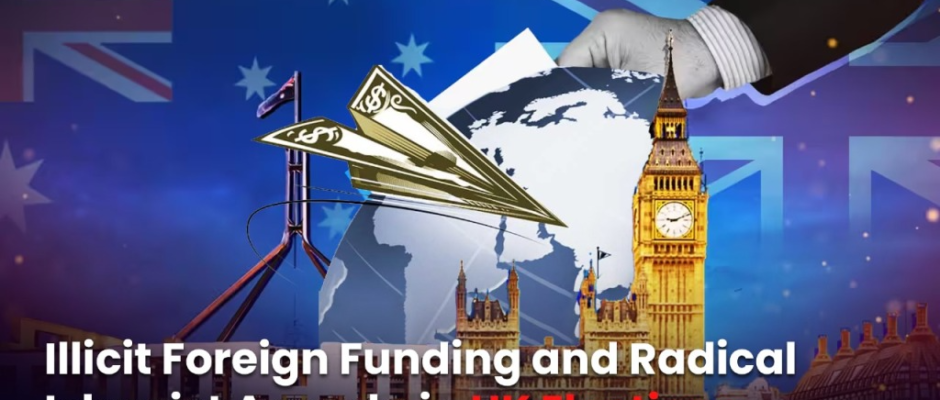
Illicit Foreign Funding and Radical Islamist Agenda in UK Elections

Illicit Foreign Funding and Radical Islamist Agenda in UK Elections

Rohan Giri Prior to the UK general elections, a media investigation revealed that five of the six major British political parties had taken illicit foreign funds. To minimise excessive foreign influence, British legislation compels parties to refund unlawful donations within 30 days and disclose any failures to the Electoral Commission. Only people on the electoral roll can make donations, with a minimum limit of £500. However, the Bureau of Investigative Journalism discovered that the Conservative Party, Reform UK, Liberal Democrats, Green Party, and Scottish National Party failed to prevent or identify these donations, which were made through an assortment of modest payments totalling more than £500 from a foreign source. As per the report, only the Labour Party successfully blocked such unlawful donations. Election law expert Gavin Millar criticised the self-policing method as ineffective and illogical because it relies on beneficiaries to enforce the law. Concerns had grown in the run-up to the 2024 UK general election about foreign players funding political non-governmental organizations (NGOs). Despite precise laws deliberate to prevent excessive foreign influence, some NGOs with significant influence in UK politics have evidently received large amounts of funding from international sources. These contributions, which are frequently routed through intricate channels to avoid detection, undermine the integrity of the democratic process and threaten to influence election results in favour of foreign interests. The current legal system, which relies mainly on self-policing, is deeply inadequate, allowing foreign funders to have hidden power over British politics. Several controversial groups in the British community receive funding from ambiguous sources, which they utilize to spread their propaganda and operations throughout the country. One prominent example is Muslim Council of Britain (MCB), an umbrella group that represents over 500 interconnected mosques and Muslim organizations. MCB has a notorious history of sponsoring and supporting extremist actions, prompting consecutive British administrations to adopt a “non-engagement” stance with the organization since 2009. Notably, the MCB backed a declaration in Istanbul calling for jihad in reaction to Israel’s activities in Gaza and backing Hamas attacks on foreign forces, possibly involving British troops. Another outfit of concern is Hizb ut-Tahrir, which is secretively operational in the UK despite being banned in many countries due to its disruptive ideology and links to terrorist acts. Hizb ut-Tahrir has been accused of radicalising young Muslims and pushing for the formation of a global caliphate through non-democratic means. Its financing roots are opaque, leading to suspicions of foreign financial aid intended to destabilise communities. Islamic Relief Worldwide, headquartered in the United Kingdom, has been accused of supporting terrorist entities, especially Hamas. However, the organization denies the accusations. Israel and the United Arab Emirates, have blacklisted for the concerns about the misuse of charitable donations to help terrorists. Furthermore, CAGE, a UK-based advocacy group, has made headlines for its provocative viewpoints and possible ties to terrorists. The entity openly advocated for the prominent figures such as Dr Aafia Siddiqui who is serving an 86-year jail term for the attempted murder of an FBI agent in disputed circumstances. She is an al-Qaeda sympathiser. Also, they advocated for Anwar al-Awlaki, an American-born cleric of Yemeni descent, who was a key figure in al-Qaeda in the Arabian Peninsula (AQAP). While CAGE professes to advocate for human rights, its support of high-profile terrorists and receipt of foreign financing have sparked investigation and criticism from a number of sources, including the British government. The Islamic community in the United Kingdom has considerable influence on the political mandate because of its large population and active involvement in societal and political concerns. British Muslims contribute to the electorate’s diversity of approaches, influencing policy discussions over immigration, foreign policy, and community welfare. The community’s participation in voting and political discourse ensures that the problems and demands of a sizeable portion of the people are addressed. This impact, however, can be destroyed by organizations and people that mislead or manipulate the community to advance their own objectives. Extremist organizations in the UK have not only attacked non-Islamic communities, as evidenced by the attacks on Hindus in Leicester, but are also actively influencing political circumstances ahead of the general elections. These organizations mobilise Muslim voters and lobby for certain political positions, such as supporting Palestinians and calling for a cease-fire in the Israel-Hamas conflict. According to studies, these organizations use societal tensions and global conflicts to acquire influence, which frequently results in heightened division and violence. The ubiquitous influence of these extremist groups emphasises the critical need for tougher measures to resist their activities and preserve the democratic process from being hijacked by radical ideology. In 2017, the Henry Jackson Society emphasised the importance of foreign money in spreading Islamist extremism in Britain. They noted that money, mostly from government-linked foundations in the Gulf and Iran, has supported the spread of extremist notions, particularly Saudi Arabia’s multimillion-dollar initiatives since the 1960s to promote Wahhabism. In the United Kingdom, the funds have taken the form of endowments for mosques and Islamic educational institutions that have hosted extremist preachers and distributed radical material. British Muslim religious leaders who have received training in Saudi Arabia, as well as the use of Saudi textbooks in Islamic schools in the United Kingdom, contribute to this effect. Many of Britain’s most infamous Islamist hate preachers are tied to foreign financing, which has contributed to the radicalisation of many who have joined jihadist groups in Iraq and Syria. Foreign funds pose a serious threat to the UK’s democratic values, as proven by recent exposes of illegal donations to major political parties and the influence of extremist organizations. Despite rules aimed at preventing undue foreign influence, the inability of a structured legal framework to ban illegal donations highlights the shortcomings of the current self-policing system. Furthermore, foreign funding by political NGOs and extremist groups undermines the legitimacy of the democratic process. These organizations use societal tensions and global crises to advance their objectives by propagating extreme beliefs and disrupting communities. (Author is a doctoral fellow at Amity University in Gwalior, content manager

Read More

Academic Research or Hit Job?

Ashoka University paper deviously questions Indian electoral outcomes in the guise of research with very little basis or evidence Vinod Kumar Shukla It took over four years for Ashoka University to come up with 50-page research paper ‘Democratic Backsliding in the World’s Largest Democracy’ by Sabyasachi Das which terms 2019 Lok Sabha polls outcome as electoral fraud. The paper lacks objectivity when it outlines that polls were manipulated in closely contested constituencies. Manipulations at the time of voter registration, voting and counting are other findings that this paper boasts of. Insinuations that Muslims were deliberately de-franchised by removing their names from voter lists too figured in the report as one of the tools of manipulation. The research paper suggests that manipulation has its impact on nine to 18 seats with victory margin of three to seven per cent. Even if one were to believe that the data and findings were on dot, the outcomes would not have been tilted or would have remained unaffected as BJP had won 303 seats out of 543. BJP would have still formed the government even if it had lost all 18 seats as the paper claims. Another twisted argument claims that BJP won a disproportionately higher number of closely contested seats where it was in power. State cadre officers’ credentials have also been questioned in the report, They have been squarely held responsible for votes manipulation by charging that observers from state services of BJP-ruled states were in large numbers. Now, the interpretation that all state level officers resorted to manipulating outcomes to ensure a BJP victory was neither backed with evidence nor data or facts. This conclusion is more imaginary rather than being a fact. It’s libellous too. Let’s do a fact check on closely contested 98 seats with less than five per cent victory margins of which BJP had won 43 seats (roughly 44 per cent). Out of these seats, the BJP won 22 in states that it was in power. The paper in guise of research ignores the fact that BJP won equal number of seats from opposition parties ruled states. Ashoka University paper does not have any plausible explanation to insidious job in the name academic research.   Contrary to what Ashoka University academic claims, 2019 elections were not at all closely contested as BJP led by its mascot Narendra Modi had secured over 50 per cent votes share in 224 seats. This constitutes about 75 per cent seats that BJP garnered. Why does Ashoka University paper set aside a glaring fact that BJP bagged more seats in Uttar Pradesh in 2014 Lok Sabha polls at 71 when SP was in power. This is against 62 seats won in 2019 when it was in the saddle. In 2019, there was a Congress government in Madhya Pradesh but BJP had won 28 seats out of 29; it had won all seats in Rajasthan while nine out of 11 in Chhattisgarh. Karnataka too was ruled by the opposition when BJP and its ally had won 26 seats out of 28 seats. West Bengal, Odisha and Telangana were such states where BJP did well despite opposition governments. The Quint was quoted in the Ashoka University paper to point out variance in votes polled through Electronic Voting Machines (EVMs) and votes counted. The paper claims that there was variance in 373 seats but was able to provide examples of 11 seats where it purportedly found discrepancies. Of these, five were won by the BJP and six by others. Actually the author needs basic lessons in politics and election dynamics as closely contested seats won by any political party by no means suggest manipulation. They have won with organisational strength, social engineering, compatibility of alliance partners, campaign strategy, strength of economic and development agenda, star campaigners and benefits provided to people by the government. In closely contested elections, taking voters to booths on polling day matters the most and BJP is good at it. Election management in BJP is done with such precision that it goes for person to person, door to door contact with volunteers or party people marked to each voter or the family. So, BJP predictions on victory or outcomes made periodically is based on its extensive campaign machinery inputs and not conjecture, predictions made by media outlets or hear say. Asoka University paper also talks about deletion of Muslim votes from electoral lists thereby questioning the very basic electoral credential in India that has been hailed as ‘biggest festival of democracy’ by international agencies as well. The report commits another big blunder by completely ignoring notices given to parties like Samajwadi Party of Akhilesh Yadav to provide proof in support of his allegations on deletion of muslims names from the electoral lists. Actually, the case of Muslim vote banks is the other way round as Bangladeshi and Rohingya infiltrators are illegally getting inducted into voter lists not only changing demographies but are a threat to democracy. So, Ashoka University report is not academic work but a hit job done on behalf of certain political parties.  Report findings or observations in such cases are predetermined and arguments, data points or methodology is designed to such false narratives. Such reports are later amplified by leaders like Arvind Kejriwal and Mamata Banerjee to drive their own nefarious agenda. They have always been questioning Election Commission of India, Electronic Voting Machines and voter verified paper audit trail (VV PAT) whenever they lost elections or people rejected them. If non-BJP parties were to be elected, then these very parties hail such ‘electoral outcomes’ as ‘victory to democracy’.  As if in second thought, Ashoka University meanwhile distanced itself from findings in the paper commission by the institution. But question remains, who assigned the project? Who funded it? The university must come clean as it puts a big question mark on credibility of constitutional bodies of the country like Election Commission of India. Ashoka University in any case is known in academic circles for debunking alternative socio-economic

Read More

China braces to play dirty in Nepal

Delicate political applecart has the potential to throw up a storm given multiple coalition partners, communists &Maoists may go Beijing way! Rohan Giri Himalayan Kingdom Nepal is going through trying times as no single party would enjoy even simple majority in the Parliament following the November 20 elections. Having said this, the five-party alliance led by Nepali Congress Sher Bahadaur Deuba is set to form the next government in the 275 member Nepali House as the five coalition partners began their power sharing formula in the new dispensation. For a stable government to be sustainable, the alliance will have to get 138 of their candidates elected as members. This seems to be within the reach for the coalition in this Hindu majority state – Kingdom. The results and trends indicate that Nepali Congress has emerged as front runner while the Communist Party of Nepal (Unified Marxist-Leninist) is at second place. Nepal Communist Party (Maoist Centre) follows it at third position and Nepal Communist Party (Unified Socialist) would have fourth largest block of elected members. There are currently two significant coalitions in the election, one led by Nepali Congress (NC) and the other by the Nepal Communist Party (United Marxist-Leninist). Apart from this, the National Independent Party entered the fray for first time with its own set of candidates. Nepal Communist Party (United Marxist Leninist) made Nepal’s territorial integrity as its campaign call. Its supremo K.P.Oli took upon himself to withstand pressure from purported India pressure. On the other hand, Nepali Congress party included the country’s territorial conflict with China as its rallying point. International concerns on Belt and Road Initiative (BRI) and the Millennium Challenge Corporation (MCC) were brought to national debate. After a decade-long deadly Maoist insurgency followed by 10 years of political instability, Nepal adopted new constitution in 2015. This election is the second federal and provincial election in Nepal after the enactment of its constitution in September 2015. Last five years of government have been in turmoil and instability owing to bickering and coups of a different variety. Internal power struggles and flipping sides by political leaders defined the instability in Nepal while the country evolved as an exciting full democracy in South Asia with its own unique character. China’s aggression in Nepal through its wolf diplomats and direct involvement in the political overturns bring to fore its expansionist streak. Case in point is the Chinese Foreign Minister Wang Yi’s state visit to Kathmandu, transfer of the Chinese Ambassador to Nepal, and other high-level interactions in the midst of electoral process. This is typical to the Oligarchs driven Chinese Community Party and its general secretary Xi Jinping. During O.P. Sharma’s term as Prime Minister in 2015-16 and 2019-21, Nepal’s engagement with China was elevated to one of strategic partnership. Chinese scholars believed that since the Nepali Congress took reins, the country progressively drifted away from China. Due to United States presence in Nepal and India being natural ally of the Himalayan Kingdom, Chinese strategists have been working overtime to gain full control on the country as was the case with Pakistan. From Indian perspective, Nepali Congress led by Deuba may be the best bet as of now. New Delhi has been a benevolent partner in Nepal’s progress under the monarchy as well as the new democratic state. India’s concern may accentuate in case communist elements within the majority coalition and maoist extremists driven opposition look at realignment to carve out a pro-China political formation and edge out Nepali Congress even after having emerged the largest party. It is undeniable that during KP Oli’s leadership, relations between Nepal and India deteriorated over a number of issues, including the modification of the map of Limpiyadhura, Lipulekh, and Kalapani. The roti-beti culture of India and Nepal makes their relationship unique, and the open borders between the two countries provides the facility for citizens to move and manage trade and relationships, especially the Madhesis. During KP Oli’s tenure, he turned to China for supplies, signing a trade and transit treaty that led to the Chinese invasion of Nepali territory. Oli not only attempted to position himself against India to please China but willingly ignored China’s encroachment Nepal territory. India believes in neighbor first policy and Nepal is the immediate neighbor. India has been Nepal’s “firm partner” on the path to peace, progress, and development. This election is important for both Nepal and India to sustain the bilateral ties, cultural and civilizational relations, and geopolitical situation. In this backdrop, China’s mobilization of Nepal’s communist parties may put India’s long-standing relations in a bind. An unholy alliance between Deuba and Oli is being attempted as a way for China to have foothold in the new power structure. Chinese encroachment in the Himalayan state is a challenge for New Delhi as well. Although Nepal elections outcomes are expected to benefit India, it entails strengthening interpersonal links and structurally incorporating Kathmandu into connectivity projects focused on sub-regional trade with India. One would keep fingers crossed as the political slugfest in Nepal unfolds and Chinese dragon breaths down the Himalayan Kingdom’s neck. (Rohan is a journalism graduate from Indian Institute of Mass Communication (IIMC) New Delhi, and Manager Operations at CIHS.)

Read More