CIHS – Centre for Integrated and Holistic Studies

Date/Time:

Vienna Waltz for NSG

Modi’s visit to Austria signals global leaders to act decisively on nuclear governance, stability, innovation and facilitate India entry into NSG Rahul Pawa In a momentous visit that marks a significant milestone in India’s diplomatic history, Prime Minister Narendra Modi landed in Vienna on Wednesday after a successful tour of Russia. This visit, the first by an Indian Prime Minister to Austria in 40 years, underscores Modi’s strategic vision to elevate India’s global standing, particularly in the realm of nuclear technology and security. Austria, a key participating government of the Nuclear Suppliers Group (NSG), plays a pivotal role in shaping global nuclear policy. For India, securing NSG participating government status has been a long-held aspiration, one that Prime Minister Modi has tirelessly pursued. The NSG, a body of 48 participating governments that seeks to prevent nuclear proliferation by controlling the export of materials, equipment, and technology that can be used to manufacture nuclear weapons, represents a global group that India has sought entry into for over a decade. India’s quest for NSG entry began in earnest after its landmark civil nuclear agreement with the United States in 2008. This agreement, which allowed India access to civilian nuclear technology and fuel from other countries despite not being a signatory to the Nuclear Non-Proliferation Treaty (NPT), was a significant diplomatic achievement. However, for India to fully benefit from global nuclear commerce, NSG entry is crucial. It would provide India with greater access to nuclear materials and technology, enhancing its energy security but most importantly allowing India to contribute more significantly to global nuclear governance efforts. Modi’s visit to Vienna comes at a time when the global tech and security landscape is rapidly evolving. India’s potential inclusion in the NSG should be viewed not only as a recognition of its impeccable nuclear safety and clean usage record but also as a crucial step toward strengthening global nuclear technology and innovation. Austria’s influence within the NSG makes it a crucial ally for India in this pursuit for global good. India’s entry to the NSG has been a topic of discussion at multiple NSG plenaries over the past decade. Despite substantial support from several strong participating governments, Communist Party of China’s (CPC) opposition has been a significant obstacle. At the 2016 NSG plenary in Seoul, CPC insisted that India’s application could not be considered until the group agreed on criteria for non-NPT (Non-Proliferation Treaty) signatories, effectively blocking India’s bid despite strong backing from other major powers. CPC’s consistent stance against India’s entry, citing rules, procedural issues and the need for consensus, has frustrated many NSG members who view India’s inclusion as beneficial for global nuclear governance efforts and nuclear commerce. Meanwhile, India has made significant advancements in nuclear technology, particularly with its ambitious plans to develop thorium-based reactors. Thorium, a safer and more abundant alternative to uranium, promises to revolutionise nuclear energy. India’s expertise in thorium technology positions it as a leader in this field, with the potential to offer cleaner and safer nuclear energy solutions worldwide. The development of the Advanced Heavy Water Reactor (AHWR), designed to use thorium as its primary fuel, marks a significant stride in this direction. Several key NSG members, including the United States, France, Switzerland, and the United Kingdom, support India’s bid, arguing that India’s impeccable nuclear record, responsible nuclear behaviour, and potential contributions to global nuclear security make it a suitable candidate for the NSG. However, despite India’s commendable nuclear track record and significant advancements in nuclear technology, the Communist Party of China’s (CPC) objections to India’s entry into the NSG are perceived as a strategic maneuver to maintain its dominance in South Asia. CPC’s rationale appears to be rooted in a desire to prevent a regional competitor from accessing advanced nuclear technology and materials, thereby preserving its own strategic leverage. This stance is further complicated by CPC’s continued support for rogue nations like Pakistan and North Korea, which have contentious nuclear programs. By blocking India’s NSG entry, CPC not only undermines global efforts to foster responsible nuclear governance and energy security but also hampers broader international goals of enhancing nuclear safety, advancing technological progress in the nuclear sector and avoiding institutional scrutiny of its support to Pakistan and North Korea. As India continues its ascent as a major economic and technological power, its influence on the future of nuclear energy and security becomes increasingly crucial. PM Modi’s visit to Vienna transcends mere diplomacy; it is a powerful call for the world to acknowledge the evolving dynamics of global nuclear governance. The moment has arrived for the international community to move beyond regional politics and strategic rivalries, embracing a future where India’s contributions play a vital role in shaping global nuclear policies. During his visit, PM Modi is likely to engage in high-level discussions with Austrian leaders, emphasizing the mutual benefits of trade, business cooperation, collaborations, and significantly, India’s imminent NSG entry. This visit serves as a clear signal to the international community to recognise the significance of including India in the NSG and to act decisively in the interest of nuclear governance, stability and innovation. (Author is Director – Research, Centre for Integrated and Holistic Studies, a New Delhi based non-partisan think tank)

Read More

Strategic Autonomy, Balancing Powers

Indo-Russian summit strengthened special & privileged strategic partnership. India offers to play role of a peacenik in Ukraine conflict Dr. Punit Gaur Indian Prime Minister Narendra Modi’s two day visit to Russia has been watched keenly across world capitals. Especially so, given that it is the first bilateral engagement of Modi in his third term and it coincided with North Atlantic Treaty Organization (NATO) summit in Washington DC. Modi’s Russia visit to participate in the twenty second annual summit of India and Russia invited sharp reactions from Indian allies and foes alike. From US, European Union to Ukraine, there were comments on what Prime Minister Modi should be doing in Moscow. The Moscow summit is a first after President Vladimir Putin’s visit to New Delhi in 2021 and this engagement has come in the backdrop of ongoing conflict on East European front with Ukraine. Perhaps, global leaders expected serious talks between Modi and Putin that paved for a swift and organic end to the bloody conflict in Ukraine. To their great comfort, Prime Minister Modi did not let them down, Modi made serious attempts to counsel and convince President Putin that peace in the region was not possible with blood on hands. At the same time, Modi played a balancing act not to annoy his host in Moscow who spent most of the two days with Indian Prime Minister. On its part, Keiv expressed its disappointment on Modi’s visit to Moscow though President Zelensky is fully aware of Bharat’s position vis-à-vis Russia. Resilience in relations between the two partners who have evolved relations despite challenges may not have missed Zelensky while stating the obvious on Modi’s Moscow visit. Even White House and European Union may have known the inseparable strategic relations between Bharat and Russia. Several firsts marked Prime Minister Modi’s visit to Moscow. The milestones crossed during the visit underscore profound significance attached to this bilateral engagement. Russia’s highest state decoration, the Order of St Andrew was bestowed on Modi that may not go well with India bashers. This award signifies PM Modi’s efforts to cultivate bilateral relations between India and Russia. In 2000, India took the initiative to commence the cycle of annual summits between two countries at highest level. The tradition of having structured high-level discussions has been easily recognized by both sides as a way to take the bilateral relations to next level each time. India-Russia trade has seen an unprecedented surge to more than US $ 65 billion in 2022 owing to diverse products and services and there’s no denying the fact that energy constitute a big chunk of this bilateral transactions. India’s continued oil and gas dealings with Moscow have not gone well with the Western powers. US $ 100 billion bilateral trade targeted in six years during Modi’s visit is yet again a milestone that can be easily achieved. In recent years, Russia’s Far East and Arctic have drawn India’s attention as possible strategic investment sites. Though national currencies account for 60 per cent trade between India and Russia, the urgency for quicker and more real-time settlement of transactions is growing, especially in backdrop of Russia that got delinked from SWIFT ecosystem. Ignoring the unilateral sanctions on Russia and threats from US, India has not only maintained but strengthened its diplomatic and commercial ties with Moscow. These ties fraught with challenges and underscores the need for more diversified trade. Additionally, India has increased military collaboration with Russia announcing plans to work together on weapon manufacture, joint deployment of troops, vessels and fighter jets and access to military installations. India and Russia call on visa-free travel would significantly boost tourism and people-to-people connectivity. The move to allow students and visitors to use national currency, clearances for MiR cards in India and RuPay cards in Russia is again a significant first. The proposal to open two more consulates in Russia underlines the importance of economic and cultural ties and holds the potential for further economic growth.   Bharat’s decision to go ahead with ‘strategic autonomy’ on multilateral issues is what most allies have been trying to come to terms with. When Modi and Putin spoke at Uzbekistan in 2022 during Shanghai Cooperation Organisation (SCO) conference, he reportedly told the Russian president, “This is not the time for war.” This stance was reiterated during Modi’s Moscow visit while amplifying Bharat’s policy framework. India adopted an autonomous neutral stance regarding Ukraine and did not sign a joint communiqué at the Switzerland Summit last insisting on conditions for participation of all parties including Russia for lasting peace. Upholding UN Charter’s tenets, especially concerning value of preserving national sovereignty and territorial integrity was also insisted upon in Switzerland as well as Russia now. India firmly rejected the idea of using force to settle disputes. Peaceful negotiation and diplomacy are the most critical approaches for all disputes and this position reflected in Modi’s engagement with Russia. One significant development is Bharat’s willingness and commitment to offer a platform and play the role of a mediator for the peace process has again come to fore. At the same time, Bharat has emphasized that Russia should guarantee safety and repatriation of its citizens who are employed by Russian military ever since the conflict between Russia and Ukraine began. President Putin’s ready agreement on this request is a significant take away from Moscow. Russia seeks to create a multipolar world order and India vying for for a key role among Global South countries regard one another as crucial political allies. Russia continues to be an essential supplier of weapons, energy and space technology, all of which India views as necessary for its transition to become a major developed country by 2047.  Modi’s trip to Russia not only demonstrates New Delhi’s intention to grow ties with Russia but underscores the potential for significant mutual benefits and the importance of India’s strategic autonomy. (Author is a Research Fellow at Indian Council of World Affairs with focus on Eurasia)

Read More

Think Different, Do Differently

Modi 3.0 may have to extricate itself from incremental expansion of on-going projects, if it were to lead Bharat to exalted developed nation status K.A.Badarinath Prime Minister Narendra Modi is expected to form a government for record third term in a row with comfortable majority after a tumultuous eight-week long Lok Sabha elections campaign. While Modi 3.0 begins mid-June, there’s huge interest globally on the agenda for the new government. There’s already some spadework done by the present regime on what would perhaps be rolled out in first 100-days of freshly minted National Democratic Alliance government. Once the new government takes charge with a reconstituted team under Prime Minister Modi, political stability at centre and 20-odd states ruled by BJP or its coalition partners is assured.  Unlike several countries that are in the midst of wars, conflicts or political instability, Bharat would stand out as a nation of 1.4 billion people to emerge as the global economic powerhouse and a beacon of hope for global communities. The eight per cent plus growth coupled with stable interest rates and reined-in inflation levels at 4 per cent will serve as backdrop for Bharat to emerge as third largest economy globally surpassing Germany and Japan. After US and China, Bharat will emerge as third largest economy and a hub for agricultural produce, industrial manufacturing, providing services and export cost-effective quality goods and services. In first three years of Modi 3.0, Bharat will not only be valued as US$ five trillion economy, but would well be on way to move up market capitalisation in stocks sweepstakes. Already, both BSE and NSE have reported that market capitalization in Bharat have crossed a whopping US$ five trillion serving as a leading indicator on what’s in store for the economy. First big task for new finance minister to occupy the corner room in North Block would be to present a full regular budget in three months along with blueprint for making Bharat a developed economy by 2047. Opposition parties, especially the Congress, may have scoffed at the idea of ‘developed nation’ tag for Bharat, but putting in place nuts and bolts to go big is something inevitable. A commendable job done by Nirmala Sitharaman is what would come handy for Modi 3.0 while charting its course for attaining the exalted ‘vikasit bharat’ status which is both a commitment and conviction for Team Modi. Cash surpluses of over Rs. three lakh crore, RBI dividend of Rs 2.1 lakh crore and record foreign exchange reserves of US$ 648.7 billion as on May 25 serve as positives for new government to rollout short term measures in its long journey to becoming a developed nation. Even if interim budget expenditure projections of Rs 47.65 lakh crore and gross tax collections target of Rs 38.2 lakh crore are retained, borrowings through bonds and bills may be pruned by third edition of Modi government. Alternatively, retaining gross borrowings at Rs 14.13 lakh crore in 2024-25 will provide enough leeway for the new government to introduce new elements to economic expansion and put it on high growth trajectory of over 10 per cent growth on continuum for three years. A big push to capital spending to create assets across infrastructure areas at Rs 12 lakh crore may become focal point to further Modi government’s campaign to evolve New India along with new jobs, services and opportunities, cater to the aspirational youth that backed BJP-led NDA in the seven phase Lok Sabha elections that ended today. Sticking to fiscal prudence strategy that involves reduced fresh borrowings, lower accumulation of debt and interest payments outgo coupled with serious recalibration of food, fertilizer and oil subsidies may have to continue without any let up. On the parallel, deepening and broad-basing famed growth paradigm with focused development interventions in education, healthcare, housing, water and farm support is what the Narendra Modi government in its new avtar may have to continue. Real challenge will be to lay firm foundation for a ‘new developed’ Bharat. Out of box thinking may propel diversified economic expansion that’s inclusive and target oriented. For instance, can the new government think of 20 new growth centres to take Bharat’s economy to next level? What does that mean? Say for instance, can Sandeshkhali in West Bengal’s Sunderbans area where women faced violence and sexual abuse become new growth centre for women-centric development project? Three crore ‘lakhpati’ didis scheme be housed in Sandeshkhali and spread across Bharat as women’s economic empowerment project of Bharat. Local skills, opportunities and fresh ideas from different states apart from development of eco-sensitive Sundarbans waterfront can be weaved into this signature project of Prime Minister Modi. Comprehensive economic uplift project for tribal communities can be centred in Bastar or Narayanpur in Chattisgarh where both Left extremism and rampant religious conversion of vulnerable tribal communities happen routinely. Can a growth centre be planned and implemented for fisheries development with coastal Kerala or Andhra Pradesh being its headquarters? Should fisheries be managed and regulated from Delhi? A fresh economic growth model around fisheries and coastal areas development can be evolved to give thrust to these areas. If Hyderabad is developed as defence technologies and original manufacturing hub, can’t ports based economic development model be designed in Odisha? No new project, scheme or public sector company should be allowed registration in national capital region or the metropolis. Twenty-odd new thematic growth areas can be considered to spread development projects to nook and corner of Bharat. If required, some ministries, departments, state-run companies, autonomous bodies may have to be located away from Delhi. Modi 3.0 can even design twenty hubs with spokes and spines each for start-ups, different financial services etc as decentralized economic growth centres. Why not relocate agriculture ministry to say Amritsar or Ludhiana without making hue and cry about it? Should comprehensive hills development project not be run out of Uttarakhand or Himachal Pradesh? There’s very little utility in keeping environment and forests ministry housed in Paryavaran Bhavan located at posh Jor

Read More

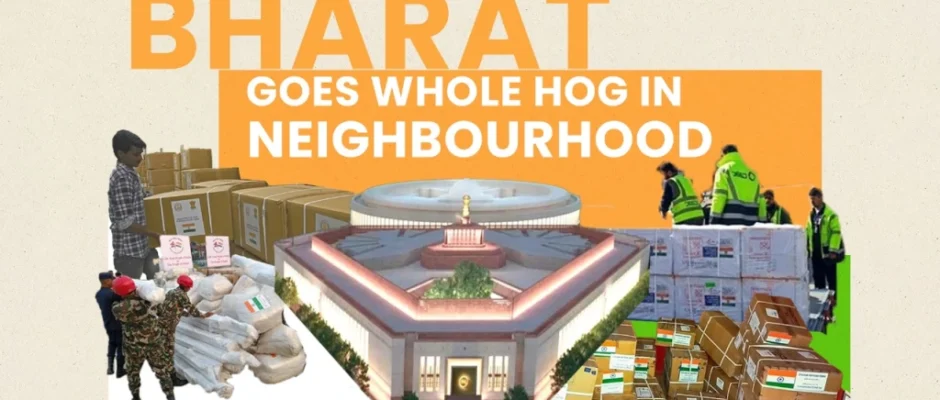
Bharat Goes Whole Hog in Neighbourhood

Stability, progress and growth is what Bharat seeks to achieve in South Asia through its ‘neighbourhood first’ policy Dr Divya Gupta Post-independence in 1947, Bharat pursued a regional policy based on the principle that neighbours are important to national security and a market that can contribute to India’s economic development. Given the bipolar world order that prevailed during Cold War, Bharat pursued non-alignment based on its stated global role as the third-world leader. India built her policy on the basis of “The Five Principles of Peaceful Co-existence” (Panchsheel) which was first signed on April 28, 1954 between then Prime Minister Jawaharlal Nehru and his Chinese counterpart Zhou Enlai. Panchsheel covered issues like sovereignty and integrity, territorial integrity, no mutual aggression, non-interference in each other’s internal affairs, equality, mutual benefit and peaceful coexistence. Panchsheel agreement was considered one of the significant bases for building foreign policy with immediate neighbouring countries that India pursued after independence. But, Prime Minister Nehru was particularly interested in building and strengthening international cooperation especially among developing countries. Indian foreign policy during that period had focused more on international relations than neighbourhood relations. After end of Cold War, India made significant adjustments in her foreign policy framework owing to international, regional changes and internal challenges. Over the years, India has gradually come to occupy a significant role on strategic chessboard within the region and the world. A person who thought ahead about close relationship with neighbouring countries was former Prime Minister Inder Kumar Gujral, known for his Gujral doctrine, a policy orienting the relationship between India and its neighbours. Gujral doctrine was a policy that sought friendship based on sovereign equality and non-interference with “non-reciprocal magnanimity” towards smaller countries such as Bangladesh, Nepal, and Sri Lanka. The incumbent Prime Minister Narender Modi has formulated, followed and executed “neighbourhood first policy” in letter and spirit with respect to our immediate neighbours including Afghanistan. Essence of this policy is the desire to effectively contribute to the construction and architecture to establish a stable foundation of peace and cooperation in South Asia in particular and Asia in general as a responsible, stable and large country. Narendra Modi expanded the matrix of his foreign policy framework, took new line showing distinct imprint in his policies. He formulated his foreign policy doctrine (Modi doctrine) and introduced new pillars of India’s foreign policy (Panchamrit) including five pillars: dignity, dialogue, shared prosperity, regional and global security, cultural and civilization linkages aimed at affirming India’s position as a rising power in the world. During high-level discussion at 69th session of United Nations General Assembly in September 2014, Prime Minister Modi said, “The destiny of a country is linked to its neighbourhood. That is why my government has placed the highest priority on advancing friendship and cooperation with neighbours” (Modi 2014). He argued that “neighbours are the number one priority” which is considered a bright spot in India’s foreign policy. India’s ‘Neighbourhood First policy’ guides its approach towards management of relations with countries in its immediate neighbourhood, i.e. Afghanistan, Bangladesh, Bhutan, Maldives, Myanmar, Nepal, Pakistan and Sri Lanka. The policy is based on the idea that a stable and prosperous neighbourhood is essential for Bharat’s economic and security interests. The Neighbourhood First Policy is also part of Bharat’s larger vision of becoming a leading power in the region and world. India’s Neighbourhood First policy can also be seen as a manifestation of Modi government’s vision of building ‘Vasudhaiva Kutumbakam (the world as one family). Vaccine diplomacy and development assistance based on mutual respect and equal partnership are two most important pillars to catapult India’s Neighbourhood First policy[i]. Vaccine diplomacy has been seen as pragmatic response to a global pandemic and way to strengthen its image as a responsible leader at both regional and global levels. Noteworthy, Indian diplomacy, particularly during the Covid-19[ii] pandemic, resulted in India being recognised ​​on the world stage as a harbinger of hope providing necessary help to needy nations and their people globally. As part of India’s Neighbourhood First policy, India, through its vaccine diplomacy (Vaccine Maitri)[iii], extended help to many countries of the world and neighbouring countries during the Covid-19 pandemic. Also, and notwithstanding that India was affected very badly, particularly during the second wave, India handled the situation very well to overcome the worst effects of the pandemic relatively, and at the same time, help other countries to address the challenge. Primary beneficiaries of Vaccine Maitri in South Asian region are Bangladesh (Rs 22.5928 million in total supplies in the form of commercial and grant assistance, followed by Nepal (Rs 9.499 million); Sri Lanka (Rs 1.2640 million); Afghanistan (Rs 1.4680 million); Bhutan (Rs 0.55 million) and Maldives (Rs 0.312 million). India committed $10 million to South Asian Association for Regional Cooperation (SAARC) Fund to address the global pandemic. Keeping with the spirit of Vasudhaiva Kutumbakam, India is providing support to Afghanistan and Sri Lanka to address their myriad challenges through its development assistance initiative. Since the Taliban assumed charge in Afghanistan, India supplied wheat and other essential food items and Covid-19 vaccines as humanitarian aid to Afghanistan. In its budget for 2022-23, India allocated Rs 2,000 million as development assistance to Afghanistan. Apart from this India also provides financial assistance to neighbouring countries through Lines of Credit (LoCs), Grant-in-aid, Credit Facility, Currency Swap Facility and others. India has extended four Lines of Credit worth US $ 7.862 billion to Bangladesh under Indian Development and Economic Assistance Scheme (IDEAS). India also supports Bangladesh in several developmental and infrastructure projects across sectors such as roads, highways, railways, ports, power transmission, waste management, economic zones, information and communication technology, solar power generation etc. India has also provided Rs. 45,000 million as development assistance for 12th Five Year Plan (November 2018-October 2023) to Bhutan. India has extended five LoCs totalling to US $ 1.33 billion[iv] to Maldives including assistance to Greater Male Connectivity Project. India has provided budgetary support to Maldives. In September 2020, India offered US $ 250 million in financial assistance to Maldives to mitigate the impact

Read More

Has Economic Inequality Risen in Bharat?

World Inequality Lab report methodology, databases deployed are questionable & biased. It does not stand rigour of academic scrutiny. Chaitanya Khurana Over past several years, Bharat has made remarkable progress in ending poverty and hunger. In July 2023, United Nations has said that 415 million people have been brought out of extreme poverty within just 15 years spanning from 2005 – 21. These numbers were mentioned in absolute as part of global multidimensional poverty index which was released by United Nations Development Programme (UNDP), Oxford Poverty and Human Development Initiative (OPHI). Surjit S. Bhalla & Karan Bhasin, renowned commentators on poverty and economic issues recently reviewed latest official consumption expenditure data for 2022-23 which has shown an unprecedented reduction in rural and urban inequality. The inference from this latest released official data is that Bharat has achieved a remarkable feat of ending extreme poverty and there are suggestions for upward revision in poverty line and redefining existing social protection programmes for better targeting of beneficiaries so that few people who might have been left behind are uplifted. On the contrary, World Inequality Lab report, “Income and Wealth in India, 1922-2023: The Rise of the Billionaire Raj” (Pikketty et al, 2024) has made some claims that may not be tenable as per data points available in public domain. As per World Inequality Lab report, inequality levels declined post-independence but after early ‘80s, income and wealth inequality spiked and increased at rapid pace from early 2000s. The report claims that in terms of Income and Wealth, India’s top one percent holds 22.6 per cent and 40.1per cent respectively. The report added that India’s top one percent holds the highest income and wealth as against their peers in any other country and higher than South Africa, Brazil and USA. This is not the first time that Western Think Tanks and self-proclaimed intellectuals tried to defame India’s rising economic growth and success the country had in uplifting its poor. They seem to harbour unfounded fears in Bharat’s rise, dominance as an economic power and leader of the changing world order. The report has so many flaws and deficiencies that it may not stand academic scrutiny of its Data and methodologies used. On both the metrics, World Inequality Lab is flawed and found deficiencies. This whole analysis regarding Bharat’s wealth inequality is more propaganda and less of reality. First limitation in the World Inequality Lab arises out of combining data sets. Usually, Different databases use different methodologies to collect and estimate data. It is not an acceptable academic practice to combine two datasets just for the sake of an analysis. For instance, the report uses forecasting techniques of interpolation and extrapolation which can give you biased and inconsistent results as these are estimates and forecasts, not actual data. Instead of using latest consumption expenditure data, the study uses Generalized Pareto interpolation techniques for extracting which in itself shows that the data has been generated which can be inconsistent and biased because all forecasting techniques have limitations. The two datasets PLFS and HCES used in the report are not comparable so therefore claims of rising inequality are false. The reliance on PLFS data of the past which has been red flagged by India, International Labour Organization and giving this information in the footnote explains the hidden agenda. Secondly, tax collections database cannot be the basis to justify its claim on rising inequality. Higher tax collections imply that over the years, tax compliance has become better, more and more people are coming into the tax net with taxable incomes. Taking the tax database from 1920 and concluding that top one per cent earned less before 2010 and 1990 eras pre-supposes uniform tax compliance over the years which is absolutely false. Thirdly, focus of the authors was solely on top one per cent income earners in India. Over past many years, many foreign think tanks and intellectuals have had problems with Indian billionaires but if the billionaire was from a western developed economy, then it is not a crime. The report has cherry picked top one per cent earners and ignored emerging middle class that expanded considerably over past many years and constitute 31 percent of the population. Fourthly, the report has attempted to focus on perceived inequality aspect which is a very uni-dimensional approach to poverty. Many development economists now use multi-dimensional poverty index (MPI) to measure poverty and inequality which is more appropriate for analyzing the reduction in poverty for any country. Niti Aayog’s report on MPI has shown that 248 million individuals in India have overcome multi-dimensional poverty between 2013-23 and this holds greater significance for the typical ambitious Indian than count of billionaires in the nation. Reduction of Poverty is the ultimate goal and reduction inequality is its consequence.  Fifth, the Report considers market capitalization or stock market wealth as part of net wealth. This is a very debatable assumption which has been considered in the report. Top one percentile income earners’ companies are listed on the stock market and with their valuations increasing related stock prices on the boom, suggestion has made that it translated to higher wealth for these income earners. On the contrary, if the stock prices fell and valuations dipped, their wealth would decrease and inequality shrinks. Taking this as a parameter to comment on India‘s inequality is completely inconsistent with good academic data driven rigor. This is not the first time that Piketty’s work has been criticized by economists and related commentators for its use of erroneous methodologies and inconsistent results.  Geloso, Magness, Moore and Schlosser wrote in 2003 that in the Paper titled.  “How Pronounced is the U-Curve? Revisiting Income Inequality in the United States, 1917–60”, inequality for United States of America has been overstated. Hence, the Inequality Lab report does not stand academic scrutiny, inconsistent and flawed with its methodologies and results which shows that this is just propaganda and nothing more. (Author is a doctoral scholar in finance at Indian Institute of Management, Indore)

Read More

Bharat’s Civilizational Democratic System Has Evolved!

Methodological inaccuracies & biases adopted by V-Dem apart from experts enlisted to evaluate Bharat’s democratic credentials is questionable Pummy Pandita The encroachment of selective and biased methodologies into the arena of international rankings and surveys has raised serious questions about their integrity. Far from being an anomaly, this issue permeates a broad spectrum of indices. Among them, the Varieties of Democracy (V-Dem) Institute’s eighth annual report on democracy, entitled “Democracy Winning and Losing at the Ballot.” Purportedly known for its deep dive into state of democratic governance around the globe, this report seeks to provide an exploration into complex dynamics of democracy in various nations, with India receiving particular emphasis. India, the world’s largest democracy, stands at the forefront of discussions on democratic health and vitality. The nation’s democratic journey is distinguished by its commitment to regular electoral engagement, a robust multiparty system and a steadfast embrace of diversity and pluralism. Yet, V-Dem’s labeling of India as “one of the worst autocratisers” casts a long shadow, provoking thorough scrutiny of the methodologies and criteria V-Dem employs. Such a characterization not only stirs discussion but demands a more nuanced understanding of the factors influencing these assessments. As observers and analysts scrutinize these rankings, the debate underscores need for transparency and rigour in evaluative methodologies employed by V-Dem and other indices around the world. Alarmingly, implications of such rankings extend far beyond mere numbers; they significantly influence a nation’s access to resources, financial implications, opportunities, and its global reputation. Consequently, when integrity of these methodologies is called into question, it can precipitate disagreements, escalate into diplomatic strains, or necessitate shifts in policy. Varieties of Democracy Institute, anchored at University of Gothenburg in Sweden, stands as the source behind V-DEM rankings. This report includes a suite of indices such as Liberal Democracy Index, Electoral Democracy Index, Liberal Component Index, Egalitarian Component Index, Participatory Component Index, and Deliberative Component Index, each contributing to a understanding of democratic health and governance globally.  The methodology and approach adopted by V-Dem Institute have raised considerable concerns particularly in their evaluation of India’s democratic credentials. A detailed scrutiny of indices and sub-indices utilised by V-Dem reveals a mixed picture: India scores well on objective measures such as the proportion of the population with voting rights and the percentage of direct popular votes. However, a noticeable decline is observed in areas heavily reliant on ‘expert opinion.’  V-Dem’s reliance on “innovative methods for aggregating expert judgments” to derive “valid and reliable estimates” for concepts that are inherently challenging to observe is a point of contention. The field of social science research is well-acquainted with the biases and limitations inherent to such methodologies. Despite this, V-Dem’s acknowledgment of potential biases in its operations appears cursory at best, quickly passing the buck to ‘experts’ and claiming to mitigate these biases through a so-called ‘measurement model’. This approach raises questions about the institute’s commitment to academic rigour, as it seems to prioritize self-promotion over methodological integrity. The transparency and accountability of V-Dem’s evaluation process are also under scrutiny. The institute reportedly relies on around roughly 25 “Country Experts” across five categories to assess each country, with the identities of most of these experts remaining concealed. This small group of experts is tasked with making judgments on the democratic status of nations, a stark contrast to the democratic ethos upon which countries like India are built. India, for its part, has established a democratic system that allows its citizens to shape their destiny through participatory elections, rather than deferring to the opinions of a select few.  Moreover, V-Dem’s approach to updating its methodologies and assumptions appears uninspiring. While it claims to regularly review its methods, actual adjustments are made only “occasionally.” Criticisms from countries in the Global South, which highlight the biases and ideological leanings inherent in V-Dem’s methodologies, have been persistent. These critiques often point out the alignment of such evaluations with the interests of influential figures and the lack of significant efforts by V-Dem to address or amend its flawed methods. This ongoing resistance highlights not only concerns about the transparency and accuracy of V-Dem’s methodology but also about the competence and intentions behind the reports it publishes. The portrayal of democratic performance in V-Dem’s reports also seems to echo a familiar narrative found in Western literature and analysis, where Western nations—primarily the United States, Canada, Europe, and Australia—are consistently depicted as outperforming the rest of the world. This narrative perpetuates a simplistic and often misleading view of global democratic landscapes, further complicating the trust and validity of such assessments. The persistent reluctance of V-Dem to revisit and revise its evaluative processes suggests a deeper problem than mere methodological transparency. It hints at a fundamental disconnect between the institute’s proclaimed objectives and its operational ethos. This steadfast adherence to a disputed methodology, in the face of widespread critique, underscores a concerning lack of competence or, more troublingly, suggests potential ill-intentions behind the production of these reports. In conclusion, the approach of the Varieties of Democracy (V-Dem) Institute towards evaluating global democracies, with a notable focus on India, underscores a deeply troubling confluence of methodological shortcomings and apparent biases. While V-Dem positions itself as a standard-bearer of academic integrity, leveraging innovative methods and expert judgments, its persistent neglect in addressing and amending the inherent biases within its methodologies significantly detracts from the trustworthiness of its evaluations. This steadfast stance not only erodes the credibility of its reports but also casts doubt on the objectivity and underlying motives of the institute. Particularly glaring is V-Dem’s indifference towards engaging with the sustained critiques from countries across the Global South, which points to a broader disregard for the multifaceted expressions of democratic governance beyond the Western paradigm. The institute’s assessments of India bring these issues into sharp relief, highlighting a potential bias and even anti-India sentiment that seems to overshadow the nation’s democratic achievements and complexities. India’s democratic journey, marked by its vast electoral processes, dynamic multiparty engagements, and commitment to pluralism, stands in stark

Read More

Bharat, An Evolving, Chaotic but Vibrant Democracy

From being ‘gana rajyas’ to going high-tech in campaigns & voting, Bharat has covered huge space and willing to experiment with spiritual democracy Dr Aniruddh Subhedar Like people, nations too have a distinct nature, character and history of their own. Bharat is no exception to this and has its own uniqueness in all these three aspects. Studying Bharat diligently and objectively, one will find that ideal of democracy and freedom to choose leaders has been ingrained in her ethos since times immemorial. No doubt the modern democratic institutions of Bharat took their form after British colonization but roots of democracy in Bharat are as old as it gets. When Greece was enjoying its city states, in Bharat there were Gana-Rajyas. Ganas means the people making up a state and Gana-Rajya translates to “rule of people”. Scholars tell us that even before Gana-Rajyas, during evolution of Bharatiya civilization, in Vedic period we find existence of assemblies like Sabha, Samiti and Vidath, which used to administer people and whose leaders were elected by the people only. The Ganas were basically units as cohesive as families or clans. Later when monarchy became the norm in Bharat, it was not too far away from this basic ideal. The word ‘praja‘, which means people / subjects, literally translates to ‘offspring’ or children. In essence, Raja (King) was supposed to take care of his people as his own children. And, even during that era of monarchy, at the village level panchayats or village assemblies, usually made up of community elders, were thriving in Bharat; respected and accepted by the State. Therefore, transition to modern democratic political setup was not too hard for Bharatiyas. As soon as Bharat freed itself from colonial clutches, it made universal adult franchise one of the defining characteristics of its political system. In Letter & Practice In modern times, democratic ethics are too well entrenched in Bharat’s polity in letter and practice. Preamble of Bharat’s Constitution pledges to constitute the country into “a democratic republic”. Free and fair elections are bedrock on which this democratic systems stands upon. The Constitution ensures that there is a permanent and independent body- ‘Election Commission of India’ (ECI) which has the power to control and regulate elections to parliament, state legislatures, office of president and vice-president. Measures relating to elections are so stringent that once ‘Model Code of Conduct’ is implemented by the Election Commission, the government is prohibited from making any announcements or policy decisions that could potentially influence people’s voting choices. This means government cannot start any populist scheme and even government bodies cannot start any recruiting process. Provisions of Constitution are not a dead letter. In fact, it’s followed quite strictly. General elections in Bharat are not some run-of-the-mill affair; it is of gigantic proportions. General elections in 2024 Bharat will be the largest exercise ever in the world surpassing even the one held in 2019. Total 90 million people are eligible to vote in this election. It will be the longest-held general election in Bharat (except for the first general election of Independent Bharat in 1951-52) spanning over 44 days. One of the reasons Bharat’s democracy has endured test of time is the seriousness about voting rights and fair elections. Otherwise in Bharat’s neighbourhood there’s hardly a country which can pride itself as a true democracy. In fact, in Bharat’s west, it is hard to find a truly functioning democracy till one crosses the Middle-Eastern countries. Being one of the most populous and diverse countries in the world, Bharat plays a major role in ensuring that democracy and human rights are secure in South East Asia. Bharatiyas take their right to vote seriously and don’t like anyone meddling with it. The closest Bharat came to dictatorship was during 1975-77 emergency imposed by then Prime Minister Indira Gandhi. But what preceded and followed this 21-month stint with dictatorship is worth mentioning here. Among the other reasons, the immediate cause of Indira Gandhi implementing emergency was that the courts concluded that malpractices were used in her election and declared it as null and void. Indira Gandhi paid the price for imposing the Emergency when she and her party Congress were wiped out in elections post-emergency. Interestingly enough, she was re-elected by the people again and later her son Rajiv Gandhi won highest number of seats in Bharat’s political history owing to sympathy wave caused by Indira Gandhi’s assassination by Khalistani terrorists. It shows that Indira Gandhi always had a political stature but even Prime Minister of her standing wasn’t spared by Bharatiya people when she tried to curb their freedom. Credibility of Election Process Given the vast geographical area and size of the electorate, ECI has modernized the process by using Electronic Voting Machines (EVMs) for polling and counting votes for more than two decades. Making the process more credible and faster, EVMs were first used in 1980s, and they are used in general elections since 2004. In 2017 many Opposition parties like Congress, Bahujan Samaj Party, Aam Admi Party harboured doubts on credibility of EVMs after they lost elections in some states. It was alleged that BJP is tempering with EVMs. The allegations went as bizarre as claiming that EVMs (a self-contained, stand-alone machine, lacking any networking capability) is being hacked via internet. A leader of AAP even brought a machine to the Delhi Assembly which looked like EVM and demonstrated how it could be hacked. All this hullabaloo was silenced when in May-June 2017 the ECI invited these parties and gave them the real EVM to prove that it could be hacked. Parties like AAP did not even participate in the challenge, while other two other parties, CPI (M) and NCP, who sent their representatives said that “they just came to understand how EVMs work”. Even without going into technical know-how the allegations against EVMs could be easily dismissed by looking at the fact that even in these 2017 elections, BJP lost in Punjab and Congress won. AAP won Punjab state

Read More

China Spins Jingoistic Narrative

Bharat hits back on Chinese Communist Party’s false claims on Arunachal Pradesh. Global community including US recognize the dragon ploy. Rohan Giri There’s something innate in China that cannot change. It’s in its DNA to encroach on others. As part of its grand plan to usurp others land, properties and expand its hegemony, China and its ruling Communist Party of China (CPC) have tasted success in few areas while they eagerly look at grabbing neighbours’ territories. Tibet is one area where Chinese Communist Party has had large success in altering names of places, assert control on large swaps of land and change, culture, languages and life of ordinary citizens. Through coercion, China constructed certain structures to also advance on its border regions through coercive means. Similar attempts have been made with Bharat’s territories especially Arunachal Pradesh to assert its dominance in the region. Communist Party of China and its life time General Secretary Xi Jingping announced Chinese names to places in and around Arunachal Pradesh. Latest in the Chinese ploy of old and deceitful rhetoric is evidenced by statements made by People’s Liberation Army’s Senior Colonel Zhang Xiaogang, spokesperson for Chinese Defense Ministry. By intention, he claimed that southern region of Xizang, the Chinese nomenclature for Tibet, was integral component of China’s territory.  This was obvious reference to Arunachal Pradesh which China thinks is its own territory. Chinese Defense Ministry raked up the bogey on Bharat’s north-eastern state of Arunachal Pradesh after Sela Tunnel was constructed to enhance civic and military connectivity and capabilities in the state. The latest overtures by China expose the Chinese Communist Party ploy to initially seize Tibet and subsequently move in on Arunachal Pradesh. Bharat along with 17 other countries, mostly neighbours, has experienced adverse consequences of persistently making unsubstantiated claims by Chinese Communist Party. Henry McMahon, then foreign secretary of Britain drew an 890-km border between Bharat and Tibet in 1914. Arunachal Pradesh was formerly referred to as North Eastern Frontier Agency before the establishment of the McMahon Line. On one side of McMahon, Tibet existed as an autonomous region while on the other Arunachal Pradesh was an Indian state. Chinese communist party falsely maintains that Tibet is one component of China and refuses to acknowledge this demarcation. China’s aspirations for territorial expansion had begun to gain momentum at this point. The act of manipulating maps to include some regions of Bharat has been observed since ancient times, hence its innate to its nature. Bogus claims of Chinese communists were undermined when Japanese forces launched an invasion of Arunachal Pradesh, north-eastern state of Bharat during Second World War. Additionally, emergence of Chinese expansionism posed an enormous threat to Bharat’s territorial integrity. During that period, the British-led Indian Army provided protection to Tawang of Arunachal Pradesh. Bharat has had consistently maintained a firm stance against China’s claims and Arunachal Pradesh residents have historically rejected  China’s expansionist aspirations and unsubstantiated assertions. Latest PLA statements on Arunachal Pradesh have come after Chinese Communist Party misleading names of 11 locations in Arunachal Pradesh. In addition to expressing their outrage, local populace actively engaged in peace marches on the roads, demonstrating their opposition to China. The protesting people were holding placards that read, “We stand by India” and “Arunachal is not part of China.” The posters in their possession had the message, “Don’t we know… How China is oppressing the people of Tibet and is always engaged in looting it? At any cost, we would not like the condition of Arunachal Pradesh to become like that of Tibet…” Individuals hailing from Arunachal Pradesh, holding tricolor flags, asserted that similar demonstration were held when China changed the names of six locations in 2017 and 15 locations in 2021. The misleading names were in the Chinese and Tibetan languages. In 2023, the controversy over stapled visas gained attention as Indian Wushu players were granted such visas by China. New Delhi-based think tank Center for Integrated and Holistic Studies, at that time, had reported that the “Stapled visas incident is seen more as one step further in China’s grand expansionist plan and communist vision to occupy others’ land disregarding international treaties, pacts and ‘gentlemen’ agreements to not change on-the-ground goal posts. Only way to put an end to this psycho-warfare like stapled visas is to firmly retake ‘Aksai Chin’ under its ‘illegal’ occupation since 1950s and held after the 1962 war.” Bharat and its government always said that Arunachal Pradesh was, is, and will remain integral to the country. China’s illegal expansionist strategy extended much beyond Arunachal Pradesh, Tibet, or Nepal. Countries and international communities need to be alert to such machinations and not succumb to mechanisms like debt trap, infrastructure development or other forms of avarice. (Author: Rohan Giri is a journalism graduate from Indian Institute of Mass Communication (IIMC) New Delhi, and Manager Operations at CIHS.)

Read More

Drone Didis to Revolutionize Bharat’s Farm Sector

Bharat has moved with purpose in spread of drones to revolutionize her huge farm sector that’s key to self-sufficiency model, feed 1.4 billion people and provide agriculture products and services globally. Having adopted drones consciously over last one decade, these flying objects mark significant advancement in agricultural output and modernizing farming processes. This creative plan is a big step towards using modern technology to solve long-standing issues in the agriculture sector that’s integral to Bharat’s way of life. Conventional agricultural spraying techniques that rely on physical labour or heavy gear lifting are time-consuming and less accurate in providing farm nutrients, soil supplements and water apart from spray of pesticides etc. Indian government has adopted use of drones in agriculture and related services to transform crop management and protection in light of constraints associated with physical handling of farm nutrients and pesticides. Modern spraying technology is being used on drones to cover huge tracts of fields with previously unheard-of precision and speed. These unmanned aerial vehicles are gradually taking the place of the labour-intensive and ineffective hand spraying method. Capacity of drone sprayers to reach difficult-to-get locations such as steep terrain or heavily forested areas, which are difficult for traditional machinery or labour is one of its main advantages. These drones provide optimal resource utilization and minimize waste by accurately targeting crops with necessary nutrients, herbicides or insecticides. This promotes sustainable farming practices. These unmanned aerial vehicles (UAVs) outfitted with cutting-edge sensors and GPS technology can apply pesticides, herbicides, and fertilisers with unmatched precision and speed as well. Farmers can target particular portions of their fields with drone sprayers, minimizing resource waste and lessening environmental effect. Furthermore, farmers may concentrate on other key facets of agriculture because of the effectiveness of drone operations, which saves them a significant amount of labour and time. The drone sprayer plan has been widely praised for its potential to take Bharat’s agriculture to next level. Farmers that use this technique can increase crop yields, maximise resource usage and help improve their standard of living. Drone usage also supports India’s commitment to sustainable agriculture which lessens negative consequences of conventional farming methods while boosting eco-friendly solutions. Use of drone sprayers is expected to help millions of Indian farmers with a number of urgent problems. The advantages are numerous, ranging from lowering danger of chemical exposure for workers to minimizing environmental contamination brought on by overuse of pesticides. Furthermore, farmers benefit greatly from the increased efficiency that drones provide in terms of cost savings which eventually strengthens their financial security. Nonetheless, there are certain drawbacks to drone technology’s broad use in agriculture. Concerns including licensing processes, legal frameworks and cost must be addressed to guarantee easy integration and accessibility for farmers from a range of socioeconomic backgrounds. Policymakers, technology companies and other agricultural stakeholders must work together to tackle these challenges. The broad use of drone sprayers can be facilitated by cooperative projects that provide financial support, training and awareness-raising which could spark a paradigm shift in Indian agriculture. Most stakeholders in the farm sector will have to work in unison to adopt drones like other technologies. With the drone sprayer plan, Bharat is demonstrating its commitment to using innovations for sustainable development as it sets off on this revolutionary journey. In several other sectors as well, drones are being increasingly deployed to deliver pharmaceutical products and tackle life threatening emergency situations. India is positioned to usher in a new era of agricultural prosperity by embracing technology-driven solutions, empowering farmers, and promoting economic growth while protecting the environment for future generations. Drones for farm development Thanks to development of drone technology, India’s agriculture sector has undergone a spectacular revolution in recent years. These unmanned aerial vehicles are strong instruments that are changing how farmers manage their crops and nurture their land; they are not just futuristic gadgets. Drones have made a major contribution to Indian agriculture in the form of crop monitoring and management. Drones with cutting-edge cameras and sensors fly over huge stretches of farmland, taking high-resolution pictures that provide vital information on crop health, insect infestations, and soil conditions. With the use of this real-time data, farmers are better equipped to optimize their techniques for fertilization, irrigation, and pest management, which ultimately increases yields and minimises resource waste. Drone technology is also revolutionising farming techniques nationwide with precision agriculture. Drones optimise production by precisely directing inputs such as insecticides, fertilisers, and water, hence reducing waste and negative environmental effects. This accuracy is crucial for maintaining sustainable farming techniques for future generations in a nation where agricultural resources are becoming scarce. Drones are also excellent at large-scale mapping and surveying, giving farmers access to precise land-use surveys and maps. Better land management, crop selection and resource allocation are made possible by this capacity, which is especially important in India’s several agro-climatic zones where soil conditions vary greatly. Drones have advantages over traditional farming methods. Drones prove to be invaluable in hard-to-reach areas where conventional machinery is unable to operate. These flying marvels bridge the gap between farmers and their fields with their unprecedented efficiency and accessibility, whether they are monitoring crops or delivering necessary supplies. Drones are also essential for disaster management since they can quickly assess crop damage following natural disasters like floods or droughts. Drones minimize losses and aid recovery process by facilitating rapid response measures through the provision of precise and timely information. Overall, drone technology has the potential to revolutionize agriculture in Bharat by providing innovative solutions to challenges faced by farmers and enhancing efficiency and sustainability of agricultural practices.  However, coordinated efforts are required to guarantee affordability, accessibility and appropriate legal frameworks in order to fully reap its benefits. Drone technology has the potential to take Indian agriculture to new heights of wealth and sustainability if given the proper backing and funding. Drone Didis to helm farm reforms Under the ‘Namo Drone Didis’ scheme announced by Bharat’s government on November 30,  women in 15,000 self-help groups would be trained and

Read More

India to turn third largest economy sooner!

Turmoil in UK, Germany & Japan, churn in US and China may not impact Bharat’s plans but global headwinds cannot be wished away K.A.Badarinath Three significant developments were reported in last couple days. All the three relating to economy are intrinsically linked and have long lasting impact globally. Japanese economy contracted for two consecutive quarters ending 2023 and reported recession. Embattled United Kingdom has also officially shifted into recession hit zone after last two quarters of 2023. This has had its immediate impact. Japan moved to fourth position in global economic sweepstakes while Germany moved up the rankings to third place. All these were prominently reported in last two days thereby leading to questions on Indian economy’s future as we head for another Lok Sabha elections in next two months. Firstly, United Kingdom moved from stagnation to recession after economic contraction of 0.1 per cent (July – September 2023) and 0.3 per cent (October – December 2023). Loss of appetite for goods and services leading to negative consumer sentiment and political slugfest between Tories and Labour ahead of this year’s elections contributed to the recession that Bank of England and analysts prefer to term as ‘technical’. Prime Minister Rishi Sunak however is gung-ho   about the prospects going forward. Secondly, the curious case of Japan needs significant explanation. Aging population, Negative growth in its numbers for nth year, scarcity of workers impacting output to Yen’s valuation vis-à-vis the US greenback have been identified as major factors. Japan’s economy shrank by 3.3 per cent (July – September 2023) and 0.4 per cent in October – December 2023. Yen depreciation has impacted valuations across the spectrum. During last one year or more, Yen has reported depreciation of 20 per cent against major currencies while its 30 per cent against US dollar. On October 20, 2022, Yen slipped to its worst levels at 150 as against US $. In the last one week, it has been hovering around 104.7 – 105 against the US dollar. Yen depreciation vis-à-vis US dollar is significant given that Japan imports big from United States both food and energy products. Thirdly, Germany moving in as third biggest economy at $ 4.55 trillion as against $ 4.19 trillion of Japan is significant for more than one reasons. While Yen’s continued depreciation played a big part in Japan’s GDP, Germany’s performance on economic front has been modest while dealing with its labour issues, human resources shortages and euro valuations. German economy has had contracted by 0.3 per cent in 2023 while analysts expect a modest positive growth of 0.3 per cent in 2024 followed by 1.2 per cent in 2025. Trade driven recovery may be expected in Germany. But, fingers are crossed given the demand slump internationally and production woes in Germany. There’s a fourth factor that’s discussed intermittently and rather in subdued voices. US, the largest economy, seems to have avoided recession in 2023 with a soft landing and there’s likelihood of slipping into contraction mode this year. Some do suggest that US economy was already on decline owing to high inflation, retail prices though officially there’s no word on it as of now. Fifth big factor is China that has gone through a lot in last several months over a year. Chinese economy, the second largest globally, may expand by 4.6 per cent in 2024 and 4 per cent in 2025. Where does it leave the dragon economy in the Year of Dragon that foresees everything good? Protracted Covid related restrictions have subdued the Chinese economy under President Xi Jingping though officially the economy expanded 5.6 per cent in 2023. International Monetary Fund does not believe these figures and it has its own data points that estimate a much lower expansion. In this backdrop, what happens in India will be more than interesting to watch for both Indians and global populace looking for a straw of support in their struggle to counter the global downturn on economic front. With El Nino receding and monsoon forecast being very positive, India will continue to be the ‘brightest star’ with 6.5 – 7 per cent growth. Apart from being the fastest growing economy, India induced expansion is bound to keep the tide on positive side globally. However, global headwinds cannot be wished away. Russia and Ukraine war is not coming to an end any time now while the second bloody conflict between Hamas and Israel gets only worse. Shipping lines on international waters especially in the Red Sea are impacted thereby safe movement of vessels has been constricted. Also, Reserve Bank of India (RBI) has established its own track record, worked independent of Federal Reserve and European Central Bank on the monetary policy issues. Continued strong domestic consumption, expansion in goods & services output coupled with healthy capital inflows – both domestic and foreign – will only keep the Indian economic wheel on even keel. In this backdrop, stable and strong political dispensation lends strength to argue that overtaking both Japan and Germany to become third largest economy globally by 2027 or a wee bit earlier is credible. Prime Minister Narendra Modi has promised within and outside Parliament that Bharat will be third largest economy in his third term with over $ 5 trillion valuation. Strong fundamentals and resilient economic order coupled with a reformer in Prime Minister Modi would help hasten the process. If global upturn happens in next few years as estimated by some economists, then India’s place under the Sun is assured sooner than later. (author is Director & Chief Executive with New Delhi based non-partisan think-tank, Centre for Integrated and Holistic Studies)

Read More