CIHS – Centre for Integrated and Holistic Studies

Date/Time:

Hindu Genocide Unfolding in Bangladesh

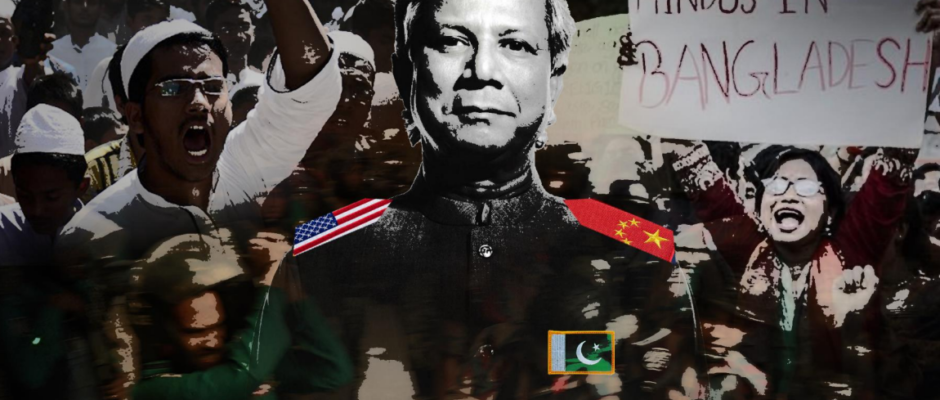
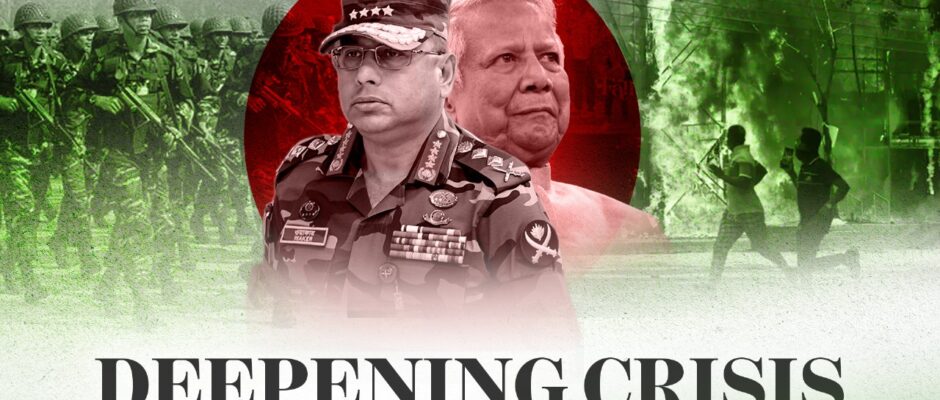
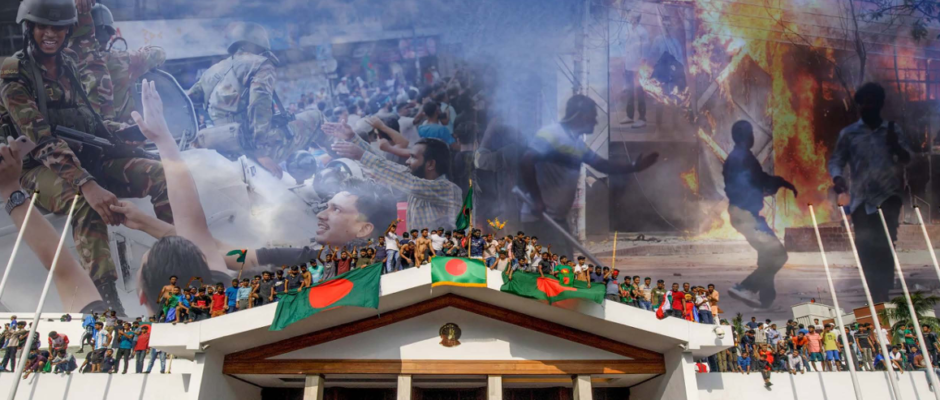
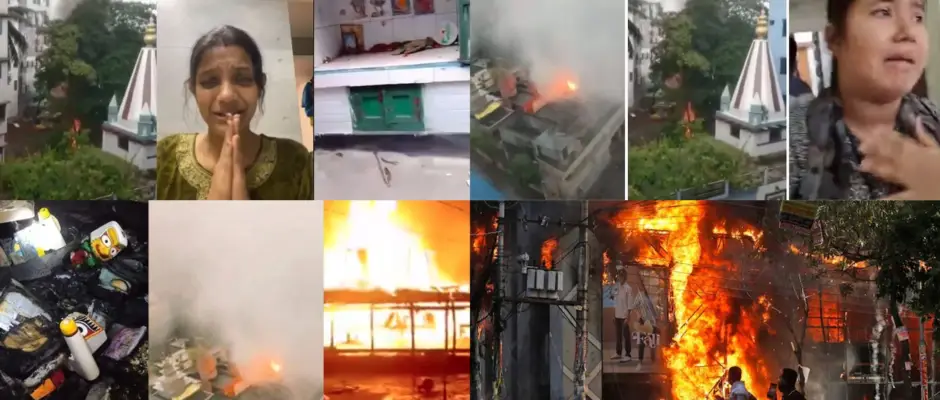
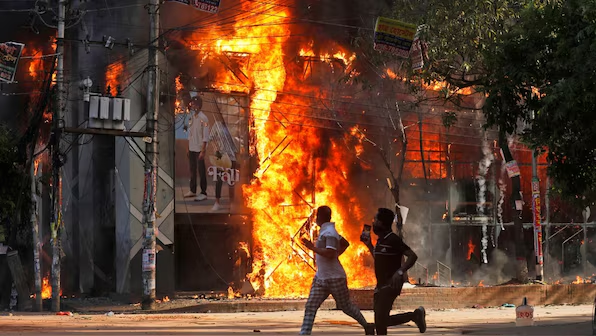
Hindus, Buddhists, Jains and Christian bear brunt of unprecedented violence unleashed by uncouth Islamists & their handlers. Rahul Pawa Today, Bangladesh faces critical juncture as Prime Minister Sheikh Hasina resigned amidst escalating unrest with an interim government now set to take charge under the military’s supervision. This comes as the country is engulfed in violence with the Hindus and other minority communities bearing brunt of what is rapidly becoming genocide of unimaginable proportions. As the world watched Bangladesh in horror, a systematic campaign of terror was fueled by Islamist extremists’ targeting Hindu homes, businesses, temples and lives. The unrest that began in June over a government job quota system has spiraled out of control. Initially seen as a movement for fairness, the protests quickly devolved into a pretext for Islamist factions including Jamaat-e-Islami, Hefazat-e-Islam and Jamaat Shibir to launch brutal attacks against Hindu and other minority community. The violence has been widespread and systematic: in Moulvibazar, the Notun Kali Temple was desecrated and Hindu homes were set ablaze displacing most families. In Chittagong’s Hajari Goli, Sri Krishna Temple was attacked and mobs attempted to break into Hindu homes specifically targeting families with young girls. These are not isolated incidents but part of a coordinated effort to annihilate Hindus in Bangladesh. Strikingly, the violence against Hindus in Bangladesh bore hallmark of genocide under international law. Genocide is defined as acts committed with the intent to destroy, in whole or in part, a national, ethnical, racial, or religious group. The targeted killings, such as the murder of Hindu police constable Suman Kumar and lynching of Hindu Awami League leader Haradhan Roy and his nephew are clear indicators of a calculated effort to eliminate this minority group. Furthermore, systematic attacks on religious sites including ISKCON and Kali temples and destruction of Hindu homes and businesses point to an organised campaign with genocidal intent. This is not random violence but sheer number of incidents reflects deliberate and coordinated effort to eradicate Hindus from Bangladesh. It is pertinent that the international community must recognize these signs and act before it is too late. For those closely monitoring events in Bangladesh, rapid spread of violence against Hindus following military takeover comes as no surprise. Bangladesh Army Chief held meetings with Jamaat-e-Islami and Hefazat-e-Islam leaders. But, there’s not a word on organised targeting of Hindus. The message is univocally clear, Hindus in Bangladesh are now under siege. In Feni Bash, Parsta Hindu Temple was attacked while riots have engulfed Hindu areas nationwide. In last two days, Islamists murdered two Hindus in Rangpur town and three more were killed by Jamaat Shibir protestors. Entire families have been wiped out, leaving survivors in fear and despair as Hindu temples, homes and businesses are systematically destroyed. The international community cannot remain passive while an entire population is being targeted for destruction. Moreover, Pakistan and China’s involvement in this crisis adds a dangerous dimension to the violence. Both nations have a vested interest in destabilising Bangladesh, and by backing Islamist factions like Jamaat-e-Islami, Hefazat-e-Islam, and Jamaat Shibir, they are advancing their geopolitical agendas while exacerbating the humanitarian crisis. Pakistan, known for supporting Islamist extremism and terrorism, has reportedly provided financial and logistical support to these extremist groups. China, leveraging its influence in the region, has further destabilised the situation, turning a blind eye to the atrocities committed against the Hindu population. This geopolitical strategy has made the situation far more complex, demanding global attention. The violence in Bangladesh is not merely an internal issue; it is part of a broader strategy that threatens the lives of millions of innocent people. The involvement of these two nations must be scrutinised and they should be investigated for their role in this unfolding genocide. The global community, including the United Nations, human rights organizations, and nations that believe in democracy, especially India, the regional super-power must take immediate action to prevent further atrocities. Diplomatic pressure should be applied to ensure the protection of Bangladeshi citizens, and an independent investigation into the crimes against Hindus must be initiated. The world has seen too many genocides in the past; one cannot afford to let history repeat itself. Immediate action is needed to halt the bloodshed and to ensure that justice is served for the victims of these heinous crimes. The time to act is now, before the situation escalates further and another dark chapter is written in the history of human rights violations. (Author is Director – Research at CIHS in New Delhi)

Read More

China-Pakistan Agenda in Bangladesh Protests

Violent protests by students against job quotas may have been conveniently used by Beijing & Islamabad to further their interests Rahul Pawa China, Pakistan, geo-political interest groups and international stakeholders may have muddied Bangladesh waters. They may have either directly or indirectly contributed to current wave of violent protests that resulted in 130 fatalities. These players may have conveniently used the anger against quotas for government jobs as a cover to stroke flames of dissent against Prime Minister Sheikh Hasina and her Awami League government. The current spate of violent incidents seems to have been triggered by Communist Party of China and Pakistan that have taken an adversarial position and spread discontent against Sheikh Hasina’s government. Protests erupted after Appellate Division of the Supreme Court decided on July 10, 2024 to maintain status quo on quota system intended for freedom fighters and their families for four weeks. This came after a High Court ruled on June 5, 2024 that declared 2018 government circular canceling 30 per cent quota for freedom fighter’s descendants in government jobs illegal. This sparked widespread anger among students and larger population, culminating in violent clashes and a death toll that continued to rise. Students from various universities in Dhaka united to demand quota reforms. After initial postponement owing to Eid and summer holidays, students movement resumed on July 1 with demonstrations. Students and teachers from public universities like University of Dhaka, Rajshahi University of Engineering and Technology and Jahangirnagar University, among others were soon joined by counterparts from private institutions such as North South University and BRAC University. Under the banner of Anti-discrimination Students Movement, they launched ‘Bangla Blockade’ (Bangladesh Shutdown) thereby disrupting domestic train and road transportation networks. Online activism surged with calls for “another 2018” in reference to previous quota reform movement. Subsequently, protestors call for a ‘Bangla Blockade’ intensified on July 7. As demonstrations spread nationwide, clashes with police on July 11 marked a significant escalation. Prime Minister Sheikh Hasina’s remarks on July 14, referring to Razakars (Bangladeshis who collaborated with Pakistan during 1971war) made during a press conference after her return from China coupled with the ruling Awami League’s hardened stance intensified the situation. This led to violent suppressions by Chhatra League and resulted in hundreds of injuries. The kindling for this unrest had been laid well before the court’s ruling as flames were fanned earlier this month during Prime Minister Sheikh Hasina’s visit to Beijing from July 8 to 10, 2024. The visit, intended to secure significant financial aid and strengthen bilateral ties ended abruptly, hinting at Hasina’s deep-seated dissatisfaction with the Communist Party of China (CPC). China offered only $100 million in financial assistance, a far cry from the initially promised $5 billion. Adding to the discord, Xi gave Hasina very little time as Beijing proposed a controversial ten-year re-education policy aimed at countering Islamic culture and promoting Chinese lifestyles, similar to measures implemented in Pakistan during 2010. This proposal, perceived as racist and a direct affront to Bangladesh’s cultural sovereignty, significantly strained Dhaka – Beijing relationship. The protests in Dhaka quickly escalated as protesting students and citizens voiced their dissatisfaction with reinstated job reservation quota. This policy initially abolished in 2018 reserved 30 percent government jobs for families of 1971 independence war veterans. The new quota system, viewed as unreasonable and discriminatory, exacerbated existing frustrations amid high unemployment and rampant inflation. Pakistan-backed Islamist groups such as Jamat-e-Islami, which have significantly undermined Bangladesh’s private sector, exacerbating economic challenges the country already faces.This influence, funded by the Middle East via Pakistan, has made government jobs even more sought after. The resulting volatility in the private sector has created a hostile environment, where economic grievances easily morph into political unrest. This destabilising influence was earlier evident during the violent response to the Bangladesh government’s attempt to modernise labor laws in 2018. The proposed changes aimed to attract more foreign investment by aligning local labour practices with international standards. However, Islamist groups, heavily funded by Pakistan vehemently opposed these changes arguing they would undermine Islamic values and worker rights. Jamat-e-Islami with its significant political clout mobilised large-scale protests and strikes which paralysed many sectors of the economy including the vital garment industry. This unrest discouraged foreign investment and highlighted the fragility of private sector in the face of Islamist political and religious extremism. Moreover, China’s involvement in Bangladesh’s student unions further escalates the situation. Reports indicate that CPC has infiltrated Bangladesh universities through education and student exchange programmes. Five Chinese universities in Yunnan province alone teach Bangla language and culture, sending students to Dhaka to create intelligence assets and funding channels for student wings. This strategy aims to mobilise Bangladeshi students against their own government’s policies thereby creating more space for CPC influence. Notably, student unions that staunchly defended Islam in Bangladesh remained conspicuously silent on CPC policies against Uyghur Muslims. The current situation reiterates CPC’s potential to influence and organise student protests in Bangladesh. Earlier, on April 13, 2021, students gathered at the Dhaka Press Club, demanding better arrangements from Hasina Administration for studying in China. The protest pressuring the Bangladeshi government nearly turned violent, demonstrating CPC’s influence and capability to mobilise students in Dhaka, highlighting its broader strategy of using education and cultural programs as tools of influence. Moreover, China-Pakistan nexus in Bangladesh adds another layer of complexity. Pakistani students often affiliated with Jamat-e-Islami collaborate with their Bangladeshi counterparts facilitating communication and coordination for protests. The human intelligence (HUMINT) capacity of Pakistan’s ISI has been instrumental in channeling Chinese funds to stage ongoing protests in Dhaka. Bangladeshi workers in Chinese companies are reported to have been trained to mobilise pro-China rallies as seen in 2019 when workers of Jingjiu Group in Bangladesh who were seen chanting Pro-China slogans in Mandarin. Intriguingly, CPC’s interest in Bangladesh extends beyond financial aid. Beijing aimed to establish strong foothold in South Asia leveraging its Belt and Road Initiative (BRI) aspiring to integrate Bangladesh into its economic sphere. Despite the disappointing loan offer, China has

Read More

Bangladeshi Hindus Face Religious Persecution

The book brings to fore sexual assault, rapes, extreme inhuman discrimination perpetuated by Muslim vandals on minority Hindus. Prakhar Sharma “Being Hindu In Bangladesh” is documentation of a narrative often sidelined in mainstream discourse. Authored by Deep Halder, an esteemed editor and Avishek Biswas, a seasoned professor, this publication offers first-hand account of the lives of Hindus in Bangladesh, transcending mere secondary research to provide a grassroots perspective. The book cover serves as a powerful prelude to the content within. Adorned with stark red blood sign, it commands attention and sets tone for the narrative. This imagery resonates deeply evoking visceral responses and hinting at harsh realities faced by Hindus in Bangladesh. It captures author’s experiences in Dhaka. Within the pages of this tome lie two prevailing sentiments that encapsulate plight of Hindus in Bangladesh. Firstly, there is the pervasive fear that under the rule of opposition Bangladesh Nationalist Party (BNP), the already precarious situation of Hindus would deteriorate further with murderous mobs threatening their very existence. Secondly, even under governance of the Awami League, Hindus continue to harbour concerns about their future, uncertain about what awaits them beyond the tenure of Sheikh Hasina. Halder and Biswas meticulously unravel these beliefs, presenting a harrowing portrait of challenges faced by Hindus in a predominantly Muslim nation. They delve into grim reality of unprovoked violence, where Hindus routinely lose not only their land and livelihoods but their homes and daughters to marauding mobs. These incidents, occurring year-round and predominantly in rural areas, remain obscured from journalistic scrutiny, compelling the authors to undertake a journalistic odyssey akin to war reporting. In “Being Hindu In Bangladesh,” Halder and Biswas have not only shed light on a marginalized narrative but have provided a platform for voices that often go unheard. Their work stands as a testament to resilience of a community grappling with adversity, urging readers to confront uncomfortable truths and advocate for change. “Dalit – Muslim Unity is a false Narrative” Yes, you have read it correctly. Deep Halder, the book’s author, ventured to Mandal’s house in Bangladesh, gathering evidence and first-hand information for his narrative. The book meticulously unravels the story behind “Jai Bhim – Jai Mem,” a narrative that has been romanticized over decades. Halder skilfully captures life of Jogendranath Mandal, Pakistan’s first Law Minister and a towering figure in pre-partition dalit leadership. Mandal, who opted for Pakistan over India, envisioned harmonious coexistence between dalits and muslims in newly-formed nation. However, as communal tensions escalated, Hindus began fleeing East Pakistan for India in large numbers with Mandal eventually following suit. Few in Mandal’s lower-middle-class neighbourhood now recall that this very house was host to the eminent leader during his twilight years. Mandal, disillusioned and broken, spent his final years here, perhaps reflecting on his shattered dream of Hindu-Muslim unity in East Pakistan. He passed away in obscurity in Bongaon, North 24 Parganas, West Bengal, in 1968. The house, adorned with blue windows and nondescript outer walls, is owned by Bharat Chandra Adhikary. Adhikary extended refuge to Mandal upon his return to India in 1950, offering solace to a man who had resigned from the Pakistani cabinet in despair. In his resignation letter to Pakistan’s Prime Minister Liaquat Ali Khan, dated October 8, 1950, Mandal expressed his belief that economic interests of Muslims and Scheduled Castes in Bengal were aligned. However, disillusionment with Muslim League and scepticism towards Indian National Congress and Hindu Mahasabha eventually led him to accept unpopularity of his decision to support Pakistan. Halder’s exploration of Mandal’s life and choices offers readers a nuanced understanding of complexities surrounding identity, politics, and communalism in tumultuous era of partition. Through meticulous research and poignant storytelling, Halder brings to light the untold story of a man whose ideals and aspirations were ultimately overshadowed by harsh realities of history. “Noakhali Horror” In a poignant interview reminiscent of haunting tales depicted in “Pather Panchali,” Deep Halder met with Smritikana Biswas, a 90-year-old witness to horrors of Hindu – Muslim riots in Noakhali in 1946 and subsequent atrocities in 2021 which included attacks on Hindu temples and homes. Biswas recounted a chilling memory of her father’s desperate attempt to save her sister during the 1946 pogrom, where violence threatened their village located hours away from Dhaka. It was a haunting decision but the only means to safeguard the girl. Even now, the trauma of witnessing mutilated bodies and stench of blood still lingers, as Biswas confessed to Halder, reflecting on tragic events that have left an indelible mark on her life. Each time I revisited this chapter, I found myself recoiling in horror. Through first-hand account of Purnima Rani Shil, detailed in “Horror In The Countryside,” the grim reality of plight faced by Bangladesh’s Hindu population came into stark focus. Shil’s harrowing experience on the night of October 8, 2001 where she was brutally assaulted and violated until losing consciousness, serves as a reminder of unfathomable brutality endured by countless individuals. Even worse, the perpetrators and their associates continue to torment her with incessant harassment. Why This Book is ‘Different’? What sets “Being Hindu In Bangladesh” apart from other contemporary literature is its distinctive focus on a narrative often overlooked in discussions of war and history. While numerous books delve into broader themes of conflict and violence, this publication stands out by addressing a significant gap in partition literature which has predominantly been shaped by a selective narrative favoured by left historians. Moreover, Partition of Bengal and its aftermath remain underexplored topics, lacking the attention it rightfully deserves. Authors Deep Halder and Abhishek Biswas seize the opportunity to rectify this oversight. They embark on a unique journey into lives of Hindus in Bangladesh, traversing the country to document their experiences, challenges, and broader socio-political landscape. By shining a spotlight on this overlooked aspect of history, the authors offer readers a more comprehensive understanding of complexities inherent in post-partition societies. Hindu American Foundation’s report revealing that 11.3 million Hindus have fled Bangladesh due to religious persecution

Read More

Jinnah’s Fallacy Commemorated as Pakistan’s National Day!

The Lahore Resolution, aka Pakistan Resolution, written by Sher-e-Bangla A.K. Fazlul Huq, said that Muslims in India were a separate country with their own social, religious, and cultural identities. It called for the creation of independent states in areas where Muslims predominated. Despite the resolution’s own lack of mention of the term “Pakistan,” it planted the seeds for its ultimate establishment. Millions of Muslims’ hopes for their political future were brought to life and given a tangible vision by the Lahore Resolution. Intellectuals like Allama Iqbal, who emphasised the political, social, and cultural distinctions between Muslims and Hindus, were instrumental in developing the idea of a distinct Muslim state. The concept gained more popularity after Choudhary Rahmat Ali’s 1933 pamphlet “Now or Never”, which suggested calling the hypothetical state “Pakistan”, was published. Pakistan is an odd outlier in the vast fabric of geopolitical history, a nation that appeared out of thin air and lacks a tangible locus. Its establishment in 1947, during the mayhem of British decolonization in the Indian subcontinent, was not a product of historical or cultural evolution, but rather of political expediency. Ever since its establishment, Pakistan has faced difficulties in defining its identity and navigating issues related to legitimacy, governance, and identity beyond its arbitrary borders. Pakistan was created by political plotting motivated by the demands of sectarian politics and colonial legacies, not by a natural process based on nationalism. Pakistan was created by the division of British India. Pakistan’s ideological foundation came from the Two-Nation Theory, which maintained that Muslims and Hindus were two distinct nations that could not cohabit in a single state. Nevertheless, this notion oversimplified the complex sociocultural context of the Indian subcontinent and ignored the diversity within Muslim communities. Pakistan’s identity gets more complex by its large geographical region. Divided by over a thousand miles of Indian territory, East and West Pakistan (now Bangladesh and Pakistan, respectively) had little in common except their shared religious beliefs. This physical separation further undermined the legitimacy of the Pakistani state, escalating racial tensions and ultimately leading to the bloody battle and Bangladesh’s secession in 1971. Two-Nation Theory of Muhammad Ali Jinnah was weak and unimpressive. It was hollow on an intellectual level and disconnected from reality. Muslims were everywhere throughout India and all of them would not have been able to have had their own homeland without a massive population swap. Although Ambedkar and Jinnah discussed it in passing but both must have understood how unrealistic it was. Yet, Jinnah was able to stir up fleeting feelings and sway Muslim sentiment in his favour. The day India was divided proved its falsehood. Just slightly more than half of the 100 million Muslims migrated to Pakistan. The remainder chose to remain in India.[1] Jinnah, leader of the All-India Muslim League, fiercely advocated Muslims’ rights in British India. He believed that the Muslims of the subcontinent were a distinct people and that they ought to have their own nation where they could openly practice their religion and have their rights to politics and culture protected. This idea served as the cornerstone of his political campaign to establish Pakistan. A fundamental element of Jinnah’s scheme and subsequent partition of the Indian subcontinent was the Two-Nation Theory. The argument that Muslims and Hindus in British India were two different nations with irreconcilable differences was used by Jinnah and his Muslim League to support the demand for a separate Muslim state.[2] With support from Muslim League, Jinnah formulated the Two-Nation Theory for the purpose of defending their political, cultural, and religious rights, contented that Muslims needed their own state.  This increased tensions between communities and prepared the ground for the terrible violence and uprooting that precipitated division in 1947. In fact, the split itself continues to rank among the most horrific events in the history of the region, causing extensive killings, large-scale migrations, and lingering hostilities. There is no denying that Jinnah’s Two-Nation Theory still has an impact on South Asia’s political climate today. The contentious relations between India and Pakistan and the continuous discussions in the region about nationalism, identity, and religious plurality are all affected by the legacy of partition. Dismissing the Myth That Hindus and Muslims Cannot Coexist With a population of over a billion, India is home to both one of the biggest Muslim populations in the world and a majority Hindu population, dispelling the idea that the two religions cannot live in harmony. Most Muslims and Hindus in India live in harmony, sharing homes, workplaces, and cultural activities.  This coexistence is a result of centuries of shared history and respect for one another, not just an oddity. Rhetoric that asserts Muslims and Hindus cannot live in harmony has reappeared in recent years. The long history of tranquilly and cohabitation between these two cultures in the Indian subcontinent is undermined by this dividing narrative, which is frequently supported by political agendas and sectarian interests. The belief that Muslims and Hindus cannot live together exaggerates complex social realities and ignores millennia of shared cultural history and respect. Many religious sects have historically called India home, contributing to the country’s rich cultural diversity. First of all, these claims are contradicted by India’s own history. For centuries, Muslims and Hindus have coexisted in the same social and cultural context, sometimes amicably and other times tensely. The blending of these two major religions is attested to by the nation’s syncretic traditions, which are seen in its literature, festivals, and architectural design. From ancient times India has been a melting pot of several religions, where mutual respect and understanding have often prevailed. During the Indian Independence movement, Muslims and Hindus fought side by side against British colonial rule. Visionaries like Mahatma Gandhi and Maulana Abul Kalam Azad, who highlighted that all Indians, regardless of their creed, share a common destiny, advocated religious harmony and cooperation. There are countless examples of Hindus and Muslims living side by side in harmony and peace throughout India. The reality on the ground belies the

Read More

Situational Analysis: Persecution of Bangladesh’s Hindus Intensifies

At the time of India’s independence from British colonialism in 1947, the predominantly Muslim eastern portion of Bengal province because East Pakistan, which declared independence as Bangladesh in 1971. The circumstances facing the Hindu population in Bangladesh are alarming. Being a minority in a largely Muslim nation, they are subjected to various forms of persecution, including theft, physical aggression, sexual violence, coerced conversions to Islam, desecration of religious sanctuaries, illegal confiscation of properties, and forced displacement. This analysis underscores the adversities encountered by Hindus in Bangladesh. The Hindu population has significantly dwindled over the last seventy years.

Read More

Bangladesh’s Crossroads: Navigating Rising Extremism and Anti-Hindu Persecution

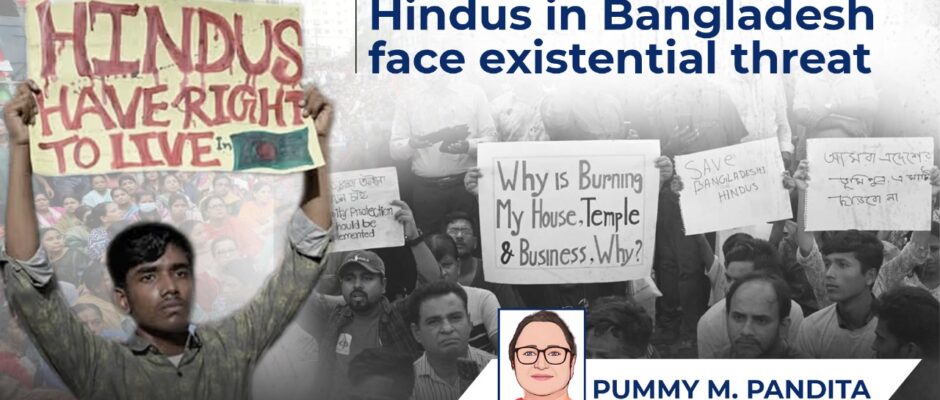
Rahul Pawa Since its inception in 1971, Bangladesh has borne witness to an alarming trend of persistent human rights violations against the Hindu minority. The initiation of this harrowing journey can be traced back to the Bangladesh Liberation War, which tragically saw hundreds of thousands – some estimates even escalating to 2.4 million – of Hindus losing their lives. In the subsequent two decades, from 1971 to 1991, the Hindu demographic saw a significant drop from constituting 13.5% of the population to a mere 9.2%. As time went by, the situation didn’t improve; the 2011 census data further revealed the Hindu population dwindling to 8.5%, showcasing the grim reality of a consistent Hindu exodus induced by relentless persecution. Instances of violence, particularly the distressing post-election attacks of 2001 where an estimated 200 Hindus were killed, and many more were displaced, serve as stark reminders of this sustained oppression. The history, darkened by the tales of these atrocities, underscores the urgent need for robust and comprehensive action to protect the rights and wellbeing of Bangladesh’s Hindu minority. Recently, the persecution of Hindus has taken an even more disturbing turn with the rise of Islamist extremism, spearheaded by the Bangladesh Nationalist Party (BNP) and their ideological ally Jamaat-e-Islami (JeI). On Friday, July 28, 2023, these radical Islamist factions orchestrated a series of deplorable acts, magnified by a rally staged in the Naya Paltan area of Dhaka city. This gathering, attended by over one hundred thousand Islamists, served as the platform for the announcement of a continuous agitation program, delivered through a video message by BNP’s acting chairman and convicted terrorist, Tarique Rahman. This climate of fear and hostility has effectively marginalised Hindus, relegating them to the status of second-class citizens in their own homeland. Such developments pose serious challenges to Bangladesh’s secular fabric and its commitment to uphold human rights. On multiple instances, a host of leaders from the BNP have fearlessly expressed their intentions to strike back against every member of the Sheikh Hasina lead Awami League. Their rhetoric ominously suggests that the “agents of Awami League,” which includes Hindu supporters and India (Bharat), would be subjected to severe consequences should the BNP regain power. This hostile stance was reflected at the recent gathering as well, with attendees zealously participating in anti-India and anti-Hindu chants. A particularly disconcerting sentiment emerged from the crowd as they proclaimed, “Bangladesh is Muslimstan, Hindus go to Hindustan” – a blatant effort to exclude and marginalise the Hindu community, this sets a dangerous precedent for a potential escalation in an already volatile and strained environment. In stark contrast to the ominous atmosphere generated by the BNP rally, another event, a peace rally organised by the youth front of the Awami League, presented a deeply human and sympathetic face to the issues at hand. The rallying cry came from Purnima Rani Shil, a Hindu woman who suffered an unthinkable ordeal at the hands of BNP members at the tender age of 14, in the Ullapara area of Sirajganj district in 2001. In her moving testimony, Purnima conveyed the stark reality of what a BNP return to power might mean: “If BNP regains control, I fear thousands of Hindu girls may become victims of this notoriously anti-Hindu party. They stole my childhood and my youth. They exiled my family from our village. I found no justice anywhere, as from 2001 to 2006, the country fell into the clutches of Pakistani agents and enemies of humanity. Khaleda Zia is the matriarch of anti-Hindu atrocities, with her son, the convicted terrorist Tarique Rahman, functioning as a marionette of the Pakistanis. They aim to transform a secular Bangladesh into another Pakistan.”  Alarmingly, the Bangladesh Nationalist Party recently declared what they ominously labeled as the “final part of war” against Prime Minister Sheikh Hasina and her governing body, the Awami League. Urging their supporters to make Dhaka city their stronghold until the ruling government is unseated, this call to arms rings a dangerous bell, not just in Bangladesh, but echoes ominously across the globe. What’s particularly disconcerting are the financial streams that the BNP is purportedly benefiting from. Media reports suggest that the party is being showered with millions of dollars from dubious sources. These funds, murkily acquired, are directed towards sustaining a challenge against the incumbent government. Even in the face of severe economic collapse, Pakistan appears to be pumping substantial sums into the coffers of the BNP, raising concerns over its vested interests. Disturbingly, infamous figures such as terrorist Dawood Ibrahim are believed to be aiding the ultra-Islamist party with substantial financial support. This level of global backing raises serious questions about the international networks of radicalism and the ideological hatred driving these alliances. The BNP is also believed to be deploying the power of propaganda to influence minds and fuel divisiveness. It has reportedly poured millions into lobbying activities across the United States and Europe.  Simultaneously, the BNP is staging an alarming media assault against Prime Minister Sheikh Hasina and her government. Utilising the reach of social media and international news outlets, the party is disseminating a narrative steeped in extremist ideologies. This massive propaganda drive seeks to undermine the established peace and unity, as it fuels societal divisions on a large scale, aided and abetted by the malignant forces of Islamist hatred. The dangerous undertones of their activities are a stark reminder of the relentless threats that peace-loving societies face around the world and how nations that fall for such extremist views and ideas are destined to collapse. The persistent plight of the Hindu minority in Bangladesh, marked by rising religious extremism and significant financing of such factions, highlights the pressing challenges to peace, social harmony, and human rights in the region. As Bangladesh continues to grapple with these complex issues, the manner in which it safeguards minority rights and counters religious extremism will be pivotal. These developments, resonating far beyond national boundaries, necessitate vigilant observation and strategic intervention from regional and international stakeholders, underscoring the critical

Read More

Bangladesh: Violence against Hindus, Buddhist & Other Minorities

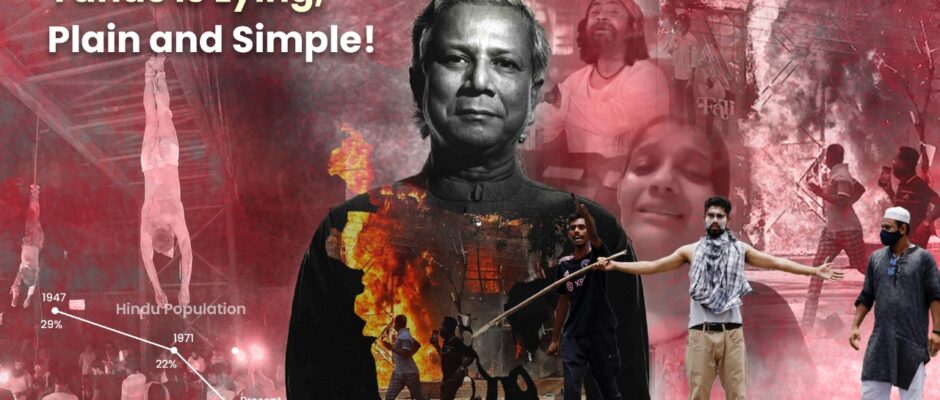
The terrible story of the Hindus in Bangladesh began with the 1947 genocide. It reached a pinnacle during the Bangladesh Liberation War when about three million Hindus had been slaughtered in one of the century’s largest genocides, which continues to this day. Over the years, thousands of Hindu shops have been plundered. Hundreds of Hindu business people have been killed. Acres of land belonging to Hindus have been forcefully occupied. Innumerable Hindu temples have been vandalised. Targeted killings of men, abduction of girls and women with intent to rape and murder have been principal tactics of fundamental Islamists. These fundamentalists primarily belong to the Jamaat-e-Islami Bangladesh, its student wings and other radical Islamists, Jihadi groups, political parties and associations active in the region. As a result, thousands of Hindu families have been forced to flee Bangladesh. Since decades, Islamic indoctrination and radicalisation in Bangladesh have been a worry for minorities. Several Hindu families have been falsely accused of insulting Islam. Such accusations have often tragically resulted in looting and plundering of Hindu shops and households.  Two notable examples of jihadi violence based on made-up blasphemy accusations were Brahmanbaria (2016) and Thakurpara (2017). Moreover, the law-and-order agencies of the country have repeatedly failed to take requisite measures to bring peace and stability, indicating their appeasement of the majority Islamic community. Over the last seventy years, the number of Hindus in Bangladesh has been on decline. Figure 1 depicts Bangladeshi population demography trends in percentage based on the Ministry of Planning data and the Bureau of Statistics, Government of Bangladesh. As per data from the Bangladesh Jatiya Hindu Mohajote’s annual report released in 2020, the following figures (2, 3, 4) detail the atrocities against Hindus in the country. Similarly, recent anti-Hindu violence in Bangladesh by Islamic mobs (primarily members of Jamaat-e-Islami Bangladesh) started on Wednesday, October 13, 2021. It was just hours after falsified images of a copy of the Quran in the lap of Lord Hanuman’s idol at a Durga Puja pandal (makeshift Hindu celebratory place of worship) in Cumilla district were circulated over Internet. Jamaat-e-Islami and its student wing (Islami Chhatra Shibir) members have reportedly committed the act. Subsequently, on the dreadful night of October 13, 2021, Muslim mobs stormed the pandal, accusing Hindus of blasphemy and setting off a chain of pre-planned attacks on Hindu pandals and temples across Bangladesh. Update*: On October 20, 2021, one thirty-five-year-old Iqbal Hossain, son of Nur Ahmed Alam from the Sujanagar area in Comilla, was identified as the individual who placed the Quran at the pandal. Bangladesh: Violence against Hindus Timeline Wednesday, October 13, 2021 Cumilla, Chittagong division of Bangladesh On the day of Maha Ashtami, a sacred day for Hindus, thirty-five-year-old Iqbal Hossain, entered the Nanuar Dighir Par Durga Mandir in Cumilla district of Bangladesh and placed a copy of the Quran in the lap of Hindu God Hanuman’s idol. As per local district officials, the individual took photos of the scene before fleeing.  The initial attacks commenced in the evening and were planned, orchestrated by local units of Jamaat-e-Islami and its student-wing, Islami Chhatra Shibir. Over four hundred (400) Jamaat-e-Islami Islamists attacked Hindu men, women and children, torched more than twenty Hindu houses, Durga Puja pandals, and vandalised temples around the area. Chittagong, Chittagong division In Chittagong, the iconic Bura Kali temple in Banshkhali district was attacked along with several other smaller temples. Cox’s Bazar, Chittagong division In Cox’s Bazar, a Puja pandal in Kachharaimura Sheelpara was attacked and Hindu were households vandalised in Mognama. Chandpur, Chittagong division In Chandpur, violent Islamist mob spread communal violence, attacked Puja pandals at Lakshmi Narayan Akhara temple in Hajiganj. Multiple deaths were reported. Lakshmipur, Chittagong division In Lakshmipur, a violent Islamist mob attacked two temples in Ramgati and Ramganj districts. Noakhali, Chittagong division   In Noakhali, a Puja pandal was vandalised by Jamaat-e-Islami mob late at night. Thursday, October 14, 2021 Cumilla, Chittagong division   Violence continued in Cumilla and other parts of Bangladesh. Puja pandals set up on the banks of Nanua Dighi (in Cumilla district) were vandalised, idols burnt and broken. As per reports from local news agencies, a total of nine (9) Puja pandals were razed to the ground. Ghazipur, Dhaka division   In Ghazipur, a group of Islamists armed with sticks vandalised idols at Kashimpur’s Radha Gobinda Temple. Paschim Para and Pal Para temples were also attacked the same night. Bandarban, Chittagong division   In Bandarban, there was a morning attack on peaceful Hindu devotees. Islamist mobs stormed the Central Hari Mandir in Bandarban’s Lama upazila, leading to violence and destruction of Hindu property. When the police intervened to save the Hindu devotees from the violent mob, around fifty police personnel were attacked and subsequently injured in the attack.  Khulna, Khulna division  At around 7:00 p.m. local time, Bangladesh’s Rapid Action Battalion (RAB) and Bomb Disposal Unit (BDU) retrieved 18 crude bombs from main gate of Rupsa Maha Shashan, which contains a Hindu Kali temple. The role of Jamaat-e-Islami and its student-wing Islami Chhatra Shibir again resurfaced during investigations. Friday, October 15, 2021 Chittagong, Chittagong division   After the Juma prayers (Friday prayers) hundreds of Islamists marched out of the Shahi Jama Masjid and attacked Hindus at the Puja venue at Anderkilla. Soon after the incident, they dispersed from the site amidst inaction by the Bangladeshi police. Noakhali, Chittagong division   An innocent Hindu devotee was butchered in Noakhali’s Begumganj upazila after an Islamic mob attacked Hindu residences. According to ISKCON authorities, a 500-strong mob first vandalised a Durga Puja pandal adjacent to the temple before attacking the devotees in the ISKCON temple. Barisal, Barisal division   In Barisal, jihadi mobs vandalised three Hindu temples late in the night at Gournadi upazila. Saturday, October 16, 2021 Munshiganj, Dhaka division  In early hours of October 16, Islamic radicals vandalised six idols of Hindu gods and goddesses at a Kali temple in Sirajdikhan upazila, Munshiganj.  Feni, Chittagong division   Following an ‘Asr prayers’, an Islamist procession begins in front of the

Read More
  • 1
  • 2