CIHS – Centre for Integrated and Holistic Studies

Date/Time:

Can Labour Rebuild the Bridge with Bharat

Can Labour Rebuild the Bridge with Bharat?

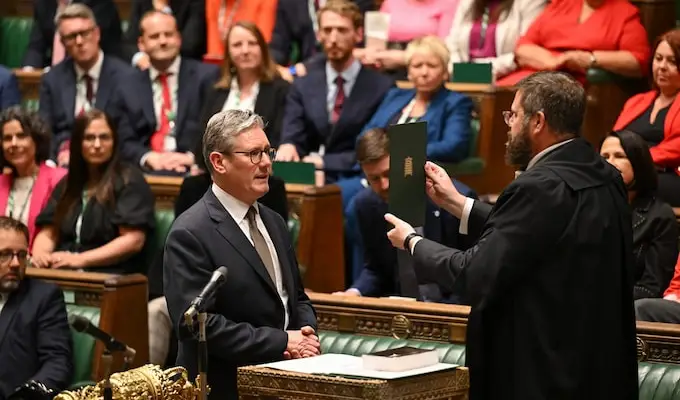
Prime Minister Keir Starmer may have to work overtime to mend Labour ways and breath fresh life into UK ties with Bharat. Prakhar Sharma Relationship between United Kingdom and Bharat has always been complex, evolving and shaped by their checkered past. Today, these ties are transforming into modern partnership. With Labour Party storming back to power under Keir Starmer, UK-India relations are entering a new phase that demands careful attention. Labour Party’s past actions and current stance on Bharat-related issues might impact these ties particularly considering growing influence of British Indian community. Labour Party on Bharat Labour Party hasn’t always been on the best terms with Bharat, especially during key moments in recent history. In 2019, under Jeremy Corbyn’s leadership, the Labour Party adopted a controversial resolution calling for “international intervention in Kashmir” and even mooted UN-led referendum. This move came right after India abrogated Article 370 which revoked special status to Jammu and Kashmir. The timing and content of the resolution were seen by many as aligning with Pakistan’s stance on Kashmir and as an anti-India position. The backlash was immediate. Over 100 Indian organizations wrote to Corbyn expressing their strong disapproval. The response wasn’t just limited to letters of protest. Several British-Indian voters who had supported Labour felt betrayed and shifted to the Conservative Party in the following elections. The result? Significant losses for Labour were attributed to their stance on Kashmir. Recognizing the damage done, Labour Party chairman Ian Lavery publicly acknowledged that Kashmir resolution had offended not just India but British Indians as well. In a bid to repair relations, Lavery assured that Labour would not take sides—neither pro-India nor pro-Pakistan—on the Kashmir issue, signalling an attempt to distance the party from Corbyn’s earlier position. This promise, reported by The Guardian, was clear effort to regain the trust of British-Indian voters who felt alienated by Labour’s earlier approach. Similarly, during farmers’ protests in Bharat during 2020 – 21, Keir Starmer and some Labour MPs voiced concerns about Indian government’s handling of the situation citing human rights issues. While their concerns were claimed to be framed around human rights, it highlighted their stance on Bharat’s domestic affairs which is not acceptable for a nation like Bharat with better political stability than UK in the recent past. British Indian Community and its Political ‘voice’ Understanding the need to mend ties with British Indian community, Keir Starmer has made significant efforts to rebuild trust. His visit to Swaminarayan temple in Kingsbury where he stated that “There is no place for Hinduphobia in the UK,” was a clear attempt to reach out to the community. He also emphasized Labour’s intention to build a new strategic partnership with Bharat, marking a shift from the party’s previous positions (BBC, 2021). British Hindu community with nearly 983,000 people in England and Wales has become a significant political force (ONS, 2021). Historically seen as Labour vote bank, this community has grown more assertive in recent years, making it clear that their support is not guaranteed. The launch of  ‘Hindu Manifesto’ reflects this change, aiming to bring Hindu voices into mainstream political discussions and ensure that their concerns are addressed (The Times, 2023). Future of UK-Bharat Relations With Labour Party back in power, the future of UK-Bharat relations is at a crossroads. Keir Starmer’s recent efforts to engage with the British Indian community and his commitment to a stronger partnership with Bharat are promising signs. However, it’s crucial that the Labour Party goes beyond words and takes actions that respect Bharat’s sovereignty and address concerns of the British Indian diaspora (The Times, 2021). From Bharat’s perspective, there is cautious optimism that the Labour Party will adopt a more nuanced and informed approach to bilateral relations under Starmer’s leadership. The success of UK-Bharat ties will depend on how well the Labour Party can navigate this complex relationship acknowledging the growing influence of British Indian community while fostering mutual respect and cooperation. (Author is Alumnus of London School of Economics and a doctoral scholar at University of Delhi. He works at Rishihood University)

Read More

Swami Vivekananda Unpacked Dharma for Global Communities

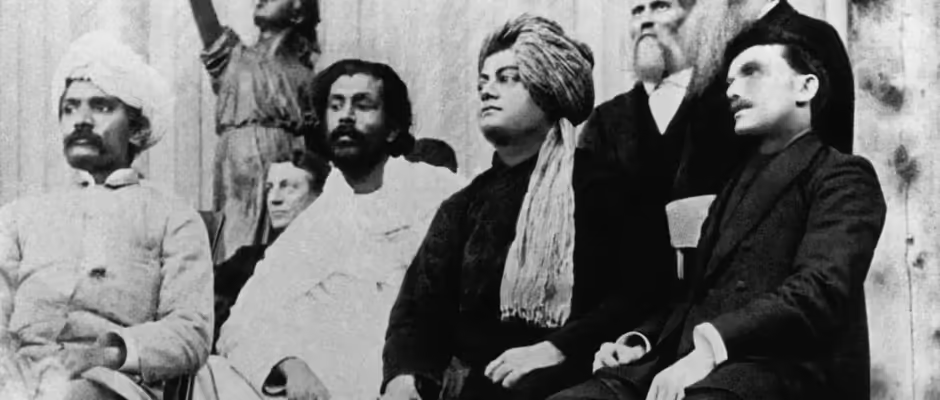
‘Us’ versus ‘them’ is passé. The great Bharatiya sage unveiled vedic vision of entire humanity being part of the wholesome ‘Supreme’. Dr Aniruddh Subhedar Very few people know that “Juggernaut” is derived from Sanskrit word “Jagannath,” most revered Hindu god literally meaning “Lord of the world”. In early 19th century, Christian missionaries spread malicious propaganda that during popular Rath Yatra of Bhagwan Jagannath, a huge chariot crushed devotees under its wheels. Many influential people in England including William Wilberforce who is admired in Western world for his advocacy to abolish slave trade demanded an end to the so-called devilish practices. Over the years, western world got enlightened about Jagannath Rath Yatra. But, even today, English word “Juggernaut” is seen as a destructive, unstoppable force serving as living testimony to the smear campaign against Bharat’s culture and Hindu dharma. Truth behind this one word illustrates the hostile world in which Swami Vivekananda had to work at a time when Hindus were considered savages, their philosophy and traditions viewed as devilish. Amidst these hostile forces, Swami Vivekananda hoisted the banner of Bharat’s spiritualism to Western world and emerged victorious. Throughout her history, Bharat produced great sages and scholars, each one greater than the other. But, in modern times, Swami Vivekananda is seen as harbinger of sanskritik (cultural) and adhyatmik (spiritual) revolution in India. He was the pioneering monk who understood the need to spread sublime and profound philosophy of Advaita Vedanta throughout the world. Global awakening to Yoga and Vedanta is fruition of Swamiji’s pioneering efforts. World’s Parliament of Religions World Parliament of Religions held in Chicago in September 1893 can be termed the first organized interfaith gathering internationally. Swami Vivekananda participated in this parliament which was held during September 11 – 27, 1893. From his first rendition on September 11 which opened with touching lines “Brothers and Sisters of America,” up to his address at the final session on September 27, Swamiji addressed the parliament six times. Each of these speeches focused on Bharatiya philosophy, universal brotherhood and need for global unity. Swamiji not only expounded on the philosophy of Vedanta but amplified teachings of Lord Buddha and their intricate relationship to Sanatan Dharma. While he criticized evangelical activities of Christian missionaries, he stressed the need for every individual to walk the path of self-realization. Quoting Lord Krishna’s words from Bhagavad Gita: “ये यथा मां प्रपद्यन्ते तांस्तथैव भजाम्यहम्। मम वर्त्मानुवर्तन्ते मनुष्या: पार्थ सर्वश:।।” (O Arjuna! In whatsoever form one seeks Me, I reach him in that form, for all mankind is but following the paths I laid down for them.) Swami Vivekananda told the world that the path to reach Supreme Being is not and cannot be monopolized by one religion. It is open to every honest seeker. Bharat’s Soul Unveiled Swamiji’s words were not just verbose discourse on philosophy for armchair intellectuals, nor were they a recounting of Bharat’s long-lost past. Rather, what Swamiji presented to the world was Bharat’s very soul. When Swamiji said, “I am proud to tell you that we have gathered in our bosom the purest remnant of the Israelites… I am proud to belong to the religion which has sheltered and is still fostering the remnant of the grand Zoroastrian nation,” he was not merely recounting Bharat’s glorious past but presenting reality of Bharat that was rooted in spirituality even during most testing times of colonial oppression. This legacy continues today when Iran, the original land of Zoroastrians is suffering religious fanaticism, riots and theocracy. Zoroastrianism continues to flourish in India. It is this soul of Bharat that prompted Indian Government to offer citizenship to persecuted religious minorities in its neighbouring countries through Citizenship (Amendment) Act, 2019. Arguments and conspiracy theories floated against the all-inclusive act was from those that did not realize Bharat’s Soul. Swami Vivekananda and World Peace Swami Vivekananda’s work had lasting impact not only on people of Bharat but global communities. His teachings led to setting up Vedanta societies across United States that continue to thrive even today. Vedanta Society of New York and that of Northern California, San Francisco were centres established by Swami Vivekananda. Today, the world going through conflicts and wars may have missed an enlightened soul like Vivekananda. We see racial crimes, bigotry, wars and persecution. Religious fanaticism is raising its head in the form of Khalistani terrorism. The land of Bengal (both Bangladesh and West Bengal) has descended into religious persecution and chaos as it has strayed from the path shown by Swami Vivekananda. At the World’s Parliament of Religions, Swami Vivekananda said: “Sectarianism, bigotry and its horrible descendant fanaticism, have long possessed this beautiful earth. They have filled the earth with violence, drenched it often and often with human blood, destroyed civilization and sent whole nations to despair. Had it not been for these horrible demons, human society would be far more advanced than it is now”. These words of Swamiji are more relevant today than ever. For long, organizations like United Nations have attempted at maintaining global peace. But, the world tends to lapse into chaos and violence periodically. Limited success is seen by UN as its efforts are mainly aimed at political level. What Swamiji preached was the path of emancipation of every soul where every individual strives for self-realization. September 11, when Swami Vivekananda delivered his speech at World’s Parliament of Religions, is commemorated by his disciples and admirers as ‘Vishwa Vijay Diwas’ (the day when he conquered the world). But this conquering is not a dystopian dream of military victory and subjugation; it is a victory through message of peace. For those harbouring malice, the “Lord of the World” (Jagannath) becomes a “destructive force.” But for noble minds nurtured by Swamiji, even “conquering” loses its bloodshed and becomes an exercise in love and mutual respect. To a world that knew only the logic of “us vs. them,” Swami Vivekananda introduced the idea of “आत्मवत् सर्वभूतेषु”. It signifies all living entities as part of one’s self. It’s time the world revisits

Read More

Growing Clout, Footprint

Bharat’s businesses have come off age, taken over several global brands, top line corporates lock, stock, barrel or partnered in US, UK & Europe K.A.Badarinath Two large deals sealed in just one week speak volumes about Indian corporates verve, gut and appetite for going global. Reliance Industries Ltd (RIL) and Walt Disney tango in Bharat’s media, television and entertainment industry is not limited to creation of US $ 8.5 billion behemoth. It opens up a zillion opportunities for Indian companies, vendors and challenges competition to surpass this milestone. This joint venture also marks Bharat’s film-makers, entertainment and media firms going global hand in hand with best in the industry. Asia’s richest businessman Mukesh Ambani and his wife Nita Ambani being hands on RIL – Walt Disney gives a spicy twist to the deal. Going forward, the joint venture model can work well and logically in global territories and it throws up an opportunity for Reliance – Disney – Century Fox to become a formidable player in media and entertainment sectors internationally. Another home grown billionaire from The Punjab, Sunil Bharti Mittal sent tongues wagging when Bharti Airtel group heralded by him emerged biggest stakeholder in the British iconic telecom services provider, British Telecom. Buying out the Israeli magnate Patrick Drahi led Altice group’s entire stake and cornering 24.5 per cent in British Telecom for US $ 4 billion is the icing on cake for Sunil Bharti Mittal whose Bharti group provides telecom services in 17 countries. In the process, Mittal has emerged largest stakeholder in British Telecom, hitherto the public telecom services provider. What would have been more satisfying for Sunil Bharti Mittal is that life has come full circle. Before 2010, British Telecom held over 21.5 per cent stake in Mittal’s then fledgling Bharti Airtel. This deal not only provides high-stakes branding push but allows Bharti Airtel access to United Kingdom’s 5G technologies, artificial intelligence networks and cutting edge technologies. Deutsche Telecom and T-Mobile Holdings with 12 per cent each are the two other large owners of British Telecom. Strategic insights in telecom, media and corporate markets in United Kingdom and Europe are something Sunil Bharti Mittal should look forward to being at head table of British Telecom. Bharti is not the first Indian company to go shopping in United Kingdom, US or Europe for iconic companies and brands that were seen as value enhancing prepositions. Most talked British brand and company acquired was Jaguar Land Rover by Tata group that was once mocked at for having produced the smallest and modest ‘Nano’ car. Uptight United Kingdom honchos could hardly come to terms with being led by a coloured team of Tata professionals to turn around the JLR that was once seen as a drain on the company and Britain was struggling to save the automobile brand. When Ratan Tata, easily the most celebrated businessman walked into the boardroom of Ford on March 26, 2008 to acquire JLR business at US $ 2.3 billion, disbelief and disconnect confounded top leadership team of British company. In 15-years, the group has turned around JLR into a kicking Bharat – British brand that’s hard to compete with. Tata group was labelled audacious when it took Corus Steel in $ 12 billion bid around the same time to emerge UK – Europe’s one of the largest players in steel market. While this was happening, Reliance bought out one of the oldest and most recognized British toy company Hamleys with 259-years corporate history and British battery technology company, Faradion made global industry sit up to the onset of Indian buyers. Reliance acquisitions were relatively more modest, around the same time, Kumarmangalam Birla, yet another Indian billionaire had set eyes on Atlanta-based Aluminium major Novelis and acquired it in 2007 for a whopping US $ six billion. This catapulted the Aditya Birla group into fortune 500 companies list. After initial rush of half a dozen big ticket takeovers about 15-years back, scores of global brands and businesses came the Indian way or partnered to stay afloat. The list seems quite a long one and this phenomenon is across sectors. Several of them were risky investments and the familial story of turnaround for many Western companies was scripted by Indian businesses that stayed nimble footed for quite some time. For instance, none would have imagined that fourth Indian billionaire Anand Mahindra owned diversified group, Mahindra and Mahindra pumped life into BSA Motorcycles that stopped production about five decades ago. Birmingham Small Arms Company founded way back in 1861 known for producing motorcycles after Mahindra and Mahindra took over this defunct brand in 2022. As per Grant Thornton research, Indians own about 964 companies in UK alone as of last year if one were to go by a Reuters despatch earlier this month. It may not be an overstatement, to say that Bharat’s businesses have arrived. (Author is Director & Chief Executive of Centre for Integrated and Holistic Research based in New Delhi)

Read More

Silent Threat, Spread of Anti-Americanism!

Senators and Congressmen, women funded by foreign lobbies pose a serious threat to America’s security, integrity and its cohesion. Pummy Pandita It’s for United States Congress to defend American values and interests. Nonetheless, existence of senators with questionable ties and conduct imply that they might not put Americans welfare first. Anti-Americanism within US Congress has been a subject of debate for quite some time and of late, there have been reports suggesting some senators were outright “anti-American.” It’s not for the first time that such conversations have happened openly. There have been reports in past as well that politicians in US have harboured anti-American feelings. Claims of disloyalty were common throughout Cold War leading to rigorous scrutiny during McCarthy era. The rise of populism and partisan polarization in recent years has increased interest in priorities and allegiances of legislators. Setting precise standards is essential to identify anti-American senators in an unbiased manner. This can involve opposing important national security legislations through voting, publicly undermining American interests in statements and continue affiliations with groups that disagree with American policies and ideals. Opinions are diverse on senators and representatives in US Congress who are thought to be anti-American and have ties to foreign countries. Congresswoman Rashida Tlaib of Michigan’s 12th congressional district and Ilhan Omar of Minnesota have been discussed in the media to have reportedly harboured ‘anti-Americanism’. Congresswoman Rashida Tlaib During Israeli Prime Minister Benjamin Netanyahu’s speech to Congress, Rashida Tlaib, a member of self-styled “Squad” in US House of Representatives grabbed attention by waving a “War Criminal” placard. This brought out deep political rift about American policy towards Israel. One of the first Muslim women elected to Congress, Rashida Tlaib is a Palestinian-American recognized for her vocal support to Palestinian rights and condemnation of Israeli government practices. Alexandria Ocasio-Cortez, Ilhan Omar, Ayanna Pressley and other progressive lawmakers constitute the so-called “Squad” which includes Democratic congresswoman Rashida Tlaib of Michigan’s 12th congressional district. As one of the first two Muslim women elected to Congress in 2018, Tlaib created history. Robust progressive programs, such as Medicare for All, Green New Deal and substantial changes to criminal justice and immigration systems define her so called political agenda. The Incident • Tlaib’s demonstration was direct reaction to Netanyahu’s acts and policies which she and many others believe to be discriminatory towards the Palestinian people. The placard referred to Netanyahu as a “War Criminal,” a moniker that detractors frequently employ to characterize his involvement in military actions in the West Bank and Gaza. • Tlaib’s act was meant to highlight Palestinians suffering and human rights issues. It was also a critique of American administration’s persistent backing of Netanyahu. • The demonstration highlighted glaring differences in American politics over Israel. While a large majority of Congressmen back Israel wholeheartedly, others—especially progressive Democrats like Tlaib—are growingly skeptical of Israel’s practices and champion rights of Palestinian people. Tlaib’s political remarks and deeds reveal a bias against the United States. These accusations frequently focus on the following issues: Entry of anti-American elements into Congress is a reflection of the country’s wider political and ideological division which has important ramifications. Though some people find great strength in the story of anti-American infiltration in Congress as represented by individuals such as Rashida Tlaib, it is important to examine such assertions critically. A more nuanced picture becomes apparent when the evidence is carefully examined and larger political context is comprehended. Congresswoman Ilhan Oman: Ilhan Omar represents Minnesota’s fifth Congressional District. She is Somali American and second Muslim woman elected to Congress. Omar’s candidature stands out due to her strong opinions on a range of topics such as social justice, immigration and US foreign policy. She is frequently accused of having ties with foreign organizations that could sway her opinions not consistent with American interests. Omar has not shied away from making public her disapproval of American foreign policy, particularly as it relates to Israel and Palestine. US backing Israel was never appreciated by her and charged that lobbies like American Israel Public Affairs Committee (AIPAC) shaped US policy. Her position challenges US support for Israel, a vital ally in the Middle East which has long been established. Allegations of anti-Semitism have resulted from her remarks. In 2019, she implied that pro-Israel lobbyists were purchasing political power when she tweeted that United States political backing for Israel was “all about the Benjamins.” Both sides of the political spectrum strongly condemned this remark which resulted in a House resolution denouncing anti-Semitism. Omar’s reported ties with foreign organizations may have shaped her views against US foreign policy. Her affiliation with controversial Council on American-Islamic Relations (CAIR)—which receives funds from overseas—has been examined. There have also been claims that she has ties to Turkish and Qatari interests though concrete proof of these assertions is still hard to come by. As per reports, some of her opinions coincide with those of rogue governments. Her opposition to sanctions on nations like Venezuela and Iran considered United States’ rivals has been used as evidence of her anti-American inclination. Claim that certain members of Congress do not represent interests of United States is not exclusive to either Ilhan Omar or Rashida Tlaib. It points to broader worries about foreign meddling in American politics and possibility of outside influence on elected officials. Numerous political organizations and media outlets especially those on the conservative side have emphasized this. One major concern in American politics is influence of foreign lobbying. Foreign governments and entity lobbyists frequently try to sway American policy in favour of or against certain interests. Regulated and lawful activity notwithstanding, lobbying always carried the risk of conflicts of interest and improper influence. Source of campaign contributions was yet another concern in American elections.  As per American laws, it is illegal for foreigners to donate in the country’s elections. But, intricate web spun around political contributions makes it difficult to identify actual source of finances. In this backdrop questions have been raised on intentions and loyalty of public servants who

Read More

Bharat, force for Strength & Stability

In 78-years post-British imperialistic occupation, Bharat is on way to become ‘Vishwa Guru’ and pursuer of ‘Vishwa Maitri’ in right earnest. K.A.Badarinath Bharat is celebrating her seventy eighth independence day after having fought imperialist British occupation and monarchy. Before the ignominious exit of 1947, Britain has had for decades looted Bharat’s wealth, resources and hit at her backbone by Anglicizing the country’s millennial education system. The indomitable spirit, valour and strong civilizational connect based on ‘Sanatan Dharma’ could not be dented even after decades of inhuman rule that pushed Bharat into poverty owing to continued laundering and misrule of British imperialists. Post-1947, Bharat moved on its own with twists and turns in its socio-economic paradigm. What kept the Hindustan together last 78 years was the determination of this 1.4 billion people to regain its place as ‘guiding light’ in the comity of nations. Most Indians – be it Hindus, Buddhists, Jains, Muslims or Christians – get nostalgic and wee-bit emotional while celebrating the Independence Day. It was a struggle that none globally would easily forget as British rule was marked by White supremacist mindset laced with monarchial expansionism and human subordination and slavery of inhuman variety. Then on, Bharat re-discovered herself on all fronts. It’s her day today and centuries to follow as it moves methodically to become a developed country by 2047 that also marks 100 years of independence from British tyranny. Bharat’s rise as an economic powerhouse and her march to become third largest economy in two – three years with $ 5 trillion spread is something that did not come easily given the hard work of her farmers, services professionals, industry and exporters. It’s only a matter of time when Bharat would challenge US and China from their coveted positions. None can be scared or distraught with Bharat’s rise given her standing that strives continuously for peace, tranquility and harmonious living sans conflict, violence and expansionism of any hue or shade. Going by Bharat’s Prime Minister Narendra Modi speech on Independence Day from ramparts of the historic Red Fort, New Delhi will play a stabilizing role in the world marred by conflicts between Russia – Ukraine, Israel – Hamas and the coup of sorts in Bangladesh. Strength and determination is what Prime Minister Modi emphasized upon to tackle global challenges. Bharat being at the ‘High Table’ in international affairs would only bring sanity to deliberations and negotiations at strategic level or economic management. Even in tackling new challenges, Bharat has shown the way. After having been party to Paris agreement on cutting carbon footprint and shifting to environment friendly economic structures, Bharat is the only country that has met all climate targets among G-20. Notwithstanding her energy consumption demands, shift to green options rapidly towards ‘net zero’ voluntarily and leading by example is something Prime Minister Modi referred to in his speech on Thursday. His call for end to end chip designing for the world is an extension of Bharat’s huge strides made in industrial manufacturing including defence products, services across sectors and deft management of her economy. This will push up Bharat in global pecking order for modernizing her economy to meet international demand. Bharat’s list of ‘to do’ things seem endless if one were to look at reversing brain drain especially in key sectors like medical education. Adding 75,000 new medical colleges’ seats to 100,000 plus existing capacity is something that will help Indian youth and talent pursue their education here and cater to the world as professionals. Prime Minister Modi had clearly hinted that ‘overseas students should come to India for top class education’ and reverse prevailing outflow to foreign shores. Becoming global educational hub in five years may be a tough target to meet. But, its doable. These are transitioning times for Bharat to become ‘vishwa guru’ and pursuer of ‘vishwa maitri’. (Author is Director & Chief Executive of Centre for Integrated and Holistic Studies based in New Delhi)

Read More

RSS Initiative To Revive Family Bonding, Values

Dr.  Shailendra Kumar Pathak In a rapidly evolving world, family structures and values are undergoing significant transformations. The Rashtriya Swayamsevak Sangh (RSS), a prominent socio-cultural organization in Bharat, has recognized the importance of preserving and revitalizing family values amidst the encroaching influences of Western lifestyles, consumerism, and woke culture. Through its Family Awakening Programme, the RSS aims to reconnect Bharatiya families with their cultural roots, drawing inspiration from ancient Hindu scriptures and multi millennia long civilizational experiences. In Bharatiya culture, the family has always been the cornerstone of societal structure. This belief is deeply rooted in Bharatiya spiritual worldview, where the family represents the initial step in the journey from “Me to We.” The traditional Bharatiya family, often extended and inclusive of multiple generations living under one roof, is rooted in values such as respect for elders, filial piety, communal harmony, and moral integrity. These values are not merely social constructs but are deeply embedded in the cultural and spiritual fabric of the nation. Family and its values are the key architects of shaping individuals’ personalities and moral compasses. They provide a framework for personal development, ethical behavior, and emotional stability. On a broader scale, strong family values contribute to societal cohesion, reducing crime rates and promoting social harmony and National progress . Studies have shown that children raised in families with strong value systems tend to exhibit higher levels of academic achievement, emotional intelligence, and resilience. The foreign invasions, intruder’s rule and the globalization wave have brought Western lifestyles into Bharatiya homes, often clashing with traditional values. While modernization and technological advancements have their merits, the uncritical adoption of Western lifestyles leads to a dilution of family bonds. Individualism, a hallmark of Western culture, often prioritizes personal goals over collective family interests, leading to fragmented family units. Consumerism, an integral element of western life style which is characterized by the relentless pursuit of material possessions, has significantly impacted family dynamics. The pressure to acquire and consume often diverts attention from familial relationships. Parents, engrossed in their careers to meet consumer demands, may inadvertently neglect their children’s emotional needs, leading to a lack of familial cohesion and support. The rising wave of Woke culture in pretext of social justice and political correctness, inclusiveness and equality has led to generational rifts within families. It is developing a common perception among new generations that Traditional values are outdated or regressive. This cultural shift is leading not only to conflicts between older and younger generations but blocking the intergenerational transmission of values and wisdom. Restoring family values and strong bonds is crucial in maintaining social stability and preventing the erosion of cultural and moral foundations. Families serve as the primary unit of socialization, instilling values, traditions, and a sense of belonging that strengthens individual identity and community cohesion. When family bonds are strong, individuals are less likely to seek meaning or identity in external influences such as religious conversion or the often polarizing narratives of woke culture. A solid family foundation provides emotional support, moral guidance, and a sense of purpose, which are essential in resisting trends that can lead to social fragmentation, individual isolation, and even national decline. By reinforcing these values, society can foster a more resilient and unified nation, capable of withstanding divisive influences. The RSS’s ‘Kutumb Prabodhan’ Initiative The RSS, inspired by Bharat’s glorious cultural heritage and ancient Hindu scriptures, has launched the Family Awakening Programme popularly known as ‘Kutumb Probodhan’ to revitalize the traditional Bharatiya family structure by reconnecting individuals with their cultural and spiritual roots. The ‘initiative was conceived by the RSS as part of its broader mission to strengthen the social fabric of Bharat. The RSS has always placed a strong emphasis on cultural nationalism and societal cohesion. The family is considered the most fundamental and important unit of Bharatiya society, and the RSS launched ‘Kutumb Prabodhan’ to reinforce family bonds and instill traditional values. The philosophy of ‘Kutumb Prabodhan’ is deeply rooted in Bharatiya cultural and spiritual traditions. It draws inspiration from ancient texts, teachings, and practices that emphasize the importance of family as the cornerstone of society. The concept of “Kutumb” (family) holds a significant place in Hindu culture and scriptures. It is seen not just as a social unit but as a foundation for spiritual and moral values. The RSS initiatives draw its inspirations from these scriptures and adopts a holistic approach to well-being, recognizing that family health is not just physical but also emotional, psychological, and spiritual. Key Initiatives and Activities The RSS Kutumb Prabodhan (Family Awakening) programme has seen notable success in fostering family values and unity across India. In Pune, a middle-class family, struggling with generational communication gaps, found renewed harmony after participating in the programme’s workshops. The sessions emphasized mutual respect and understanding, leading to improved relationships between the younger and older members. Similarly, in Lucknow, a family dealing with the pressures of modern life used the principles taught by Kutumb Prabodhan to prioritize quality time together, resulting in strengthened bonds and a more supportive home environment. In a rural village in Madhya Pradesh, the programme’s emphasis on cultural and moral values helped a family overcome internal conflicts, promoting peace and collaboration in their household. There several thousand similar family betterment success stories by the RSS’s initiatives. The RSS family awakening program’s holistic approach, combining education, community service, and spiritual guidance, has made a tangible impact on numerous families across Bharat. In a world where family structures and values are increasingly challenged by external forces, the RSS’s Family Awakening Programme stands as a beacon of hope. By reconnecting families with their cultural and spiritual heritage, the RSS aims to restore the sanctity of the family unit and promote a more harmonious and fulfilling human existence. The teachings of ancient Bharatiya Hindu scriptures offer timeless wisdom that can guide families in nurturing values, fostering unity, and achieving collective well-being. As families across Bharat embrace these initiatives, the vision of a society rooted in strong family values and cultural pride

Read More

Boys Play Big in Muddied Waters!

US, China with diverse agendas coupled with religious extremist forces in Islam and evangelists may shrink open space to operate for Bharat that has big stakes in Bangladesh K.A.Badarinath The big boys are at play. Bangladesh government under Nobel laureate Muhammad Yunus is bound to be pulled apart by both United States of America seeking to establish a military base in South Asia and Chinese Communist Party led by President Xi Jingping that’s seeking unquestioned dominance in Asia. Jamaat-e-Islami and Bangladesh National Party (BNP) led by Khalid Zia would play willing tools in the big boys power play with Pakistan reduced to a lackey of minor variety. There’s denying that Muslim Brotherhood that’s globally dreaded would complicate the equation with its Islamist – Jihadist agenda on Bharat’s Eastern frontiers. ‘Razakars’ would become handy frontline private army in the hands of jihadist Muslim leadership internationally. There have been reports that already these Razakars have taken over civic policing as an occupational army of zealots. Well, tasks for Bharat are cut out after Sheikh Hasina’s government fell last week, Awami League purged, safe exit to her provided in a swift deal and Army took reins in a coup. Though interim government headed by Yunus and a battery of over dozen advisors have taken charge, nothing seems to have changed on the ground while Army calls the shots. Bangladesh’s under-belly has several layers that must be understood before Bharat gets to the drawing board to establish a working relationship with the new Army controlled, Yunus fronted regime given that Chinese, US and Pakistan deep state haggling for their pound of flesh. The ‘transitional’ Yunus regime got legitimacy as Democratic White House was first to recognise the government. Secretary of State’s spokesperson was drafted to convey that US was ‘ready and looked forward’ to working with Dhaka under Yunus. St Martin Island also known as ‘Narikel Jinjira’ (Coconut Island) or ‘Daruchini Dweep’ (Cinnamon Island) off-the-Chittagong coast may be eyed by US to set up a military base to lord over both Bharat and her expansionist neighbour China. Direct US presence in the region may not be encouraged or welcomed by Bharat given the strategic implications. Also, Bharat would get cut off virtually from entire South East Asia in terms of trade, investment and services. Church driven ‘Project K’ to carve out an artificial autonomous region christened as ‘Kukiland’ will come to the forefront. Church’s fancy idea of a separate Christian state encompasses parts of Bangladesh, Burma and Bharat’s Manipur and Mizoram. This Christian agenda is expected to get complete backing of White House under President Joe Biden or his possible successor Kamala Harris. Even if Donald Trump upstages the democrats and gets elected in November 2024 elections, this agenda may get going. Even if general elections in Bangladesh were to be held anytime now, a pliable government in Dhaka is what Washington DC may expect to see in the saddle given that Awami League is virtually out of power play. On the other hand, China would try and get Teesta River Project and other infrastructure ventures that provide Beijing proximity to India’s ‘chicken neck’ area. Weeks before Hasina government fell, US $ two billion worth interest free, concessional, commercial loans apart from grants were reportedly promised by China after a meeting that Bangladesh Prime Minister had with President Xi. On face of it, funding infrastructure projects either directly or through Asian Infrastructure Investment Bank (AIIB) may not just be limited to investment push. Instead, it will result in strategic issues for Bharat giving China advantage at her doorstep. Third dimension to Bangladesh story is the Jamaat-e-Islami backed by Pakistan and part of larger Muslim Brotherhood going berserk would pose serious challenges to Bharat. Jamaat pursuing genocide of Hindus in Bangladesh has been widely reported. CIHS has meticulously documented these grave crimes. Jamaat is popular as ‘congregation of Muslims’. Known as the largest Muslim formation founded in 1975, Jamaat was banned from political participation by Bangladesh Supreme Court in 2013 citing its opposition to religious freedom or practice of faith. Within its ambit were other organizations like Al – Badr, Al – Shams and self-styled peace committee that formed the jihadist network. All these are pronouncedly anti-Hindu, Buddhists and Christians in Bangladesh. Evangelists and Islamist forces are expected to be on collusion course given their extremely divergent agendas for Bangladesh. Bid to carve out an autonomous Christian area by extreme evangelists with backing from US may be at odds with ‘theocratic’ ‘Islamist’ state that Jamaat may like to evolve Bangladesh into. Conflict between evangelists and Muslims may turn rough reported from several cities in European countries. Contrarian geo-political forces in China, US and religious extremism donned by evangelists and Jamaat leaves very little space for open, flexible and forward thinking democratic agenda in Bangladesh. This is a heady mix in which India will have to tread carefully to safeguard her geo-political and strategic interests apart from that of Hindus and Indian origin people living in Bangladesh. Rightly, Prime Minister Narendra Modi has emphasised that Yunus government in Bangladesh must take steps to protect Hindus lives, properties, businesses especially women that have been targeted by Jihadists. For Bharat, dealing with influx of Bangladeshis fleeing the violence torn country may be a big priority apart from safeguarding her people in Bangladesh. Secondly, New Delhi may have to swerve through muddy waters that have become playground for both US and China apart from minions like Pakistan. Thirdly, recalibrating equations with Dhaka given an array of forces from far-left extremists, religious jihadists to military establishment may pose a big challenge. Fourthly, pursuing her agenda of peace, tranquillity and prosperity in South Asia may not be easy for Bharat. Fifthly, smoothening relations with Bangladesh may turn tricky while former Prime Minister and senior Awami League leader Sheikh Hasina continue to be respected state guest in Delhi. Sixthly, working with likeminded stakeholders to ring in democracy with all forces in tact may be a tall order. Seventhly, relatively tension free

Read More

Hindu Genocide Unfolding in Bangladesh

The situation in Bangladesh has reached a critical and alarming juncture, with a systematic and coordinated campaign targeting the Hindu community through acts of violence, destruction, and terror. This genocide, characterized by the deliberate annihilation of Hindu religious and cultural sites, as well as the targeted killings and displacement of individuals, poses an existential threat to the Hindu population in Bangladesh. The interim government must act with urgency and decisiveness: deploying security forces to protect vulnerable communities, ensuring justice through swift prosecution of those responsible, and initiating a comprehensive restoration of destroyed religious and cultural heritage. Moreover, the government must engage with international bodies to secure support and demonstrate a commitment to protecting all citizens, ensuring that such atrocities never occur again. Immediate action is not only a moral imperative but also crucial for the preservation of Bangladesh’s core fabric. Updated – Hindu Genocide Unfolding in Bangladesh

Read More

Hindu Genocide Unfolding in Bangladesh

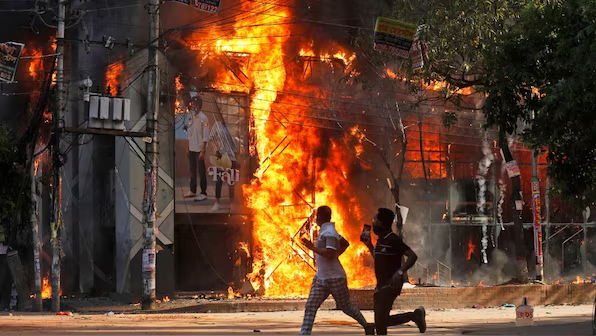
Hindus, Buddhists, Jains and Christian bear brunt of unprecedented violence unleashed by uncouth Islamists & their handlers. Rahul Pawa Today, Bangladesh faces critical juncture as Prime Minister Sheikh Hasina resigned amidst escalating unrest with an interim government now set to take charge under the military’s supervision. This comes as the country is engulfed in violence with the Hindus and other minority communities bearing brunt of what is rapidly becoming genocide of unimaginable proportions. As the world watched Bangladesh in horror, a systematic campaign of terror was fueled by Islamist extremists’ targeting Hindu homes, businesses, temples and lives. The unrest that began in June over a government job quota system has spiraled out of control. Initially seen as a movement for fairness, the protests quickly devolved into a pretext for Islamist factions including Jamaat-e-Islami, Hefazat-e-Islam and Jamaat Shibir to launch brutal attacks against Hindu and other minority community. The violence has been widespread and systematic: in Moulvibazar, the Notun Kali Temple was desecrated and Hindu homes were set ablaze displacing most families. In Chittagong’s Hajari Goli, Sri Krishna Temple was attacked and mobs attempted to break into Hindu homes specifically targeting families with young girls. These are not isolated incidents but part of a coordinated effort to annihilate Hindus in Bangladesh. Strikingly, the violence against Hindus in Bangladesh bore hallmark of genocide under international law. Genocide is defined as acts committed with the intent to destroy, in whole or in part, a national, ethnical, racial, or religious group. The targeted killings, such as the murder of Hindu police constable Suman Kumar and lynching of Hindu Awami League leader Haradhan Roy and his nephew are clear indicators of a calculated effort to eliminate this minority group. Furthermore, systematic attacks on religious sites including ISKCON and Kali temples and destruction of Hindu homes and businesses point to an organised campaign with genocidal intent. This is not random violence but sheer number of incidents reflects deliberate and coordinated effort to eradicate Hindus from Bangladesh. It is pertinent that the international community must recognize these signs and act before it is too late. For those closely monitoring events in Bangladesh, rapid spread of violence against Hindus following military takeover comes as no surprise. Bangladesh Army Chief held meetings with Jamaat-e-Islami and Hefazat-e-Islam leaders. But, there’s not a word on organised targeting of Hindus. The message is univocally clear, Hindus in Bangladesh are now under siege. In Feni Bash, Parsta Hindu Temple was attacked while riots have engulfed Hindu areas nationwide. In last two days, Islamists murdered two Hindus in Rangpur town and three more were killed by Jamaat Shibir protestors. Entire families have been wiped out, leaving survivors in fear and despair as Hindu temples, homes and businesses are systematically destroyed. The international community cannot remain passive while an entire population is being targeted for destruction. Moreover, Pakistan and China’s involvement in this crisis adds a dangerous dimension to the violence. Both nations have a vested interest in destabilising Bangladesh, and by backing Islamist factions like Jamaat-e-Islami, Hefazat-e-Islam, and Jamaat Shibir, they are advancing their geopolitical agendas while exacerbating the humanitarian crisis. Pakistan, known for supporting Islamist extremism and terrorism, has reportedly provided financial and logistical support to these extremist groups. China, leveraging its influence in the region, has further destabilised the situation, turning a blind eye to the atrocities committed against the Hindu population. This geopolitical strategy has made the situation far more complex, demanding global attention. The violence in Bangladesh is not merely an internal issue; it is part of a broader strategy that threatens the lives of millions of innocent people. The involvement of these two nations must be scrutinised and they should be investigated for their role in this unfolding genocide. The global community, including the United Nations, human rights organizations, and nations that believe in democracy, especially India, the regional super-power must take immediate action to prevent further atrocities. Diplomatic pressure should be applied to ensure the protection of Bangladeshi citizens, and an independent investigation into the crimes against Hindus must be initiated. The world has seen too many genocides in the past; one cannot afford to let history repeat itself. Immediate action is needed to halt the bloodshed and to ensure that justice is served for the victims of these heinous crimes. The time to act is now, before the situation escalates further and another dark chapter is written in the history of human rights violations. (Author is Director – Research at CIHS in New Delhi)

Read More
Festering Wound, Khalistani Terror in Canada

Festering Wound, Khalistani Terror in Canada

Anti-Bharat vitriolic by Canadian Prime Minister led bilateral relations to an abyss. Steering troubled relations to normalcy rest with Ottawa. Rohan Giri Diplomatic relations between India and Canada have been thrown into abyss following insinuations on India’s possible involvement in murder of Hardeep Singh Nijjar, a proscribed terrorist identified as key member of Khalistan Tiger Force. Canadian Prime Minister Justin Trudeau seems to have personally contributed to skewed debate on Nijjar who’s sought to be turned a hero by his government whose performance reportedly is tardy and found wanting on many fronts. A sharp rebuke from India’s Ambassador to Canada Sanjay Kumar Verma for damaging Indo-Canadian relations seems to be very much in order given anti-Bharat stance pronounced strongly by Prime Minister Trudeau for political purposes. Verma asserted that accusations by Canada lacked substance and may have been influenced by forces that were inimical to Bharat. Allegations of India’s involvement in reported murder of Hardeep Singh Nijjar, a Khalistani terrorist who had obtained Canadian citizenship, emerged after Canadian Prime Minister Justin Trudeau’s address in the country’s Parliament on September 18. He had claimed to have “credible evidence that the Indian government assassinated a Canadian citizen on Canadian soil.” This baseless allegation put a strain on bilateral relations as no credible evidence was shared by Ottawa to support its claims. India recognized as a robust and healthy democracy has no historical record of engaging in such clandestine activities and consistently championed the path of peace both regionally and globally. In an interview to ‘The Globe and Mail’, Indian envoy Sanjay Kumar Verma offered a forceful rebuttal to these allegations chastising Canada for failing to furnish any concrete or pertinent details that would substantiate their accusations. He expressed apprehension regarding the investigation’s integrity, hinting at possibility of high-level interference in investigative proceedings. The accusations triggered significant diplomatic fallout and unilaterally Canada escalated further by suspending an Indian diplomat. Retaliating, India declared a senior Canadian diplomat persona non grata and requested Canadian government to withdraw a substantial number of its diplomatic staff from India. This diplomatic spat loomed as a potential threat to broader bilateral engagement between two countries. Verma questioned validity and admissibility of purported evidence underpinning Canada’s claims pointing out that diplomatic exchanges were safeguarded by international law and not admissible in a legal context or for public revelation. He called on Canada to explain methods used to obtain these conversations and pointed to possibility of wiretaps and impersonated voices to justify Ottawa’s claims against New Delhi. India has on multiple occasions drawn attention to pending extradition requests which it alleges Canada has consistently overlooked. Following accusations, Bharat’s Ministry of External Affairs labeled Canada as a “safe haven for terrorists, gangsters, and criminals.” This characterization was not made lightly; it mirrors perception of contemporary Canada. Otherise, fabric of Indo-Canadian relations has been further frayed by a deeply troubling series of events in Canada. There is a growing wave of hostility, as sacred Hindu sites and assets of the Indian community have come under repeated attack. This disturbing trend has escalated to a point where safety of Indian diplomats in Canada is now in jeopardy.  After Hardeep Singh Nijjar was killed, a torrent of direct threats and vitriolic hate speech was unleashed against Indian diplomatic corps. Atmosphere of intimidation and outright bullying has been starkly illustrated by appearance of menacing posters throughout Canada. These posters not only advocate for assassination of Indian officials but audaciously depict them as adversaries of Canadian state, ratcheting up the diplomatic tension to an alarming degree. This volatile situation casts a shadow over Indian community in Canada and puts the diplomatic ties between the two nations on a knife-edge. In a comprehensive analysis, as international think tank, Centre for Integrated and Holistic Studies, raised alarm in its latest report about the escalating threat of Khalistani extremism in Canada, particularly during Prime Minister Trudeau’s administration. The report stressed that this radical movement, bolstered by Pakistani support, has intensified, putting a strain on Canada’s social fabric and its long-standing multicultural values. Ties between Canada and India have deteriorated, attributed in part to Trudeau’s interactions with Khalistani proponents and his unsubstantiated accusations against India. These actions have not only marred Trudeau’s leadership but reflect political influence of Jagmeet Singh, NDP leader known for his Khalistani linkages and frequent anti-India commentary.  CIHS report warned that the Canadian government’s perceived indifference towards growing Khalistani presence could incentivise separatist sentiments, potentially triggering a secessionist referendum. Such developments threaten Canadian unity and sovereignty.  The think tank underlined the urgency for Canada to repair its diplomatic relations with India. Moreover, it called on Western nations to tackle Khalistani extremism with an unwavering adherence to the rule of law and a commitment to security, human rights, and democratic principles. The response to this issue is critical, the report concludes, as it will significantly shape the future of international relations and the global order. Trudeau has seemingly overlooked these critical issues. The unchecked growth of separatist movements poses a real and significant threat to the security of Canada. It seems he fails to acknowledge the true character of terrorism, which knows no religious or ideological limits. No amount of diplomatic veneer can mask this reality. Historical patterns suggest that the consequences of neglecting such threats often have a way of returning to their origin with compounded force. Addressing these challenges with substantive dialogue and addressing the influence of Khalistani factions in Canada is crucial for restoring confidence and strengthening the bilateral relationship. The current diplomatic impasse highlights the importance of adhering to diplomatic norms, international law, and the protection of envoys abroad. Prime Minister Justin Trudeau’s approach, which seems to prioritise internal political advantages over international protocol, reflects a departure from statesmanlike conduct. Such a strategy may jeopardise the diplomatic bond with India and other law-abiding democracies worldwide. (Author is a doctoral fellow at Amity University in Gwalior, content manager at Centre for Integrated and Holistic Studies, New Delhi)

Read More
  • 1
  • 2